


Carved Oak Crest
A carved oak crest brings heraldic weight and tactile depth to a room, anchoring interiors with centuries of dark timber and chiselled detail.
Carved Oak Crest
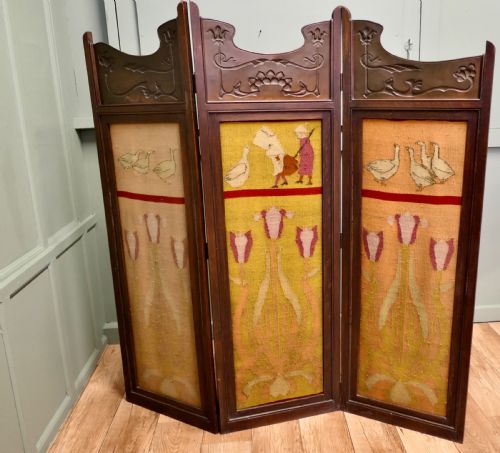
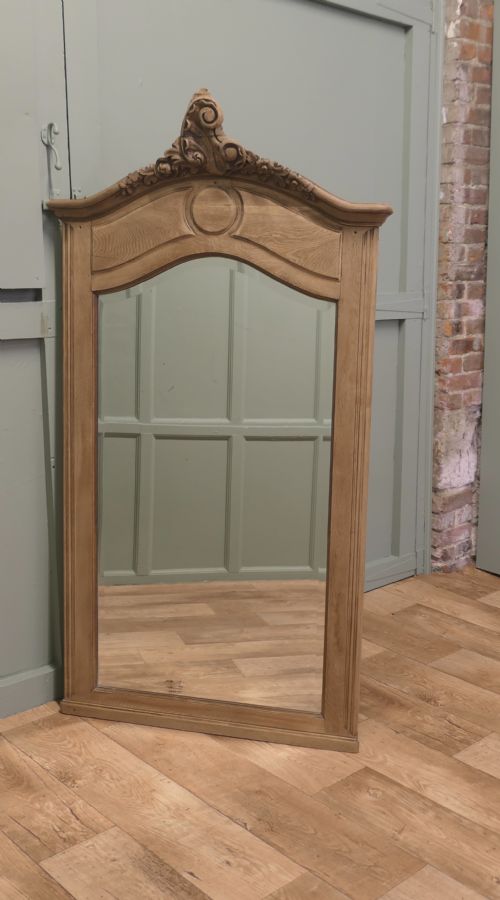
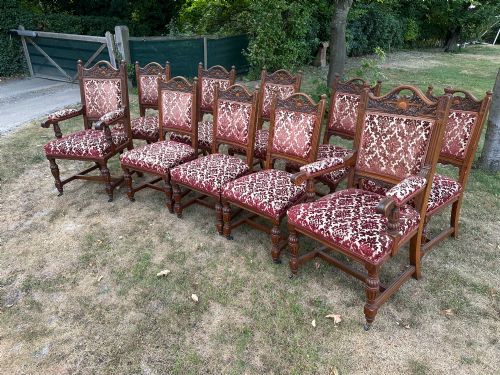
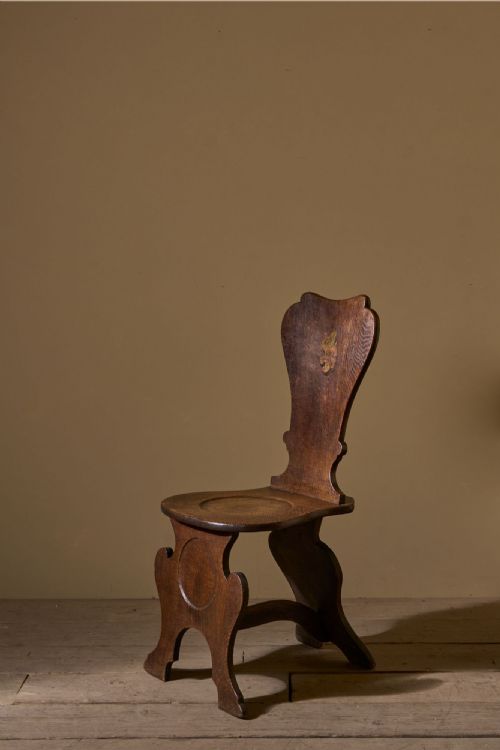
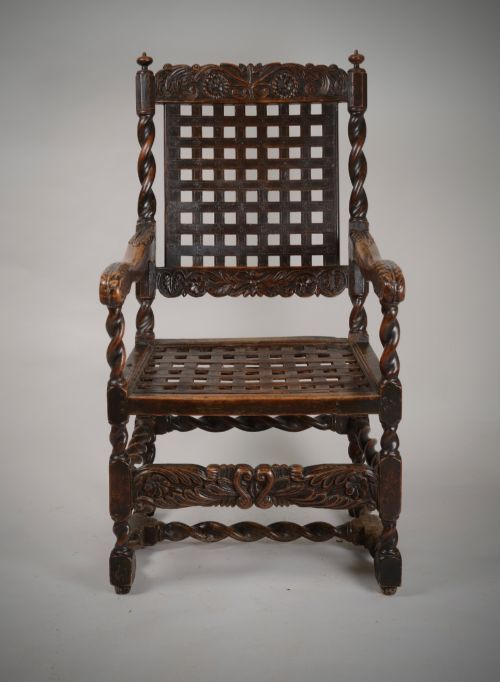
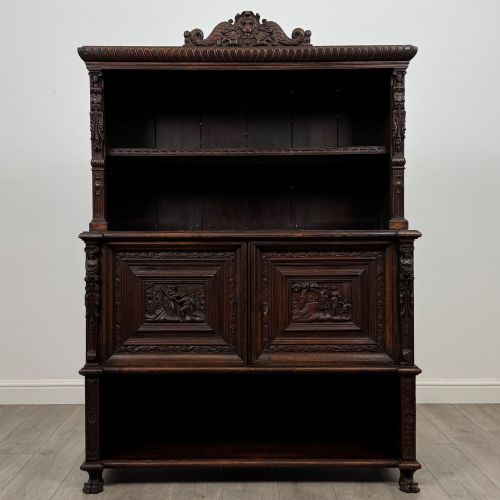
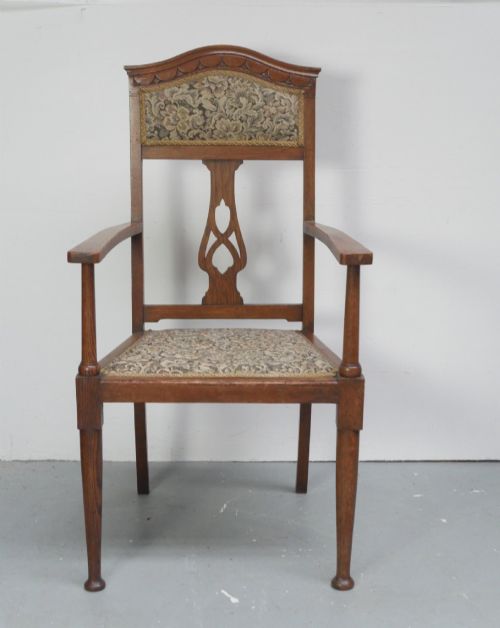
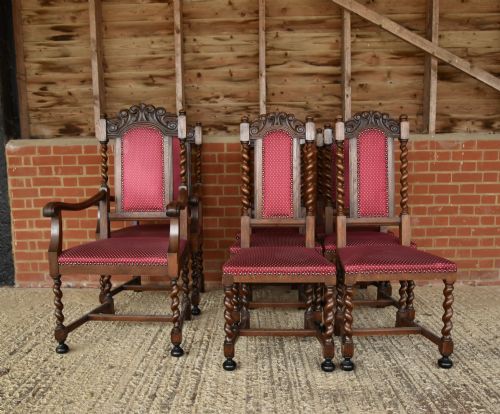
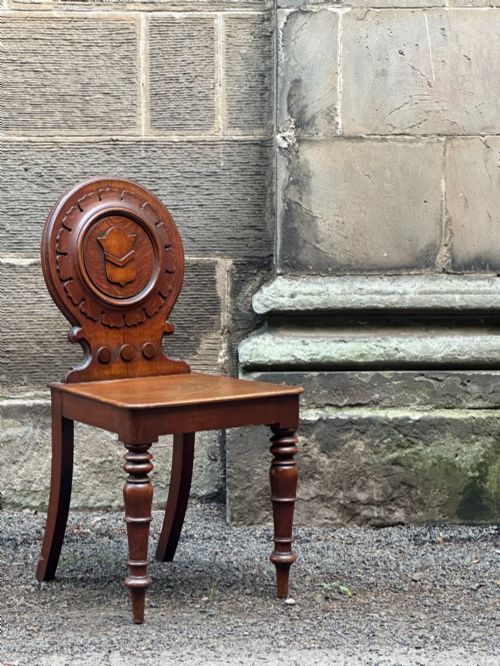
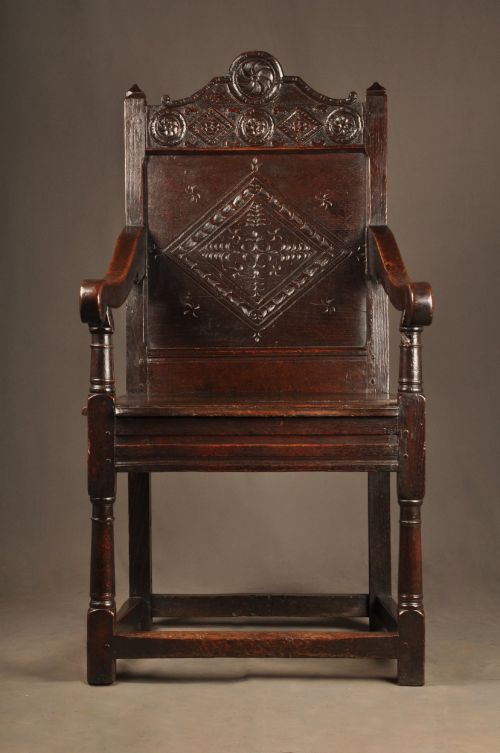
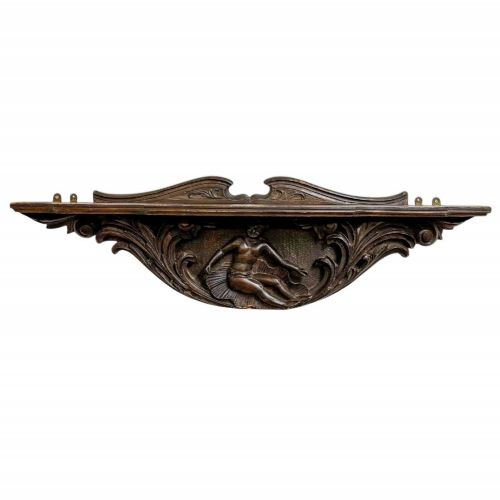
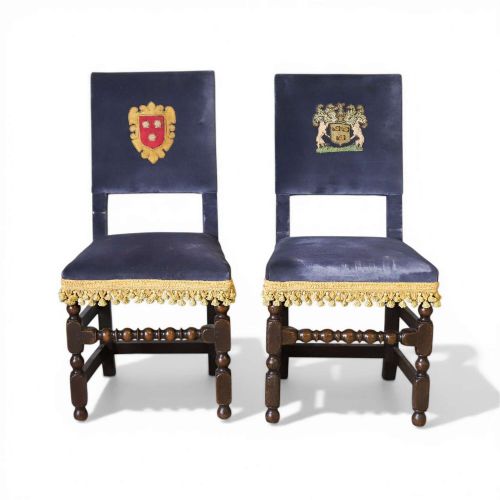
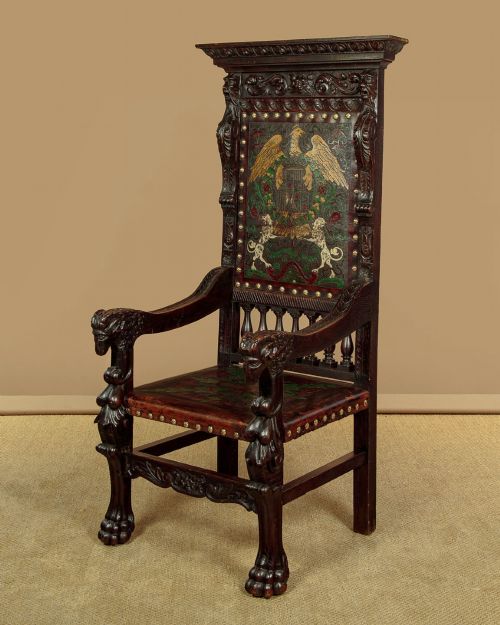
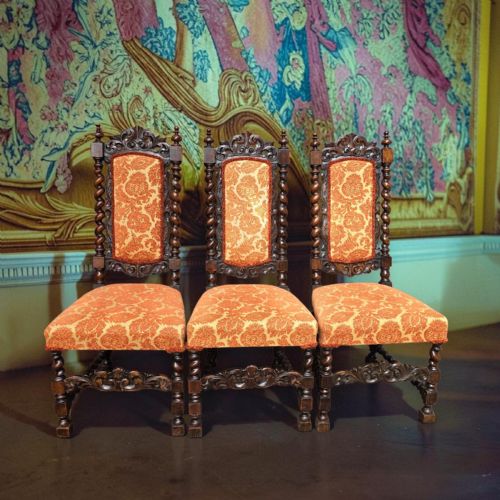
When you search for carved oak crest items, you encounter architectural woodwork, armorial panels, and seat furniture bearing distinct sculptural enrichment. The pieces span from seventeenth-century wainscot chairs and joined backstools with arched cresting rails to nineteenth-century wall brackets and dining chairs featuring heraldic shields.
You meet vernacular country pieces alongside revival items executed in Jacobean, Gothic, and Carolean styles. The woodwork often integrates regional British and continental motifs, ranging from simple geometric strapwork to detailed armorial carvings and animal figures.
What varies in quality
The depth and confidence of the chisel work dictate the sculptural merit of the crest, distinguishing sharp, spirited relief from flat, mechanical reproduction. Crisp undercut details demonstrate superior handling of the material by the carver.
Integrity of the timber and proportion within the wider frame matter significantly. Pieces retaining their original joined construction and surface patina hold greater coherence than those altered or assembled from disparate salvaged fragments.
Materials paired with oak across the selection include brass, embossed metal, wool, velvet, leather, and painted glass panels.
John Moyr Smith
The Carved Oak Crest Glossary
- Cresting rail
- The horizontal top member of a chair back or mirror frame, frequently shaped, pierced, or carved with heraldic and floral motifs.
- Wainscot chair
- A heavy wooden armchair of sixteenth and seventeenth-century origin, constructed with panelled back and panelled seat frame.
- Backstool
- An early form of upholstered or wooden seat without arms, essentially a chair built on a smaller scale than the primary armchairs of the household.
- Armorial
- Relating to heraldry and coats of arms, often displayed on carved shields, brass plaques, or embroidered panels within the furniture.
- Joined oak
- Furniture constructed using mortise and tenon joints secured with wooden pegs rather than metal nails or screws.
Carved Oak Crest: Frequently Asked Questions
What is a carved oak crest?
A carved oak crest refers to the sculptural wooden ornamentation found at the top of chairs, mirrors, and architectural woodwork, often displaying heraldic shields or floral motifs.
These elements served as focal points on formal seating and wall fixtures, denoting family lineage or stylistic allegiance.
How do I date an oak crest?
Dating relies on tool marks, timber shrinkage, construction methods, and the specific style of the carving. Seventeenth-century examples display hand-split boards and pegged joinery.
Revival pieces from the nineteenth and early twentieth centuries emulate these older techniques but often reveal machine-sawn surfaces or different assembly methods upon close inspection.
Were these pieces painted originally?
Some early oak furniture and architectural crests received painted or gilded finishes to highlight heraldic colours and grain patterns. Over centuries, many surfaces were stripped down to the bare timber.
Traces of historic paint or pigment occasionally survive in the recessed corners of the carving.
How do I care for antique oak?
Maintain the timber by applying traditional beeswax sparingly to nourish the dry wood and preserve the surface sheen. Avoid placing oak furniture near direct heat sources or in fluctuating humidity.
Gentle dusting with a soft, dry cloth prevents particulate buildup without harming the aged patina.