




19th Century Carved Shield
A 19th century carved shield brings heraldic presence and robust timberwork into a room.
19th Century Carved Shield
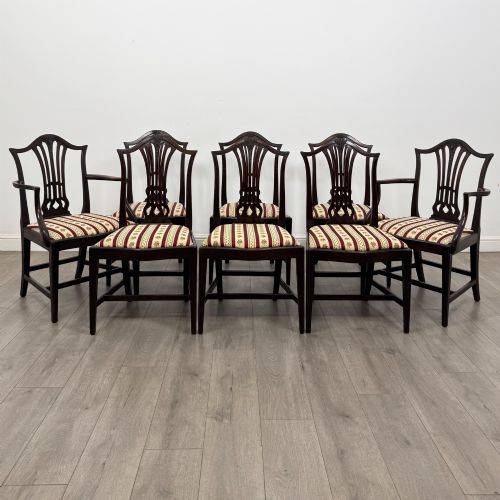
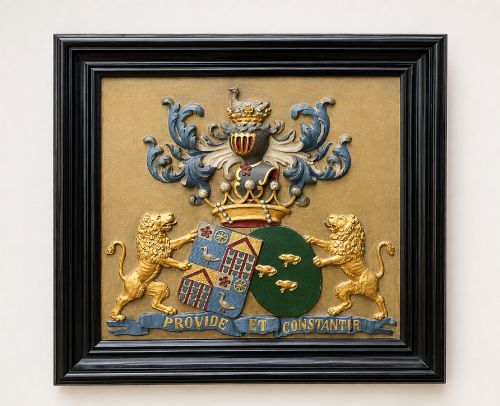
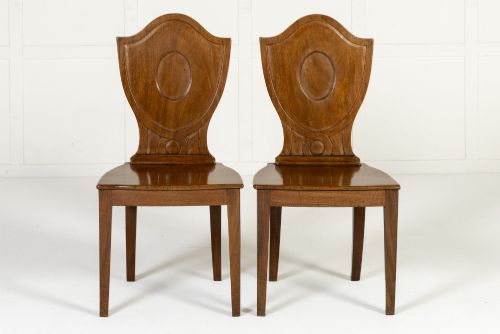
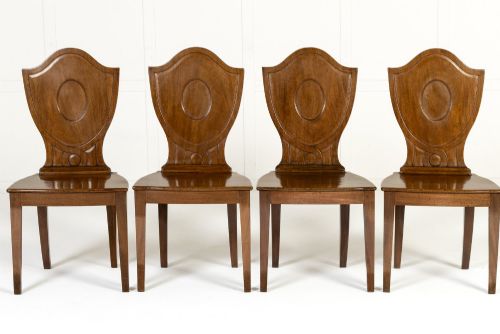
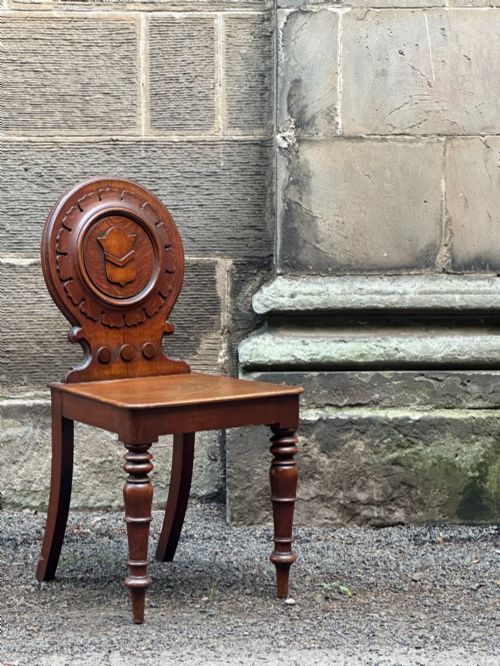
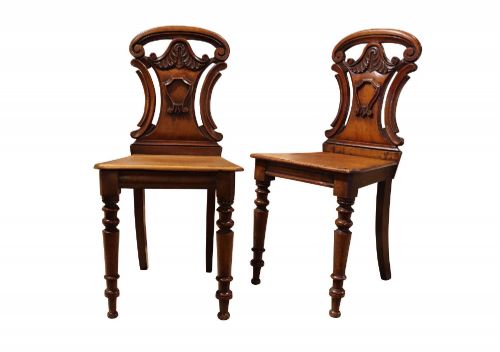
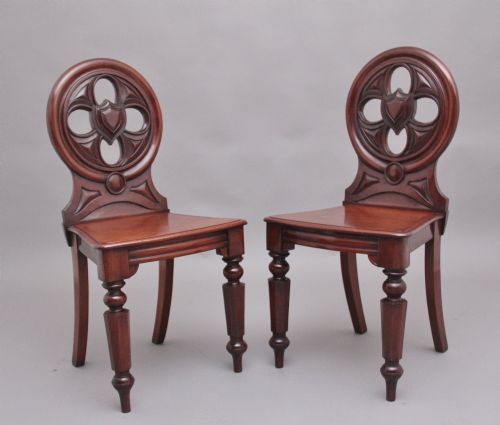
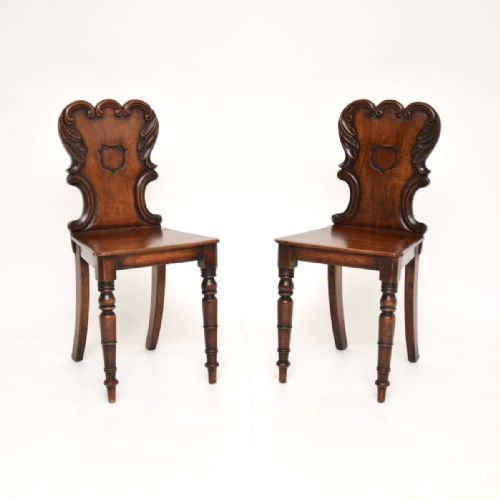
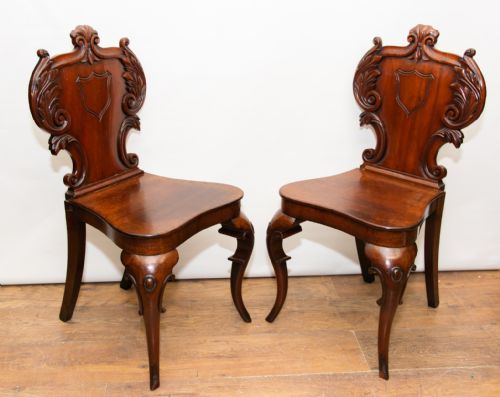
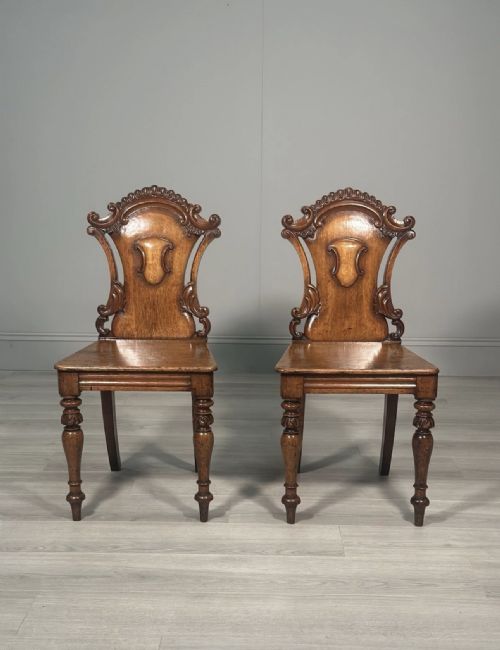
A 19th century carved shield encompasses diverse decorative and functional forms, ranging from wall plaques and heraldic panels to the characteristic carved backrests of dining chairs and hall seats. The most frequently encountered version on this page is the mahogany or oak hall chair, often featuring a carved shield motif integrated directly into the wooden back panel.
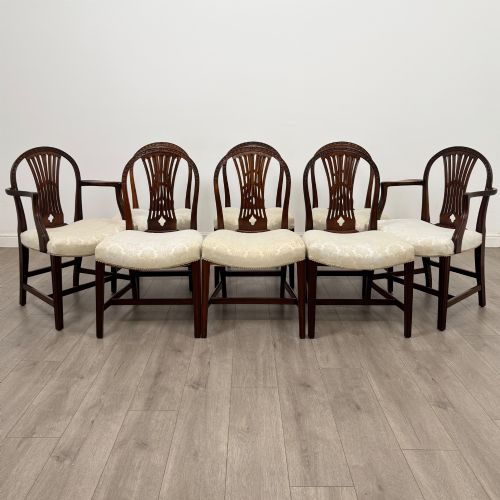
Beyond seating, the selection includes wall mirrors, marriage plaques, taxidermy mounts featuring antlers upon wooden shields, and occasional tables with shield-shaped tops. Pieces emerge from various design movements spanning the period, including Regency, Victorian, Gothic Revival, and Hepplewhite revival styles.
Origins stretch across English workshops, Scottish makers, and continental European pieces such as Dutch marriage plaques and Indian brass dhal shields. Buyers encounter both utilitarian hall furniture designed for grand entrance halls and decorative heraldic displays intended to project lineage and tradition.
Materials and techniques
Makers relied heavily on dense hardwoods, predominantly mahogany and oak, alongside rosewood, walnut, and ebonised timber for structural stability and fine carving detail. Timber elements were frequently hand-carved with crisp foliate motifs, crests, and heraldic lions, utilising chisels to achieve deep relief on chair backs and wall panels.
Brass, glass, giltwood, and fabric also appear, supporting items such as pole screens, wall mirrors, and engraved brass shields like the Indian dhal examples. Joinery combined traditional cabinet-making techniques with turned legs and robust framing to support heavy carved crests and inset panels.
A solitary taxidermy stag head keeps a silent, glass-eyed watch over the entire assembly of wooden shields.
The spectrum of quality
Quality rests upon the crispness and depth of the hand-carved detail within the wood, distinguishing sharply between flat, mechanical profiling and spirited, deeply undercut heraldic relief. The choice of timber grain, the weight of the mahogany or oak used in the frame, and the integrity of the joinery dictate the standing of a piece.
Provenance and decorative ambition elevate certain items, such as documented heraldic marriage plaques, Pugin design crests, or matched sets of dining chairs, far above standard utilitarian hall seating.
Van Rijckevorsel and Verheijen
The 19th Century Carved Shield Glossary
- Shield back
- A chair back design shaped in the contour of a heraldic shield, popularised in the eighteenth century and revived through the nineteenth century in dining and hall chairs.
- Heraldic panel
- A carved or painted wooden board displaying coats of arms, crests, or family insignia, often used for commemorative or decorative wall display.
- Pole screen
- A freestanding fireside screen with an adjustable vertical wooden pole holding a needlepoint tapestry, fabric panel, or glass reflector to block hearth heat.
- Hall chair
- A rigid wooden seat, usually without upholstery, designed for placement in entrance halls and frequently carved with family crests or shields.
- Dhal
- A traditional round Indian shield, often constructed from metal such as engraved brass with foliate decoration.
19th Century Carved Shield: Frequently Asked Questions
Where were hall chairs placed?
Hall chairs stood in entrance corridors and grand hallways to serve visitors waiting briefly or household staff attending the door. Their rigid wooden construction and prominent carved shields projected family status.
Today, they function well as decorative accent seating in narrow hallways, bedrooms, or alongside living room walls.
How do I identify a heraldic plaque?
Heraldic plaques display carved coats of arms, family crests, or marriage insignia meant to record lineage and alliances. They often incorporate Latin mottos, dates, and surnames within the carved timber design.
These panels were intended for prominent wall display inside formal rooms or entrance halls.
What is a pole screen used for?
Pole screens acted as functional household accessories near coal fires, shielding a person's face from the intense radiant heat. The adjustable screen mounted on a vertical wooden pole could be moved up or down.
Victorian examples often feature needlepoint tapestry or glass reflectors supported on tripod bases.
How do I care for carved mahogany furniture?
Carved mahogany requires dusting with a soft, dry cloth to prevent dirt settling into the deep recesses of the shield motifs. Avoid placing antique timber in direct sunlight or near heat sources to prevent wood splitting.
Occasional application of traditional beeswax helps maintain the natural lustre of the polished wood surface.