




Pugin Style Carving
Pugin style carving brings heavy ecclesiastical architecture and sharp geometry into domestic furniture through dark woods and pointed arches.
Pugin Style Carving
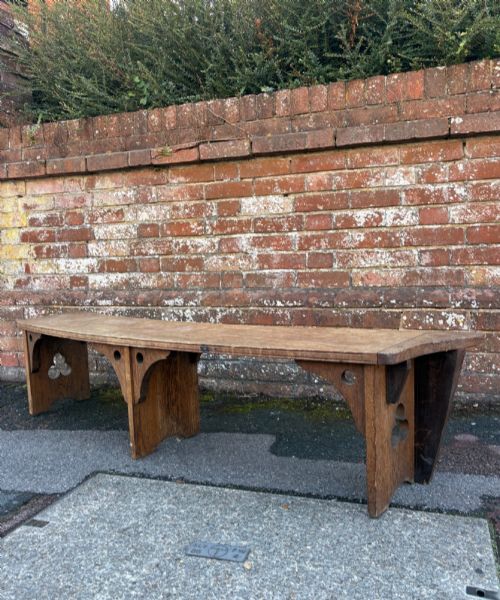
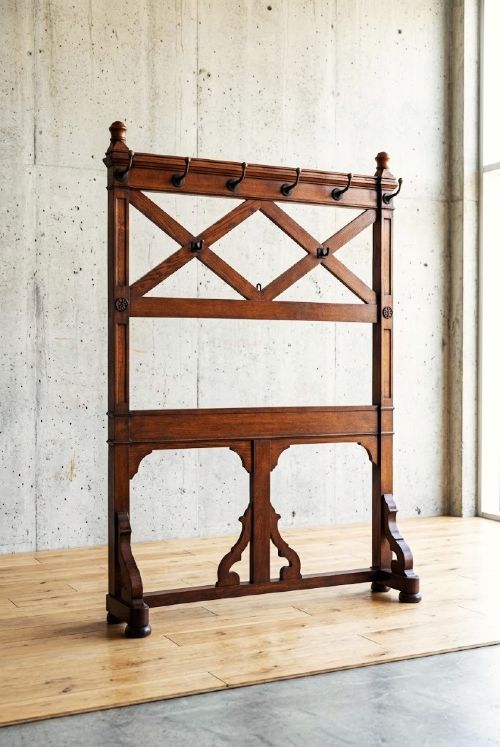
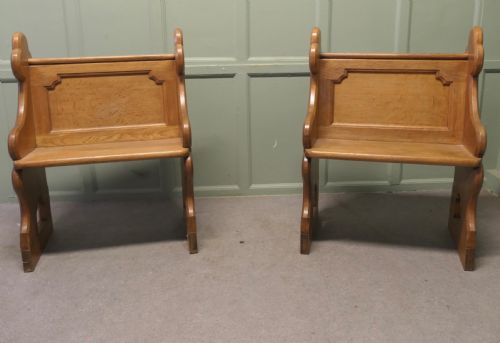
Pugin style carving encompasses solid oak and tiger oak seating, benches, coat stands, tables, and architectural wall panels spanning the nineteenth century. These pieces draw directly on Gothic Revival principles, featuring trefoil supports, heraldic crests, and sharp geometric lines that echo medieval stone tracery in timber.
The majority of pieces encountered here date from the Victorian era and the subsequent Arts and Crafts movement. Side chairs, armchairs, and hall furniture dominate the selection, often combining heavy timber frames with leather, velvet, or brass elements.
Makers and designers of this period worked closely from the aesthetic blueprints established by A. W. N. Pugin. Whether attributed to the designer himself or produced in his manner, the work maintains a rigorous adherence to architectural form scaled for domestic interiors.
Materials and construction
Solid oak and tiger oak form the structural core of these items, selected for their grain and durability. Pitch pine, walnut, elm, and beech also appear across specific seating and table forms.
Joinery relies on heavy timber construction, supporting deep relief carving and applied heraldic shields. Materials such as brass, iron, leather, and velvet supplement the woodwork on armchairs, benches, and coat stands.
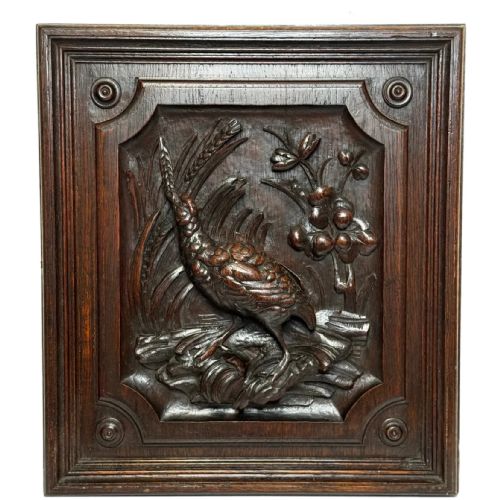
Grouse panels and heraldic lion shields remind us that nineteenth-century dining rooms doubled as indoor hunting lodges.
Distinctions in quality
Quality rests upon the crispness of the timber carving and the fidelity of the architectural proportions. Pieces showing deep, deliberate relief work and well-balanced geometric tracery stand apart from simpler production.
The choice of primary timber influences the overall caliber of the object. Selected quarter-sawn oak and dense tiger oak exhibit superior grain patterns that enhance the architectural character of the design.
A. W. N. Pugin·Augustus Pugin
The Pugin Style Carving Glossary
- Gothic Revival
- An architectural and decorative movement reviving medieval forms, pointed arches, and structural stone motifs in wood and metal. It dominated nineteenth-century design through figures such as Pugin.
- Trefoil
- A graphic ornament composed of three overlapping rings or lobes, frequently seen in the carved wooden supports of benches and chairs. It mimics traditional stonemasonry tracery.
- Quarter-sawn oak
- Timber cut radially from the log, producing a distinct linear grain pattern with medullary rays. This cut provides greater dimensional stability for heavy furniture.
- Heraldic lion
- A stylized lion motif used in coats of arms and decorative shields. Carved examples appear frequently on wall panels and furniture crests.
- Refectory table
- A long, heavy dining or serving table traditionally used in communal halls. Nineteenth-century iterations adopt Gothic structural bracing and turned or chamfered supports.
Pugin Style Carving: Frequently Asked Questions
How do I identify Pugin style furniture?
Look for heavy oak construction, pointed arches, trefoil cutouts, and strict geometric lines derived from medieval architecture.
Pieces often include heraldic motifs, chamfered edges, and architectural paneling that distinguish them from standard Victorian designs.
What rooms suit Pugin style carving?
These robust items suit hallways, libraries, and dining rooms where their heavy timber presence anchors the space.
Pairing them with neutral walls and minimal modern decor allows the architectural detail of the woodwork to remain the focal point.
Are these pieces from the nineteenth century?
The selection spans the nineteenth century, including Victorian and Arts and Crafts interpretations of Gothic design.
Materials range from solid oak to pitch pine and walnut, reflecting the manufacturing methods of the period.
How should I care for antique oak?
Maintain the wood by keeping it away from direct heat sources and sudden humidity changes to prevent timber splitting.
Apply a microcrystalline wax periodically to nourish the surface without building up excessive residue on the carved details.