
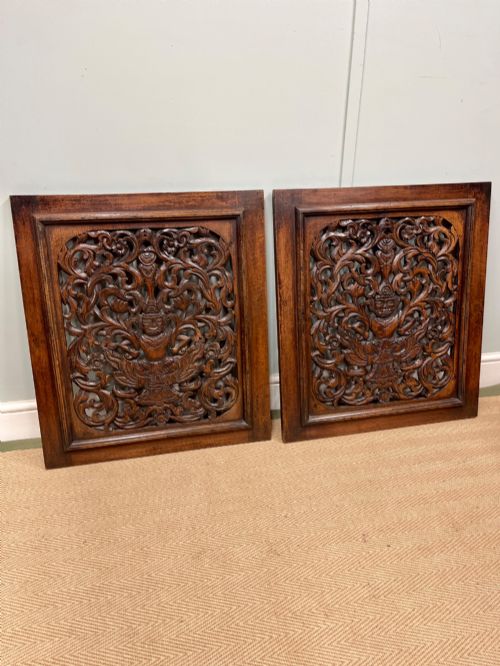
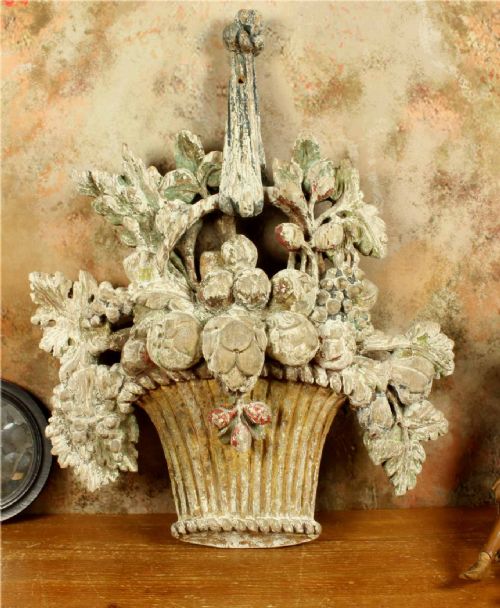
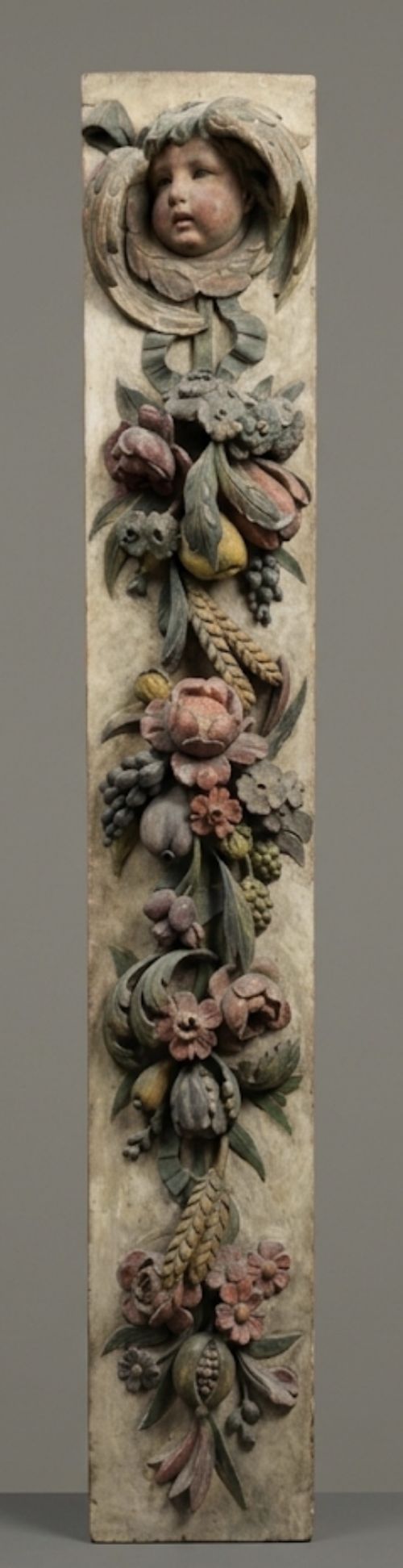
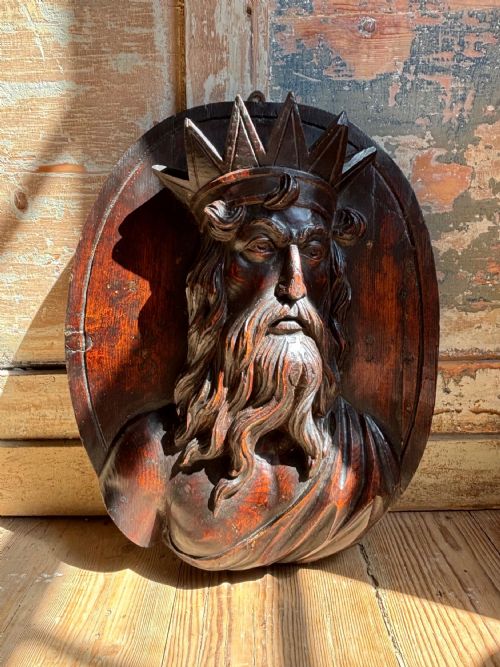
Relief Carved Plaque
A relief carved plaque brings texture and narrative to a wall, taking forms from centuries of cabinetmaking and sculpture.
Relief Carved Plaque
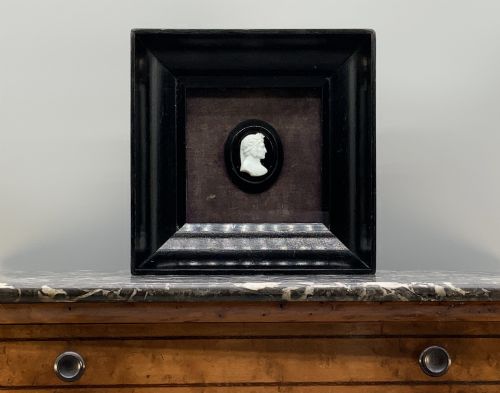
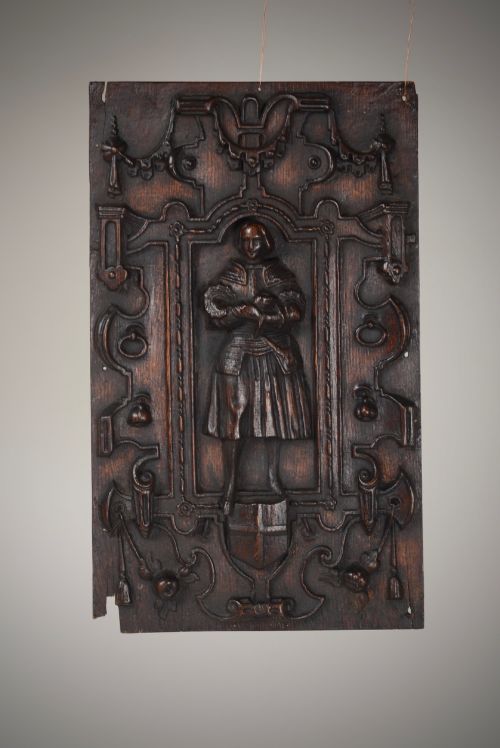
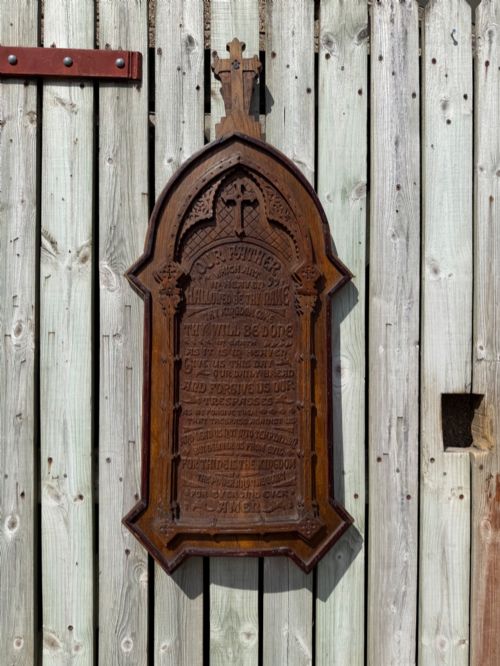
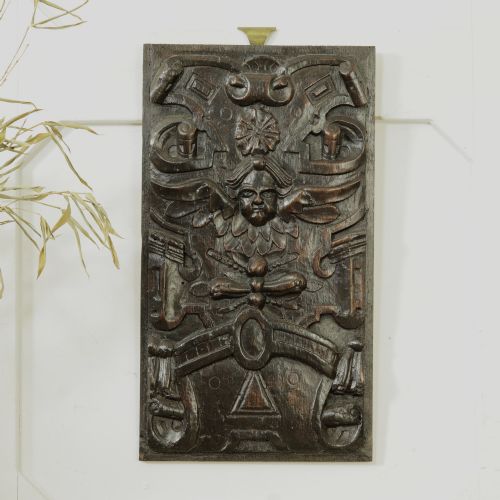
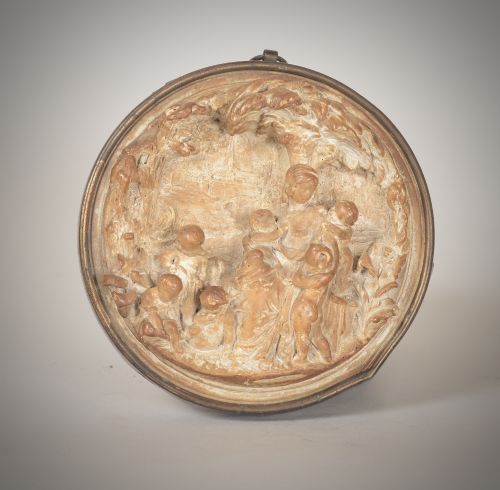
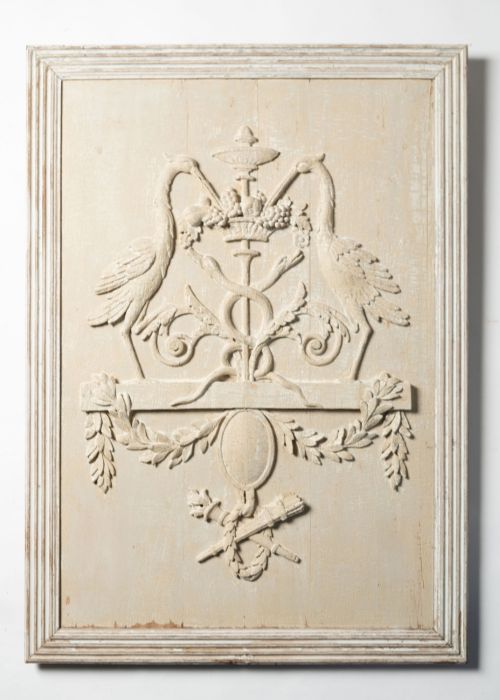
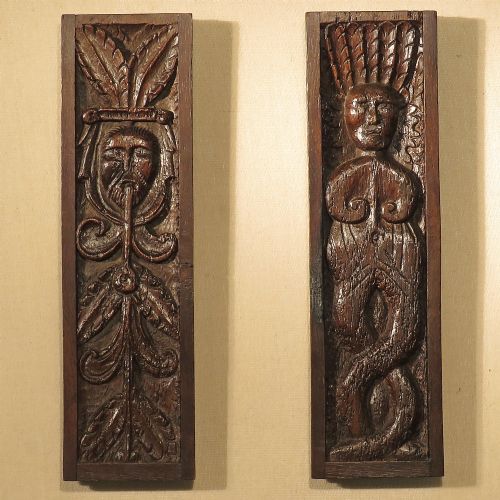
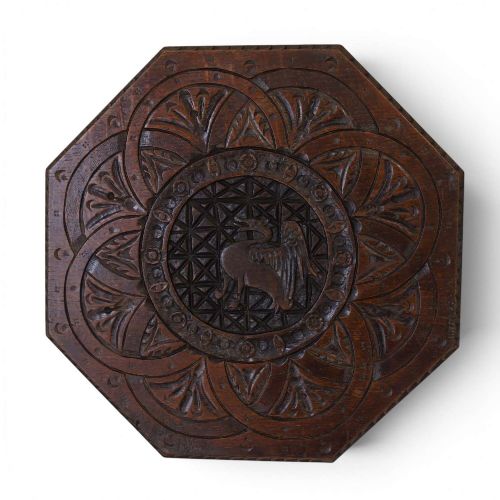
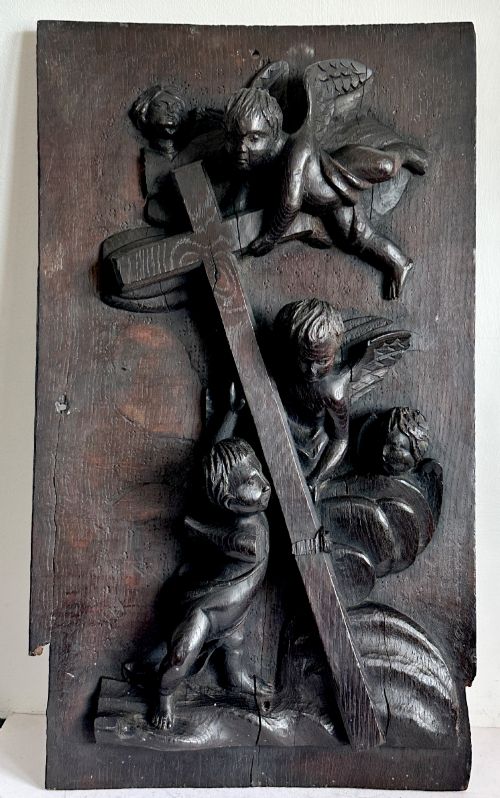
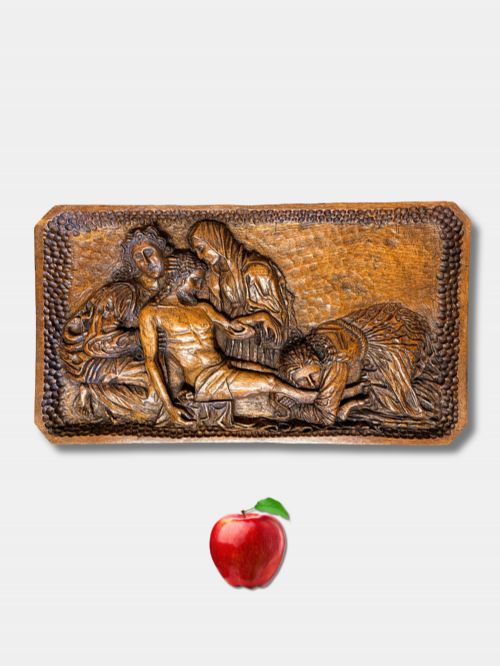
A relief carved plaque comprises architectural fragments, devotional panels, and portrait medallions designed for wall display. These pieces range from early carved timber and fruitwood panels to later architectural salvage and framed stone profiles.
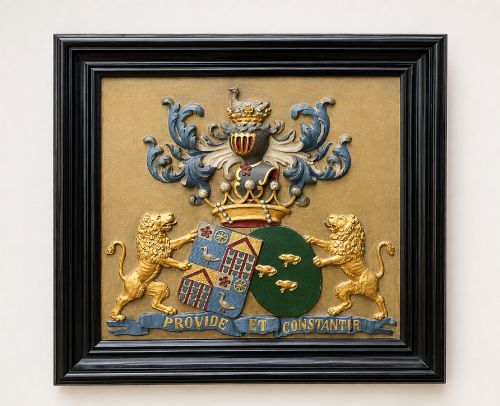
The versions most frequently met on this page span the seventeenth through the nineteenth centuries, drawing on Gothic Revival, Baroque, and Neoclassical vocabularies. They appear as heraldic marriages, hunting trophies, and classical portraits intended to anchor a room.
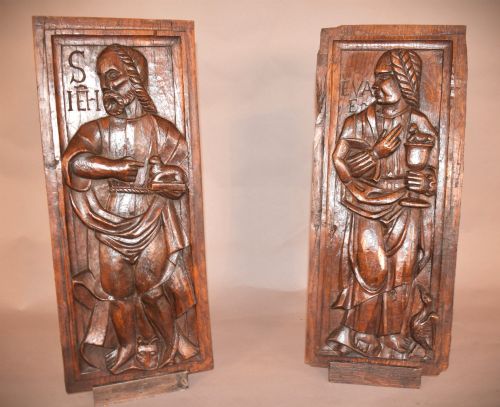
Originating from diverse European and Asian workshops, these plaques reflect regional tastes in timber selection and subject matter. Buyers encounter everything from deep Flemish oak carvings to lighter Continental fruitwood trophies.
Materials and technique
Makers relied primarily on dense timbers such as oak, walnut, chestnut, and fruitwood, alongside occasional deployments of marble, ivory, alabaster, and stone. Wood selection dictated the depth of the carving, allowing carvers to achieve high-relief figures that project cleanly from the background.
Execution involved hand chisels and gouges applied directly to seasoned timber or stone, sometimes augmented with paint, lacquer, or gilding. Architectural salvage pieces often retain traces of their original structural function before adaptation into wall art.
Listings feature woods spanning oak, walnut, fruitwood, and chestnut, alongside materials like marble, ivory, and alabaster.
Judging quality
Quality rests in the crispness of the chisel work and the depth of the undercutting, which separates spirited modelling from mechanical repetition. The best pieces show confident handling of facial expressions and drapery folds, particularly in figurative subjects like saints and classical deities.
The integration of the composition with its natural grain or stone matrix dictates visual success. Superior examples maintain structural integrity despite age, with minimal distortion and harmonious patination across the surface.
The Relief Carved Plaque Glossary
- High-relief
- A sculptural technique where the figures project significantly from the background plane, often undercut to create deep shadows.
- Architectural salvage
- Elements removed from dismantled buildings, churches, or furniture and repurposed for decorative wall mounting.
- Polychrome
- Painted or decorated in multiple colours, frequently seen on older wooden panels to enhance theatrical depth.
- Grand Tour
- Cultural travel undertaken by wealthy Europeans in the eighteenth and nineteenth centuries, yielding small portrait plaques and souvenirs.
- Heraldic
- Relating to coats of arms and armorial bearings, commonly found on marriage and commemorative plaques.
Relief Carved Plaque: Frequently Asked Questions
How do I hang a heavy wooden plaque safely?
Heavy plaques require secure wall anchors and appropriate brackets attached directly to the main timber frame or backing rather than floating hardware.
Professional mirror plates or hidden French cleats distribute the weight evenly across the wall surface.
Where should I display a wall relief?
These pieces suit spaces where directional lighting can catch the depth of the carving, such as above a fireplace or along a hallway.
Avoid direct sunlight or fluctuating heat sources that might cause timber panels to split or warp.
How do I clean an antique carved panel?
Dust gently with a soft, dry brush to prevent dirt from settling into the recessed areas of the carving.
Avoid liquid cleaners, polishes, or water, which can damage aged finishes, paint, and exposed wood.
How can I tell a 17th-century panel from a later copy?
Seventeenth-century pieces typically show tool marks appropriate to hand-forged irons, shrinkage cracks, and deep oxidisation within the grain.
Construction methods, such as pegged joints or hand-sawn backs, provide clues to the true age of the object.