
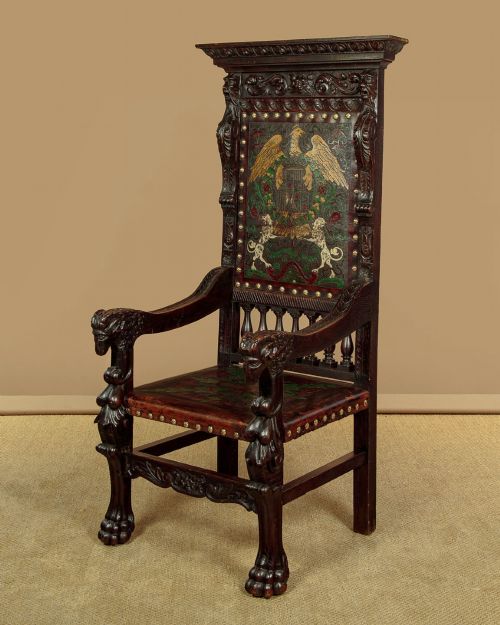


Heraldic Lion Carving
These heraldic lion carving pieces bring noble bearing and heraldry into a room through centuries of timber and stone work.
Heraldic Lion Carving
A heraldic lion carving appears across various forms, ranging from architectural elements and garden statuary to small decorative ornaments and bookends. Buyers searching for a heraldic lion carving will find pieces spanning several centuries, including seventeenth century works and nineteenth century revival items.
The objects take many shapes, from timber newel post finials and throne chairs to stone garden statues and cast stone bookends. Oak and carved wood dominate the interior pieces, while stone and reconstituted stone serve for the garden figures and architectural salvage.
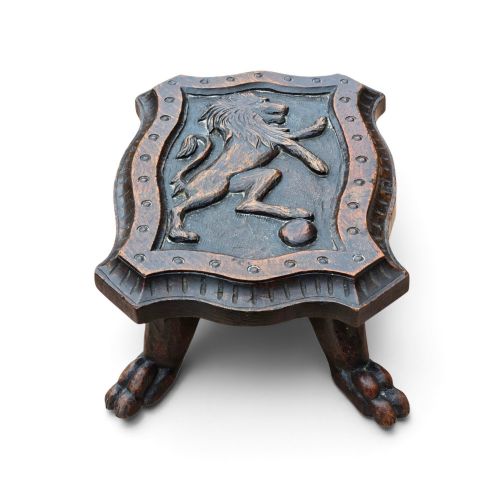
Many items incorporate shields, crests, or rampants, reflecting Gothic Revival, Jacobean, and Neoclassical styles. Pieces such as footstools and fob seals also integrate the motif on a smaller scale for domestic display.
Distinctions in quality
Depth of carving and clarity of form separate robust examples from simpler domestic items. Superior pieces demonstrate confident handling of anatomical detail in wood or stone, particularly around the mane, paws, and associated armorial shields.
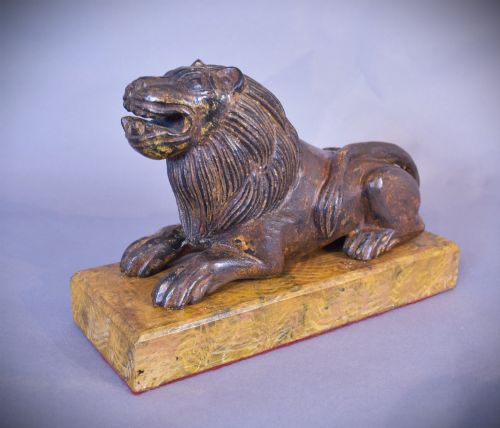
Integrity of surface finish also influences the character of a piece, whether through the preservation of original gilding and polychrome paint or the natural weathering on outdoor stone figures. The harmony between the lion motif and its supporting structure, such as a throne chair or newel post, dictates the visual success of the work.
Even a tiny sardonyx fob seal can pack a roaring heraldic lion into a pendant charm.
The Heraldic Lion Carving Glossary
- Newel post finial
- A decorative ornament positioned at the top of a staircase newel post. These timber carvings often feature heraldic beasts to mark the entrance to a stair.
- Giltwood
- Timber that has been coated with a thin layer of gold leaf. This finish illuminates carved details in interior decorative ornaments.
- Polychrome paint
- Decoration applied using multiple colours. It brings vibrancy to historic armorial crests and wooden figures.
- Cast stone
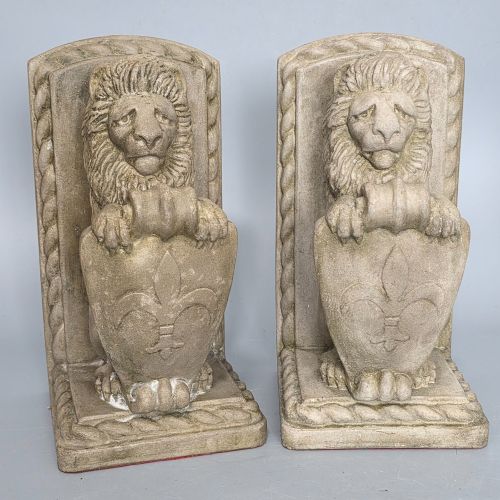
- A refined building product manufactured from aggregate and cement. It allows for the production of durable garden statues and bookends.
- Rampant
- A heraldic posture where an animal stands on one hind leg with its forelegs elevated. This stance defines the silhouette of many lion carvings.
Heraldic Lion Carving: Frequently Asked Questions
What is a heraldic lion carving used for?
These carvings serve multiple functions depending on their original context, ranging from architectural timber elements like newel post finials to garden statuary and interior decorative ornaments. Smaller versions appear as bookends or fob seals.
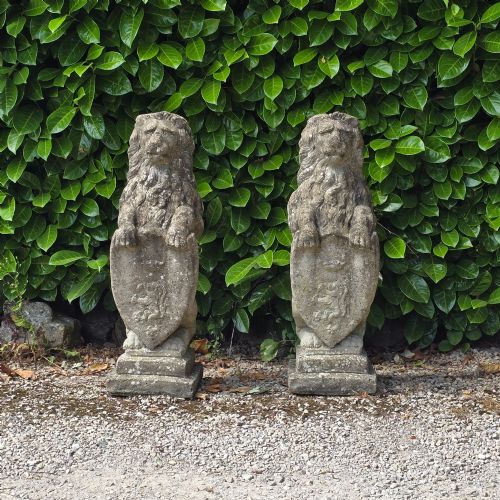
Interior examples often integrate into seating or architectural salvage, while larger stone pairs flank entrances or sit upon garden plinths to project authority and traditional design.
How do I identify the period of a carving?
Dating relies on material selection, tool marks, and stylistic indicators such as Gothic Revival, Jacobean, or Neoclassical motifs. Seventeenth-century pieces typically show hand-worked oak construction, while nineteenth-century items often reflect specific revival movements.
Examining the underlying timber, surface treatments like polychrome paint or gilding, and the specific form of the armorial shield helps narrow down the production era.
Where should I place a stone lion in a garden?
Stone and cast stone seated lions look best positioned on dedicated plinths, flanking pathways, or guarding terrace entrances. Their substantial weight requires a stable, level foundation.
Allowing the material to weather naturally outdoors integrates the stone into the landscape over time, echoing historical architectural layouts.
Are wooden carvings suitable for indoor use only?
Timber pieces, including oak throne chairs, footstools, and architectural ornaments, suit indoor environments where temperature and humidity remain stable. These materials respond poorly to excessive moisture.
Keeping wooden sculptures away from direct heat sources preserves the integrity of painted surfaces, gilt, and carved details.