


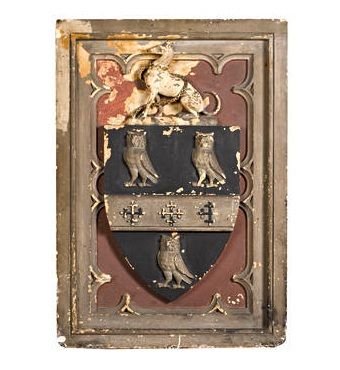
Armorial Wall Shield
An armorial wall shield displays noble lineage and heraldic achievement, bringing historic heraldry and carved craftsmanship directly into a room.
Armorial Wall Shield
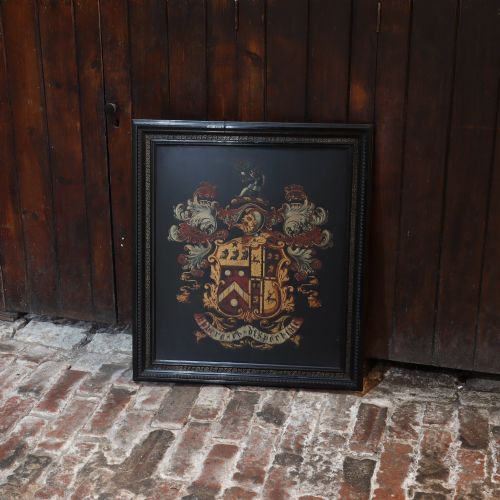
An armorial wall shield functions as a display of family lineage, civic authority, or royal allegiance, taking the form of plaques, panels, and reliefs designed for interior display. When searching for an armorial wall shield, buyers encounter pieces originating from the seventeenth century through to the mid-twentieth century, with nineteenth-century examples appearing frequently.
The objects span diverse historical idioms including Gothic Revival, Baroque, and Victorian styles. Forms range from heavy carved timber panels and coach sections to cast metal and marble reliefs.
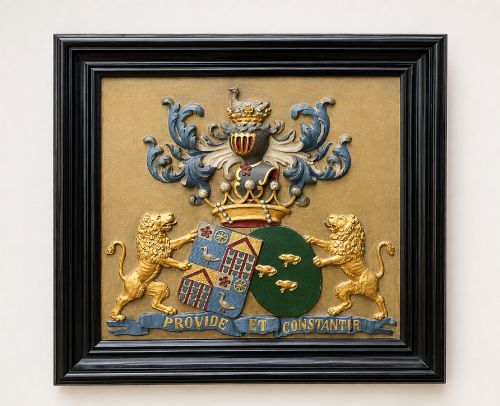
Geographic origins and stylistic influences vary widely across the selection, encompassing British family arms, Dutch marriage plaques, Italian marble, and Scottish painted coach panels. These items often served architectural, commemorative, or domestic decorative roles within grand interiors.
Materials and construction
Makers utilised solid timbers such as oak and various hardwoods, shaping them through hand carving to create high-relief shields, crests, and figures. Surfaces were frequently enhanced with polychrome paint, pigment, or gilt to accentuate the heraldic tinctures and charges.
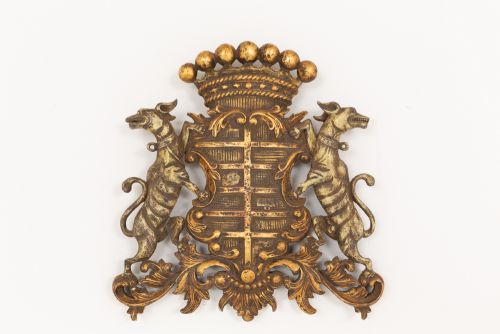
Alternative media appear alongside timber, including cast iron, bronze, plaster, and Italian marble. Metal plaques were cast and finished with patination, while stone and plaster panels relied on masonry techniques to achieve sharp heraldic detail.
Listings feature items spanning from the seventeenth century through to the mid-twentieth century.
Assessing quality and execution
The depth and crispness of the carving distinguish finer pieces from simpler decorative items, particularly in the rendering of heraldic beasts, mantling, and charges. Sharp tool work in timber or precise casting in metal reflects the skill of the original workshop.
The integrity of the original surface finishes, such as polychrome paint or gilding, plays a role in the standing of a piece. Well-preserved pigment layers or authentic patination retain the visual impact intended by the maker.
Edward Pearce·Pugin
The Armorial Wall Shield Glossary
- Heraldry
- The system by which coats of arms and other armorial bearings are devised, described, and regulated. It provides the symbolic language seen on these shields and panels.
- Polychrome
- The practice of decorating architectural elements, sculpture, or panels in a variety of colours. This finish brings out the distinct tinctures of a coat of arms.
- Gilt
- Covered thinly with gold leaf or gold paint. This treatment highlights raised elements and adds status to armorial displays.
- Gothic Revival
- An architectural and decorative style that draws inspiration from medieval design. It frequently informs the heavy tracery and pointed forms found on nineteenth-century shields.
- Mantling
- The ornamental drapery depicted around a shield in a coat of arms. It represents the cloth cloak worn over armour to protect the wearer from the sun.
Armorial Wall Shield: Frequently Asked Questions
What is an armorial wall shield?
An armorial wall shield is a decorative or commemorative plaque displaying a coat of arms, family crest, or heraldic insignia. These pieces were created to mark alliances, lineage, or official authority.
They appear in materials ranging from carved oak and hardwood to bronze, cast iron, and marble. Such items served as prominent interior displays in homes, public buildings, and carriages.
Where were these shields displayed?
Original locations included grand staircases, entrance halls, and formal reception rooms of historic houses and civic buildings. Some pieces originated as exterior architectural salvage or decorative carriage panels.
Today, collectors hang them as focal points in studies, libraries, or living rooms. Their robust wooden or metal construction suits placement on sturdy interior walls.
What styles are common?
Victorian Gothic Revival and Baroque are prominent styles among these pieces. Makers drew on medieval and seventeenth-century motifs to create dramatic, high-relief heraldic displays.
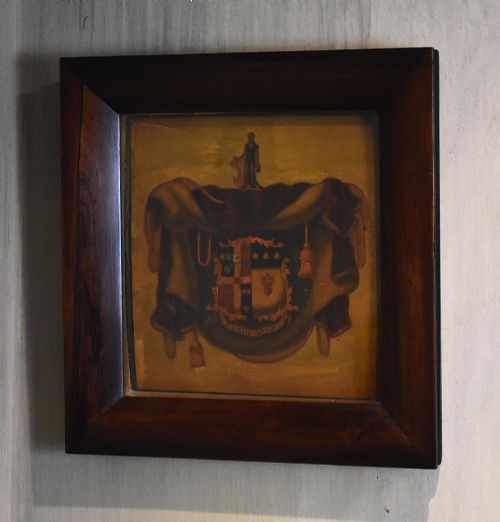
Other examples reflect Regency tastes or regional European traditions such as Dutch marriage plaques. Each style brings different sculptural qualities and surface treatments to the shield.