

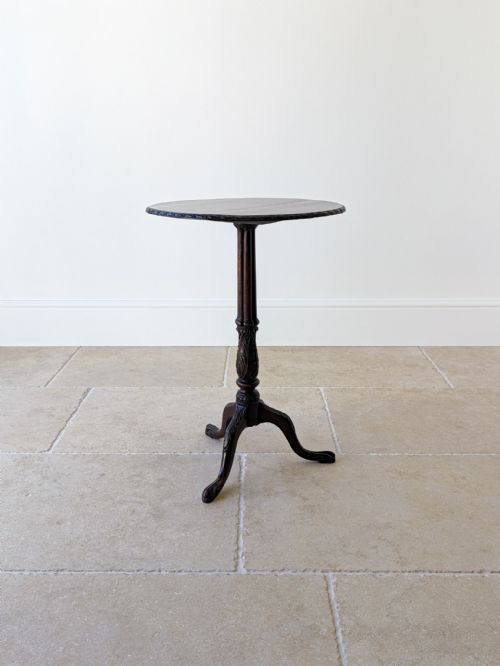
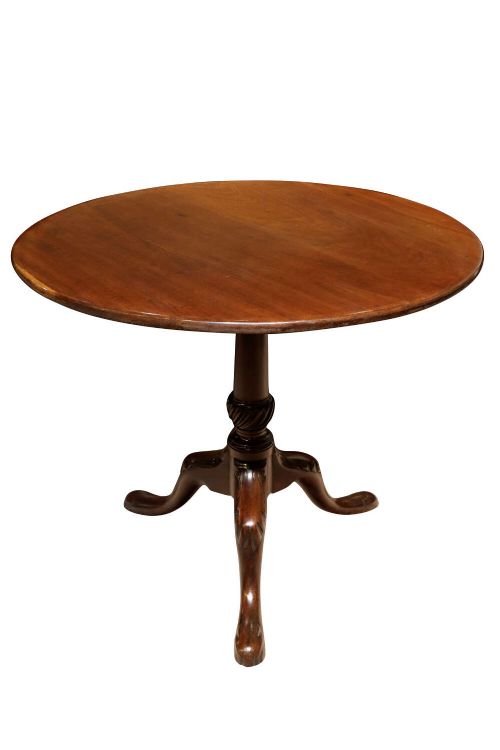
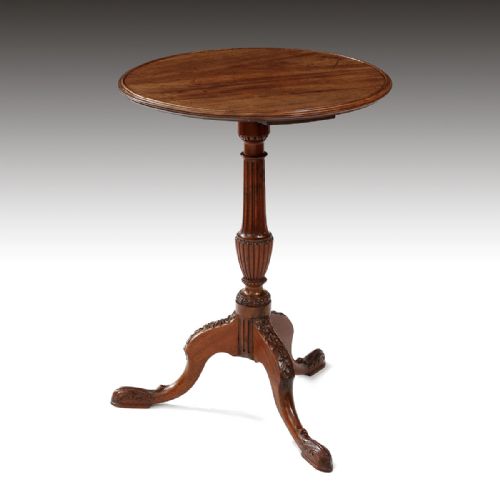
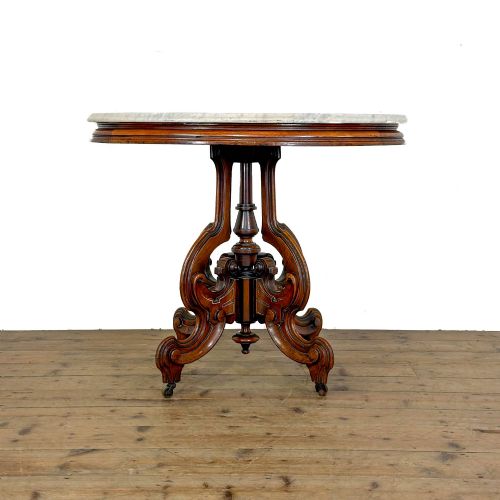
Carved Mahogany Tripod Table
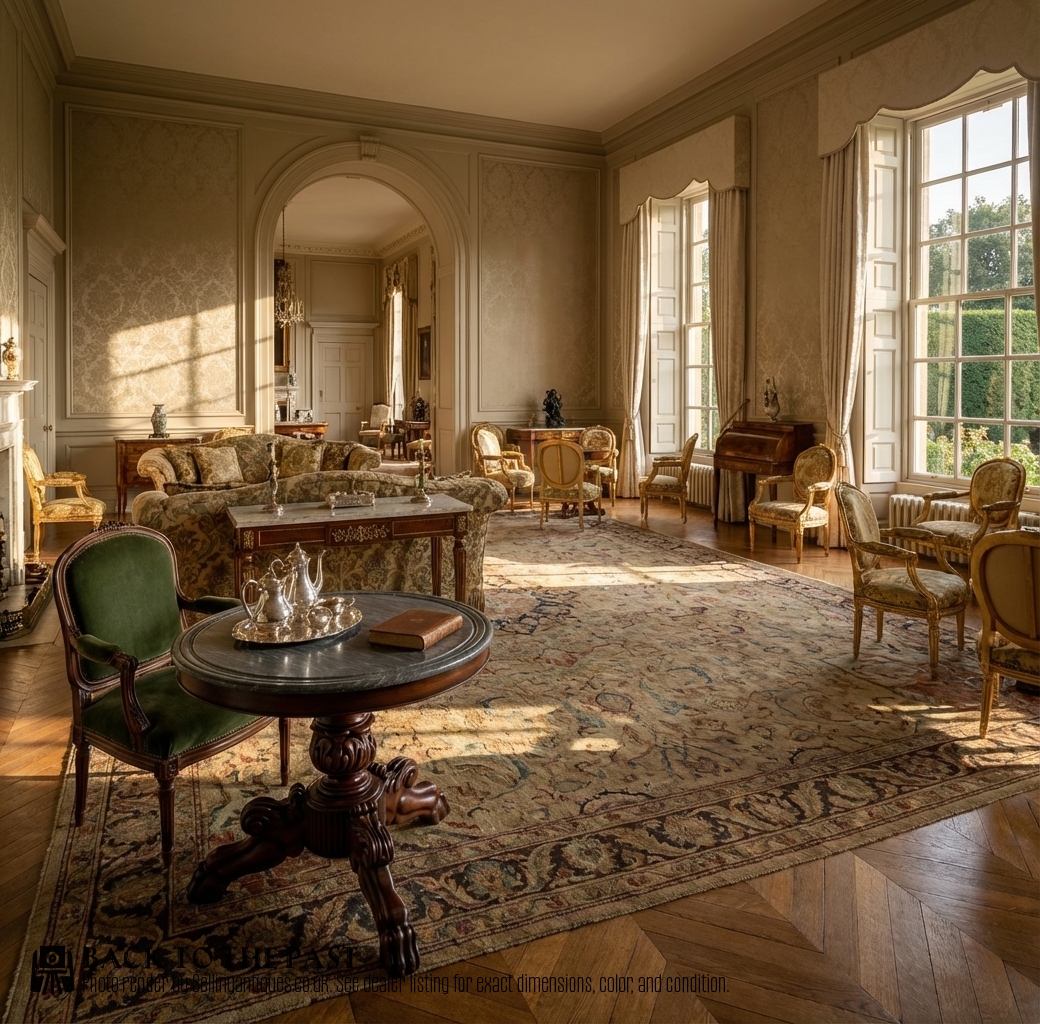
A carved mahogany tripod table brings instant character to a corner, offering a stable three-legged stance and a rich timber surface.
Identifying the carved mahogany tripod table
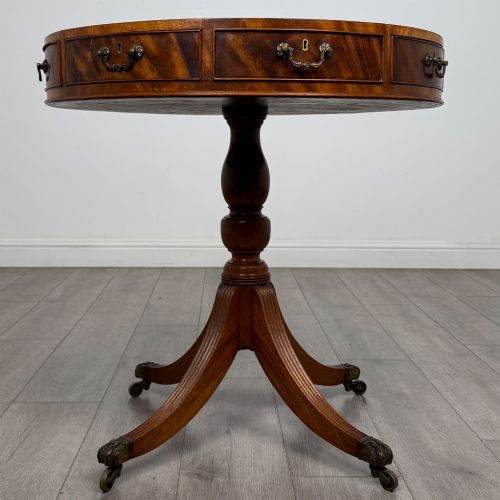
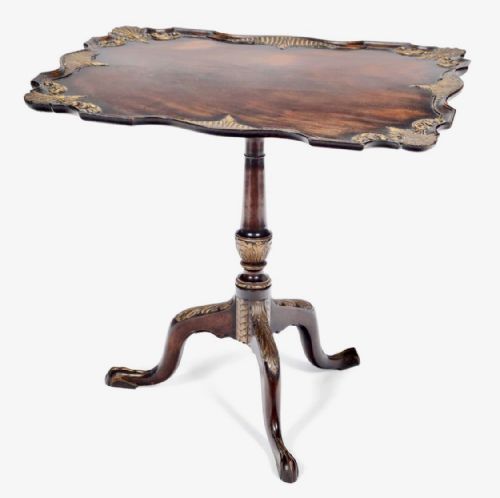
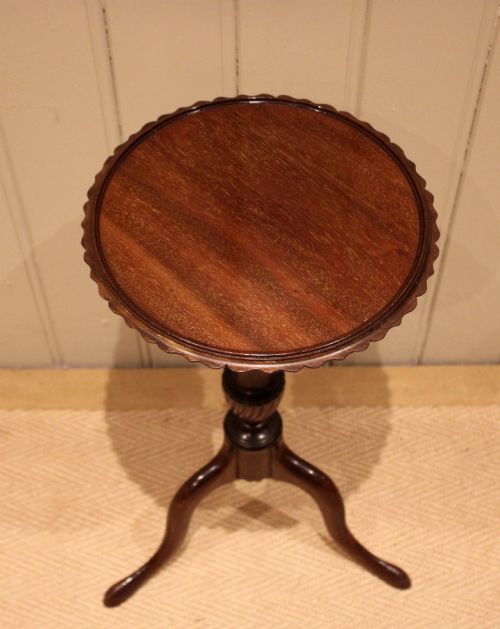
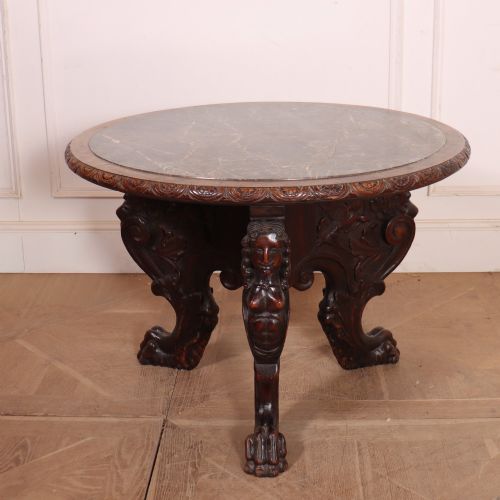
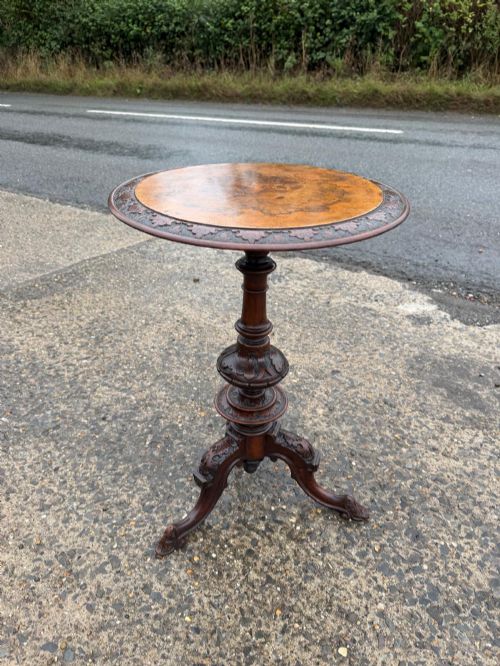
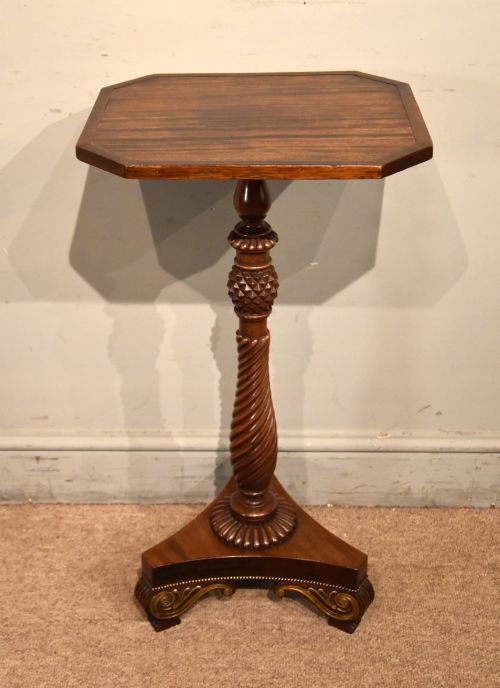
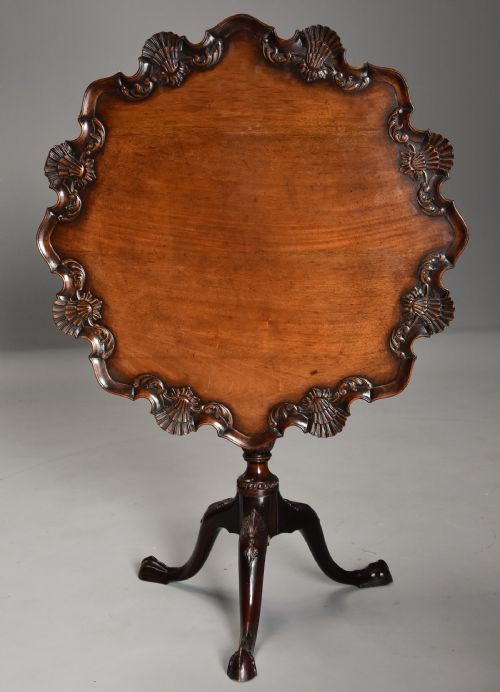
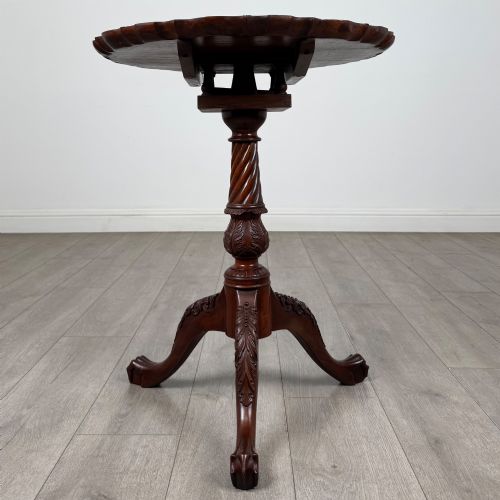
A carved mahogany tripod table stands on a central pillar supported by three legs, appearing in forms such as wine tables, supper tables, and occasional tables. These pieces emerge across the eighteenth and nineteenth centuries, spanning Georgian, Regency, and Victorian eras.
Materials and construction methods
Makers utilised solid mahogany for its strength and rich grain, shaping the timber into slender pillars and three-legged bases. Additional elements incorporate brass hardware, iron fittings, and marble inserts.
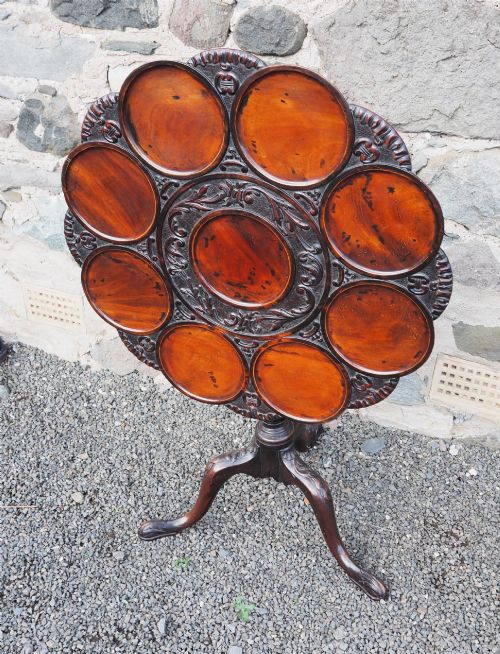
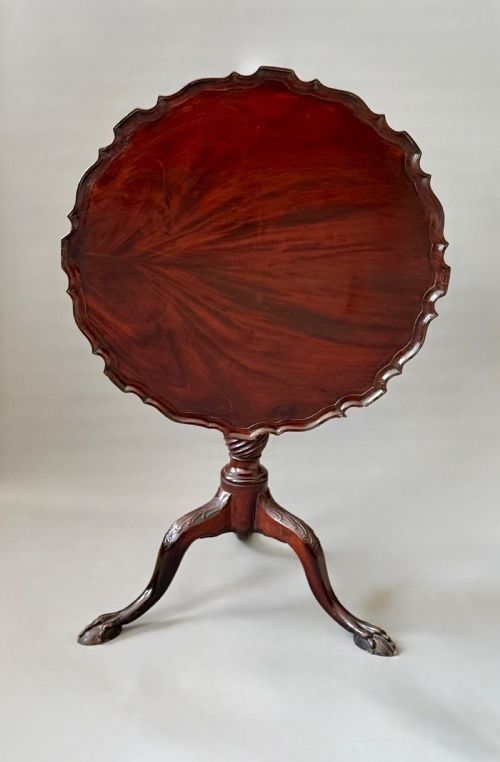
Carving defines the decoration, appearing on pillar columns, knees, and feet, while mechanisms such as birdcage actions allow the tabletops to tilt and revolve.
Retail Price Guide 2026
Typical UK retail prices for carved mahogany tripod table, calculated from the Sellingantiques database of over a million retail prices indexed since 2003. This retail price guide relies exclusively on Sellingantiques data; no external sources or auction records are used, so the figures do not describe the wider market.
Some nineteenth-century makers doubled their efforts by mounting a revolving piano stool atop the familiar carved tripod base.
Judging the range of quality
Excellence rests in the crispness of the timber carving and the architectural proportion between the tabletop, the turned pillar, and the splayed legs. Tables featuring detailed pie-crust edges and finely shaped feet demonstrate superior craftsmanship.
Simpler nineteenth-century examples or later revival pieces display less depth in the carving and standard turned columns rather than sculptural detail.
The Carved Mahogany Tripod Table Glossary
- Tripod base
- A support structure comprising three legs radiating from a central turned pillar. This design ensures stability on uneven floors.
- Tilt-top
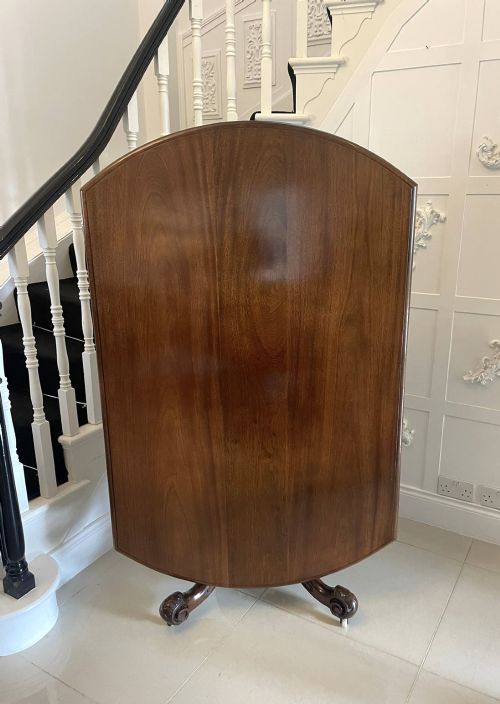
- A hinged tabletop mechanism allowing the surface to fold vertically when not in use. It is also known as a snap-top.
- Birdcage
- A timber framework beneath the top that allows the table surface to both tilt and revolve. This mechanism is typical of finer Georgian examples.
- Pie-crust edge
- A raised, scalloped border carved directly from the solid edge of the tabletop. It frequently appears on mid-eighteenth-century supper tables.
- Gueridon
- A small French round occasional table supported by a central column. These pieces often feature mahogany construction.
Frequently Asked Questions
What is a tilt-top table used for?
A tilt-top table served as a versatile piece of furniture in eighteenth-century rooms, easily moved to the fireside for dining or tea.
When not in use, the top folded flat and stood against the wall to save floor space.
How do I spot an 18th-century table?
Eighteenth-century examples often feature dense mahogany with deep hand-carving on the knees and feet, alongside complex mechanisms like birdcage supports.
Later nineteenth-century pieces tend to show simpler turnings and lighter timber frames.
Where should I place a tripod table?
These tables fit easily beside a sofa or in an empty corner, providing a sturdy surface for a lamp or small objects.
Their compact footprint makes them practical for modern rooms without overwhelming the floor space.
What is a pie-crust edge?
A pie-crust edge is a decorative scalloped border carved into the perimeter of a round wooden tabletop.
This labour-intensive detail signals a higher quality piece from the Georgian period.