


Carved Mahogany Hall Table
A carved mahogany hall table brings warmth and formal utility to an entrance, offering a solid architectural surface shaped by Victorian, Edwardian, and earlier hands.
Carved Mahogany Hall Table
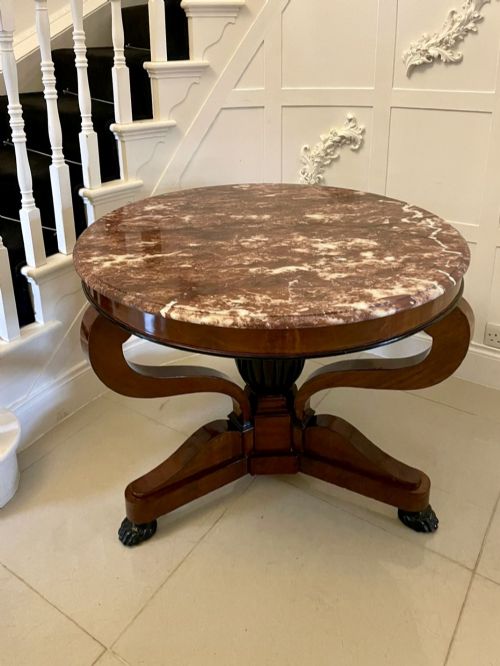
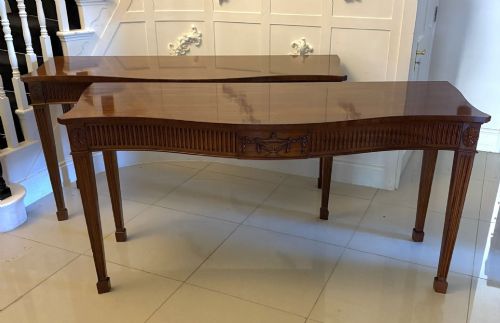
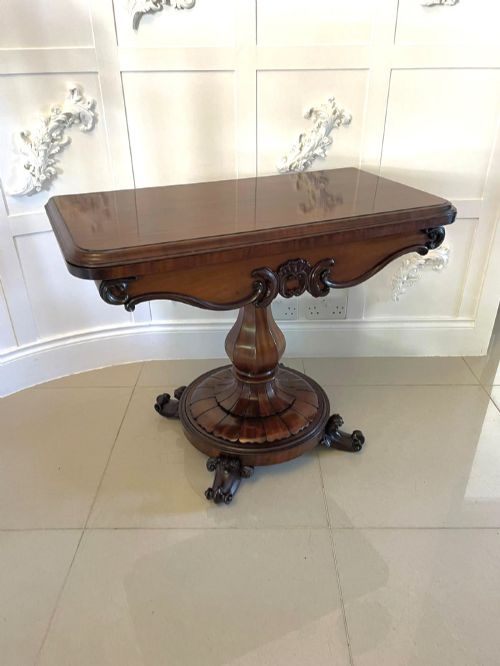
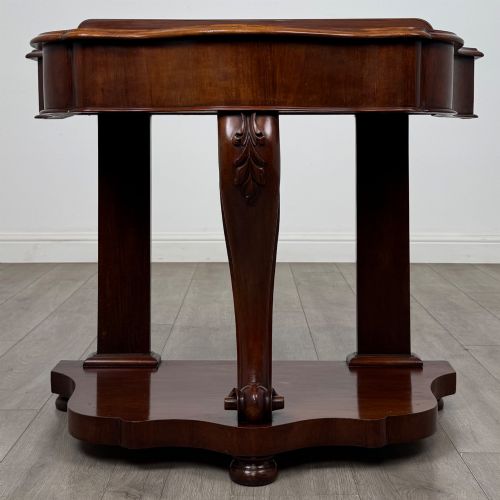
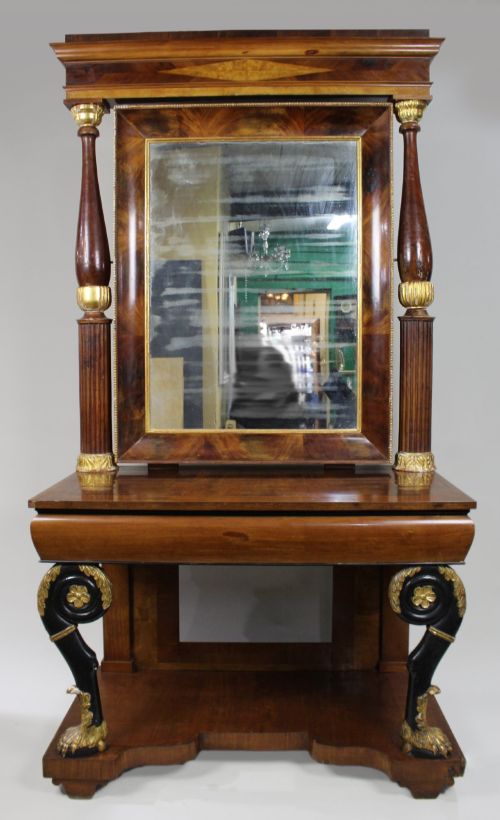
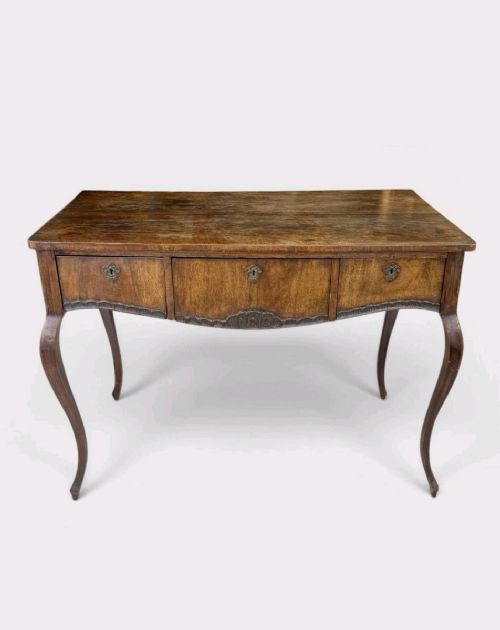
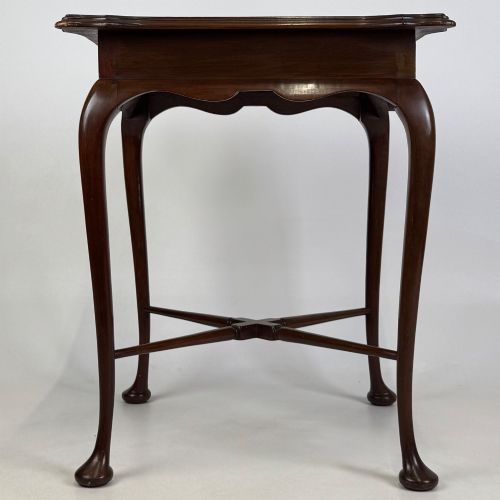
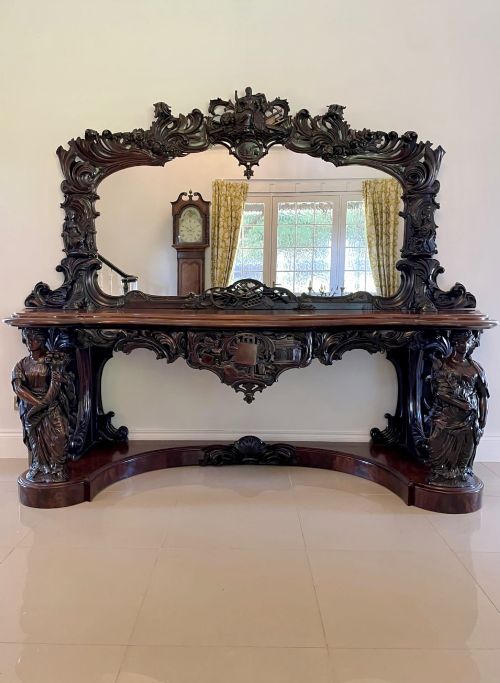
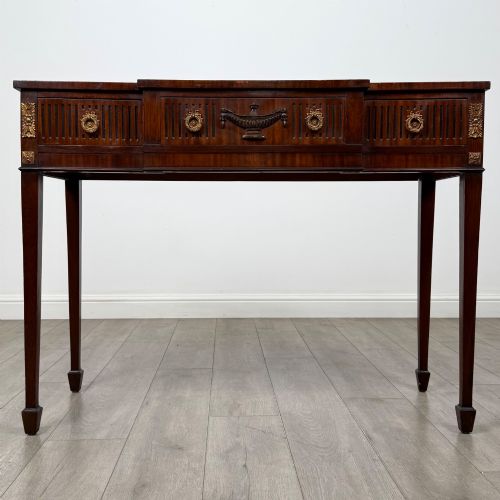
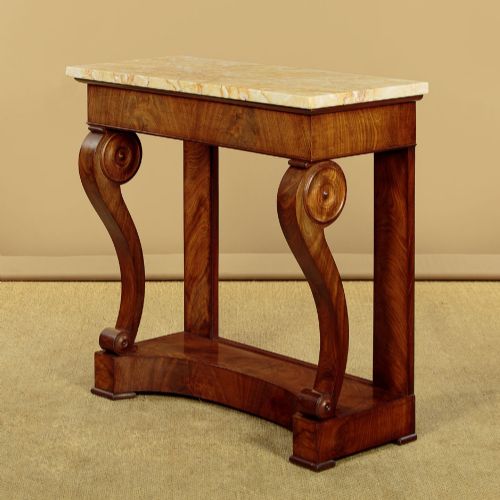
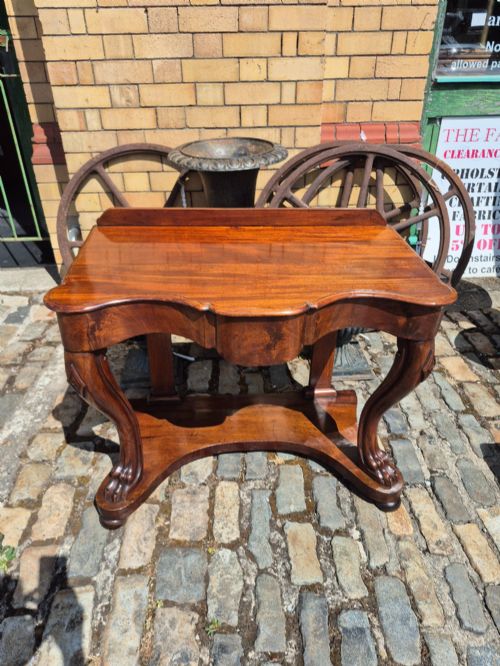
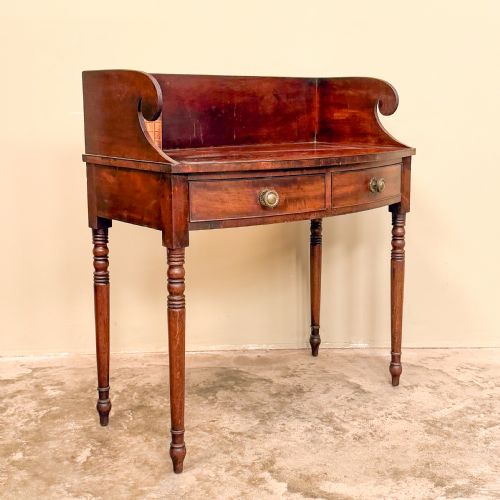
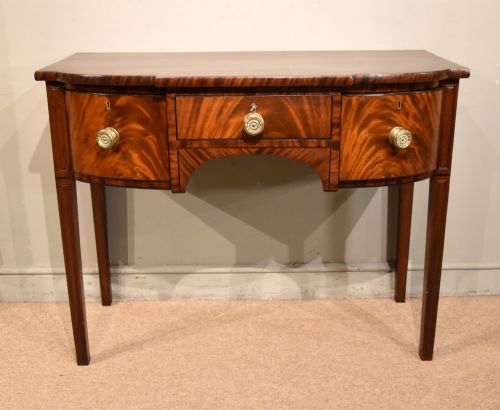
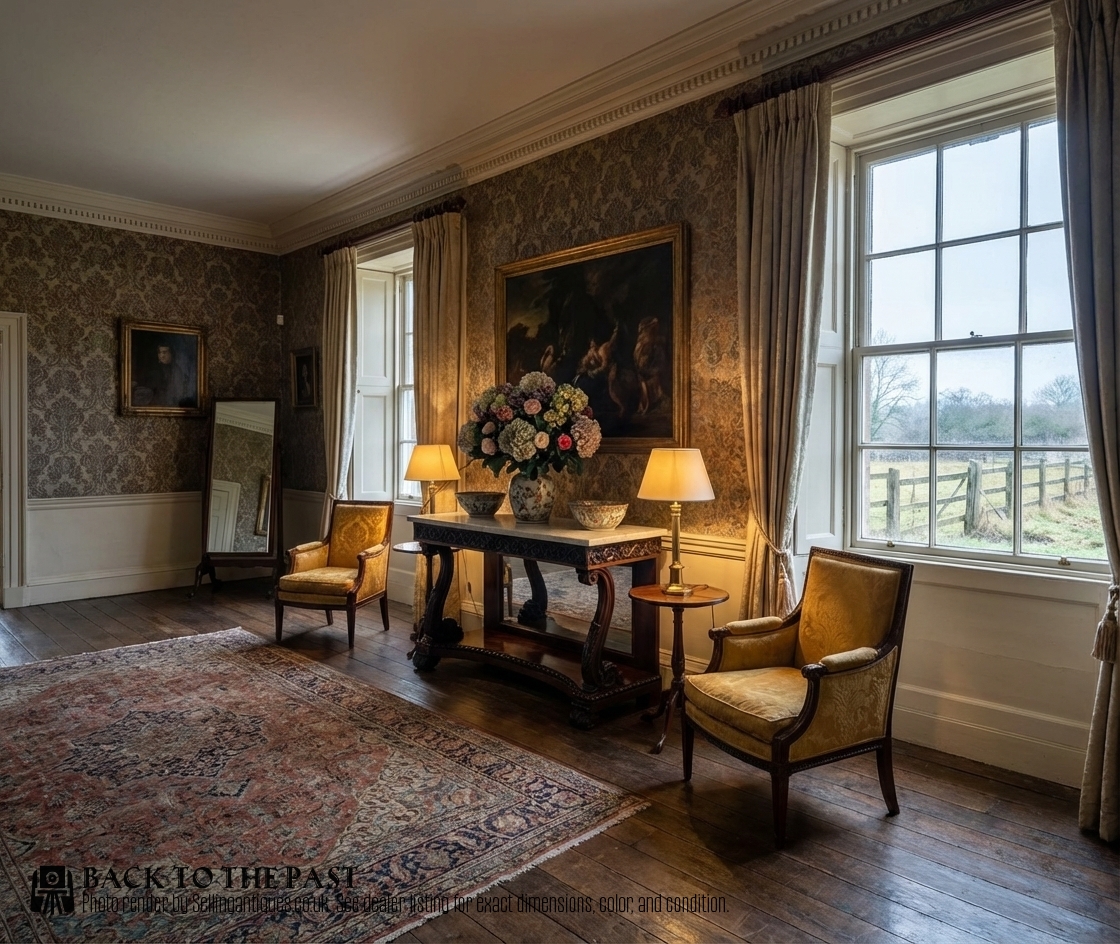
A carved mahogany hall table takes the form of a console, side, or serving table designed to stand flat against a wall in a passage or reception space. The selection spans the nineteenth and twentieth centuries, taking in Victorian, Edwardian, Regency, and William IV periods alongside revival styles such as Chippendale and Adam.
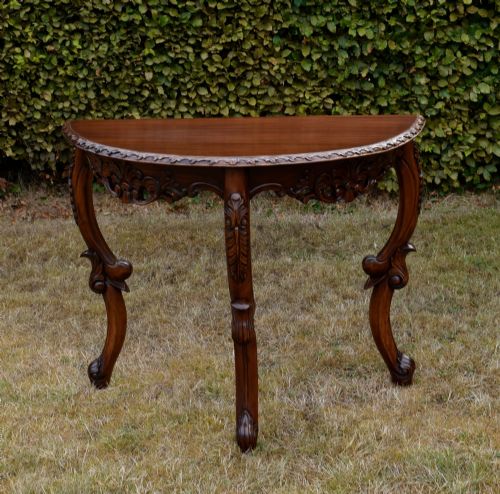
Makers and cabinetmakers produced these items as demi-lune, serpentine, or rectangular surfaces, frequently pairing the dense timber with marble tops, brass fittings, or mirror backs. Pieces range from compact half-moon lamp tables to large exhibition-quality console tables with elaborate neoclassical carving.
What varies in quality
The standard of a carved mahogany hall table rests upon the crispness and depth of the hand-carved ornamentation on the frieze and legs. Superior examples display fluent, undercut foliage and well-defined capitals, whereas simpler items rely on shallow moulding.
Material selection dictates the upper tier of pieces, where figured flame mahogany veneer, heavy polished marble tops, and intact parcel gilding elevate the visual weight. The integrity of the structural joints and the symmetry of serpentine or demilune curves further divide standard production from exhibition pieces.
Carved Mahogany Hall Table Retail Price Guide 2026
Typical asking prices for carved mahogany hall table among the pieces listed under this phrase on Sellingantiques today, from the lower quarter to the upper quarter. They describe what is for sale here now, not the wider market.
Some nineteenth-century tables arrived with unusual carved capitals on their legs, as if the forest itself decided to sprout foliage indoors.
Maple and Co
The Carved Mahogany Hall Table Glossary
- Demilune
- Half-moon in shape, describing tables designed to sit flush against a hallway wall. This silhouette was particularly popular for nineteenth-century console and pier tables.
- Console table
- A table supported by wall brackets or decorative legs, built to stand against a vertical surface. They frequently feature elaborate mirror backs or marble slabs.
- Flame mahogany veneer
- A thin slice of timber cut from the fork of the mahogany tree to create a distinctive flickering flame pattern. Cabinetmakers applied this over a solid core to decorate table tops.
- Parcel gilt
- Partially gilded with gold leaf or powder to highlight specific carved details. This technique adds contrast against the dark reddish-brown tone of the mahogany.
- Serpentine
- A curved line that is convex in the centre and concave at the sides, forming an undulating edge. This shape demands precise woodworking skill in both the timber top and the matching frame.
Carved Mahogany Hall Table: Frequently Asked Questions
How were hall tables used?
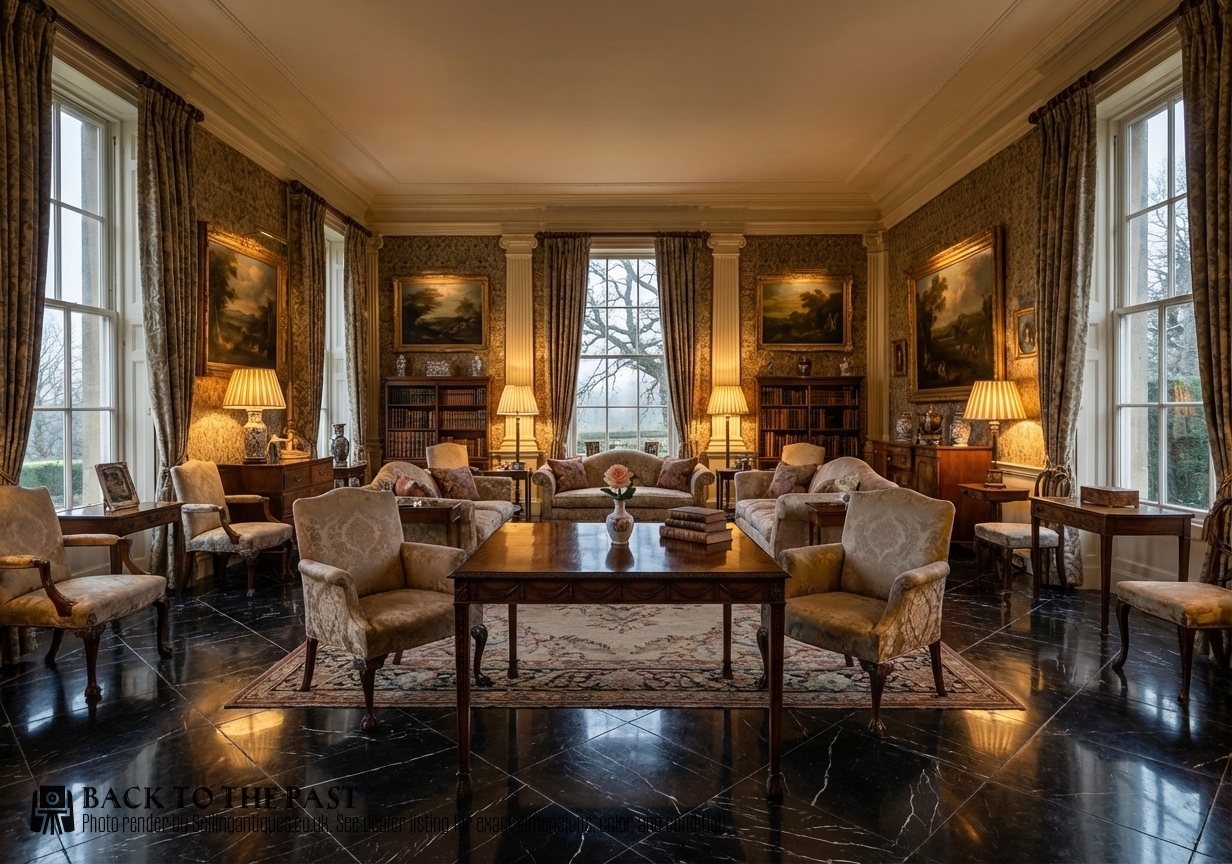
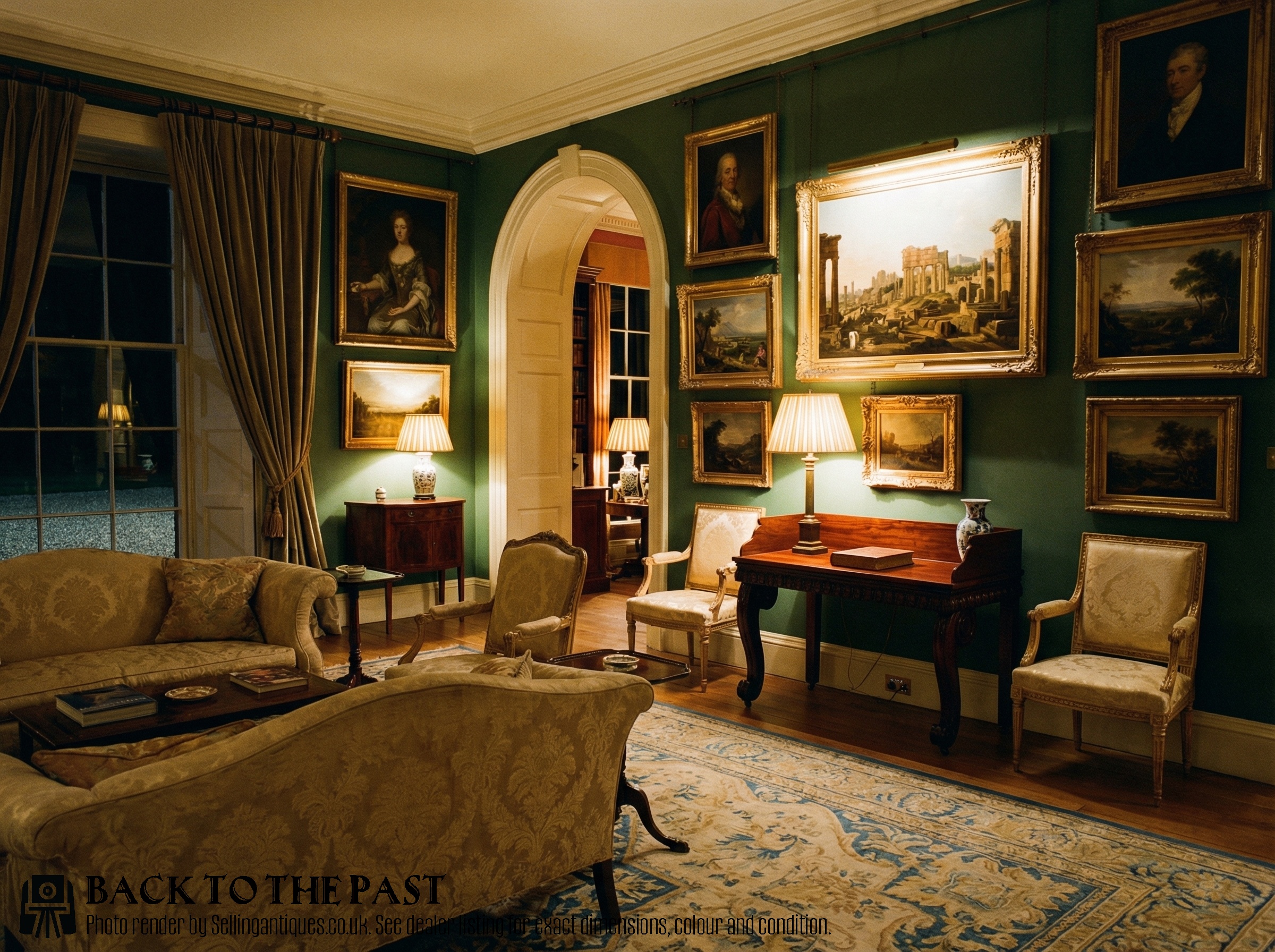
These tables served as functional furniture in entranceways and reception rooms, providing a stable surface for lamps, visiting card trays, and decorative objects. In grander homes, they anchored pier mirrors and filled narrow wall spaces between architectural doorways.
Their narrow depth ensured they remained out of the main path of movement while offering a formal display area for guests to encounter upon entry.
How do I date a mahogany table?
Dating relies on observing the stylistic markers and construction methods aligned with periods like the Regency, Victorian, or Edwardian eras. Neoclassical motifs and heavy scrolling often point toward the mid-nineteenth century, while lighter, crisper carving frequently indicates Edwardian revival work.
The choice of secondary woods, the thickness of veneers, and the presence of integrated marble slabs also help narrow the decade of production.
Where should I place a console table?
A console table finds its natural home in an entrance hall, corridor, or living room wall where space is relatively shallow. Pairing the table with a matching pier mirror or a wall-hanging artwork creates a balanced focal point upon entering the room.
Because many examples feature finished backs or sit flush against plaster, they anchor open wall spaces without obstructing foot traffic.
What is the difference between a console and a side table?
Console tables are traditionally designed to stand against a wall and were historically anchored with brackets or specific wall fixings. Side tables are free-standing items of furniture with four finished sides that can be moved around a room more easily.
In modern usage, the terms often overlap, though console tables more frequently incorporate wall-mounted mirrors or half-moon demilune shapes.