
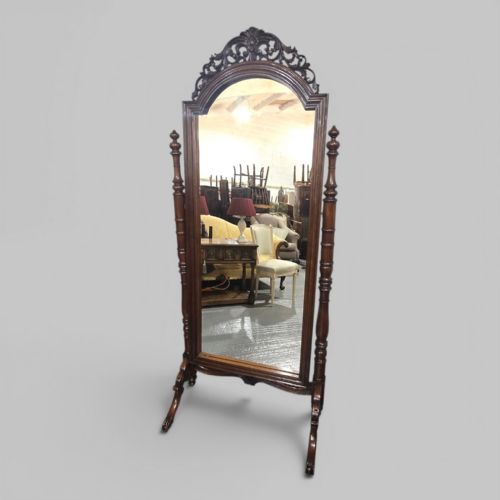
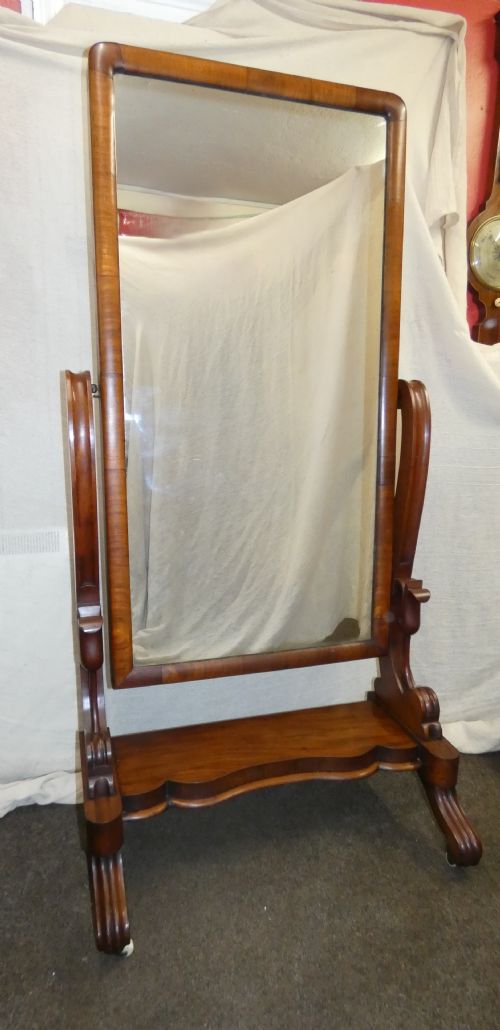


Carved Mahogany Dressing Mirror
These carved mahogany dressing mirror pieces are substantial wooden reflections from the Regency and Victorian eras that bring warmth and practicality to any room.

What They Are
When you search for a carved mahogany dressing mirror, you are looking at items designed for personal grooming and bedroom decoration. The evidence shows these pieces appear most frequently from the Victorian and Regency periods, spanning the nineteenth century.
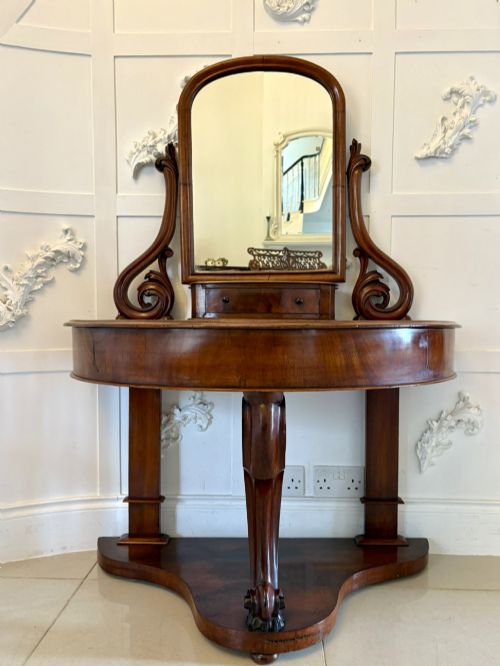
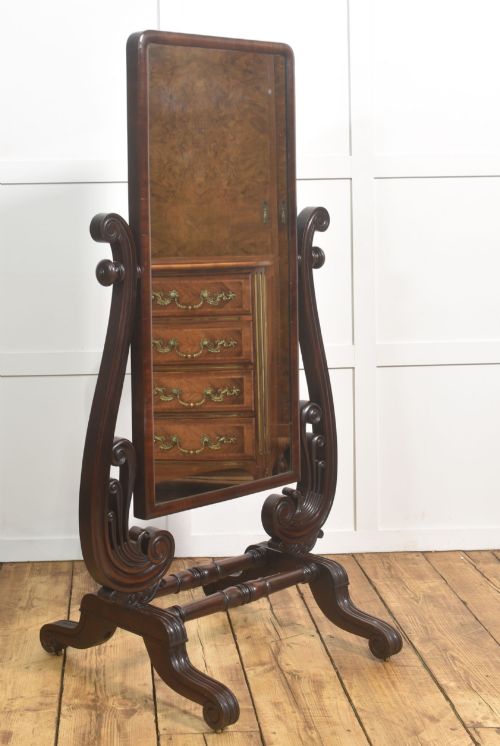
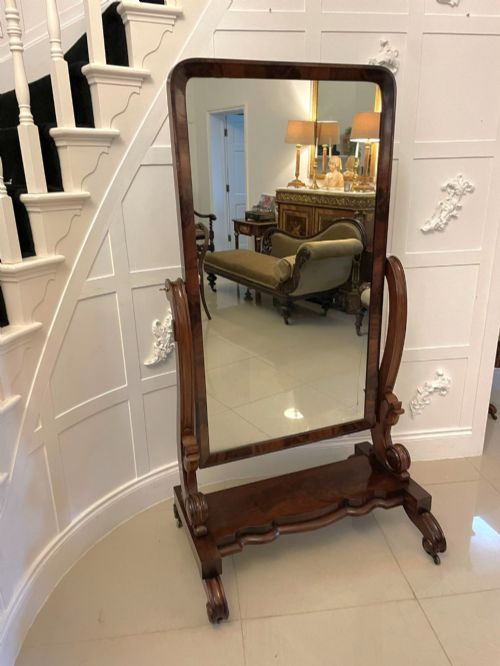
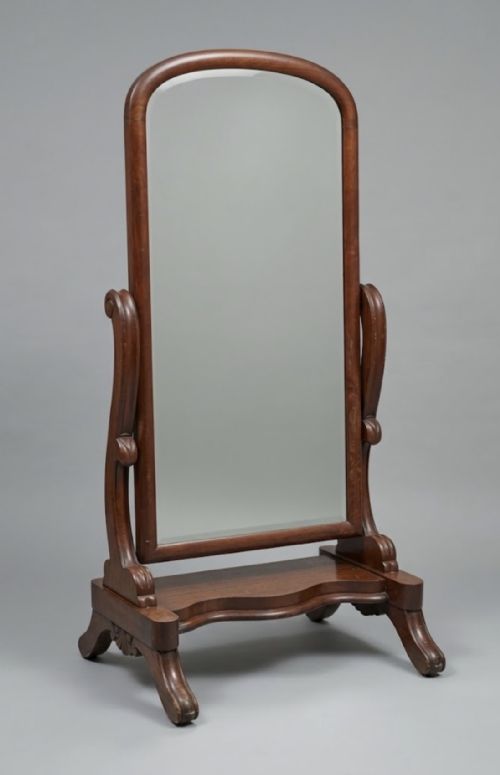
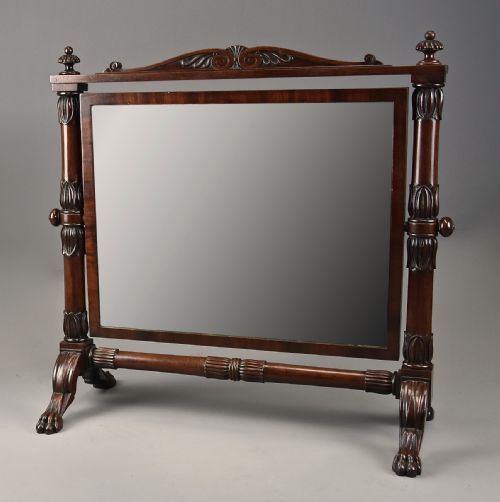
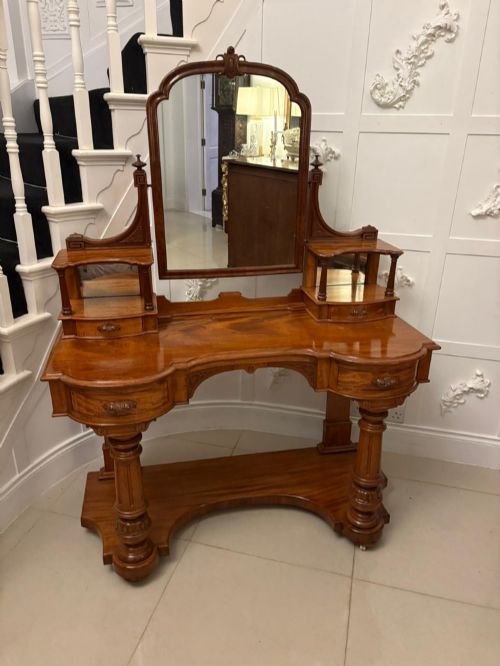
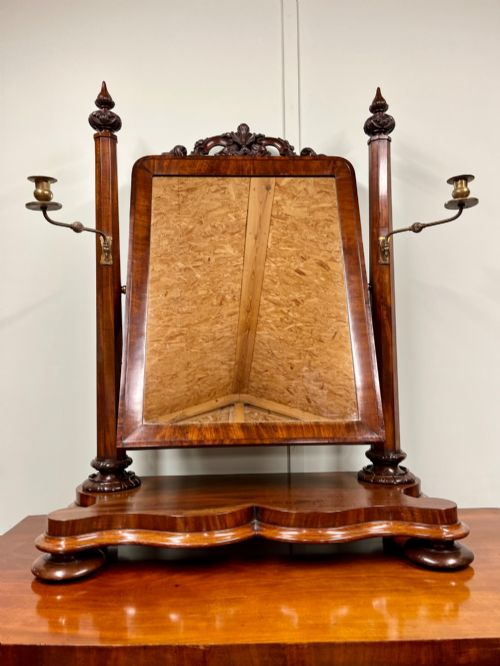
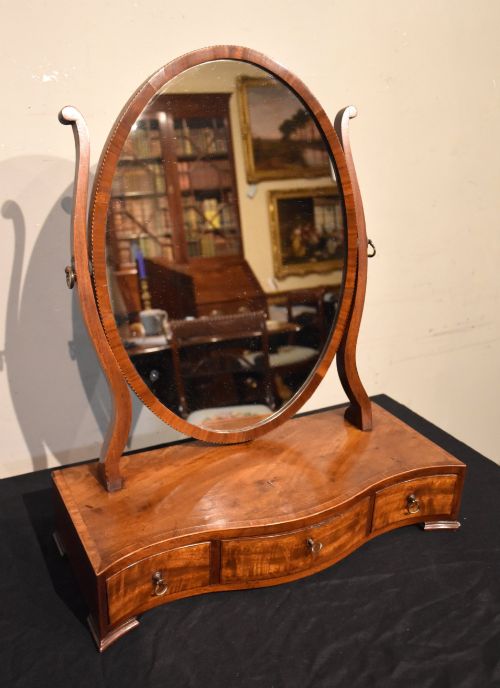
The selection includes compact toilet mirrors intended to sit upon chests or tables, alongside larger cheval mirrors and complete dressing tables incorporating carved mahogany swing frames. Most items recorded in the archive and current listings take the form of toilet mirrors, swing mirrors, and cheval mirrors.
Originating primarily through the nineteenth century, these objects combine utilitarian glass with decorative woodwork. A buyer will most commonly meet Victorian examples, often featuring swing mirror plates mounted on carved supports.
How They Were Made
Maker construction relies heavily upon solid and flame mahogany timber, chosen for its rich grain and deep colour. Artisans shaped these woods into frames and supports, incorporating carved details around the mirror perimeters and bases.
Materials extend beyond timber to include glass for the reflective plates, brass fittings for movement and adjustment, and occasional marble tops on the associated tables. Joinery and carving techniques unite these elements into stable swing mirror assemblies.
Retail Price Guide 2026
Typical UK retail prices for carved mahogany dressing mirror, calculated from the Sellingantiques database of over a million retail prices indexed since 2003. This retail price guide relies exclusively on Sellingantiques data; no external sources or auction records are used, so the figures do not describe the wider market.
Object forms recorded in the archive range from small toilet mirrors to large cheval mirrors and duchess dressing tables.
What Varies in Quality
Quality rests in the depth and crispness of the carved detail upon the mahogany frame and supports. Pieces recorded with exceptional carved work or flame mahogany veneers stand apart from simpler utilitarian versions.
The integration of materials such as marble tops and brass hardware also distinguishes finer items from standard ones. Superior examples maintain the original balance between the swinging mirror and its supporting structure.
The Carved Mahogany Dressing Mirror Glossary
- Mahogany
- A durable tropical hardwood known for its reddish-brown colour and smooth grain. It serves as the primary material for the frames and tables in this category.
- Cheval Mirror
- A full-length swing mirror supported on a freestanding frame with four legs. This large form allows a full view of the person dressing.
- Toilet Mirror
- A smaller tabletop mirror designed to sit upon a chest of drawers or a dressing table. These units usually feature a small base with or without drawers.
- Swing Mirror
- A mirror plate hung on pivots between two upright posts, allowing the glass to tilt. This mechanism provides adjustable angles for grooming.
- Flame Mahogany
- A cut of mahogany timber displaying a distinctive swirling grain pattern resembling flickering flames. It appears on finer Victorian and Regency surfaces.
Frequently Asked Questions
What is a toilet mirror?
A toilet mirror is a small dressing glass designed to sit on top of a table or chest. These pieces provide a focused reflection for grooming.
They were common fixtures in nineteenth-century bedrooms before full-length wardrobes and cheval mirrors became widespread.
How do I identify a Regency mirror?
Regency mirrors date from the early nineteenth century and typically display restrained neoclassical lines or specific classical motifs. The timber choice is frequently mahogany.
Comparing the construction methods and stylistic markers helps distinguish these pieces from later Victorian equivalents.
What is a cheval mirror?
A cheval mirror is a large, freestanding dressing glass supported by a stable frame with four legs. The glass swings entirely within the upright structure.
These taller mirrors allow people to view their entire outfit rather than just the upper body.
Where were these mirrors placed?
These mirrors were placed on dressing tables, chests of drawers, or directly on the floor in the case of cheval models. They formed an essential part of the nineteenth-century bedroom.
Today, they function similarly in domestic spaces, adding period character while remaining useful for daily routines.