

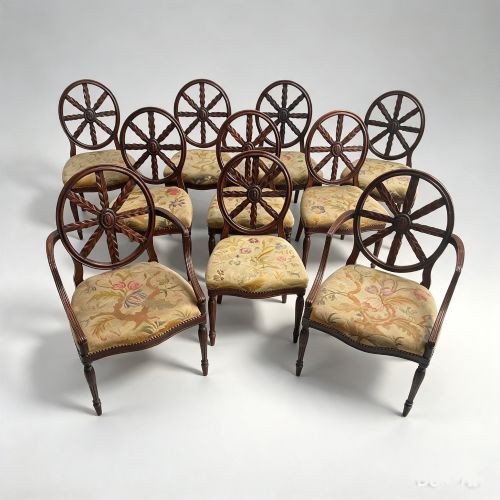
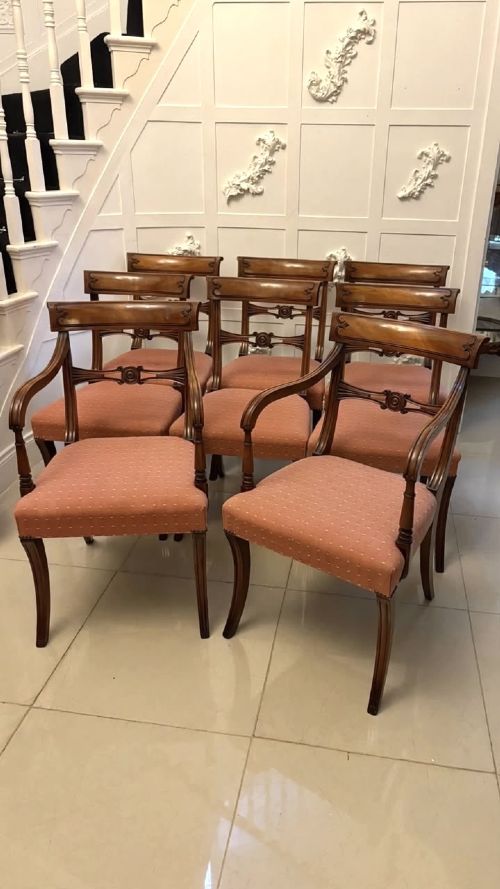
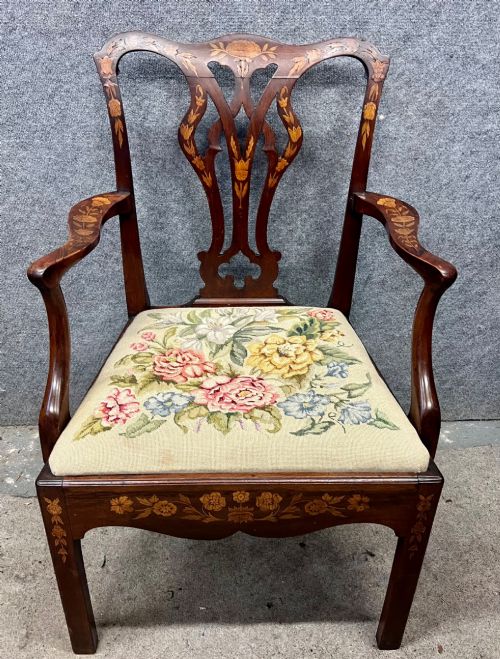
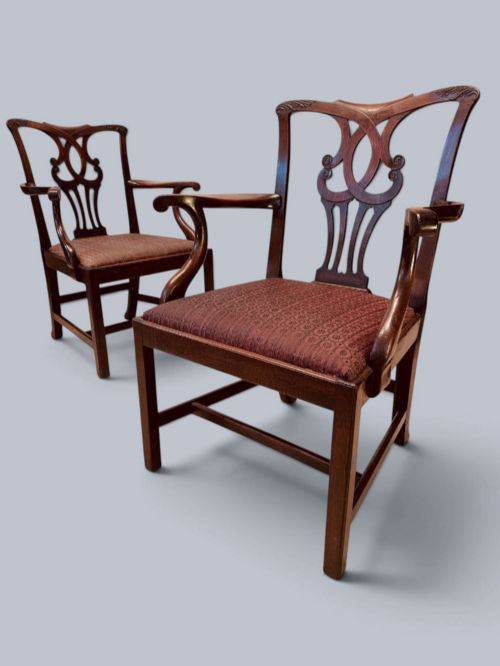
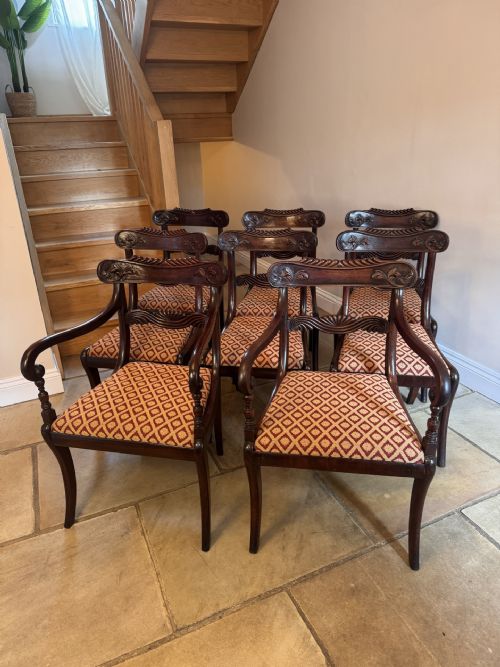
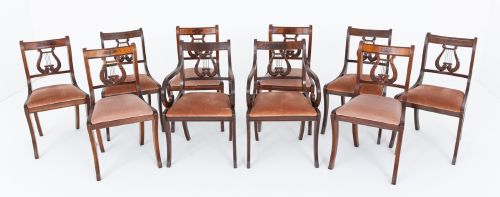
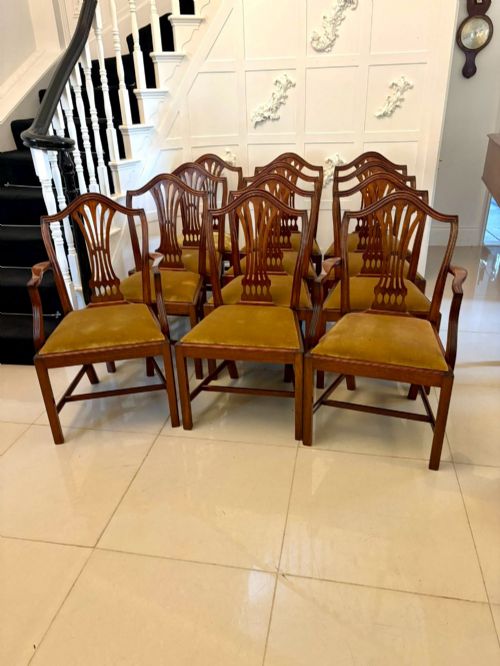
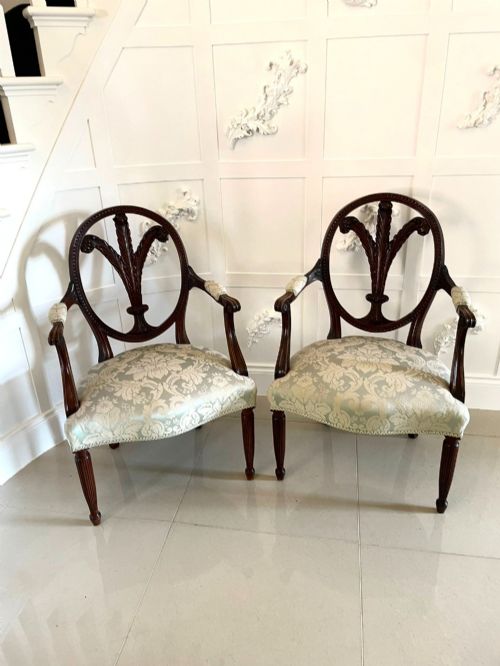
Carved Mahogany Carvers
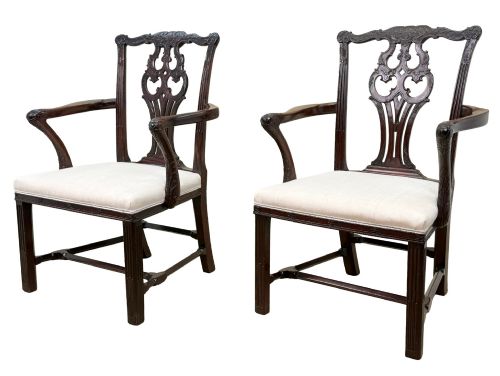
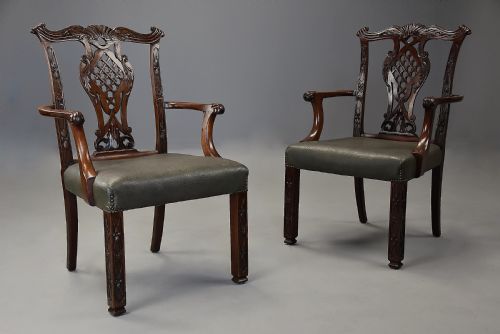
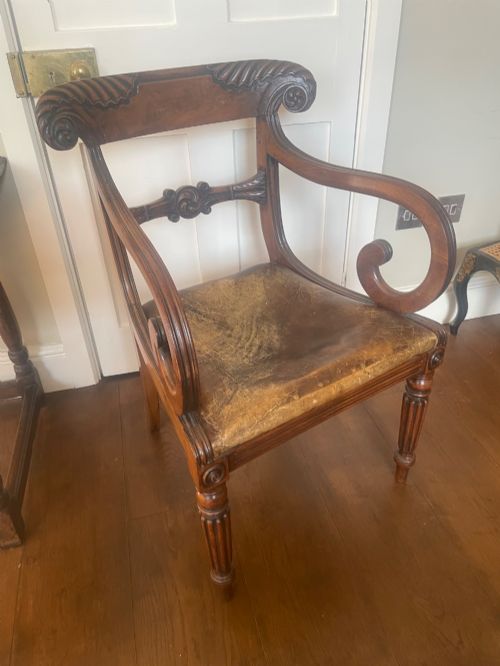
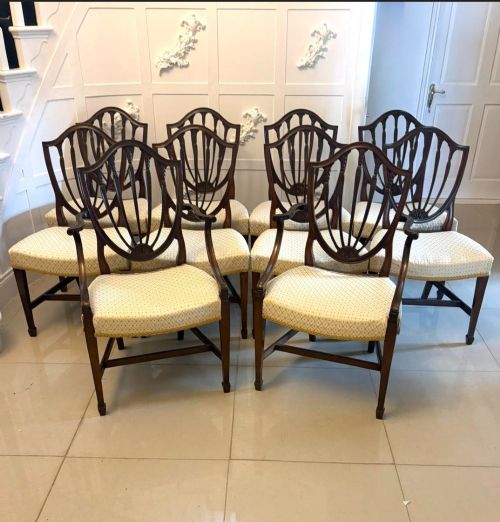
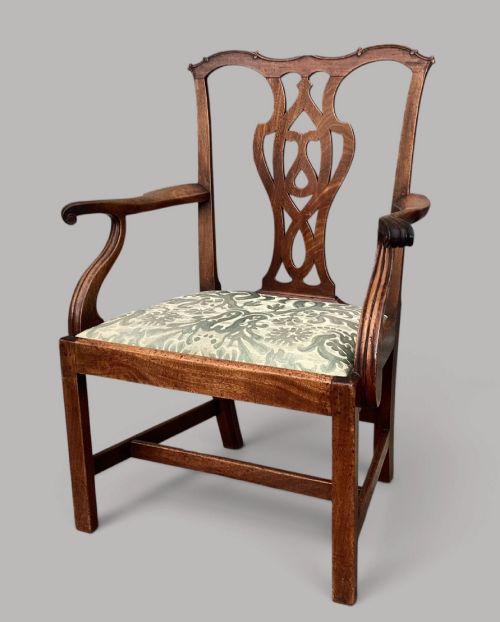
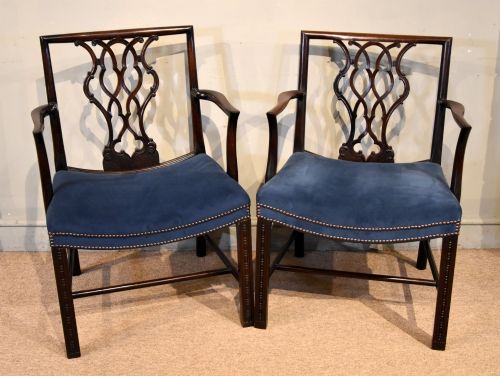
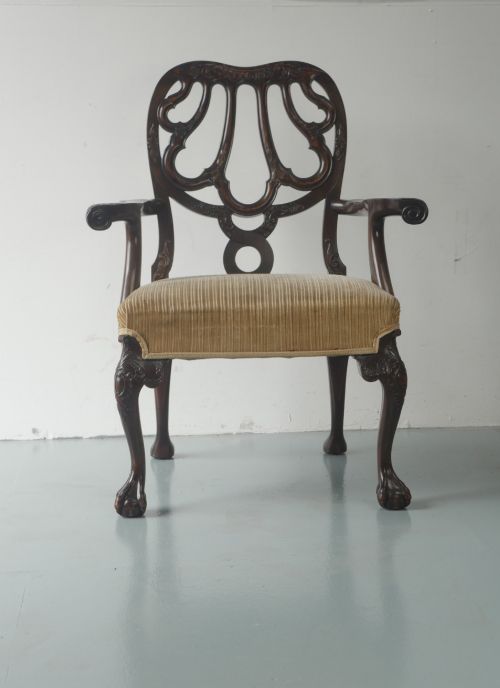
These carved mahogany carvers are sturdy timber armchairs designed for the heads of dining tables, offering both support and presence.
Carved Mahogany Carvers
When you search for carved mahogany carvers, you encounter robust timber armchairs built to sit at the ends of dining tables. The pieces on this page span the 18th century, the Regency era, the Victorian period, and the early 20th century.
You will most frequently meet revival styles such as Chippendale and Hepplewhite alongside authentic Georgian and Regency pieces. These chairs often appear individually, in pairs, or as the armchaired portion within larger sets of dining chairs.
The forms range from high-backed desk chairs to open armchairs and library seats with cane or upholstered pads. Their origins reflect British cabinet-making traditions across various centuries.
How they were made
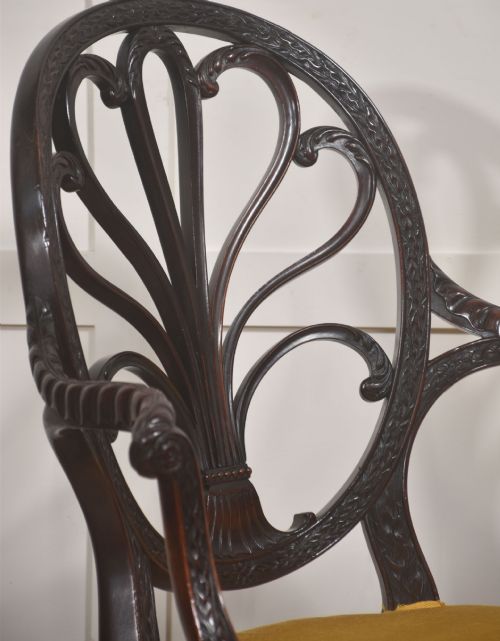
Makers shaped these chairs primarily from solid mahogany, utilising its dense grain to carve intricate details into splats, arms, and rails. Workshops often reinforced the timber frames with brass fittings or added cane, leather, fabric, and velvet to the seats.
Joinery relied on traditional mortise and tenon methods to withstand daily use at the dining table. Carvers then applied hand-carved motifs, ranging from simple ropebacks and shield backs to elaborate scroll arms and lyre patterns.
Carved Mahogany Carvers Retail Price Guide 2026
Typical asking prices for carved mahogany carvers among the pieces listed under this phrase on Sellingantiques today, from the lower quarter to the upper quarter. They describe what is for sale here now, not the wider market.
Listings feature mahogany frames paired with cane, leather, fabric, and velvet upholstery across the 18th, 19th, and 20th centuries.
What varies in quality
The standard of a carved mahogany carver rests upon the crispness of the timber carving and the weight of the mahogany used. Pieces displaying deep, sharp detailing on the splats and arms demonstrate superior workshop execution compared to softer, shallower work.
Proportion and structural integrity also divide standard examples from exhibition grade specimens. Well-proportioned frames with tight joinery and original leather or fabric upholstery retain their intended balance and strength over centuries.
Howard and Sons·Warings·Maple and Co·Alfred Allen of Birmingham·Waring and Gillow
The Carved Mahogany Carvers Glossary
- Carver
- An armchair designed specifically for the head of a dining table, featuring supportive armrests. These pieces usually match the smaller side chairs in a dining set.
- Shield back
- A chair back shaped in the outline of a heraldic shield, popularised by Hepplewhite designs. This form often incorporates carved wheat ears or drapery.
- Ropeback
- A chair design featuring a carved top rail resembling a twisted rope. This style appears frequently on pieces dating from the early 19th century.
- Elbow chair
- An alternative term for an armchair, particularly those used at a desk or dining table. The phrase highlights the prominent armrests designed to support the user's elbows.
- Lyre back
- A chair splat shaped in the symmetrical form of a classical stringed musical instrument. This motif is common in Regency and revival dining chairs.
Carved Mahogany Carvers: Frequently Asked Questions
How do I identify Georgian chairs?
Georgian chairs feature dense mahogany timber, robust joinery, and restrained hand-carved details such as interlaced splats or plain cabriole legs. They date from the 18th century through to the early 19th century.
Looking underneath reveals traditional construction methods and age-related patina on the bare wood surfaces.
Are these chairs comfortable for daily use?
Many of these pieces were built for long dinner parties, offering supportive high backs and padded seats upholstered in leather, fabric, or velvet. Their sturdy timber frames ensure stability during everyday seating.
Adding a loose squab cushion can further adjust the seat height and comfort to suit modern tables.
How do I care for mahogany furniture?
Mahogany requires minimal maintenance beyond dusting with a dry, soft cloth to protect its polished surface. Keeping the timber away from direct heat sources prevents the wood from drying out.
A gentle application of traditional wax helps nourish the antique finish over time.