


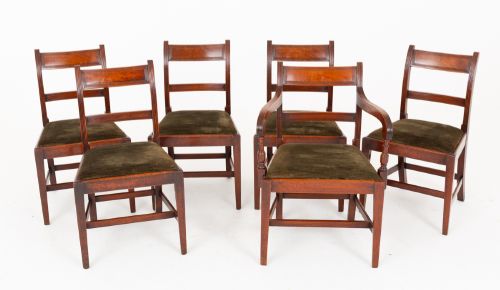
Antique Mahogany Seat Set
An antique mahogany seat set provides a matching arrangement of timber chairs or settees shaped by Georgian, Regency, and Victorian hands.
Antique Mahogany Seat Set
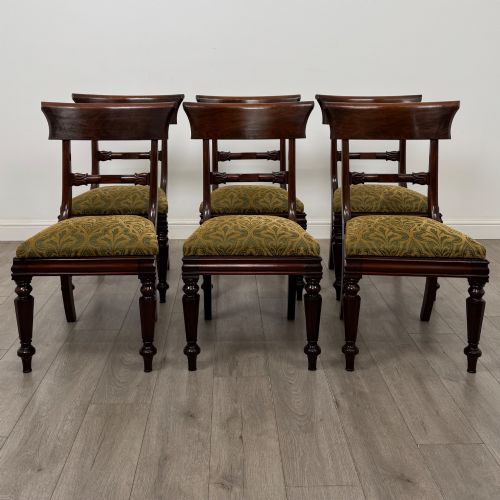
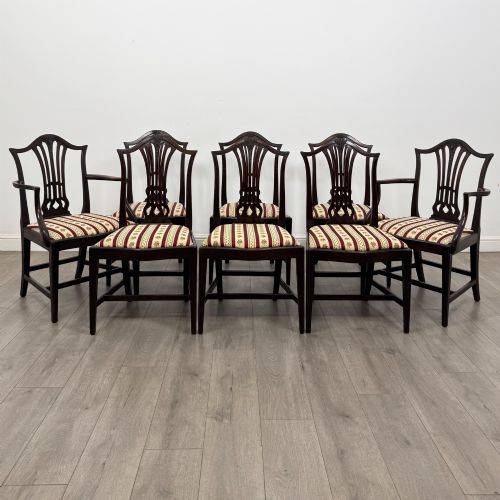
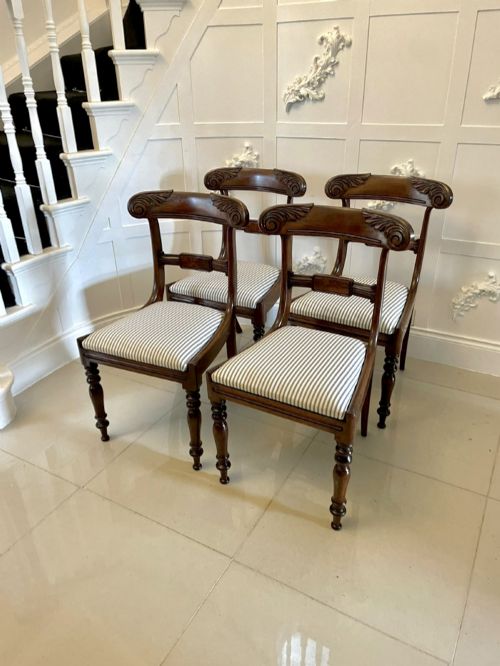
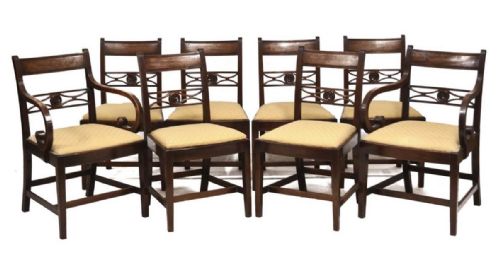
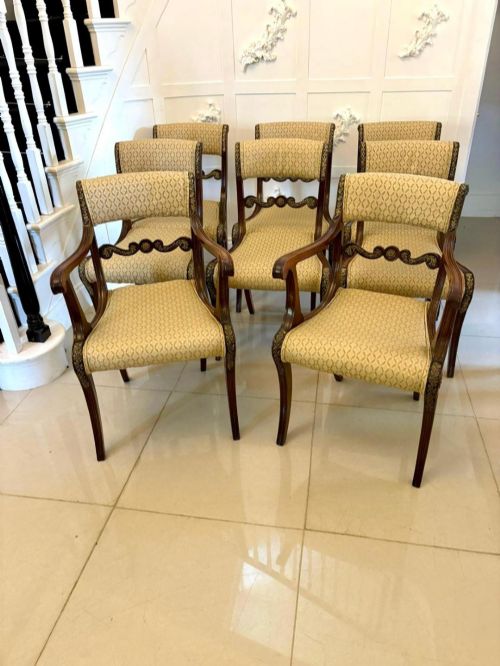
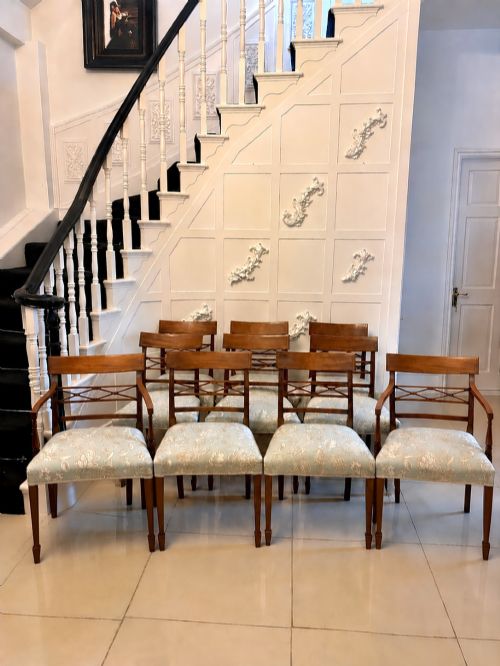
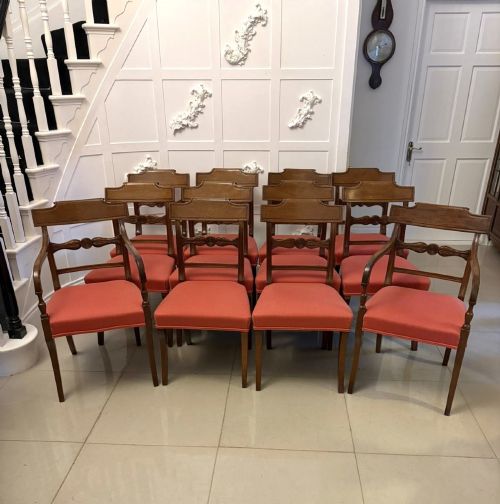
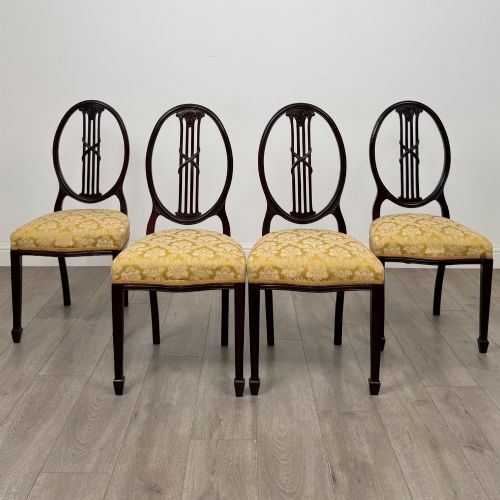
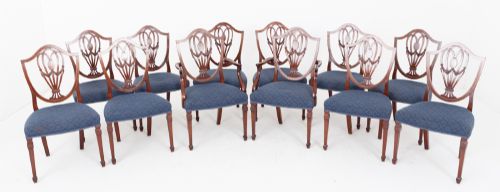
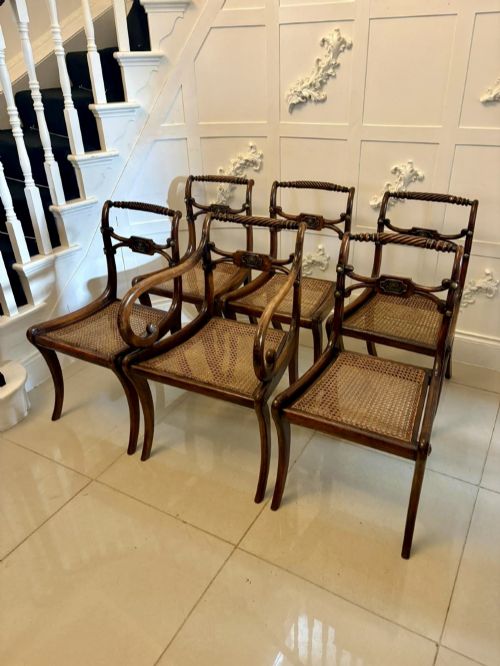
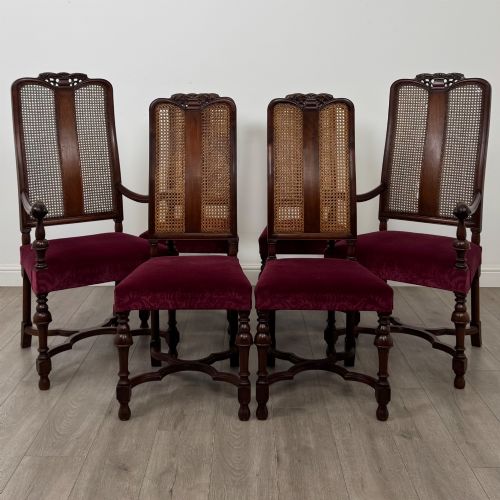
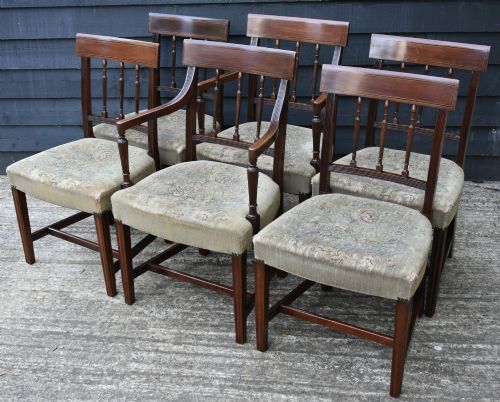
An antique mahogany seat set brings together coordinated dining chairs, salon suites, and settees originating primarily from the Georgian, Regency, and Victorian periods. Buyers encounter matched sets numbering anywhere from four chairs up to twelve, frequently incorporating carver armchairs alongside single chairs.
The selections span formal dining rooms and drawing rooms, drawing on styles such as Chippendale, Hepplewhite, Sheraton, and William IV. Formats range from shield back and balloon back dining chairs to upholstered two-seat settees and window seats.
Originating across the eighteenth, nineteenth, and early twentieth centuries, these groupings reflect the shifting domestic fashions of British homes. Sets often demonstrate careful coordination in timber selection and upholstery to maintain visual harmony around a dining table or within a parlour.
How They Were Made
Cabinetmakers constructed these seating sets using dense, rich mahogany timbers, occasionally complemented by secondary woods like pine or accented with satinwood inlay. Brass details, such as subtle inlay lines or castors, appeared on specific Regency examples to enhance the design.
Upholstery techniques varied widely according to the period, utilising materials such as leather, velvet, woven fabric, and cane seats. Frames relied on traditional joinery, integrating carved splats, bar backs, or sabre legs shaped by hand tools.
Antique Mahogany Seat Set Retail Price Guide 2026
Typical asking prices for mahogany seat set among the pieces listed under this phrase on Sellingantiques today, from the lower quarter to the upper quarter. They describe what is for sale here now, not the wider market.
Materials documented across the inventory include solid mahogany, leather, cane, brass, and assorted upholstery fabrics.
What Varies in Quality
The distinction between standard examples and top-tier pieces rests on the depth of carving, the crispness of architectural details like shield or balloon backs, and the overall coherence of the matching timber grain across every chair in the set. Master workshops achieved remarkable uniformity in proportion and joinery.
Provenance and attribution to known cabinetmakers elevate certain suites significantly, as do original upholstery methods and surviving surface patination. Sets that retain their complete complement of matching carvers and single chairs without later alterations command greater appreciation.
Gillows·Warings·Maple and Co
The Antique Mahogany Seat Set Glossary
- Carver
- An armchair designed to match a set of single dining chairs, typically placed at the head of a table.
- Shield Back
- A chair back shaped in the outline of a heraldic shield, popularised during the Georgian period.
- Bar Back
- A horizontal wooden slat running across the upper section of a chair back, characteristic of William IV designs.
- Settee
- A medium-sized upholstered two-seat sofa or bench designed for domestic sitting areas.
- Sabre Leg
- A concave, outwardly curving furniture leg tapering toward the foot, frequently seen on Regency pieces.
Antique Mahogany Seat Set: Frequently Asked Questions
How many chairs are in a typical dining set?
Most surviving sets comprise four, six, eight, ten, or twelve chairs, frequently featuring a combination of single chairs and matching carvers with armrests.
Larger configurations often accommodated expansive dining rooms in period properties.
What is the difference between single chairs and carvers?
Single chairs feature a standard narrow frame without arms to fit neatly alongside a dining table. Carver chairs include integrated armrests and were traditionally reserved for the host and hostess.
Both variants share identical decorative motifs and timber framing within a matched set.
How do I identify a Regency set?
Regency seating often displays classical influences, incorporating brass inlay, sabre legs, or reeded frames. The timbers tend to show a rich, dark red-brown hue typical of the early nineteenth century.
Craftsmen during this era favored clean lines derived from ancient Greek and Roman furniture.
Were settee seats used in dining rooms?
Settees and window seats were generally intended for drawing rooms, hallways, or parlours rather than dining tables. They provided comfortable two-seat lounging options upholstered in matching fabrics or leather.
Such pieces complemented the surrounding chairs in a larger salon suite.
Can I mix different periods in one room?
While purists prefer unified suites from a single era, mixing related styles like George III and Regency can work if timber tones align. Mahogany provides a unifying reddish-brown colour across different decades.
Careful attention to leg shapes and back designs helps maintain visual balance.