
Leather Seat Dining Chairs
Leather seat dining chairs bring substance and historical texture to a room, offering enduring utility across centuries of cabinet making.
Leather Seat Dining Chairs
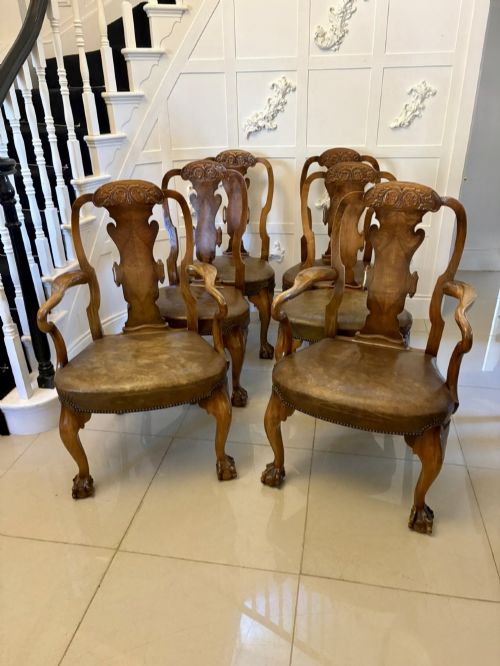
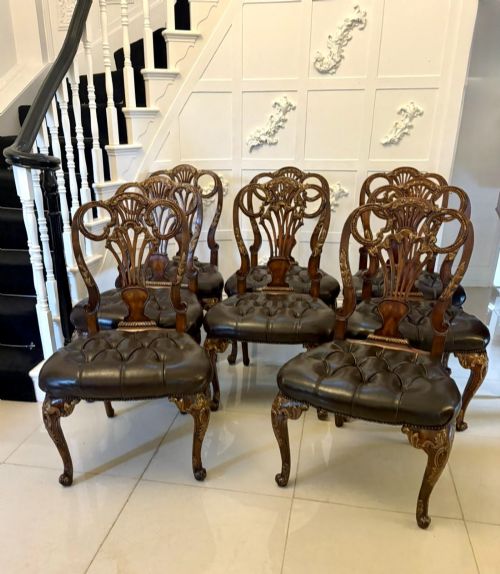
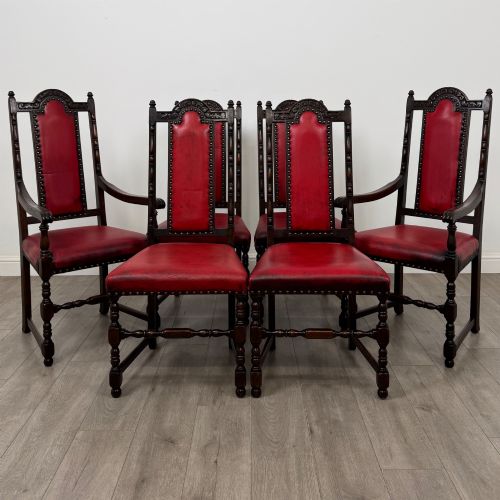
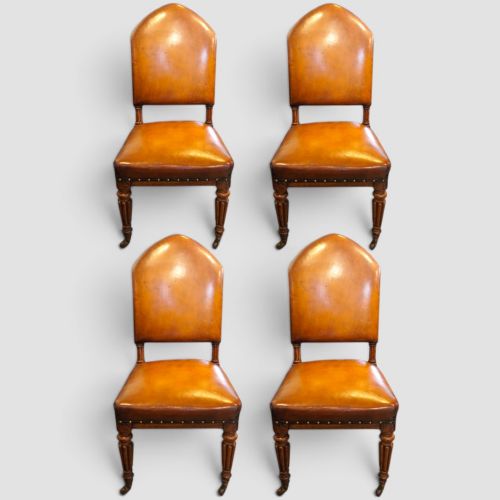
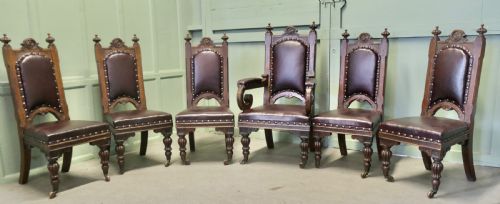
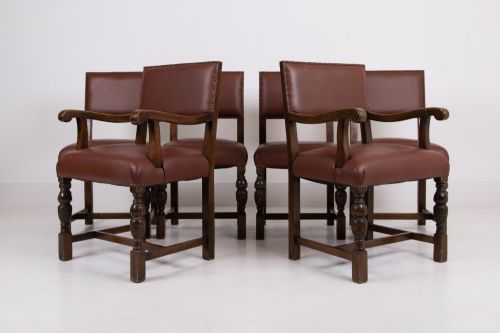
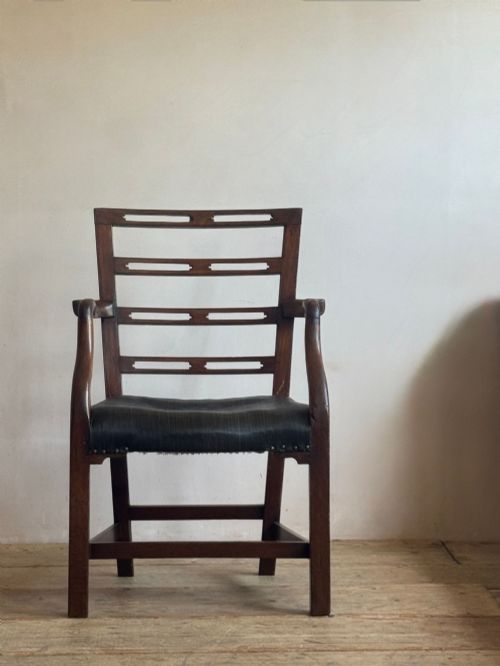
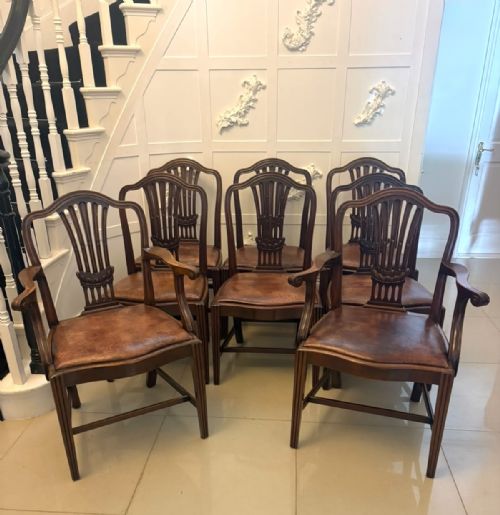
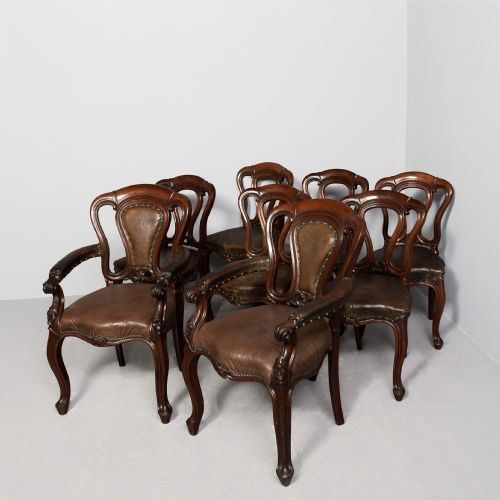
Leather seat dining chairs encompass single chairs, carvers, and larger sets originating from the eighteenth, nineteenth, and early twentieth centuries. Buyers frequently encounter sets of mahogany or oak chairs spanning Victorian, Edwardian, and Georgian periods.
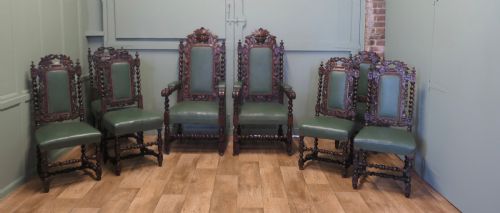
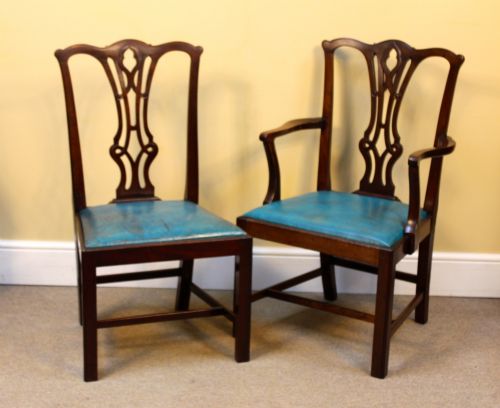
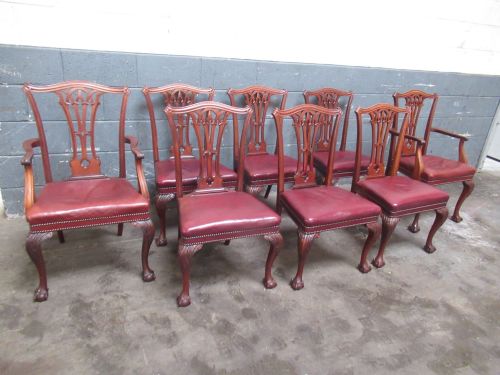
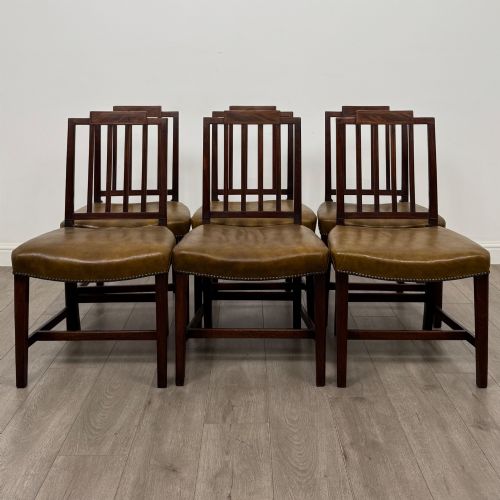
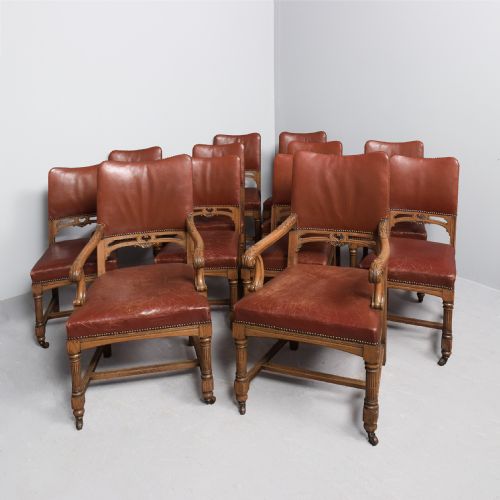
The selection ranges from robust Gothic revival and Arts and Crafts oak frames to refined Chippendale and Hepplewhite style mahogany designs. Sets often appear in configurations of four, six, eight, or twelve pieces, designed for formal dining rooms.
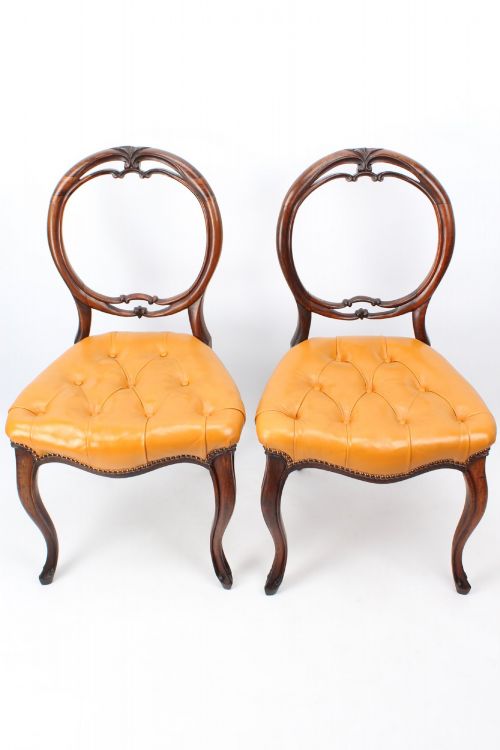
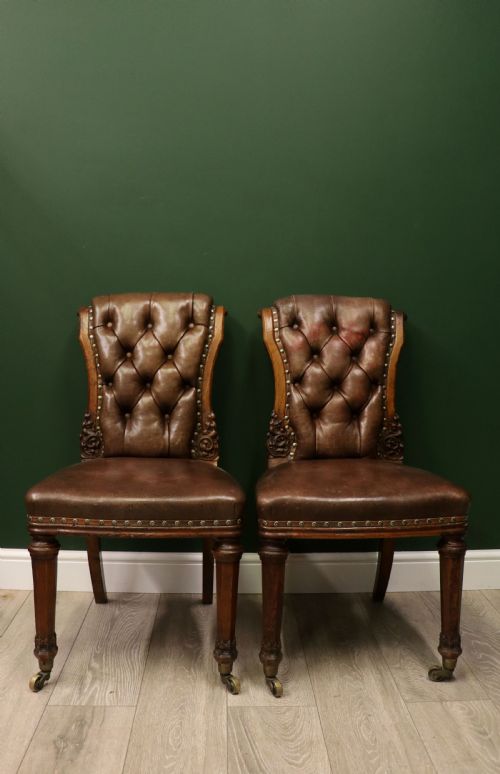
Alongside standard dining chairs, the category includes allied forms such as hall chairs, balloon back salon pieces, and heavy barback seating. These diverse origins reflect changing domestic fashions across British and continental workshops.
Materials and Construction
Cabinet makers utilised dense hardwoods including mahogany, oak, walnut, and rosewood to construct durable frames capable of supporting daily use. Timber selection governed the weight and grain character of each piece, from golden oak to deep figured mahogany.
Upholstery involved stretching cattle leather over stuffed pads, frequently secured with brass studs driven into the wooden rails. Some examples incorporated embossed Spanish leather or buttoned finishes, while frames relied on traditional joinery such as mortise and tenon joints.
Listings feature timbers including mahogany, oak, walnut, rosewood, and burr walnut across eighteenth, nineteenth, and twentieth-century periods.
Assessing the Standard
Quality rests upon the crispness of timber carving, the structural integrity of the frame joints, and the calibre of the secondary woods used underneath. Heavier timber scantlings and precise joinery distinguish superior sets from more utilitarian workshop output.
The condition and historical integrity of the leather seating also dictate worth. Retaining original patinated leather with authentic studding elevates a set above examples carrying modern replacement upholstery.
Harry and Lou Epstein·John Taylor and Son
The Leather Seat Dining Chairs Glossary
- Carver
- An armchair, usually wider and taller, traditionally placed at the head of a dining table. These matching companions accompanied sets of single chairs.
- Chippendale style
- A decorative manner originating from eighteenth-century designs featuring carved interlaced splats and cabriole or straight legs. Revival versions appeared frequently during the Victorian and Edwardian eras.
- Shield back
- A chair back shaped like a classical shield, popularised by designers such as Hepplewhite in the late eighteenth century. This silhouette returned in nineteenth-century revival suites.
- Barback
- A chair featuring a horizontal crossbar across the upper backrest, often reeded or inlaid with brass. This form is particularly associated with the Regency and William IV periods.
- Studded
- A method of fastening upholstery leather to wooden rails using decorative brass tacks placed in an even row. This technique provides both structural security and a visual border.
Leather Seat Dining Chairs: Frequently Asked Questions
How many chairs came in a standard set?
Sets traditionally varied depending on the size of the household dining table, though six or eight pieces were common proportions for domestic entertaining.
Larger dining rooms accommodated sets of ten or twelve, frequently including one or two matching carver armchairs for the hosts.
Are these chairs suitable for daily use?
Hardwood frames built from mahogany or oak provide robust structural integrity that withstands regular daily seating.
Properly maintained leather upholstery ages gracefully under normal household conditions, developing a deeper patina over decades.
How do I identify a revival set from an original period?
Cabinet makers during the Edwardian and late Victorian eras frequently reproduced Georgian and Chippendale styles using machine-assisted joinery and different secondary timbers.
Examining the underside, tool marks, and timber shrinkage helps determine whether a suite dates to the eighteenth century or a later revival period.
What maintenance does antique leather require?
Leather upholstery benefits from occasional treatment with appropriate conservation balms to prevent the material from drying and cracking.
Keeping antique seating away from direct heat sources and strong sunlight preserves the natural suppleness of the hide.