
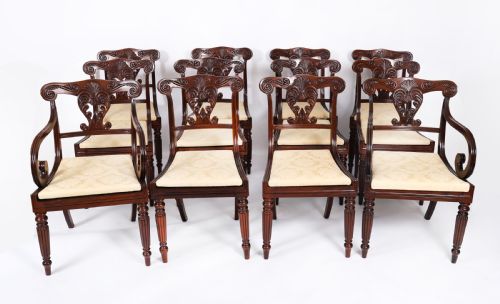


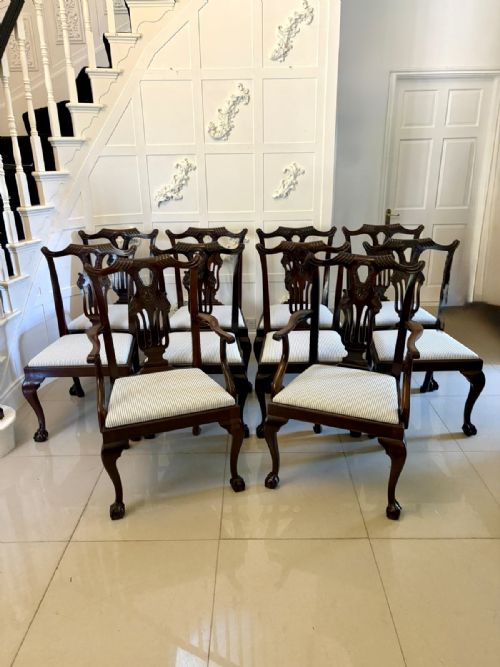
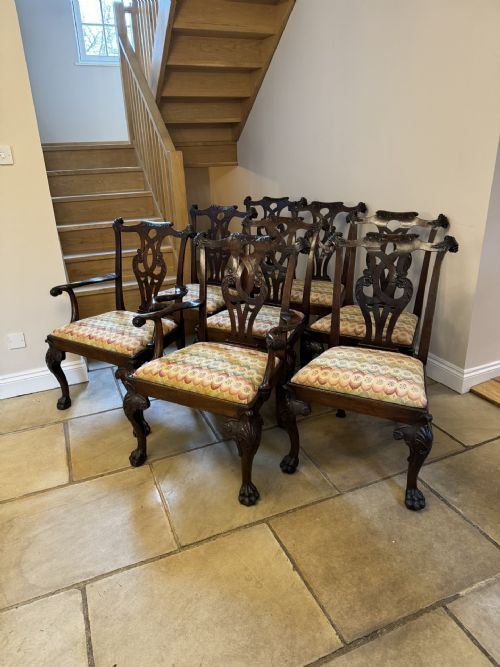


Antique Irish Dining Chairs
These antique irish dining chairs combine robust regional cabinetmaking with centuries of functional seating design, offering substantial presence around a dining table.
Antique Irish Dining Chairs
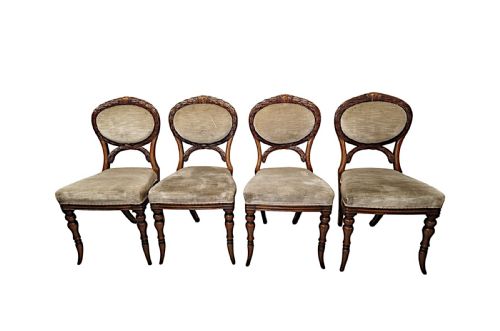
Antique irish dining chairs appear in forms spanning the eighteenth and nineteenth centuries, taking shape as side chairs, carvers, and larger matched sets. The evidence shows frequent appearances of eighteenth century red walnut and mahogany examples, alongside nineteenth century interpretations in oak, ash, and mahogany.
Makers such as Robert Strahan of Dublin feature in the records, demonstrating the calibre of craftsmanship found across urban workshops. Simpler vernacular forms, such as ash chairs with plaited straw súgán seats, sit alongside high style revival seating in the available material.
Materials and construction
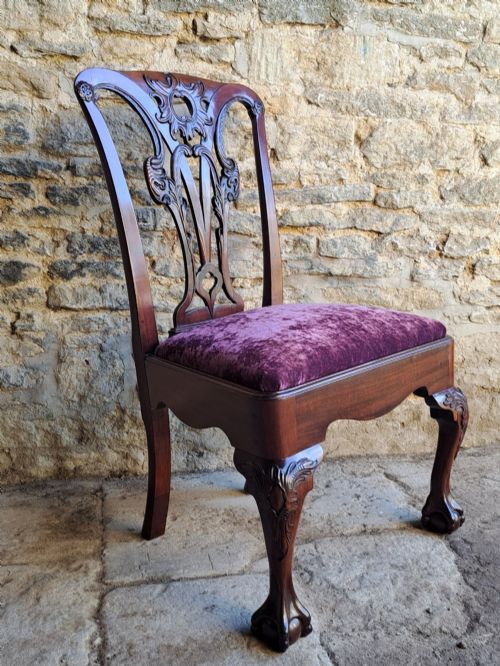
Makers relied primarily on dense hardwoods including mahogany, red walnut, oak, and ash for the structural frames of these seats. Timber selection governed the durability of the chair, with close grained mahogany and walnut permitting intricate carved details like ball and claw feet.
Upholstery elements historically incorporated materials such as leather, velvet, fabric, textile, and traditional plaited straw for súgán seats. Construction techniques involved secure joinery designed to withstand daily use at the dining table over generations.
Some nineteenth century dining chairs feature plaited straw seats, proving that rustic comfort had a permanent seat at the formal table.
Evaluating quality and execution
The degree of crispness in carved ornament distinguishes standard production from superior examples, particularly on George II revival and Chippendale style chairs. Timber selection also plays a role, where figured grain and dense, heavy stock denote a more considered commission.
Originality of components and the integrity of the frame dictate the standing of a set. Matched sets that retain their original timber surfaces and unified construction throughout command greater interest than assembled groups or pieces with extensive later replacement parts.
Strahan·Robert Strahan Dublin
The Antique Irish Dining Chairs Glossary
- Carver
- An armchair designed to sit at the head of a dining table, often matching a set of smaller side chairs. These typically feature open arms to accommodate formal clothing.
- Súgán
- A traditional Irish term for a twisted straw or rush rope used to form a flexible, plaited seat base. This technique appears on vernacular ash chairs.
- Bar Back
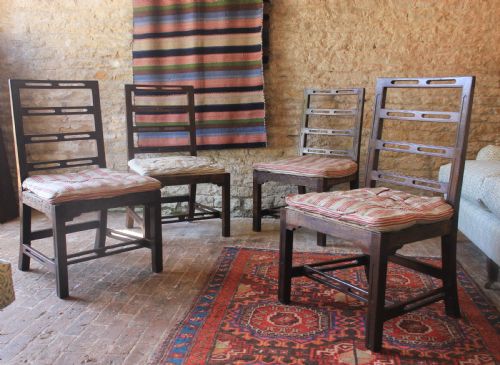
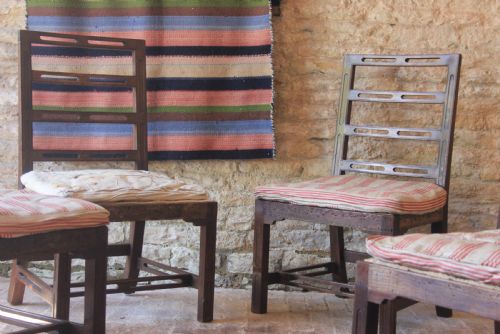
- A chair design where the horizontal top rail or a middle rail resembles a flat or curved bar. This form is common on Regency period dining seating.
- Ball and Claw
- A foot motif carved to resemble a bird talon gripping a spherical ball. It frequently terminates the legs of mid eighteenth century mahogany chairs.
- Red Walnut
- A timber commonly utilised in Irish cabinetmaking during the eighteenth century. It exhibits a warm tone and distinct grain pattern compared to standard walnut.
Antique Irish Dining Chairs: Frequently Asked Questions
How do I care for antique wood dining chairs?
Maintain stable indoor humidity levels and keep wooden frames away from direct heat sources to prevent timber splitting. Dust regularly with a dry cloth and apply appropriate wax sparingly to nourish the polished surface.
Avoid sitting heavily on antique joints or rocking back on two legs, as historical joinery requires gentle handling. Professional upholstery conservation should be employed if the internal webbing or covering requires repair.
Are these chairs suitable for daily use?
Many solid hardwood chairs from the eighteenth and nineteenth centuries remain structurally robust enough for regular seating. Solid mahogany and oak frames distribute weight effectively when the joinery is sound.
Lighter vernacular items or chairs with delicate open carved splats require more mindful treatment during daily meals. Inspect the underframe periodically to ensure the blocks and dowels remain secure.
How can I identify a Dublin made chair?
Look for specific workshop stamps or labels applied to the inside of the seat rails by makers such as Strahan. Regional cabinetmakers often utilised native timbers like red walnut alongside distinct proportions.
Comparison with documented pieces in museum collections helps confirm local construction methods and regional design quirks. Maker attribution relies heavily on physical marks or documented provenance records.
What is a súgán seat?
A súgán seat consists of hand plaited straw or rush woven tightly across an ash or timber frame. This vernacular technique provided a resilient and comfortable base before upholstered drop in pads became standard.
Such chairs represent a rural tradition distinct from the formal mahogany dining suites made in urban workshops. The straw surface requires careful cleaning to avoid moisture damage.
How do I match a set of dining chairs?
Examine the timber species, secondary woods, turning details, and dimensions to ensure stylistic consistency across the group. Sets often expanded over time, meaning subtle variations in carving depth can occur between pieces.
Check whether carvers and side chairs share identical stretcher configurations and back splat profiles. Uniformity in wear patterns across the frames also indicates whether the chairs spent their history together.