
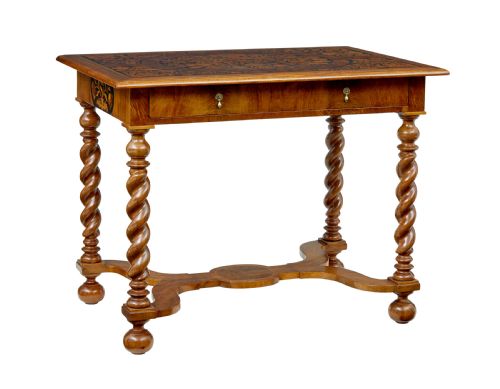
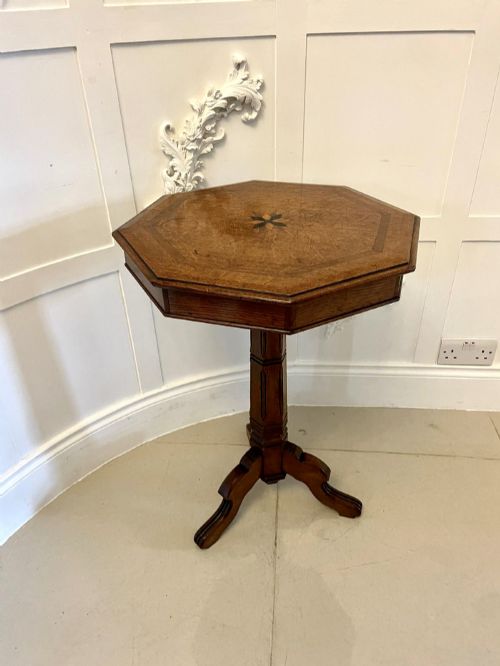
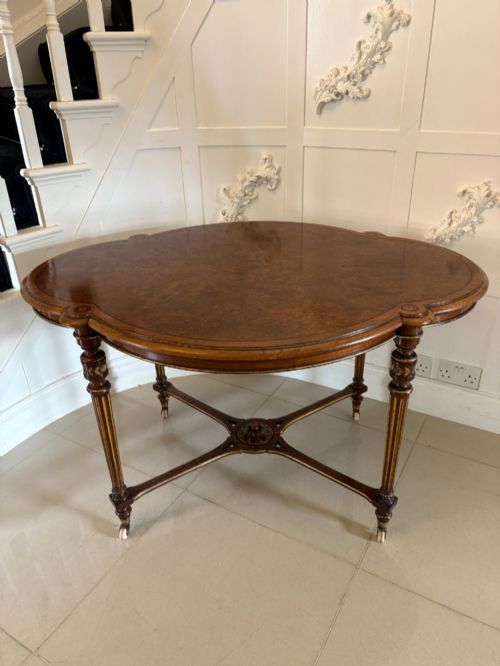
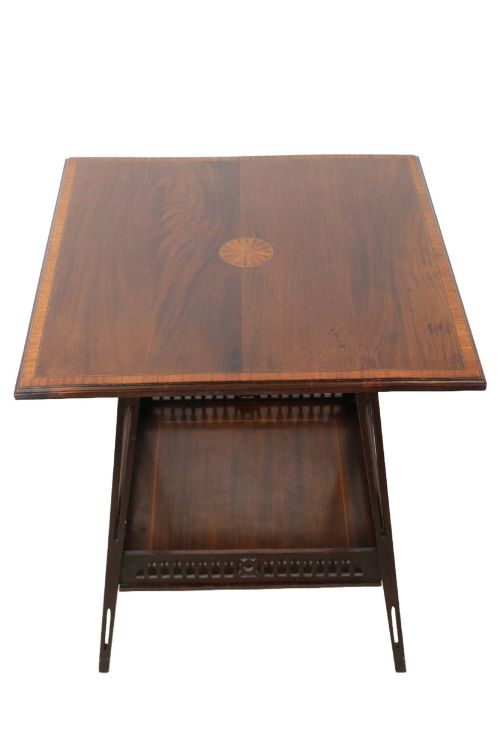

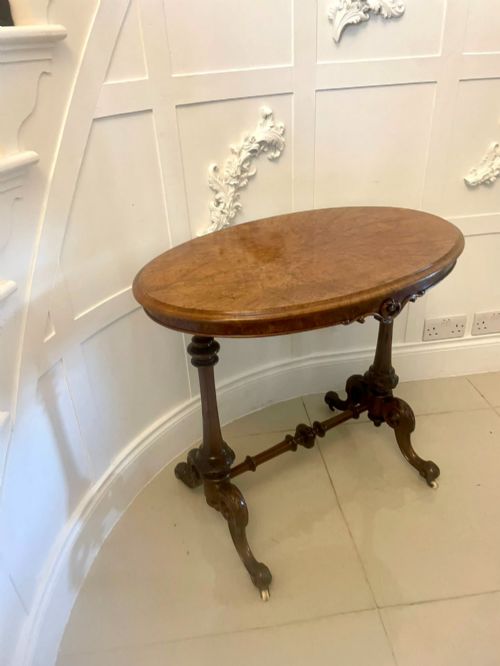
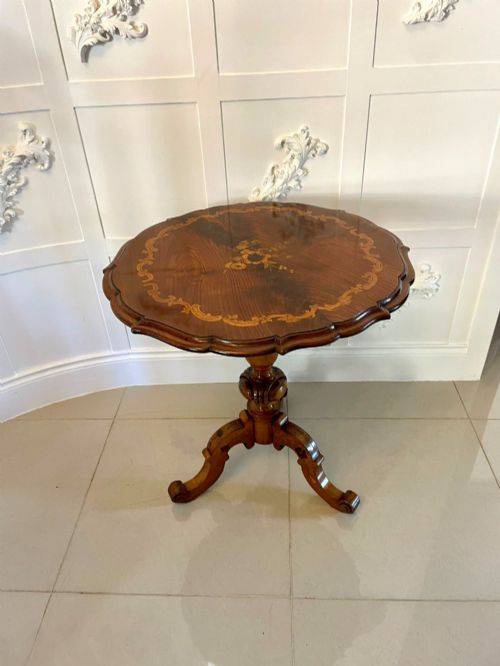
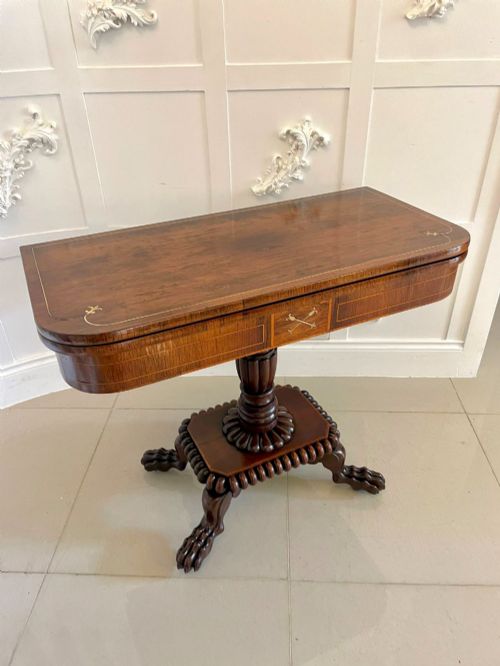
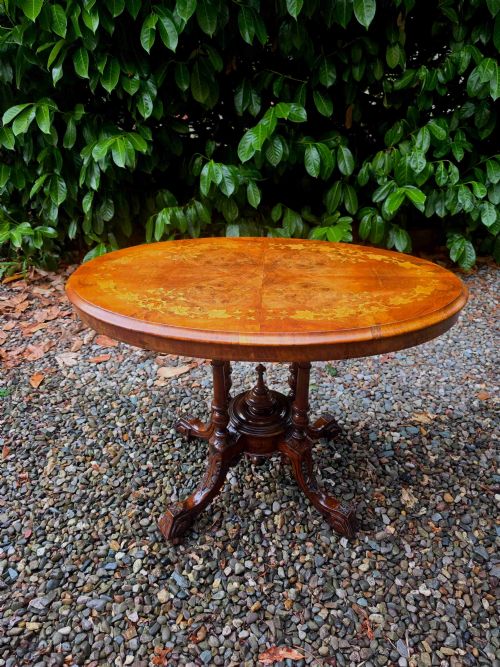
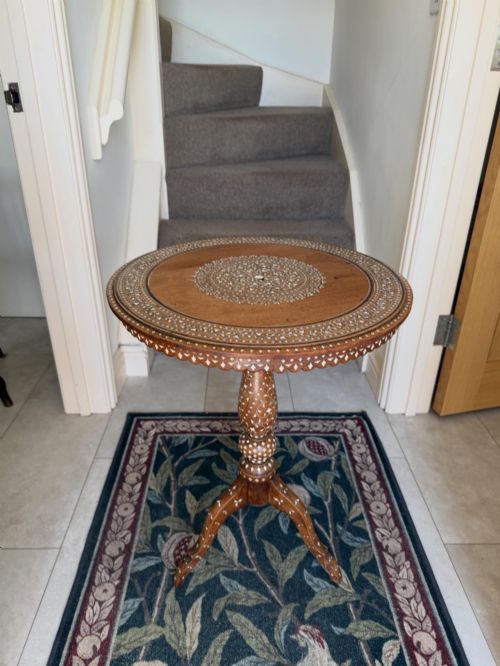
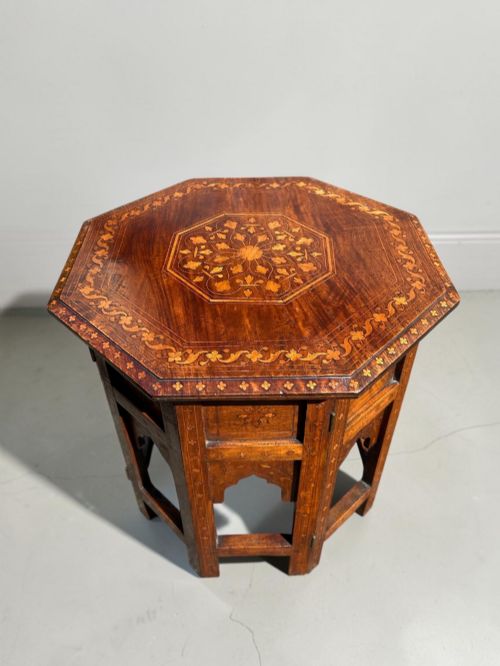
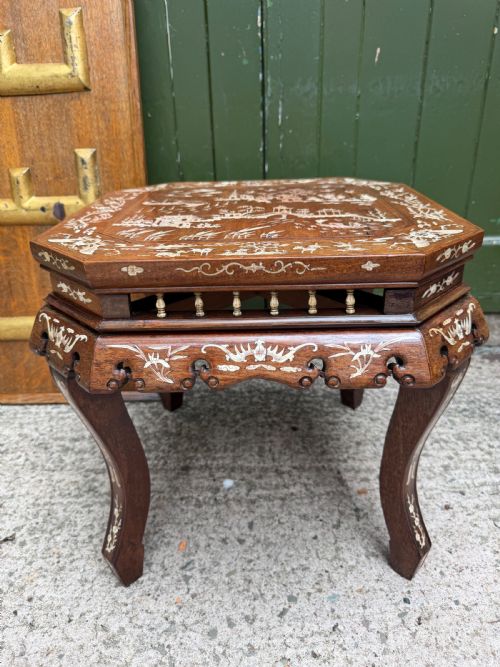
Carved Inlaid Side Table
A carved inlaid side table brings tactile depth and distinct regional character to a room through intricate surface work.
Carved Inlaid Side Table
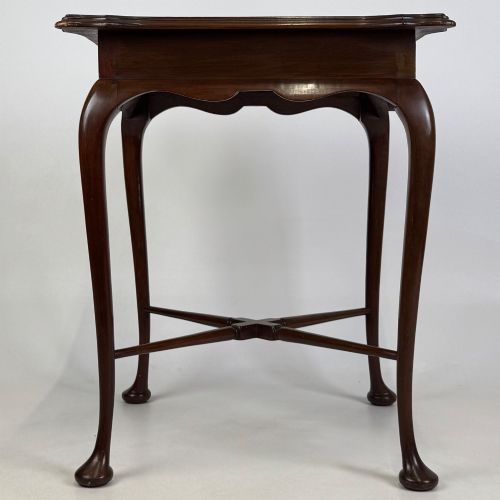
A carved inlaid side table encompasses various occasional, lamp, and octagonal forms spanning the Victorian era, the nineteenth century, and the Edwardian period.
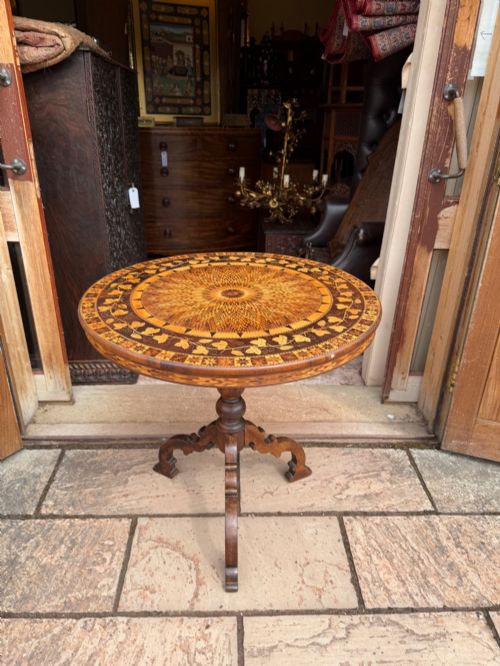
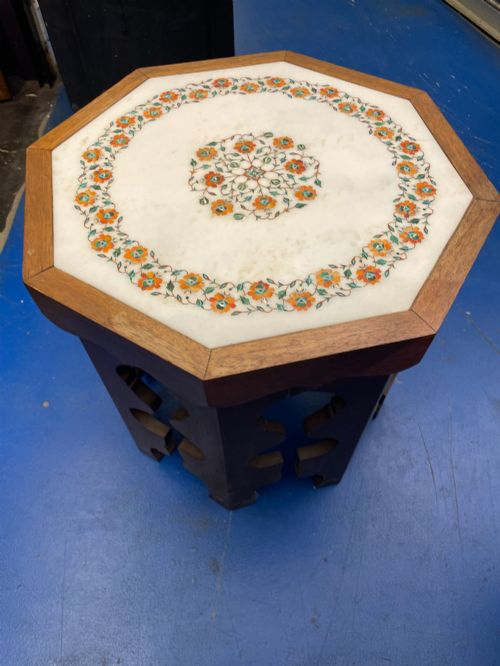
Buyers encounter diverse formats, from folding octagonal tea tables to pedestal lamp tables and card tables with marquetry.
Materials and construction
Cabinet makers utilised solid woods and veneers including walnut, burr walnut, mahogany, rosewood, oak, teak, and elm.
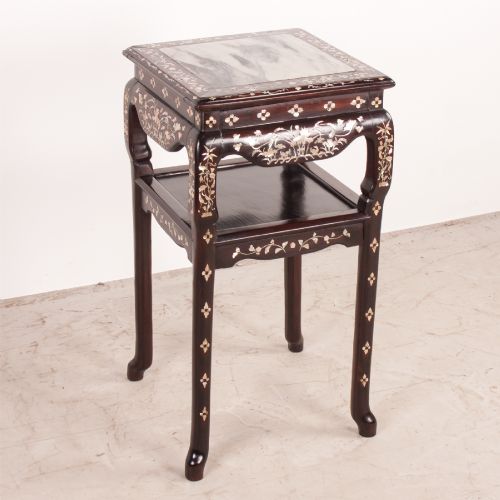
Surface enrichment relies on detailed hand carving paired with contrasting inlay materials such as brass, bone, mother of pearl, and various exotic woods.
The listings span seventeenth-century oak tables up to nineteen-thirties Indian marble and teak items, highlighting global trade links.
Assessing the work
Quality rests upon the crispness of the hand carving and the precision with which delicate inlay sits flush within the timber ground.
Finer examples display careful selection of figured timbers like burr walnut and rosewood, coupled with complex geometric or floral compositions.
Trevor Page & Co·Liberty & Co·Ralph Turnbull
The Carved Inlaid Side Table Glossary
- Marquetry
- The art of creating decorative patterns on wood surfaces using fitted veneers of different timbers and materials. This technique adds pictorial or geometric depth to table tops.
- Hoshiarpur
- A Punjabi city renowned for intricate wood carving and inlay work using brass and bone. Pieces from this tradition often utilise dense teak or shisham wood.
- Lowboy
- A small eighteenth-century English table with drawers, typically set on slender legs. These utilitarian items served multiple domestic purposes.
- Occasional table
- A small, movable table designed for periodic use around a sitting room or parlour. They appear in numerous revival styles from the nineteenth century.
Carved Inlaid Side Table: Frequently Asked Questions
Where were Hoshiarpur tables made?
These tables originate from Hoshiarpur in the Punjab region of India, where artisans developed distinctive wood carving traditions. British retailers imported them extensively during the late nineteenth century.
They combine deeply carved floral motifs with contrasting bone or brass inlay work across folding octagonal and pedestal structures.
How do I care for inlaid wooden tables?
Protect the delicate timber surfaces and inlay materials by avoiding direct sunlight and maintaining steady indoor humidity. Gentle dusting with a dry cloth preserves the finish.
Refrain from using liquid polishes that might seep beneath bone, brass, or mother of pearl segments.
What is the difference between marquetry and inlay?
Marquetry involves assembling a complete veneer puzzle that is glued down to cover the entire surface of a table top. Inlay traditionally entails cutting recesses into solid wood to insert individual pieces of contrasting material.
Both methods produce ornate decorative effects across nineteenth-century tables.
How were Syrian and Damascus tables constructed?
Artisans built these pieces using native woods adorned with geometric tessellations formed from mother of pearl and various contrasting strips. Many were designed with folding frames for convenience.
Their intricate mosaic patterns reflect Middle Eastern decorative arts popular during the Victorian period.