


Inlaid Wood Vanity Table
An inlaid wood vanity table brings sophisticated marquetry and rich timber into a bedroom, offering a dedicated surface for morning routines and grooming.
Inlaid Wood Vanity Table
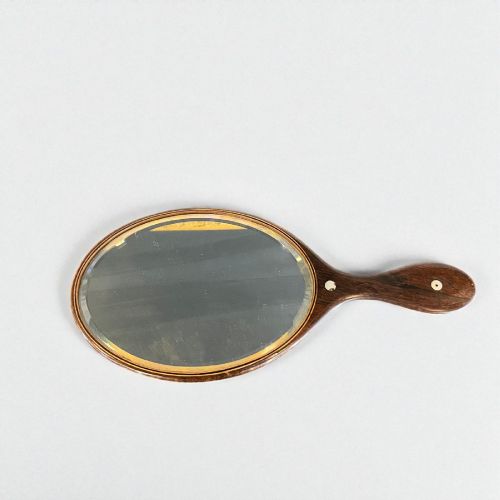
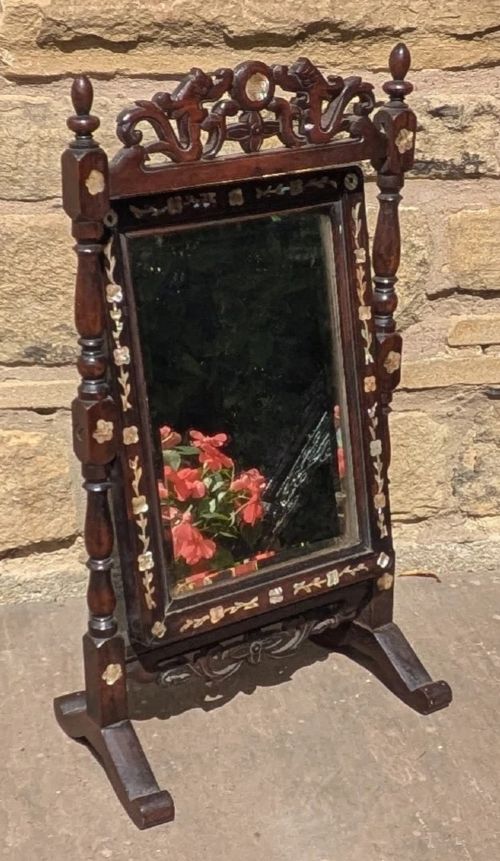
An inlaid wood vanity table combines practical dressing furniture with decorative surface patterns, appearing across periods from the Georgian era through to the Edwardian period. Buyers encounter various forms on this page, ranging from full-sized dressing tables and poudreuses to compact tabletop mirrors and shaving stands.
The construction typically incorporates foundational timbers such as mahogany, walnut, or rosewood, embellished with contrasting boxwood or intricate marquetry scenes. These pieces function as both functional desks and decorative storage for personal items, often housing compartments or swing mirrors.
How they were made
Cabinet makers utilised solid and veneered hardwoods like mahogany, walnut, and rosewood as the primary structural bodies for these dressing pieces. Surfaces received detailed decoration through wood inlay and marquetry, often combining boxwood and brass accents.
Mirrors were set into adjustable swing frames, while storage compartments utilised fitted wooden boxes and internal dividers for trinkets and cosmetics.
The selection includes writing desks, shaving stands, powder tables, and cheval mirrors alongside traditional dressing tables.
What varies in quality
The refinement of the marquetry and the precision of the wood inlay separate standard examples from finer creations. Crisp execution in floral or geometric patterns indicates skilled craftsmanship.
The choice of primary timber and secondary veneers, alongside the integrity of the original mirror glass and brass hardware, determines the overall standing of the piece.
H Mitchell·Edwards and Roberts
The Inlaid Wood Vanity Table Glossary
- Marquetry
- Decorative veneer work arranged in pictorial or geometric patterns on furniture surfaces. It involves cutting thin pieces of wood and other materials to form intricate designs.
- Poudreuse
- A French dressing table featuring folding lids that reveal a mirror and compartments. This form gained popularity during the eighteenth and nineteenth centuries.
- Swing mirror
- A looking glass mounted on pivots between upright supports, allowing the user to adjust the angle. These frequently sat atop dressing tables or chests of drawers.
- Bonheur du jour
- A small, light ladies writing desk featuring a set of small drawers or shelves on the upper surface. These pieces often doubled as dressing or correspondence tables.
Inlaid Wood Vanity Table: Frequently Asked Questions
How do I date an inlaid wood vanity table?
Dating relies on identifying the underlying timber, the style of the furniture legs, and the complexity of the wood inlay. Georgian and Regency pieces show different proportions compared to later Victorian and Edwardian examples.
Examining the construction methods inside the drawers and the backing of the mirror glass provides further clues to the exact manufacturing period.
What is the difference between a poudreuse and a dressing table?
A poudreuse is a specific French form equipped with folding top panels that conceal a mirror and cosmetic wells. Standard dressing tables usually feature a fixed mirror or a separate swing mirror mounted on top.
Both serve grooming purposes, but the poudreuse prioritises a clean surface when closed.
Are swing mirrors original to the tables?
Many dressing tables and toilet mirrors retain their original swing frames, though some have been paired together over time. Checking the wood species and wear around the pivot points helps determine if the mirror belongs to the base.
Slight variations in timber colour are common in authentic antique pairings.
How should I care for antique wood inlay?
Maintaining inlaid surfaces requires keeping the timber away from direct sunlight and extreme temperature fluctuations. Regular dusting with a soft cloth preserves the polished finish without harming the delicate veneer.
Applying microcrystalline wax occasionally protects the wood and enhances the contrast of the inlay.