


Inlaid Wood Sewing Table
An inlaid wood sewing table combines practical compartments for needlework with refined cabinetmaking in walnut, rosewood, and mahogany.
Inlaid Wood Sewing Table
When you search for an inlaid wood sewing table, you encounter versatile pieces designed for needlework, writing, and games that span the Regency, Victorian, and Edwardian periods.
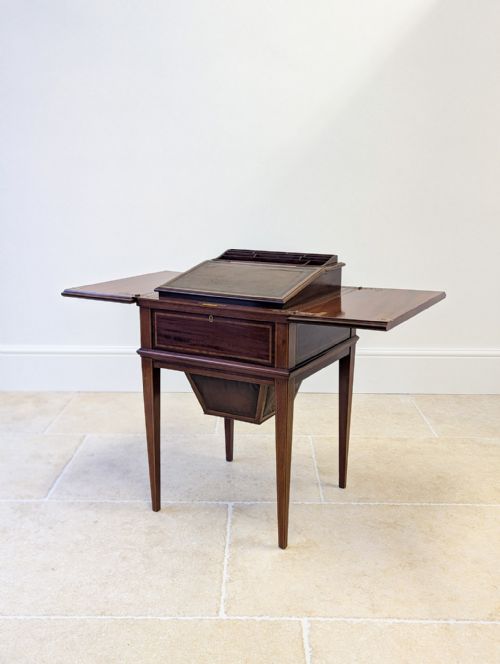
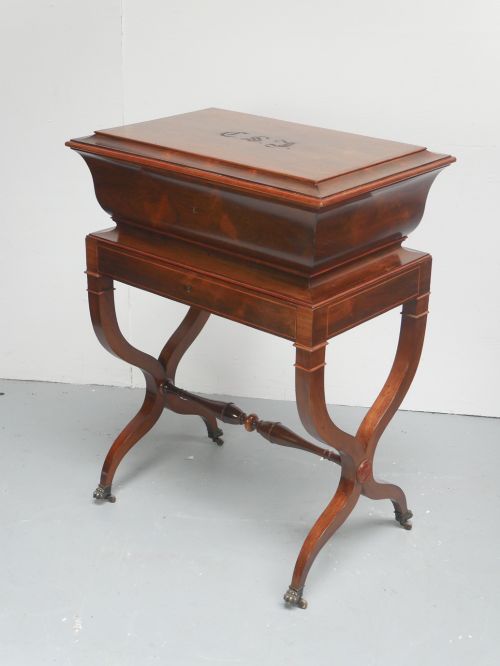
The selections on this page appear in forms such as trumpet tables, work tables, and occasional tables, often incorporating folding tops or fitted interior compartments.
Makers utilised woods like satinwood, burr walnut, and rosewood, applying intricate marquetry or brass stringing to elevate domestic furniture into ornamental focal points.
How they were made
Cabinetmakers constructed carcass frames in solid mahogany, walnut, or rosewood, applying contrasting veneers such as satinwood, burr walnut, and boxwood for decorative surfaces.
Inlay techniques combined wood marquetry, specimen wood veneers, and brass stringing or brass inlays set flush into the timber top.
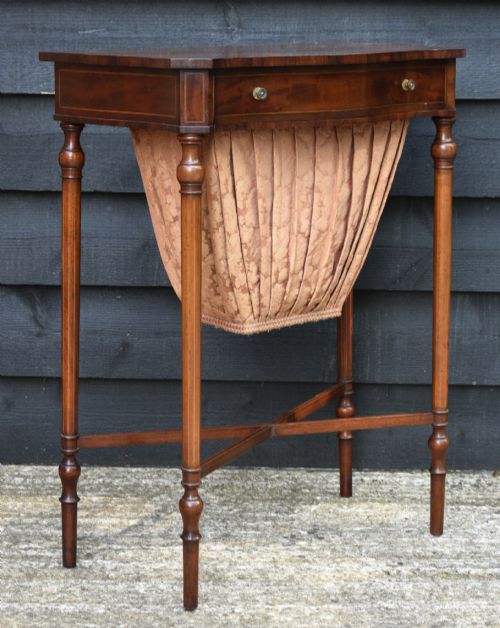
Many examples integrate textile work bags suspended beneath the table frame, alongside turned pedestals and brass hardware.
Some sewing tables hide deep, pleated silk work bags beneath their tops like secret umbrella compartments.
What varies in quality
The sophistication of the marquetry and the choice of timbers separate standard examples from finer works, particularly where detailed floral motifs or portrait decoration appear.
Construction fidelity shows in the alignment of wood grain, the crispness of brass inlays, and the smooth operation of internal compartments and foldover tops.
Lesage·Waring & Gillow
The Inlaid Wood Sewing Table Glossary
- Marquetry
- Decorative veneer patterns assembled from various wood pieces to form pictorial or geometric designs. It differs from inlay by covering the entire surface rather than resting within pre-cut channels.
- Trumpet table
- A form featuring a flared, conical body resembling a musical instrument, typically standing on a pillar and tripod base with an internal work bag.
- Poudreuse
- A multi-functional dressing table often incorporating folding lids, mirrors, and compartments for cosmetics or sewing accessories.
- Stringing
- Thin strips of contrasting wood or brass inlaid into channels cut into the main timber surface to create linear borders.
Inlaid Wood Sewing Table: Frequently Asked Questions
What is an inlaid wood sewing table?
An inlaid wood sewing table is a compact piece of nineteenth or early twentieth-century furniture designed to hold needlework supplies, featuring decorative wood veneers and internal storage compartments.
These tables frequently double as writing desks or games tables, combining utilitarian storage with ornamental woodwork suitable for reception rooms.
How do I date an inlaid sewing table?
Dating relies on stylistic markers and timber choices, such as the heavy rosewood and brass inlays characteristic of the Regency period or the lighter satinwood and mahogany of Edwardian pieces.
Construction methods, secondary woods, and the complexity of the marquetry further help distinguish mid-nineteenth-century Victorian examples from later revivals.
Were these tables used only for sewing?
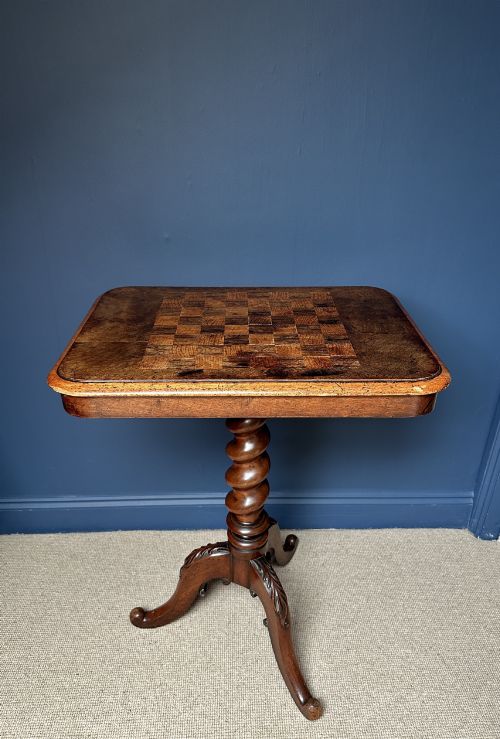
While intended primarily for needlework and embroidery, many models incorporate foldover tops with chess or backgammon boards and leather-lined surfaces for writing.
This multi-functional design made them versatile additions to drawing rooms where space economy and varied domestic pastimes mattered.
How do I care for antique inlaid wood?
Protect antique wood surfaces from direct sunlight and sustained moisture to prevent timber shrinkage and veneer lifting.
Maintain consistent indoor humidity and apply occasional quality furniture wax to nourish rosewood, walnut, and mahogany finishes without sealing the grain.