


French Marquetry Vanity
These french marquetry vanity pieces combine intricate wood inlays with elegant revival forms, offering a practical surface and a striking decorative presence.
French Marquetry Vanity
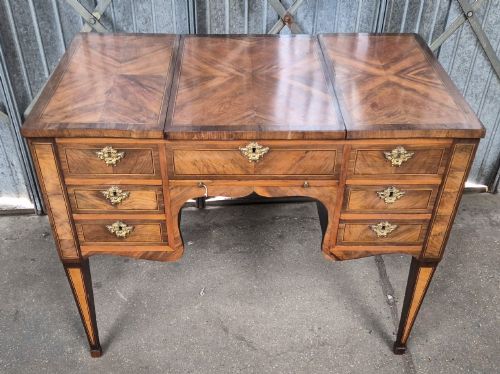
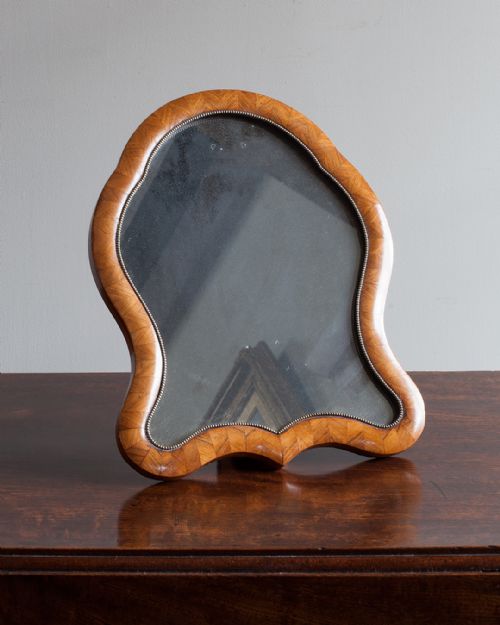
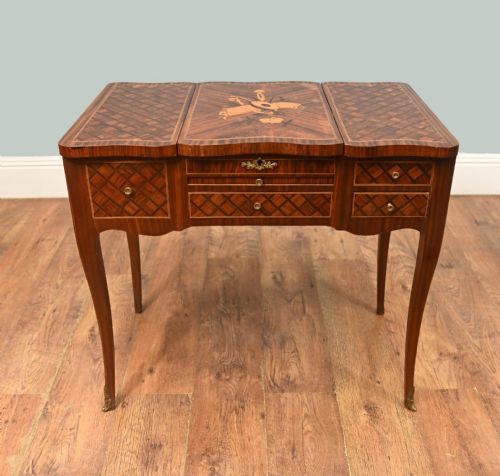
When you search for french marquetry vanity pieces, you encounter a specialised form of antique furniture designed for personal grooming and private writing. These objects encompass poudreuses, dressing tables, and smaller companion pieces such as table mirrors and display boxes.
The versions most commonly met on this page date from the nineteenth century, spanning Victorian periods and specific decades like eighteen seventy and eighteen eighty. They typically emerge through revival movements, showing strong connections to Louis XV and Louis XVI styles.
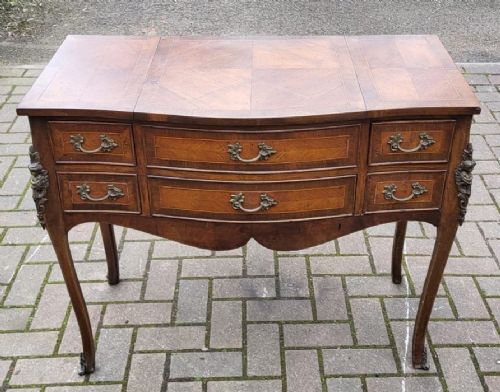
Makers and craftsmen of the period shaped these dressing tables and work tables from rich timbers, applying detailed floral and geometric veneers. Every piece balances utility with decorative flair, serving as both a functional dressing station and a polished centrepiece.
How they were made
Cabinet makers constructed these pieces using a foundation of walnut, kingwood, tulipwood, or rosewood, upon which they laid contrasting wood veneers. This marquetry technique created elaborate floral and pictorial patterns across the lids and drawer fronts.
Ormolu and gilt bronze mounts were cast and applied to corners, legs, and handles to accentuate the curved contours of the Louis XV revival style. Brass accents also reinforced edges, while fitted interior glass mirrors completed the dressing function.
Many of these tables double as work tables, thoughtfully designed to hide your knitting while you powder your nose.
What varies in quality
The distinction between standard examples and the finest pieces lies in the precision of the marquetry and the choice of timbers. Superior work displays tightly fitted veneers with a rich variety of natural wood tones that create depth in floral motifs.
Hardware also defines the upper tier, where heavy, finely chased ormolu mounts fit flush against the wood rather than appearing crude or mass-produced. The internal construction, including secondary woods and the smoothness of drawer mechanics, further separates basic pieces from exceptional ones.
Maison Pretot Paris
The French Marquetry Vanity Glossary
- Marquetry
- The art of applying pieces of veneer to a structure to form decorative patterns. Craftsmen used various coloured woods to build up pictorial floral designs.
- Poudreuse
- A French dressing table fitted with a folding top and internal compartments. It typically conceals a mirror and storage spaces for cosmetics and powder.
- Ormolu
- Gilding technique of applying finely ground high-carat gold to an object of bronze. It provides ornamental mounts and handles on revival furniture.
- Kingwood
- A dense, heavy timber with rich brown and violet-black hues. It was highly favored by cabinet makers for high-end eighteenth and nineteenth century veneered furniture.
- Bonheur du jour
- A light ladies desk featuring a small cabinet or superstructure on the writing surface. It often includes drawers and a fold-down flap for correspondence.
French Marquetry Vanity: Frequently Asked Questions
What is a french marquetry vanity table?
A french marquetry vanity table is a nineteenth century dressing table featuring patterned wood inlays and revival styling. These pieces often include folding tops and internal compartments.
They served as functional furniture for personal grooming and correspondence in private boudoirs. Today, they function as decorative accent tables in bedrooms and living spaces.
How do I identify a poudreuse?
A poudreuse is distinguished by its hinged top lid that opens to reveal a mirror and several compartments. It combines the functions of a desk and a dressing table.
Most examples date from the Victorian era and the later nineteenth century. They showcase marquetry veneers and often feature ormolu mounts along the legs and borders.
What woods were used for these vanities?
Cabinet makers utilised a foundation of solid timber overlaid with decorative hardwood veneers. Common choices include kingwood, tulipwood, walnut, and rosewood.
These varied timbers allowed artisans to create contrasting shades for floral marquetry designs. Brass and ormolu were frequently added as structural and decorative highlights.
How do I care for antique marquetry?
Protect antique marquetry furniture by placing it away from direct sunlight and heat sources. Excessive dryness can cause delicate wood veneers to lift or crack over time.
Apply traditional paste wax sparingly and buff gently with a soft cloth to maintain the finish. Avoid using modern liquid polishes or harsh chemical cleaners.