
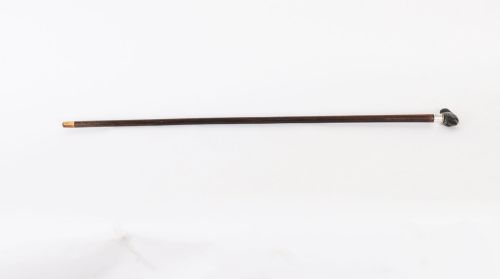
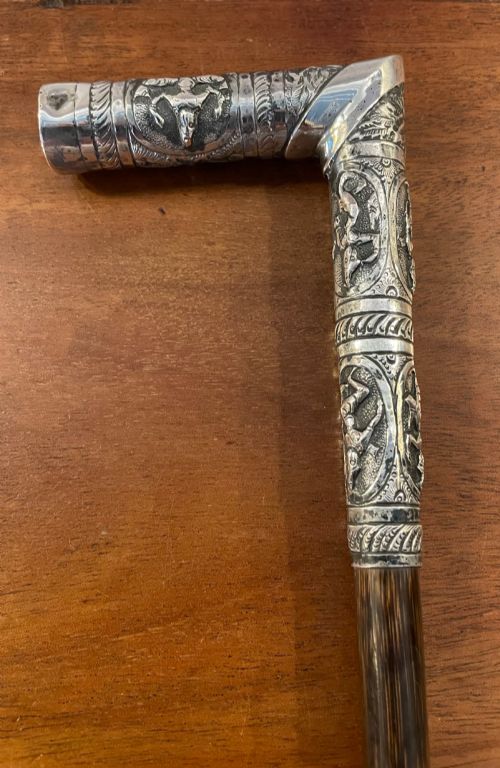
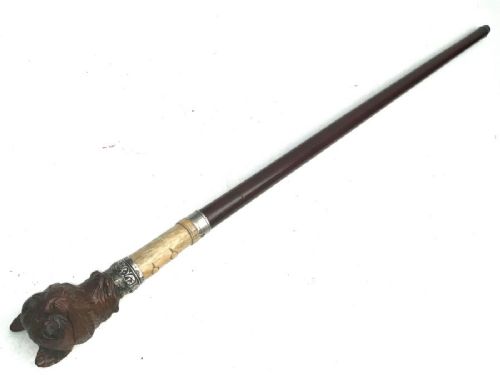
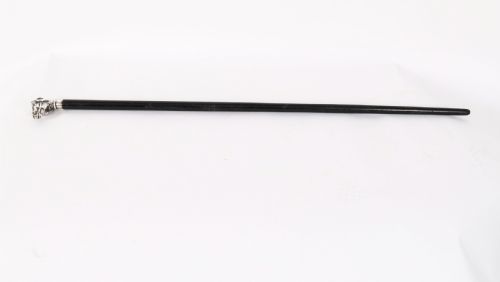
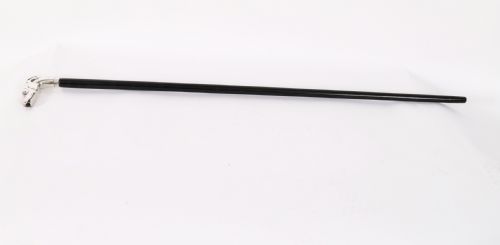


Carved Head Walking Stick
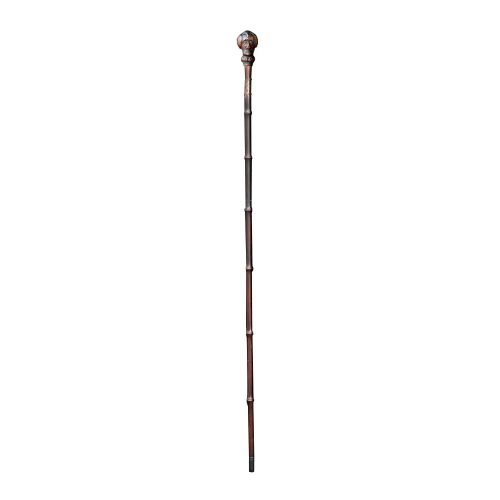
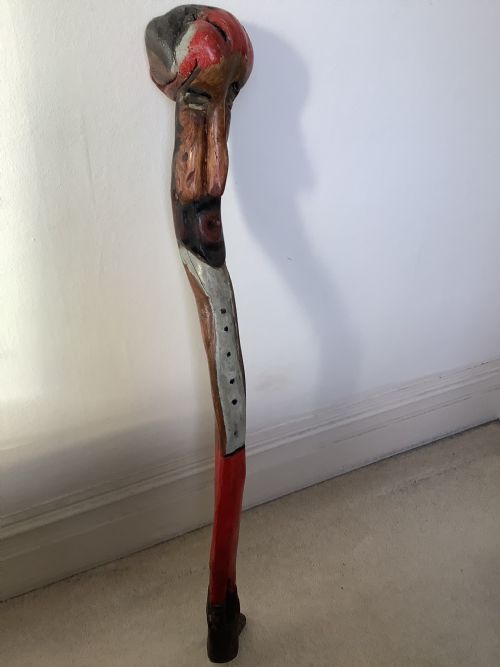
These carved head walking stick examples bring together characterful animal and figure handles from the nineteenth and early twentieth centuries.
Carved Head Walking Stick
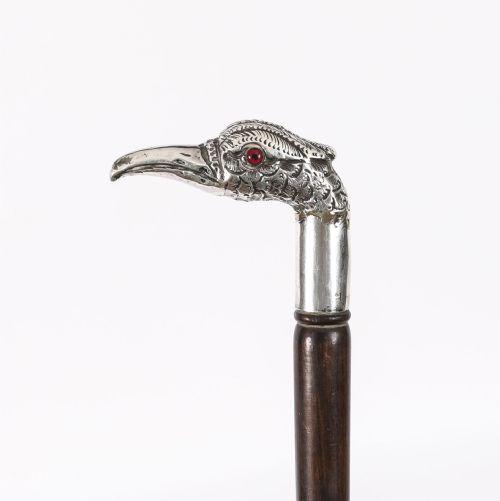
A carved head walking stick serves as a portable support while doubling as a social accessory with a sculptural handle. The pieces found here predominantly feature animal forms, ranging from horses and dogs to birds and novelty figures.
Most examples originate from the Victorian and Edwardian periods, stretching into the Art Deco era. Buyers encounter both British gentleman's canes and continental European pieces, including Black Forest carvings and French silver-mounted novelties.
Materials and construction
Carvers shaped handles from dense hardwoods, bone, horn, and ivory, mounting them onto shafts of timber such as malacca, bamboo, thorn, and ebonised wood. Artisans frequently combined these organic materials with cast silver or metal collars and mounts.
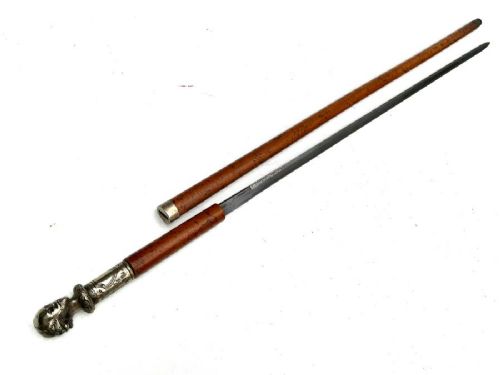
Makers integrated functional elements into the design, concealing sword blades, nutcrackers, or automaton mechanisms within the shaft and handle. Surface finishes varied from natural polished wood grains to polychrome painted details.
The listings span the Victorian, Edwardian, and Art Deco periods, incorporating materials such as silver, bone, horn, glass, and various hardwoods.
Evaluating the craftsmanship
The distinction between ordinary and superior pieces rests entirely upon the anatomical precision and depth of detail in the carving. Master carvers captured realistic expressions and textures in hair, feathers, and bone, whereas simpler workshop pieces rely on plain outlines.
Proportion and material integrity dictate the overall standard of the stick. High quality examples pair balanced shafts of malacca or bamboo with substantial silver collars and tightly fitted mechanical elements.
The Carved Head Walking Stick Glossary
- Novelty cane
- A walking stick that incorporates a hidden function, surprise mechanism, or distinctive figurative handle beyond standard support. These pieces often feature animals, mechanical jaws, or concealed blades.
- Black Forest
- A regional style of wood carving originating from the German mountain region, known for realistic animal sculptures. Pieces frequently display deep relief work and expressive canine or wildlife subjects.
- Malacca
- A slender, durable rattan cane imported from Southeast Asia, prized for its mottled brown finish and flexibility. It served as a preferred shaft material for nineteenth century gentleman's sticks.
- Sword stick
- A cane fitted with a concealed metal blade housed inside the wooden shaft, secured by a locking mechanism. These items were carried for personal protection by officers and gentlemen.
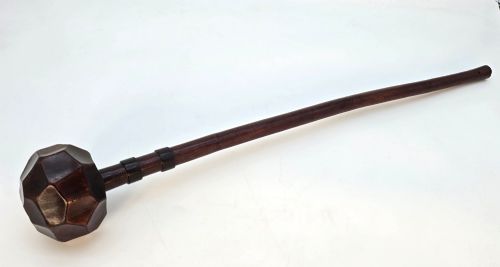
- Knobkerrie
- A traditional African wooden club featuring a rounded head attached to a shaft, used historically as both a weapon and a status symbol. Certain examples form part of wider ethnographic collections.
Carved Head Walking Stick: Frequently Asked Questions
How do I date a carved walking stick?
Dating relies heavily on style, material fashions, and any assay marks present on silver collars or mounts. Victorian and Edwardian examples often display distinct sculptural preferences aligned with prevailing artistic movements.
Changes in shaft materials, such as the shift from malacca to ebonised wood or bamboo, also help narrow down the decade of production.
Were these canes used for actual support?
Many gentleman's sticks served as genuine walking aids, while others functioned purely as fashion accessories or defensive items. Heavier shafts with sturdy hardwood handles were built for daily use on city streets.
Frail novelty canes and hollow metal-mounted pieces were intended primarily for display and social carriage rather than weight-bearing support.
What are sword sticks?
Sword sticks are functional walking canes equipped with a concealed steel blade secured inside the wooden shaft. They became popular among military officers and travellers during the nineteenth century for personal defence.
Owners release the blade by operating a hidden catch or unscrewing the handle mechanism from the collar.
How should I care for antique wood handles?
Preservation requires keeping wooden handles and shafts away from direct sunlight and extreme humidity fluctuations. Regular application of suitable wax helps maintain the moisture balance of antique timber.
Avoid using harsh chemical cleaners on silver mounts or painted polychrome surfaces to protect the original finish.