





Folk Art Walking Cane
These folk art walking cane pieces are distinctively hand-carved supports that bring character and history into any modern interior.
What folk art walking cane pieces are
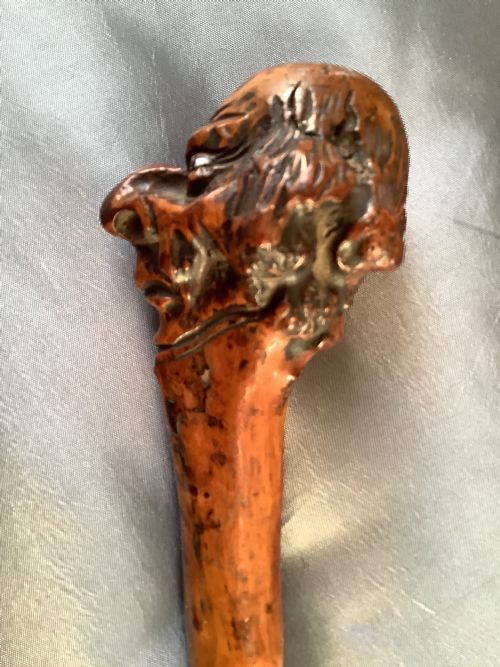
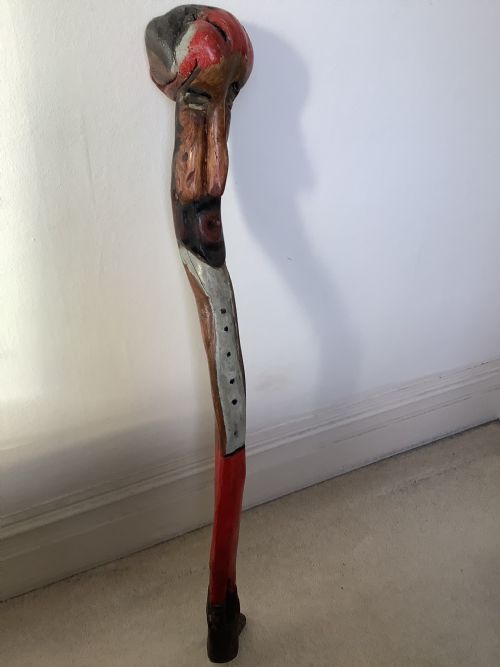
The available selection includes Black Forest German Shepherd dog handles, gadget nutcracker mechanisms featuring carved heads, and substantial polychromed thorn wood examples. Each piece displays a specific regional style or novel utilitarian function.
How they were made
Maker techniques involve working with natural materials such as hardwood, thorn wood, and dark wood to shape the shafts and handles. Artisans shape bone and brass elements to add functional detail and structural contrast.
What varies in quality
Quality rests in the precision of the carving and the complexity of integrated mechanisms, such as working nutcracker jaws or articulated dog heads. Simpler painted shafts sit at the base, while detailed sculptural figuration sits at the top.
Material selection also dictates distinction, where dense thorn wood or contrasting bone insets elevate the piece above standard hardwood versions.
The Folk Art Walking Cane Glossary
- Polychromed
- Decorated or painted in several colours. This finish brings out the tactile qualities of thorn wood carvings.
- Gadget cane
- A walking stick that conceals a secondary mechanical function. Examples include built-in nutcracker mechanisms with carved heads.
- Black Forest
- A regional style of wood carving originating from central Europe. This tradition produces highly detailed animal sculptures like the German Shepherd dog handle.
- Articulation
- Joints designed to allow movement in carved figures. This technique enables hinged components to open and close.
Frequently Asked Questions
What is a folk art walking cane?
These are hand-carved walking sticks featuring figural handles, painted finishes, or hidden mechanical devices. They reflect the folk traditions of the nineteenth century.
Craftsmen created them for utility and display, incorporating materials like hardwood, bone, and thorn wood.
How do I display a walking cane?
Sticks are typically placed upright in a heavy umbrella stand or mounted horizontally on wall brackets. This keeps the carved handle visible while protecting the shaft.
Ensure placement avoids direct sunlight to preserve painted surfaces and wood tones.
What periods do these canes date from?
The available pieces originate from the Victorian period, the broader nineteenth century, and around nineteen hundred. Dating relies on the material, style, and carving techniques used.
Black Forest designs and polychromed thorn wood examples are typical of this timeframe.
Are these canes meant for walking?
While originally built for support or as functional accessories, many act primarily as decorative objects today. Items with mechanical elements or delicate carvings require careful handling.
Collectors generally preserve them as sculptures rather than daily mobility aids.