

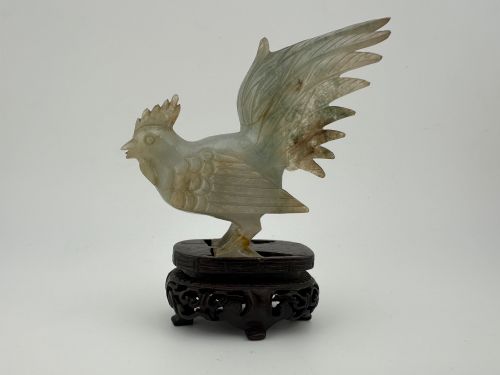
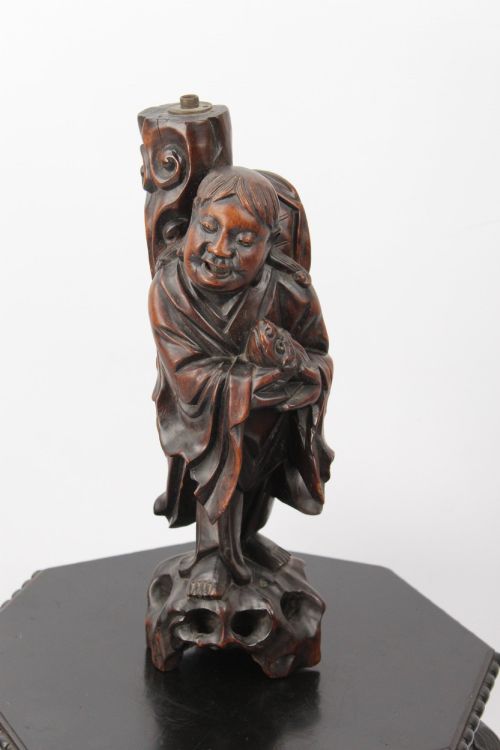
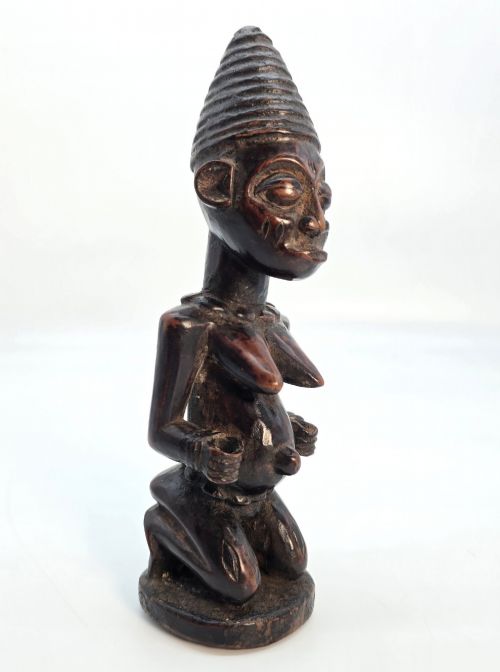
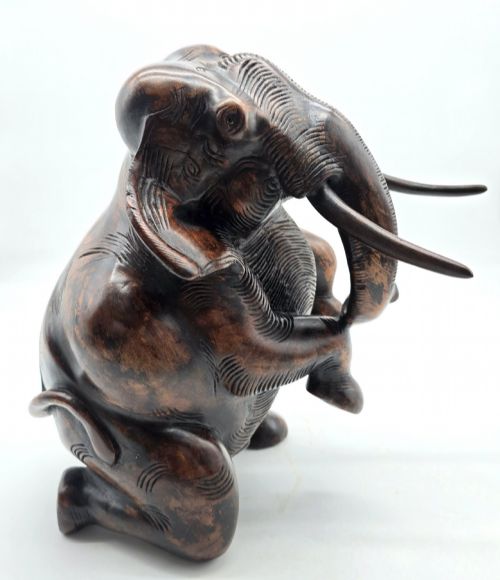
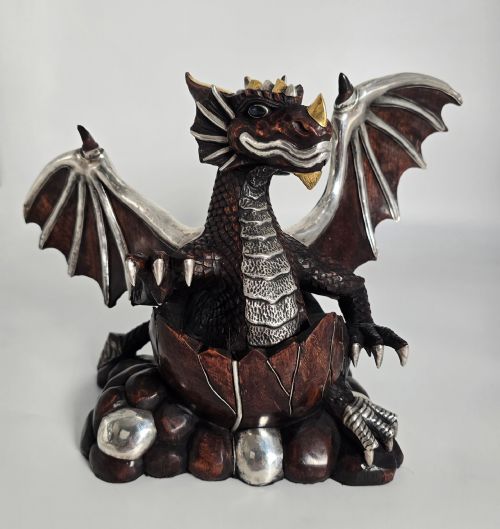
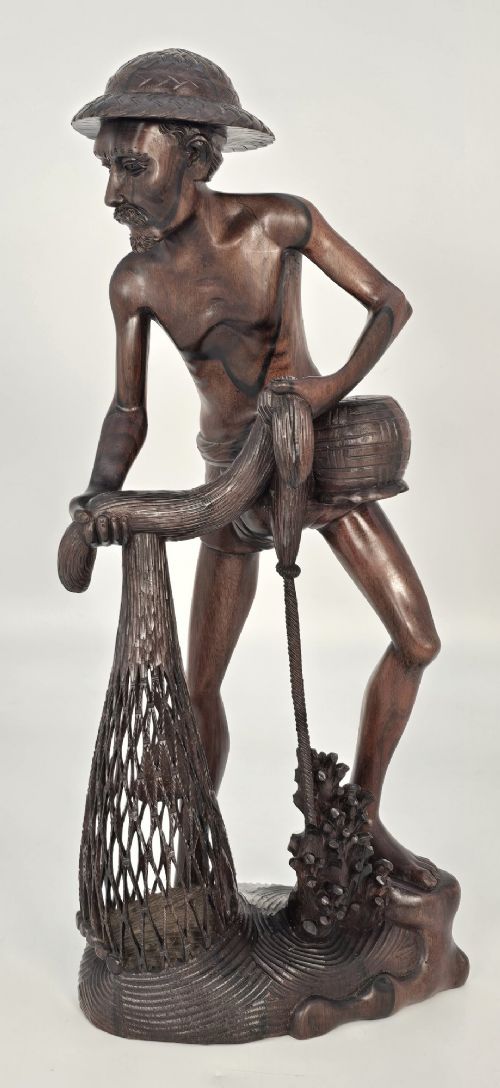


Carved Hardwood Figurine
These carved hardwood figurine selections encompass regional figures, animals, and mythological subjects shaped across the nineteenth and twentieth centuries.
Carved Hardwood Figurine
A carved hardwood figurine represents human, animal, and mythological subjects fashioned by artisans across diverse global traditions. When exploring this category, collectors frequently encounter Chinese figures, African tribal art, and Indian Raj period studies.
The selection ranges from traditional Chinese fishermen and Daoist immortals to African tribal figures and Raj period elephants. Each piece reflects the specific cultural and aesthetic priorities of its origin and period.
Materials and construction
Carvers utilised dense timbers such as ebony and root wood, sometimes incorporating bone, brass, and mixed metal mounts for decorative detail. These materials demanded precise hand-carving techniques to achieve intricate forms and fluid lines.
Surfaces frequently show natural patina developed through handling and age, occasionally enhanced by paint or polish. The interaction between the grain of the wood and the carved detail defines the visual texture of each piece.
Carved Hardwood Figurine Retail Price Guide 2026
Typical asking prices for carved hardwood figurine among the pieces listed under this phrase on Sellingantiques today, from the lower quarter to the upper quarter. They describe what is for sale here now, not the wider market.
The listings span the nineteenth century, 1880, 1890, 1900, 1920, and 1930.
Indicators of quality
Quality rests upon the precision of the carving and the vitality of the form, distinguishing master carvers from commercial workshops. Figures displaying acute attention to anatomical detail, facial expression, and posture command greater visual presence.
The choice of timber and the preservation of the original patina further influence the standing of a piece. Finer examples retain crisp edges and subtle surface variations rather than smoothed or homogenised details.
The Carved Hardwood Figurine Glossary
- Patina
- The surface sheen and colour developed on wood through age and use. This mellow appearance is a key indicator of authenticity.
- Root wood
- Timber sourced from the root system of a tree, prized for its gnarled, twisting natural grain. Carvers often incorporated these organic shapes directly into the subject matter.
- Okimono
- A Japanese decorative freestanding sculpture typically displayed in an interior setting. These figures often depict humans, animals, or mythical subjects.
- Qing Dynasty
- The final imperial dynasty of China, spanning from the seventeenth to the early twentieth century. Objects from this period frequently display traditional iconography and formal precision.
Carved Hardwood Figurine: Frequently Asked Questions
How do I date a carved hardwood figurine?
Dating relies on stylistic markers, tool marks, and the natural ageing of the wood. Comparing the subject matter to established periods helps narrow the timeframe.
Documentation or provenance from the era also assists in confirming the approximate decade of creation.
Where were these figurines made?
The pieces originate from various regions including China, Africa, India, and Indonesia. Each location utilised local timber species and distinct cultural motifs.
Regional workshop traditions dictate the specific carving techniques and stylistic conventions observed on the items.
How should I care for hardwood sculptures?
Maintain stable indoor humidity and keep sculptures away from direct sunlight to prevent the timber from splitting or fading. Gentle dusting with a dry, soft cloth preserves the surface.
Avoid applying modern chemical polishes or oils that might alter the historic patina of the wood.
What subjects are most common?
Common subjects include human figures such as fishermen, deities, and tribal warriors, alongside animals like elephants, water buffaloes, and panthers. Mythological creatures also appear frequently across different cultural traditions.
These subjects often carried symbolic meaning related to prosperity, protection, or status within their original societies.