



Carved Gothic Seating
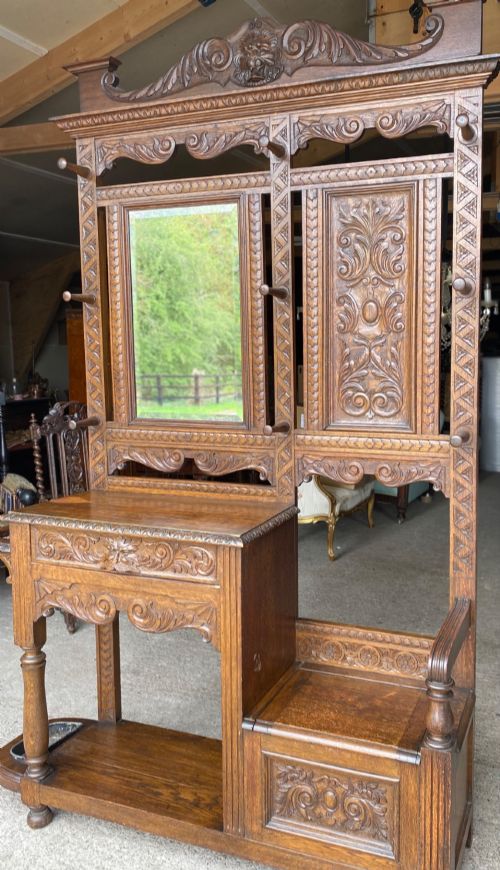
Carved gothic seating brings heavy timber and pointed arches indoors, offering sturdy architectural chairs and benches for serious interiors.
Carved Gothic Seating
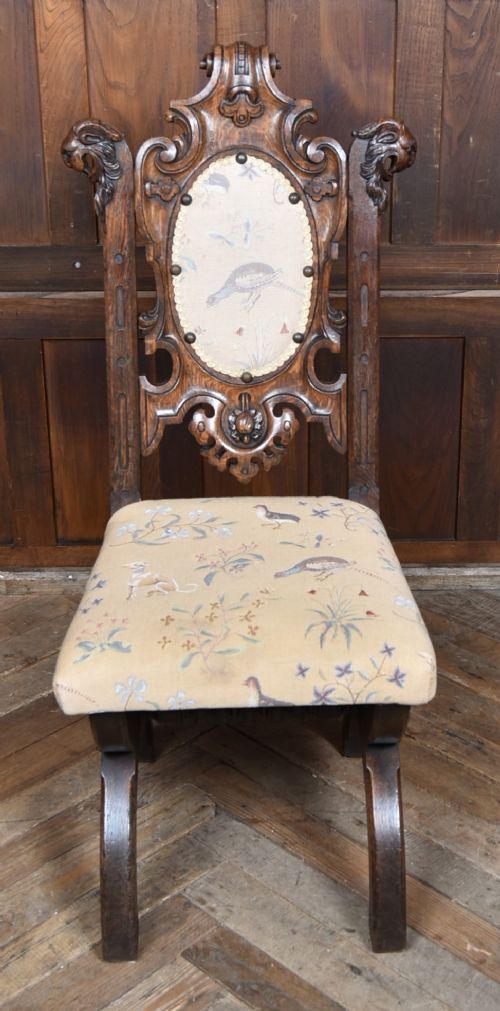
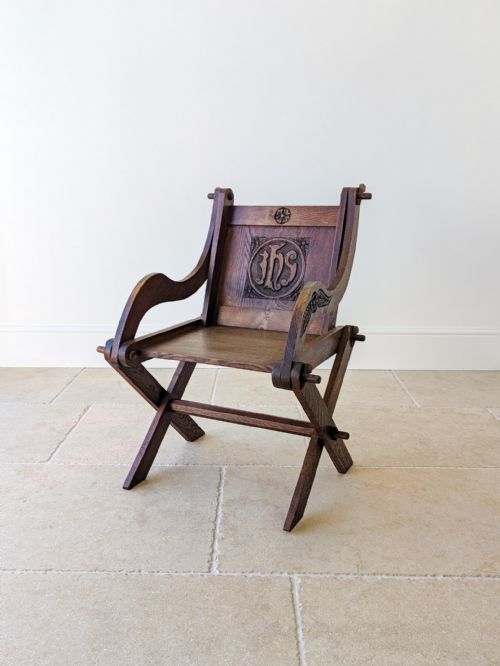
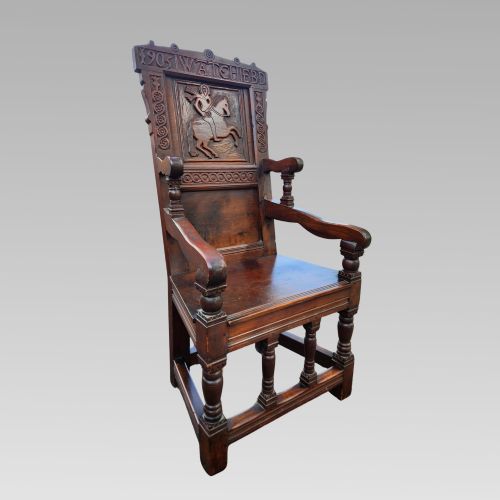
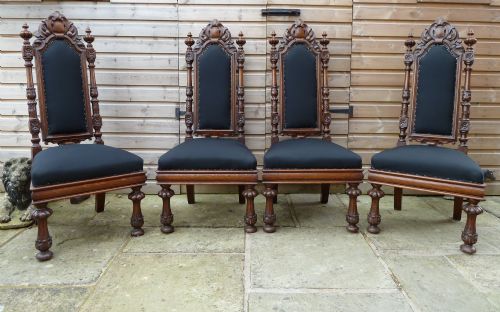
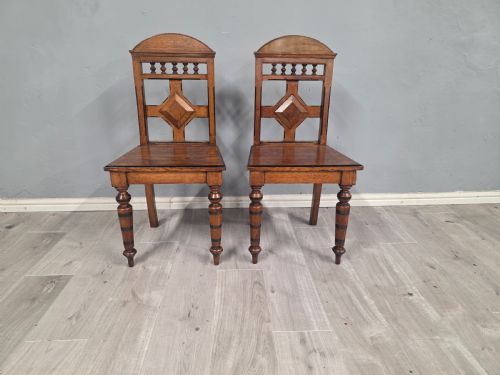
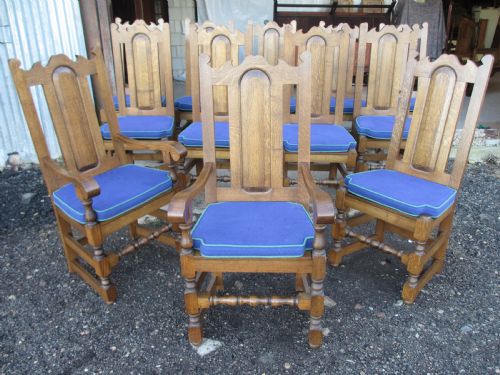
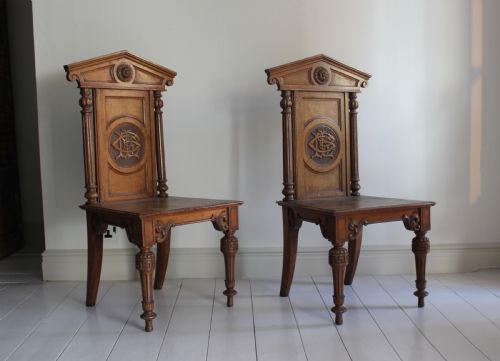
The most common forms on this page are oak hall chairs, armchairs, and dining sets featuring trefoils, high backs, and architectural panels. Makers draw on ecclesiastical and medieval motifs adapted for domestic reception rooms and libraries.
Design and Proportion
Quality separates through the crispness of the timber carving and the balance of architectural proportions. Heavy pieces succeed when decorative trefoils and heraldic panels integrate cleanly into the structural frame.
Execution ranges from simple regional workshop production to ambitious designs by notable makers using select golden oak or rosewood. Intact original upholstery and labelled maker attribution elevate individual examples.
Carved Gothic Seating Retail Price Guide 2026
Typical asking prices for carved gothic seating among the pieces listed under this phrase on Sellingantiques today, from the lower quarter to the upper quarter. They describe what is for sale here now, not the wider market.
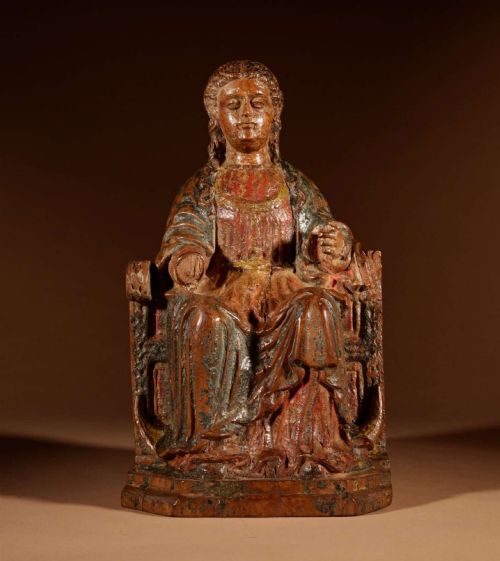
One tiny sixteenth-century Madonna sits permanently on her throne, outlasting every nineteenth-century copy built around her.
Gillows·Bruce James Talbert·W A Willcocks·Pugin
The Carved Gothic Seating Glossary
- Trefoil
- A three-lobed ornamental design resembling clover leaves, frequently pierced through chair backs and bench supports.
- Glastonbury chair
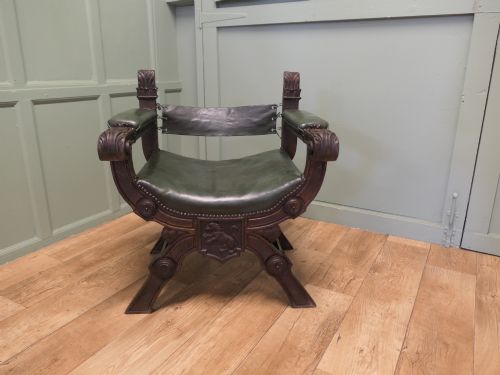
- A type of folding armchair with X-framed legs and a sloping wooden back, popular in nineteenth-century Gothic revival interiors.
- Hall bench
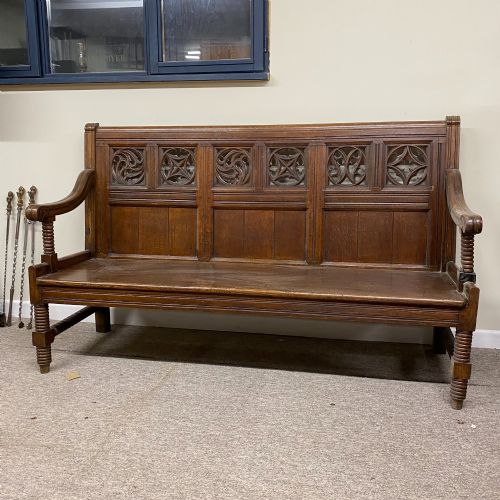
- A long wooden seat with a high carved back, placed in entrance halls and often incorporating storage boxes beneath the lid.
- Heraldic shield
- A pointed shield shape carved into timber backs, displaying coats of arms or symbolic family crests.
- Jacobean revival
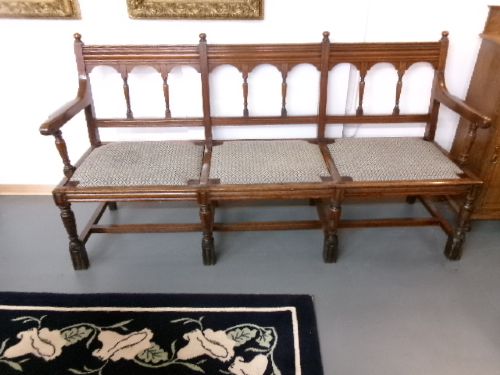
- A decorative style mimicking seventeenth-century English woodwork, featuring heavy turned legs and geometric panel carving.
Carved Gothic Seating: Frequently Asked Questions
Where do I put a heavy oak bench?
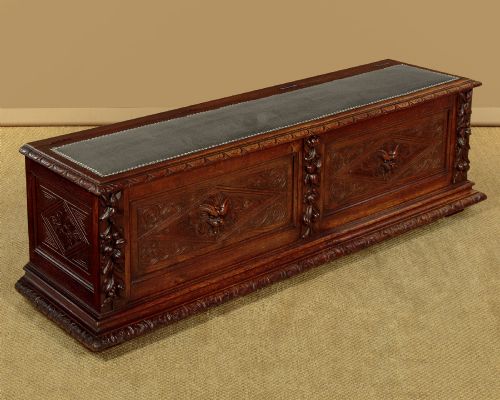
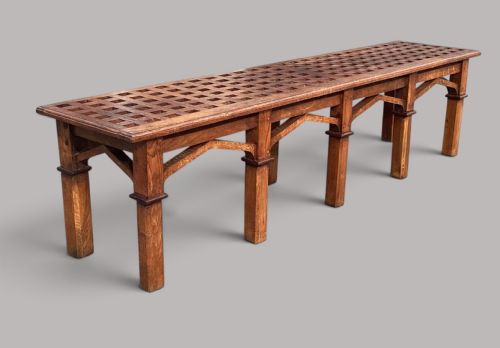
These long benches suit large entrance halls or wide corridors where timber walls balance their heavy scale. They provide functional seating while anchoring an empty passage.
Ensure the floor supports the weight of solid oak and leave enough clearance for doors to open past the high backs.
How do I care for leather seats?
Embossed leather pads need occasional feeding with neutral wax to prevent the hide from cracking under dry indoor conditions. Avoid placing them near direct heat sources.
Dust carved wooden frames gently with a dry cloth and keep polish buildup out of recessed crevices.
How can I date a revival chair?
Nineteenth-century Gothic pieces reveal their age through machine-sawn timber marks hidden underneath and standardised screw fixings. Stylistic revivals combine medieval tracery with Victorian joinery techniques.
Compare the timber density and wear patterns on the feet against the declared nineteenth-century production periods.
Are these chairs comfortable for daily use?
Most hall chairs and high-back seating feature upright wooden panels designed for posture rather than lounging. Upholstered versions with leather or tapestry pads offer softer seating.
Use them around a dining table or in a study where an upright, supportive posture is preferred.