




Painted Crest Chairs
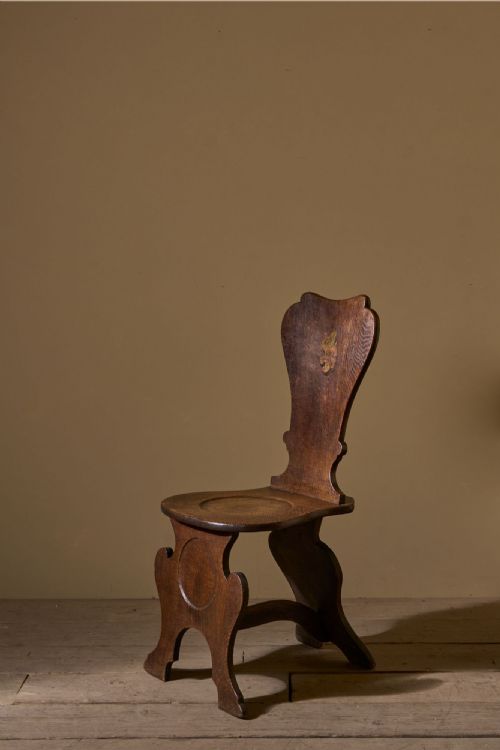
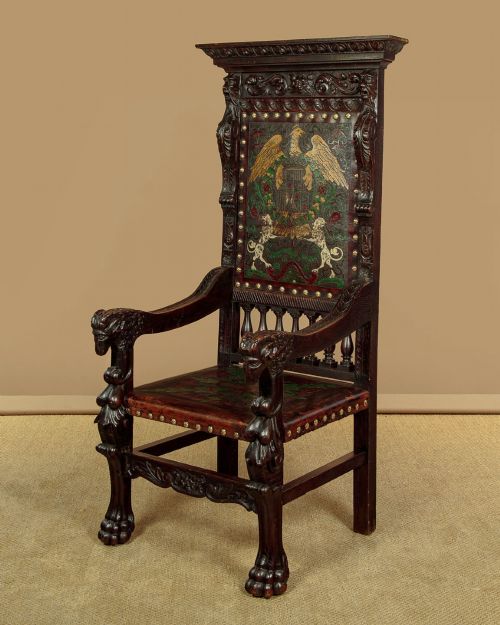
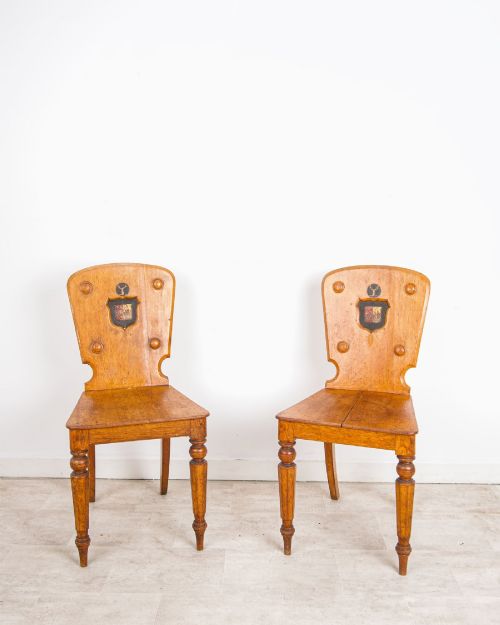
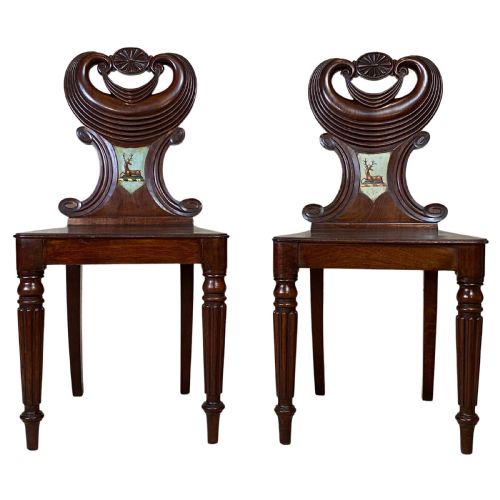
These painted crest chairs are statement seating bearing heraldic shields and armorial details, bringing bold colour and centuries of pedigree into a room.
Painted Crest Chairs
The versions you meet most frequently on this page date from the eighteenth and nineteenth centuries, spanning Georgian, Regency, and Victorian periods. Mahogany and oak form the structural backbone of these survivors, frequently paired with painted finishes, scumble glaze, or lacquer.
Makers utilised heraldic shield backs, carved crest rails, and painted panels to signal lineage and status within domestic interiors. While many function as decorative accents today, their historical role was to impress visitors the moment they stepped inside the front door.
How they were made
Cabinetmakers constructed these frames using dense timbers like mahogany and oak, ensuring the seating remained rigid and durable in high-traffic hallways. Joinery relied on traditional mortise and tenon construction to support upright backs and heavy timber seats without the need for excessive upholstery.
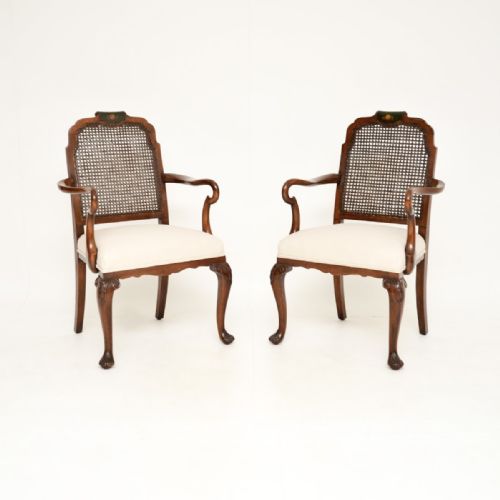
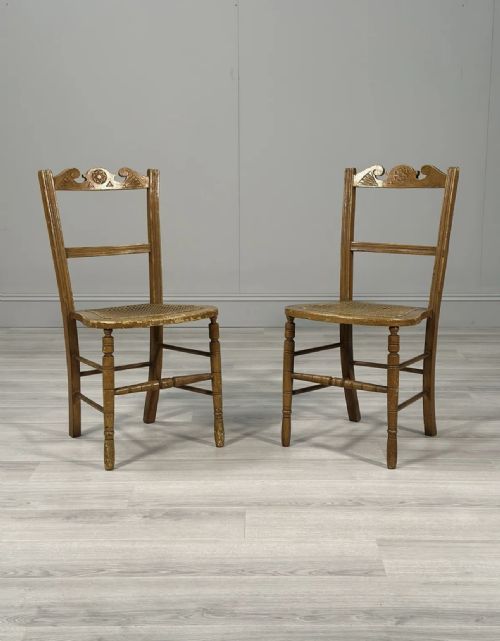
Surface decoration involved skilled painting, lacquering, or scumble techniques to simulate richer grains or provide a smooth ground for heraldic artwork. Artisans applied pigment by hand to crests and shields, frequently adding brass details, leather inserts, or woven cane panels for textural contrast.
Painted Crest Chairs Retail Price Guide 2026
Typical asking prices for painted crest chairs among the pieces listed under this phrase on Sellingantiques today, from the lower quarter to the upper quarter. They describe what is for sale here now, not the wider market.
Some hall chairs were designed with solid wooden seats specifically to discourage lingering footmen from sitting down on the job.
What varies in quality
The distinction between standard utility seating and exceptional examples lies in the crispness of the timber carving and the precision of the painted armorial work. Superior pieces display finely rendered heraldic details on shield backs, executed by specialist artists rather than general painters.
Structural integrity and timber selection further separate the tiers, with well-figured mahogany or quarter-sawn oak commanding greater presence. The retention of original surface treatments, such as early scumble paint or authentic lacquer, preserves the integrity of the piece.
Gillows
The Painted Crest Chairs Glossary
- Hall chair
- A rigid, upright wooden seat designed for an entrance hall rather than long periods of sitting. These pieces usually feature solid timber seats and decorated backs.
- Armorial
- Relating to heraldry and family coats of arms. This term describes the painted or carved crests displayed prominently on the chair backs.
- Shield back
- A chair back shaped like a heraldic shield, popular in eighteenth and nineteenth-century design. This form provides an ideal flat surface for painted crests.
- Scumble
- A decorative painting technique involving layers of opaque or translucent colour dragged over a base coat. It often mimics the appearance of more expensive wood grains.
- Regency
- A British design period spanning the early nineteenth century, characterised by classical restraint and revival motifs. Pieces from this era often draw inspiration from ancient Roman and Greek forms.
Painted Crest Chairs: Frequently Asked Questions
What is a painted crest chair?
These are historical wooden seats featuring painted or carved heraldic crests, coats of arms, or armorial shields on their backs. They were traditionally placed in the entrance halls of grand houses to display family lineage to arriving guests.
Today, they serve as striking sculptural accents in modern interiors. Their upright proportions make them ideal for narrow spaces or as decorative statements against a wall.
Where were they used?
They stood in the entrance halls, corridors, and vestibules of country houses and town residences. Guests would sit on them briefly while waiting to be announced.
Because they lived in entryways, many surviving examples were built to withstand heavy use. Solid timber construction helped them endure drafts and frequent comings and goings.
How do I style one at home?
Position a single chair in a hallway, landing, or bedroom as a focal point rather than everyday seating. Their strong architectural backs and painted details make them natural conversation pieces.
Pair them with neutral walls to let the heraldic colours and timber grain stand out. Avoid placing them in direct sunlight to protect the painted crests and wooden surfaces.
How do I date these chairs?
Examine the timber species, construction methods, and the style of the painted crest to determine the period. Georgian and Regency examples often feature lighter mahogany and classical lines, while Victorian versions may use heavier oak or scumble paint.
The evolution of heraldic painting styles and cabinetmaking techniques offers clear clues to a piece's age. Comparing the joinery underneath provides further confirmation of the manufacturing era.