

Carved Glass Cabinet
A carved glass cabinet brings together timber framing and transparent panes to display treasured objects.
Carved Glass Cabinet
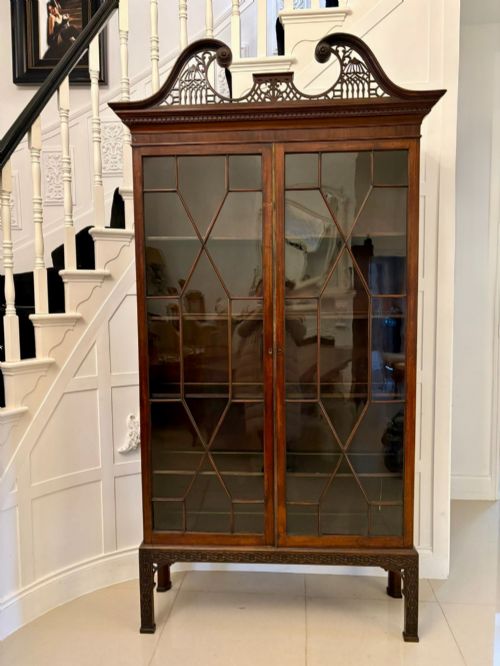
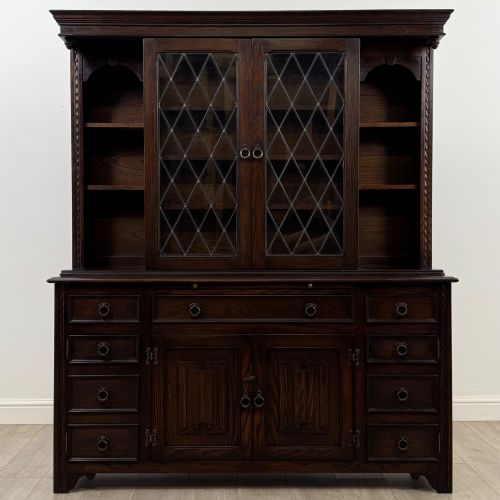
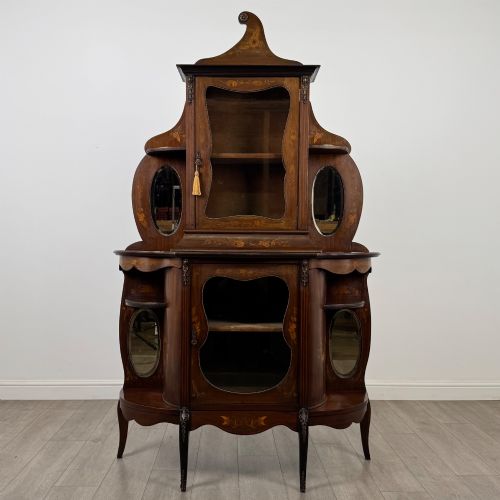
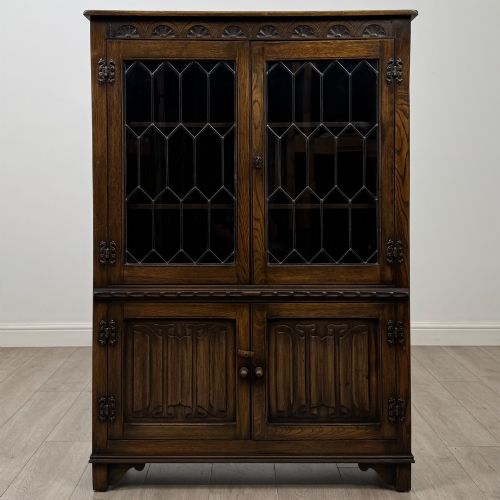
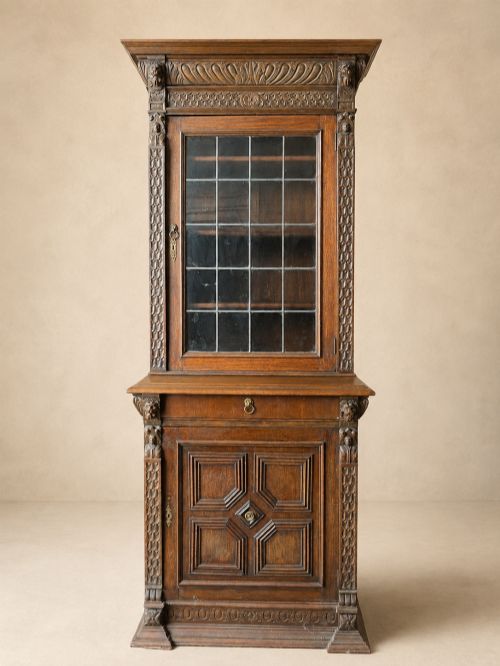
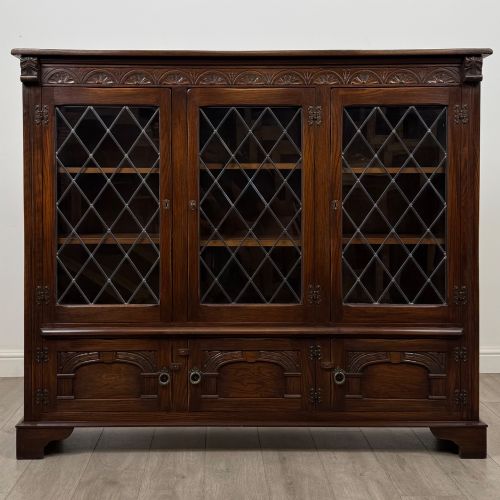
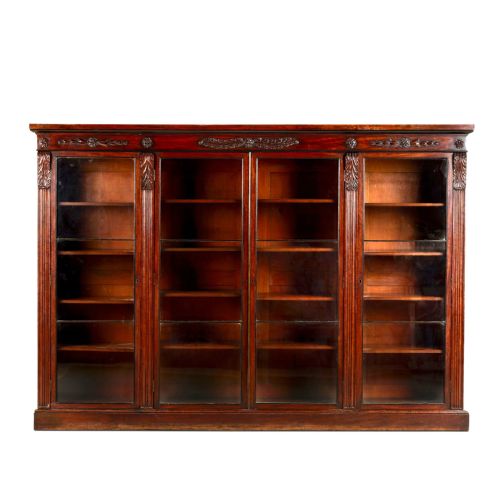
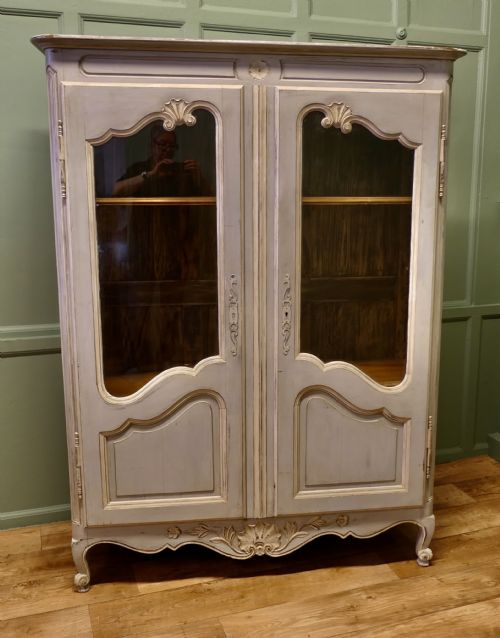
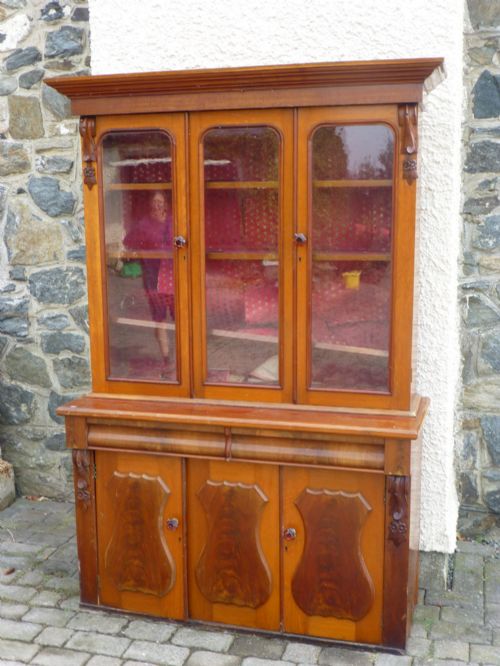
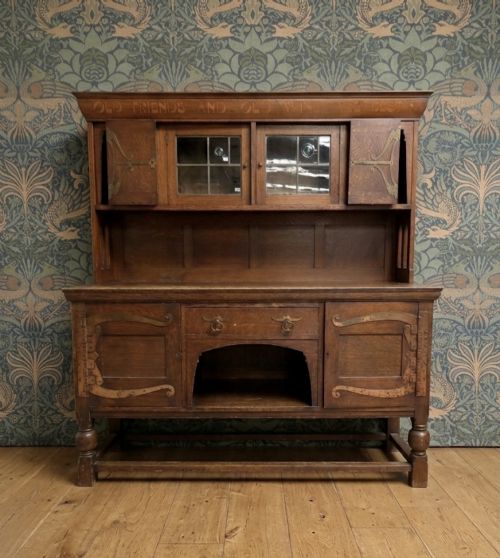
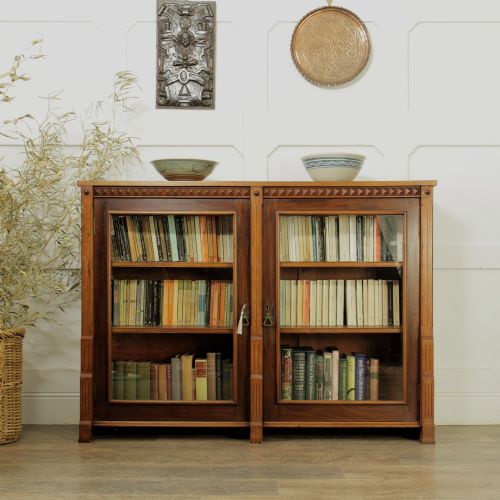
A carved glass cabinet encompasses display pieces, bookcases, sideboards and vitrines originating from the nineteenth century through the early twentieth century. These furnishings combine timber cabinetry with glazed doors or panels designed to showcase books, porcelain or curiosities.
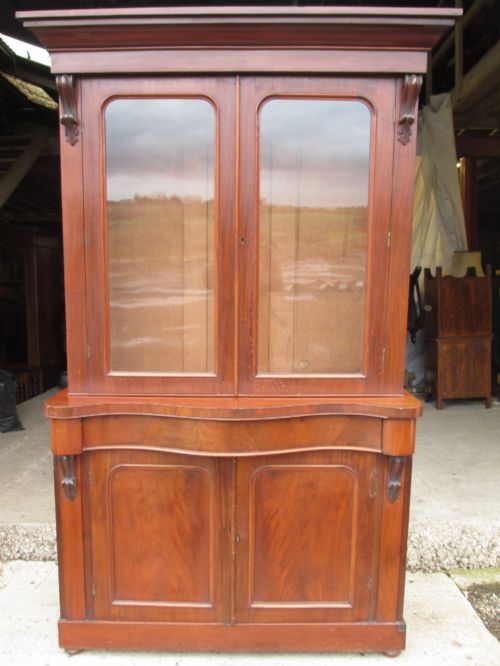
The most common examples on this page are Edwardian oak display cabinets and Victorian mahogany bookcases. Pieces span revival styles including Jacobean, Chippendale, Queen Anne and Regency, alongside Arts and Crafts and Art Deco designs.
Materials and construction
Makers utilised solid and veneered timbers such as mahogany, oak, walnut and pine, often embellished with brass hardware, fabric linings and mirror plates. Structural framing supports leaded, stained or astral glazed panels set into doors and sides.
Joinery techniques include hand-carved decorative motifs, inlaid woodwork and shaped serpentine or breakfront profiles. Lead cames hold individual panes of glass together within cabinet doors and specialised display tables.
Among the timber and brass stands an unexpected Japanese red lacquer hardwood display cabinet, proving Victorians loved global flair.
Craftsmanship and distinction
Quality rests in the precision of the timber carving and the selection of figured wood grains. Superior pieces demonstrate crisp joinery, well-fitted doors and intricate applied mouldings that remain stable over time.
The integrity of the glass panes, the weight of the brass fittings and the sophistication of revival detailing distinguish finer examples from standard production. Maker attribution also elevates certain items within the selection.
Gabriel Viardot·Ambrose Heal for Heal & Son·Maple & Co.·James Winter & Sons
The Carved Glass Cabinet Glossary
- Astral glazing
- A framework of slender wooden bars dividing glass panes within a door. This technique originated in earlier centuries and saw revival use in Victorian bookcases.
- Bijouterie table
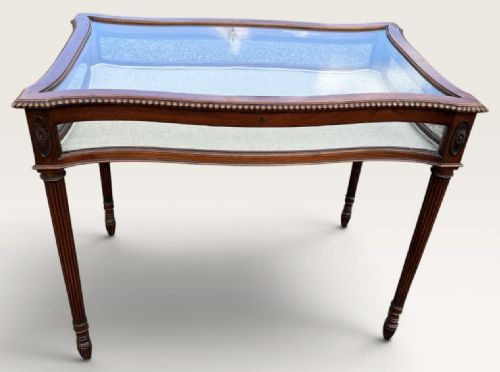
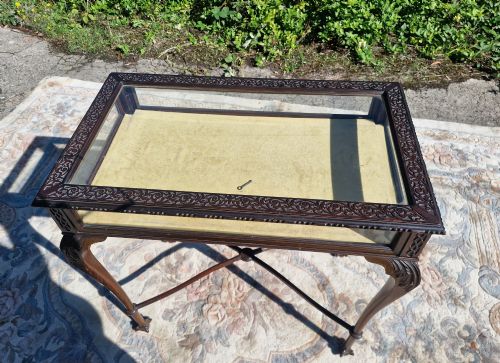
- A glass-topped display table intended for small ornaments, medals or jewellery. These pieces often feature hinged lids and fabric-lined interiors.
- Linenfold
- A carved wood panel motif resembling folded cloth. This style appears frequently on Edwardian oak cabinetry.
- Vitrine
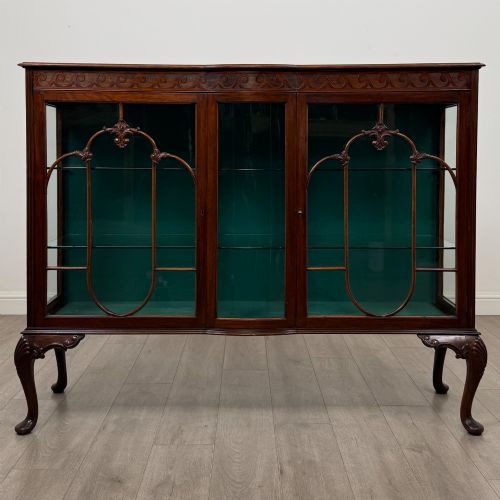
- A glass-fronted cabinet designed for displaying fine porcelain or curiosities. These pieces often feature glazed side panels to maximise light exposure.
- Breakfront
- A piece of furniture where the central section projects forward from the flanking wings. This architectural arrangement creates depth and shadow.
Carved Glass Cabinet: Frequently Asked Questions
What periods do these cabinets represent?
The selection spans the nineteenth and early twentieth centuries, encompassing Victorian, Edwardian, Regency and Art Deco eras. Revival styles from these periods draw upon earlier Tudor, Jacobean and Queen Anne aesthetics.
Craftsmen built these furnishings using traditional woods and glazing methods appropriate to their specific decade of manufacture.
How should I clean a carved wooden cabinet?
Dust timber surfaces regularly with a soft, dry cloth to prevent particulate buildup in carved crevices. Avoid silicone-based polishes that can degrade historic finishes over time.
Clean glass panes with a mild glass cleaner applied to a cloth rather than sprayed directly onto the surface, protecting the surrounding wood and lead cames.
Where were these cabinets placed in period homes?
Bookcases and display cabinets stood primarily in libraries, drawing rooms and formal reception spaces to house literature and collections. Sideboards and serving pieces functioned in dining rooms for storage and display.
Smaller bijouterie tables and vitrines occupied prominent spots in sitting rooms where guests could inspect small decorative objects.
How do I identify a revival style cabinet?
Revival pieces incorporate decorative motifs from older eras, such as Jacobean strapwork or Chippendale fretwork, built using nineteenth or twentieth-century construction methods. Wood patination and hardware styles help confirm the actual date of manufacture.
Comparing structural joints and interior timber against known period baselines clarifies whether a piece is original or a later revival.