
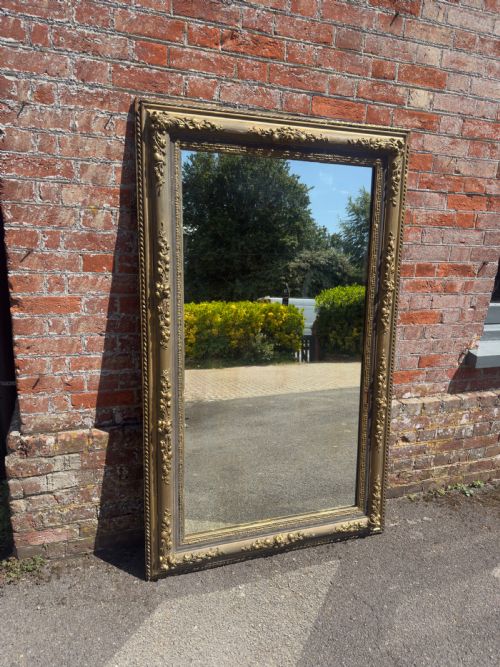


Carved Giltwood Floor Mirror
A carved giltwood floor mirror brings a commanding presence and reflective light to a room, drawing the eye with its gilded ornamentation.
Carved Giltwood Floor Mirror
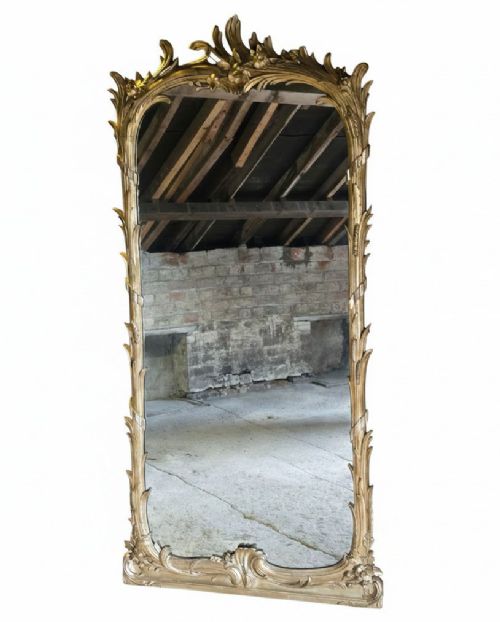
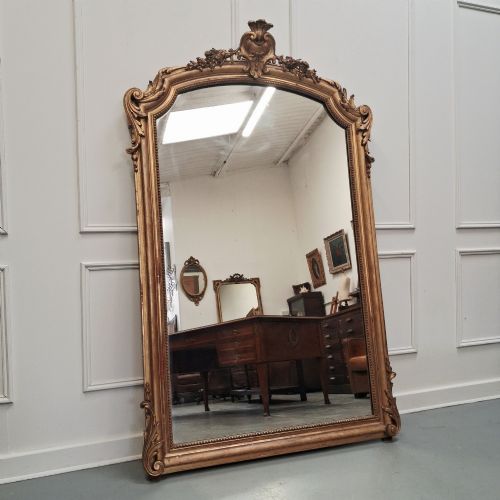
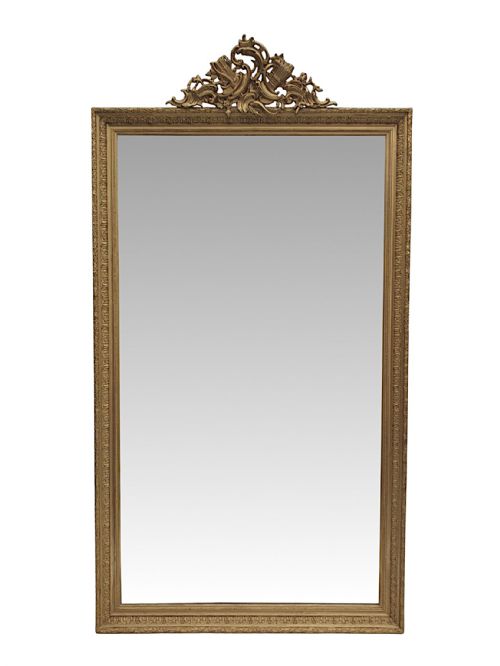
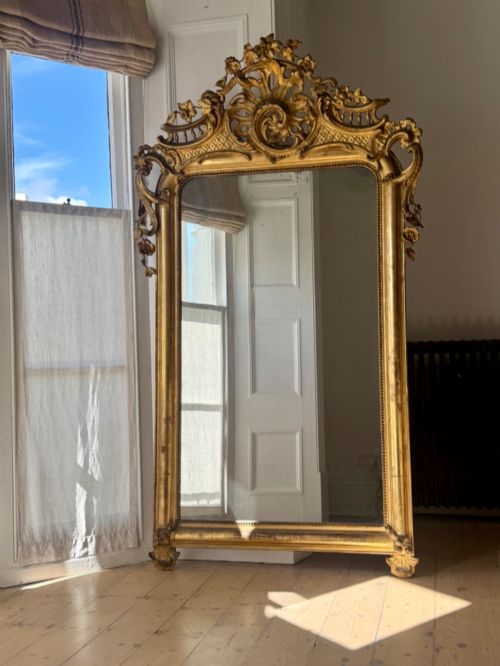
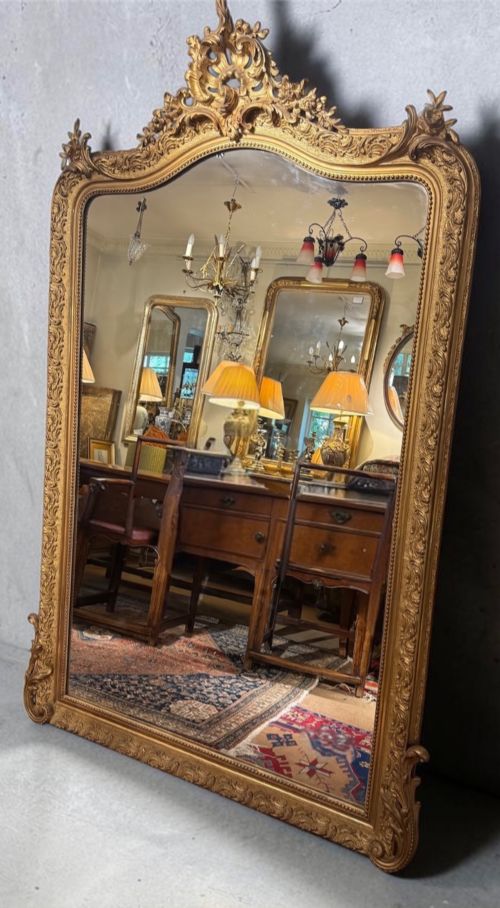
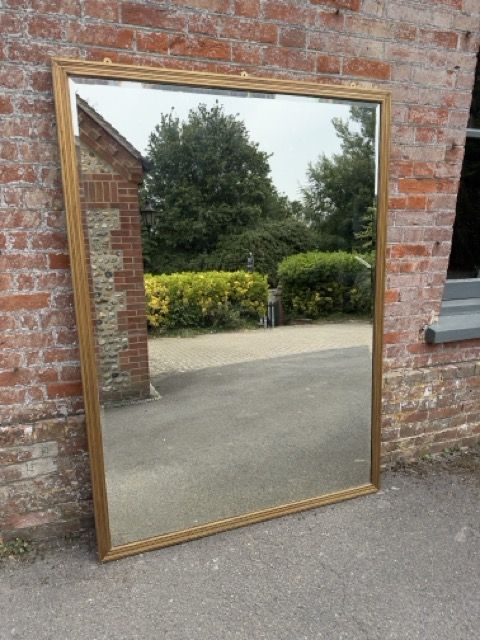
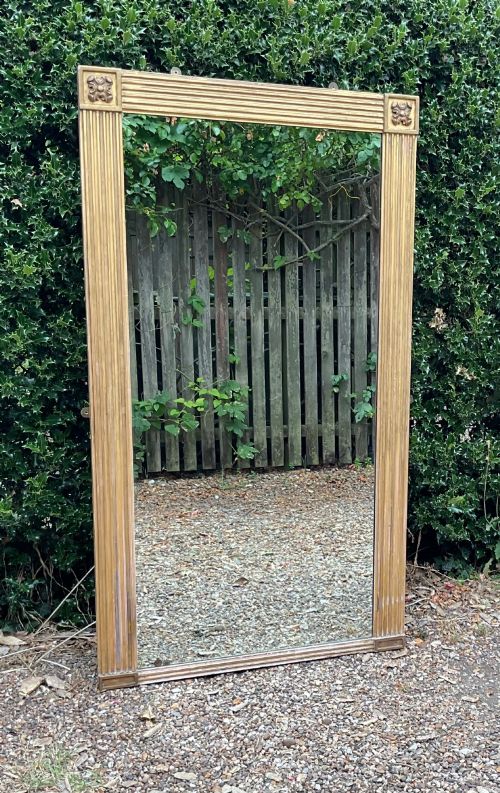
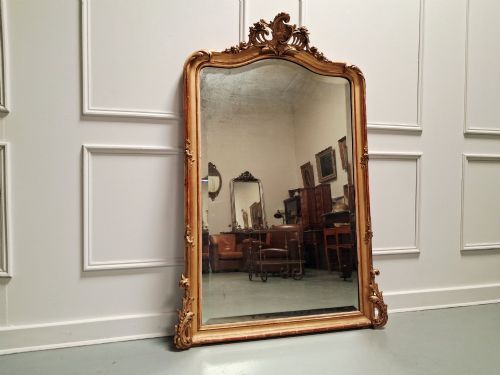
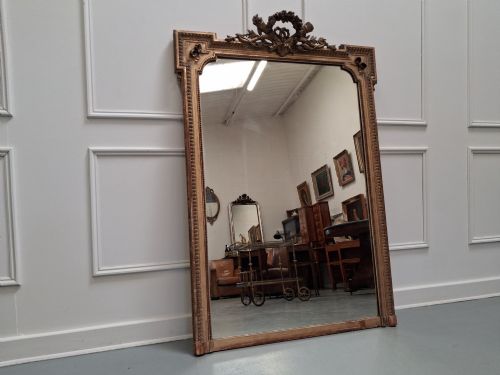
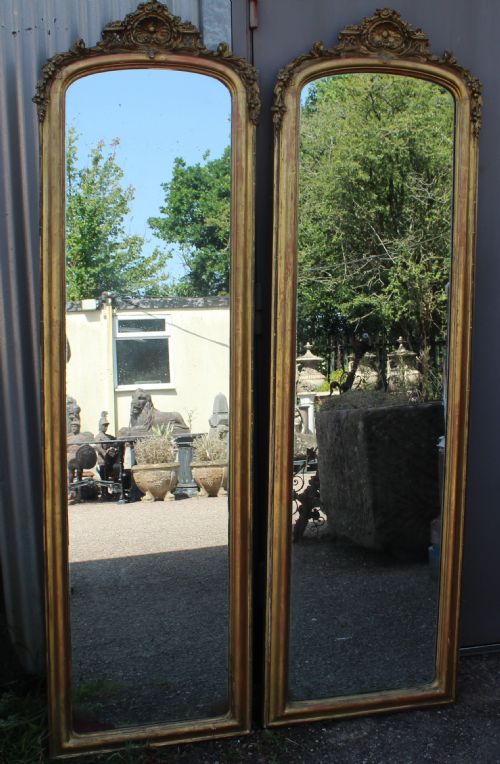
A carved giltwood floor mirror is a substantial furnishing designed to stand on the floor or lean against a wall, offering a full-length reflection. The examples found here span from the Regency period through the nineteenth century, encompassing French Rococo, Neoclassical, and Louis XV styles.
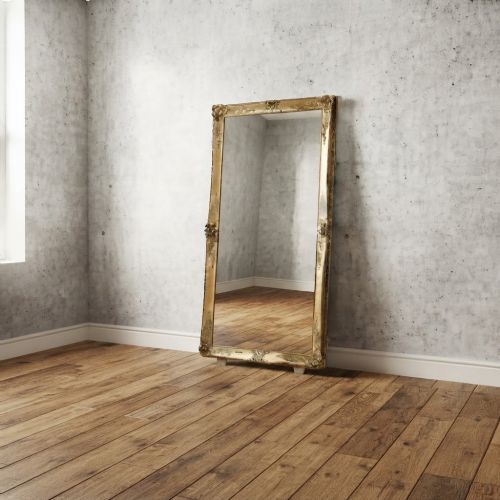
Buyers most frequently encounter large nineteenth-century French and English pieces, often described as leaner mirrors, pier mirrors, or cheval mirrors. These tall formats serve both functional dressing purposes and grand decorative roles within domestic interiors.
How they were made
The construction of a carved giltwood floor mirror relies on a timber frame shaped by hand and enriched with layers of gesso. Artisans applied gold leaf or composition metal onto the prepared surface, sometimes combining parcel gilding with painted details.
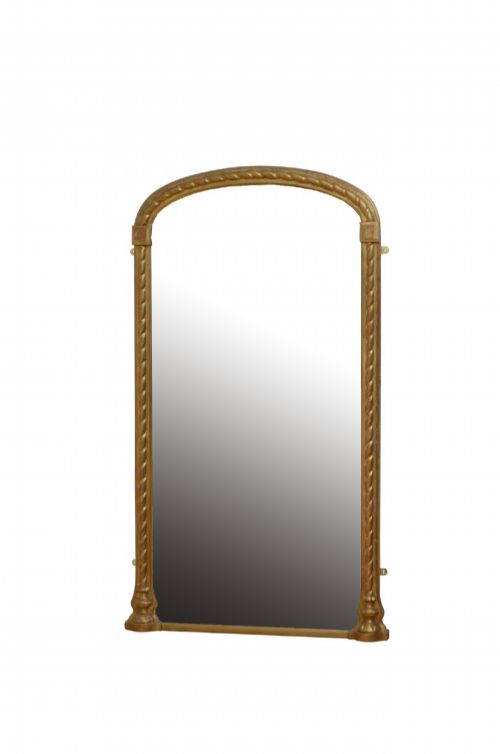
Many historical pieces utilise mercury glass within the frame, creating the distinctive mottled depth associated with older looking glasses. Carved elements range from rope twists and ribbed mouldings to elaborate ornate crestings and scrolls.
Some nineteenth-century frames hide layers of red bole beneath the gold leaf, peeking through where centuries of dusting softened the corners.
What varies in quality
The distinction between tiers of quality rests upon the depth and crispness of the wood carving and the preparation of the gesso beneath the gilding. Superior examples display meticulously hand-carved relief work where floral or scroll motifs remain sharp and defined.
Another measure of quality is the originality of the mercury glass plate and the integrity of the original gilt surface. Pieces that retain their historic gilding without excessive modern intervention command greater appreciation from collectors.
Nosotti's
The Carved Giltwood Floor Mirror Glossary
- Giltwood
- Wood that has been coated with gold leaf or a gold-coloured finish. This material forms the golden surfaces characteristic of formal nineteenth-century frames.
- Gesso
- A plaster-like mixture applied to wood frames to create a smooth surface for gilding. It allows carvers to build up intricate relief ornaments.
- Leaner mirror
- A tall mirror designed to rest against a wall rather than hang from brackets. These large formats provide a full-length reflection.
- Mercury glass
- A type of double-walled glass blown with a silvering mixture between the layers. It produces a characteristic cloudy and atmospheric reflection.
- Pier glass
- A tall mirror specifically designed to hang or stand on the narrow pier of wall between windows. They often feature matching console tables placed underneath.
Carved Giltwood Floor Mirror: Frequently Asked Questions
How do I secure a floor mirror safely?
Large mirrors that rest on the floor require proper wall anchoring to prevent tipping hazards, particularly in busy rooms.
Most substantial frames include discreet attachment points at the top rear for securing the piece firmly to a wall stud.
What is the difference between a pier mirror and a leaner mirror?
Pier mirrors were historically scaled to fit the narrow wall space between two windows, frequently paired with console tables.
Leaner mirrors are generally taller and heavier, built to stand directly on the floor while leaning back against a main wall.
How do I identify a nineteenth-century gilt mirror?
Nineteenth-century examples often display deep hand-carved wooden frames built up with gesso ornamentation in French or English revival styles.
Closer inspection of the reverse reveals older timber construction techniques, hand-beveled glass plates, and aged gilding patination.
Can these mirrors be used in a hallway?
Tall reflective surfaces function effectively in hallways by bouncing natural light around narrow spaces and creating an illusion of depth.
Placing a tall frame in an entranceway provides a practical spot for a final check before leaving the house.