





Traditional Ornate Gilt Mirror
A traditional ornate gilt mirror brings light and grand scale into a room, drawing the eye with carved detail and gleaming gold leaf.
Traditional Ornate Gilt Mirror
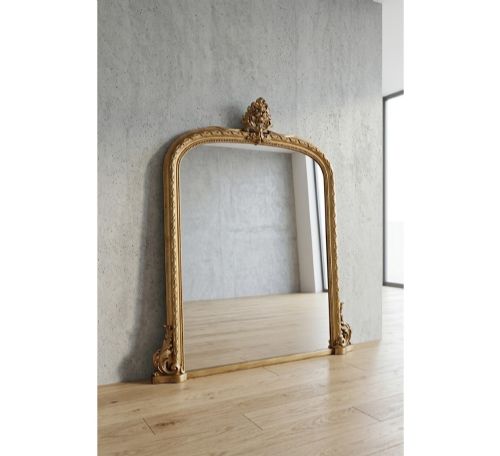
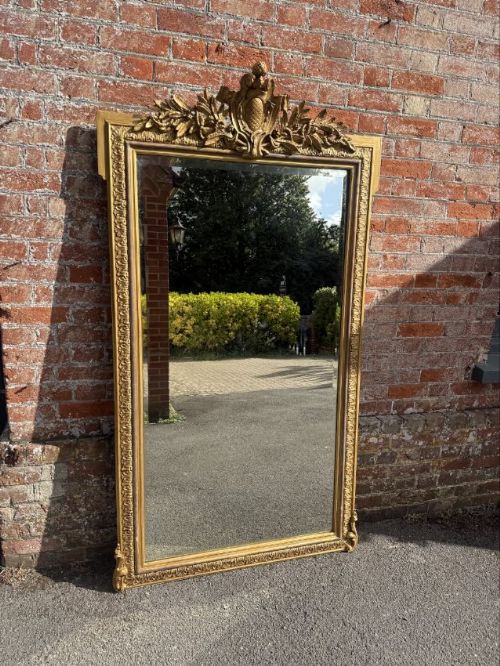
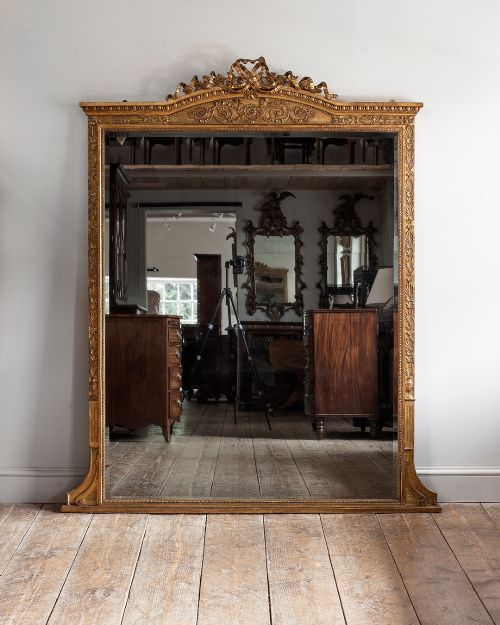
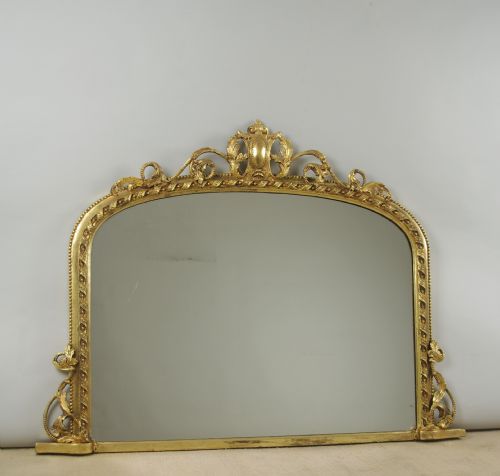
A traditional ornate gilt mirror is a statement piece designed to reflect light and anchor a room, most frequently seen here as a large nineteenth-century overmantel or wall mirror. These pieces span the Victorian and Edwardian eras, incorporating revivalist design motifs like Rococo scrolls and Baroque framing.
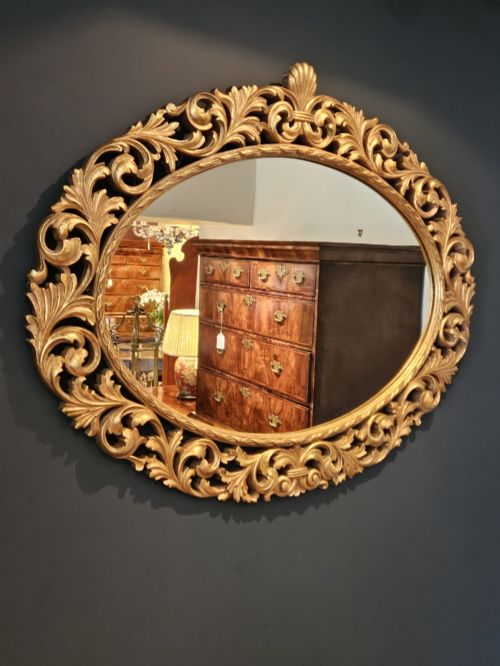
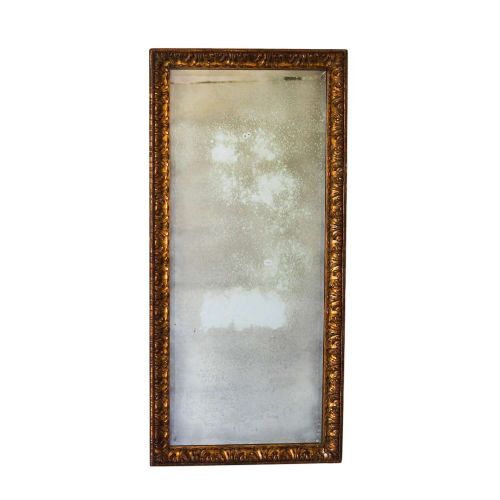
The selection ranges from tall pier mirrors and oval timber frames to grand architectural overmantels meant to sit above a fireplace. English and French workshops dominate the origins, often utilising classic arched or rectangular proportions.
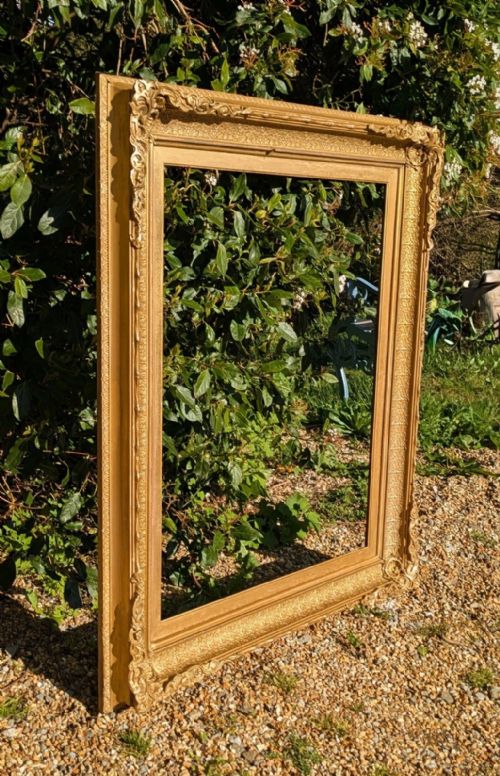
Buyers encounter heavy wooden frames built for domestic presence, carrying elaborate gesso ornamentation finished in gold. Such mirrors served both practical and decorative functions in nineteenth-century interiors, expanding visual space while displaying craftsmanship.
How they were made
Carved timber or wood forms the core structure of these pieces, providing a sturdy foundation for heavy glass and decorative mouldings. Artisans applied layers of gesso over the wood to build up relief details, creating the smooth surfaces necessary for precise ornamentation.
Gold leaf or gilt finishes were applied to the prepared surfaces, catching the light and giving the frames their characteristic metallic sheen. Composition material was frequently moulded and pressed into place to achieve intricate repeating motifs without the time required for deep hand carving.
Several mirrors include unexpected portrait oleographs alongside traditional carved timber frames.
What varies in quality
The depth and crispness of the carved detail separate standard production from superior examples, as hand-carved elements display sharper definition than moulded composition ornament. The preservation of the original gold leaf surface dictates the visual integrity of the piece over time.
Proportion and scale play significant roles in desirability, with larger overmantel formats and balanced architectural frames commanding greater presence. The integrity of the underlying timber frame and the clarity of the original glass plate contribute to the overall standard of the object.
The Traditional Ornate Gilt Mirror Glossary
- Gesso
- A plaster-like mixture applied to wood frames to create a smooth surface for gilding and relief carving. It allows intricate decorative details to be shaped before the gold leaf is applied.
- Giltwood
- Timber that has been covered with gold leaf or gilt finish. This material defines the bright, reflective appearance characteristic of these decorative frames.
- Overmantel mirror
- A large mirror specifically designed to hang on the wall directly above a fireplace mantel. These pieces often feature horizontal proportions or grand arched tops to fill the chimney breast.
- Pier mirror
- A tall, narrow mirror designed to hang on the wall space between two windows. They make efficient use of narrow wall areas to reflect natural light into the room.
- Composition
- A mouldable mixture of whiting, resin, and oil pressed into dies to form decorative ornaments. It provided a faster alternative to hand carving for ornate frame details.
- Oleograph
- A mechanical colour print textured to imitate an oil painting, sometimes found framed behind glass in these listings. It represents the broader decorative arts associated with nineteenth-century interiors.
Traditional Ornate Gilt Mirror: Frequently Asked Questions
Where should I hang an overmantel mirror?
These large mirrors traditionally hang directly above a fireplace mantel to reflect light and anchor the room's proportions.
They also function well on principal living room walls where their scale can dominate and expand the visual space.
How do I identify a Victorian gilt mirror?
Victorian examples often feature heavy timber construction covered in gesso and gilt, utilising arched tops or elaborate scrollwork.
Many incorporate revival styles such as Rococo or Baroque ornamentation typical of nineteenth-century British and French design.
What is the difference between giltwood and composition?
Giltwood consists of solid timber carved directly by hand, whereas composition uses moulded paste pressed onto a wooden base for ornamentation.
Hand-carved giltwood typically shows sharper relief and greater depth than pressed composition details.
Are French mirrors different from English ones?
French mirrors from this period frequently display lighter, more fluid Rococo curves and elegant dressing mirror formats.
English pieces tend toward substantial overmantel proportions with architectural framing and heavier timber construction.