
Gesso Gilt Overmantel Mirror
A gesso gilt overmantel mirror brings instant light and architectural weight to a room, anchoring a chimney breast with period presence.
Gesso Gilt Overmantel Mirror
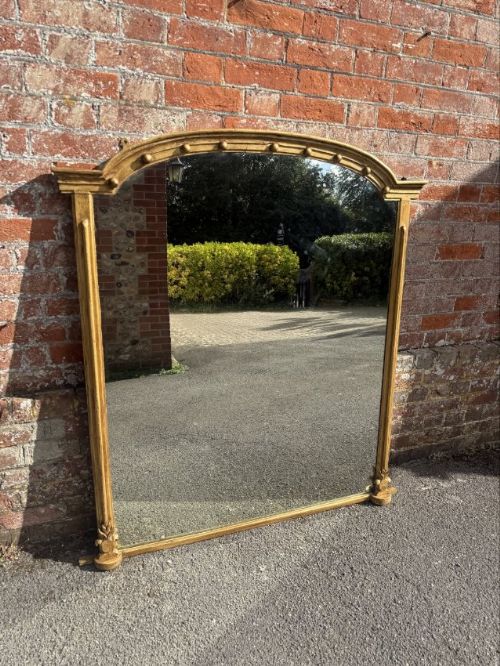
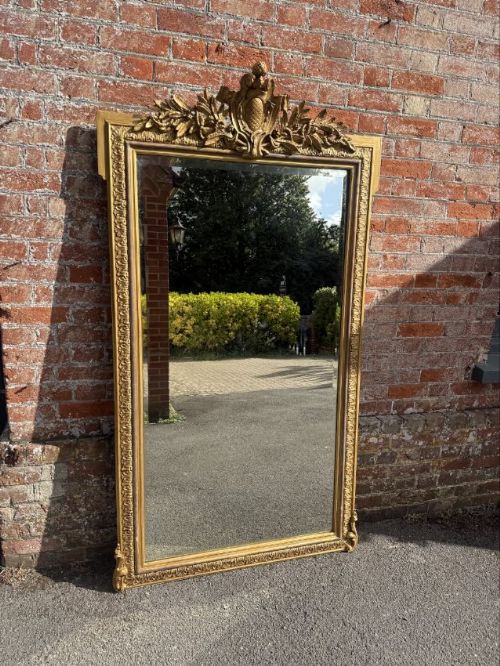
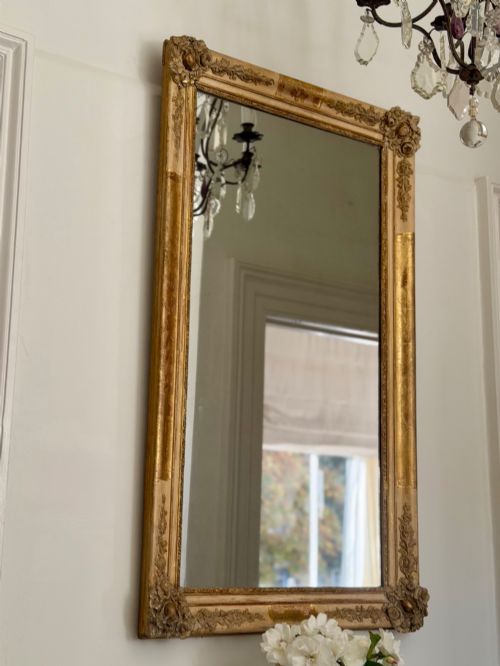
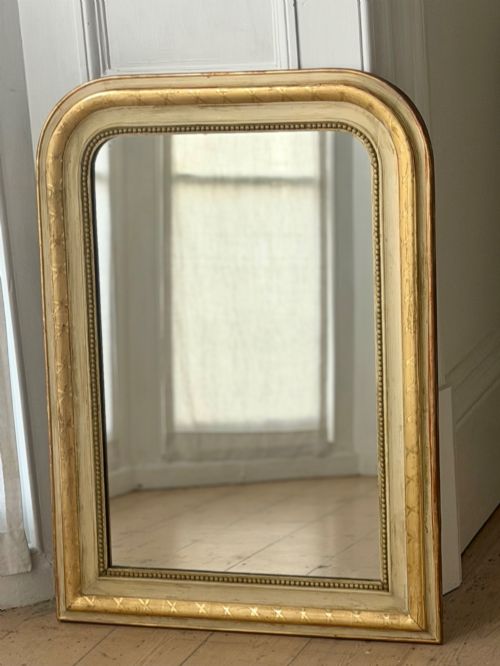
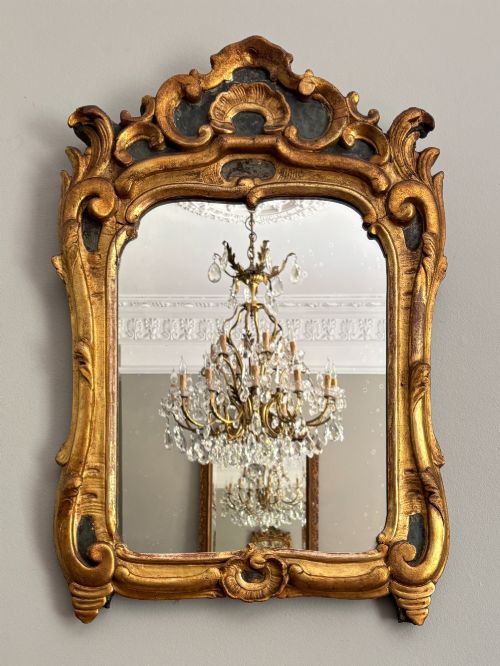
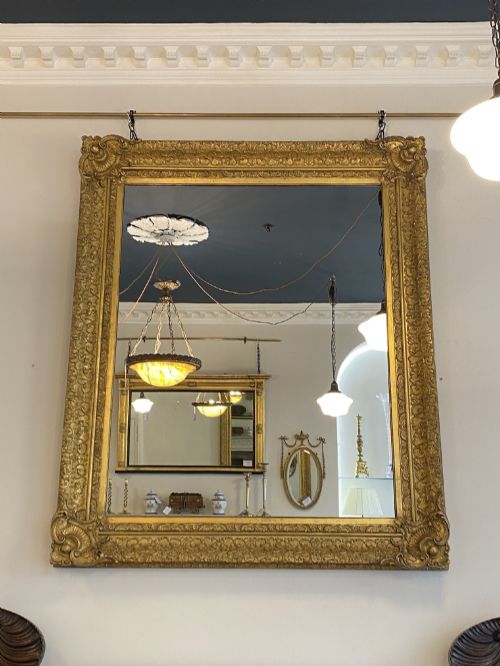
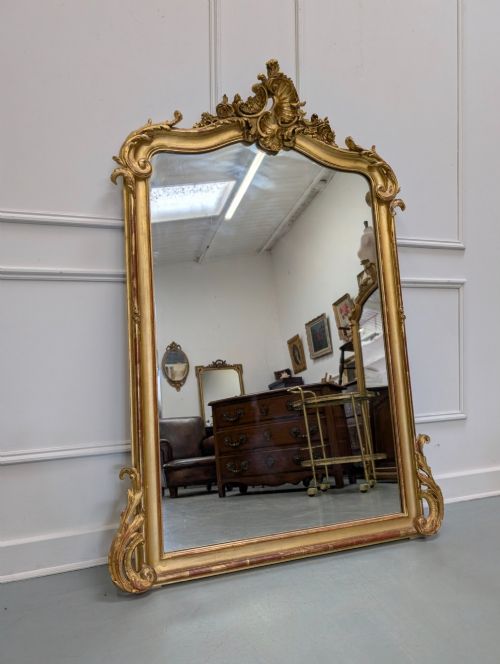
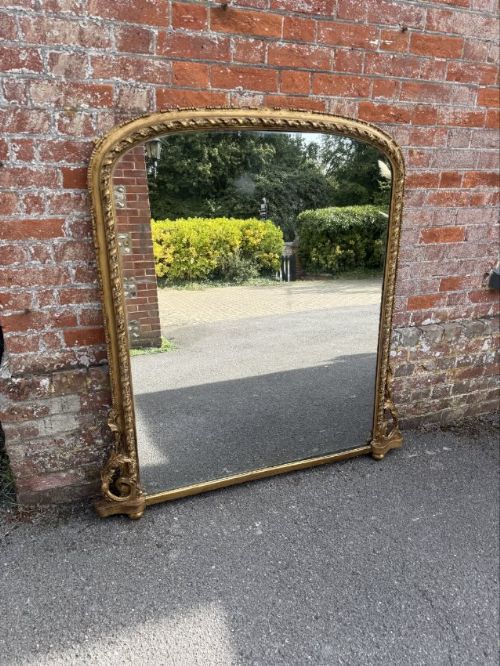
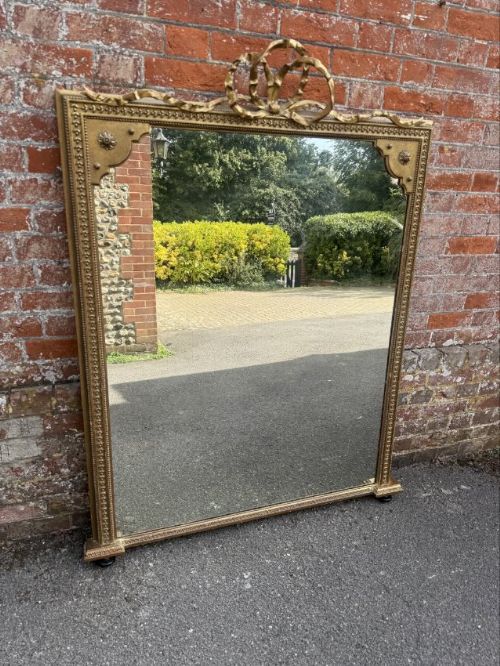
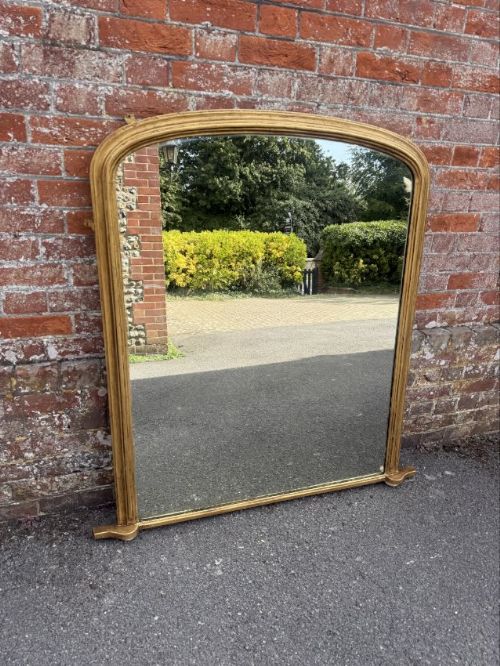
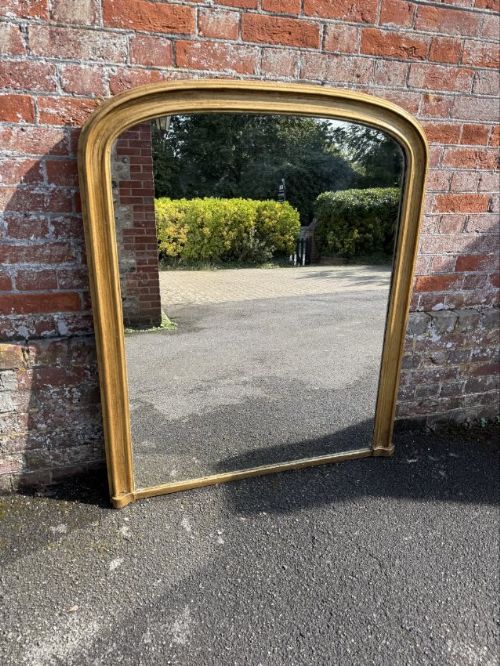
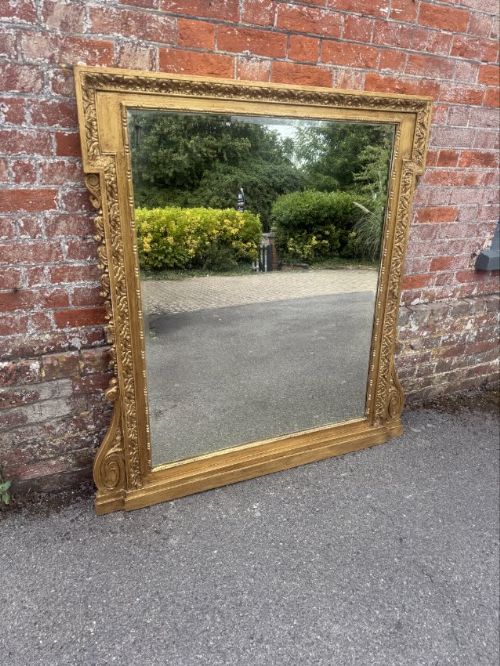
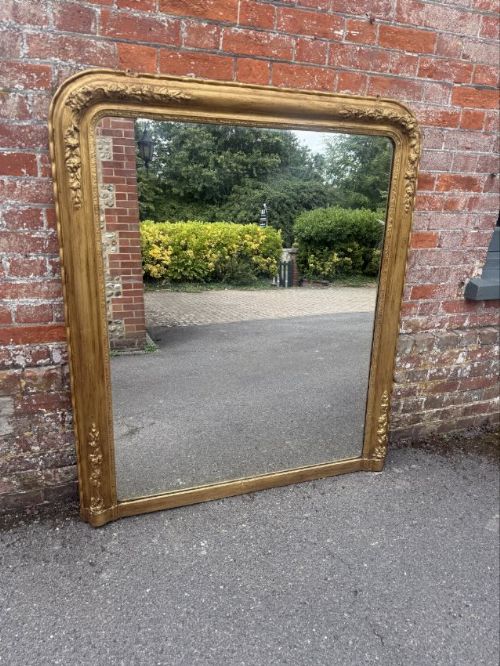
A gesso gilt overmantel mirror is a large decorative glass designed to sit above a fireplace, reflecting light and filling the broad wall space of a formal reception room. The pieces found here date predominantly from the nineteenth century, including Victorian English examples alongside continental French styles such as Napoleon III, Louis Philippe, and Rococo Revival.
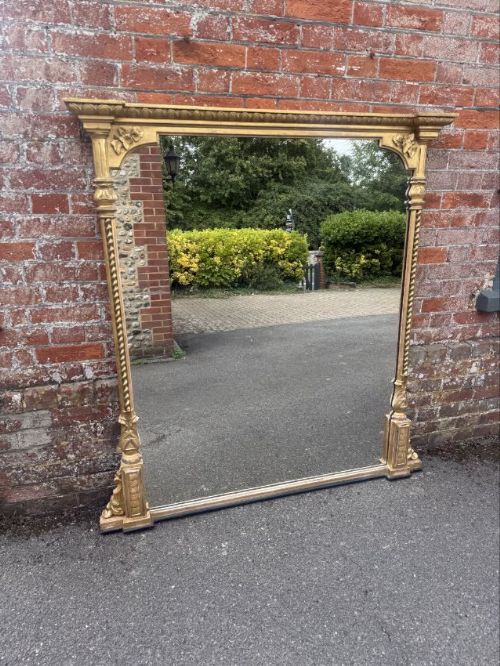
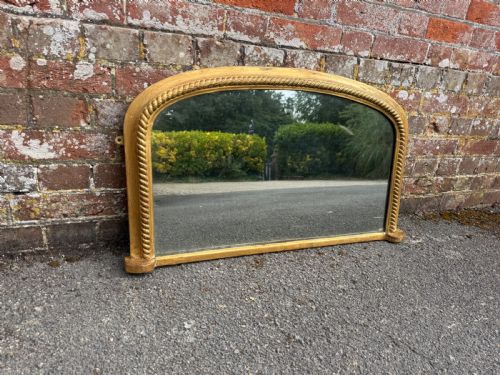
Most items on this page span the mid to late decades of the nineteenth century, showcasing arched tops, rectangular proportions, and elaborate framing. English makers favoured substantial timber frames with rope twist, tulip, or column details, while French pieces often display shaped crests and organic scrollwork.
Earlier eighteenth-century examples also appear, representing Georgian craftsmanship with deep carving and refined gesso preparation. These large formats were constructed specifically to command the domestic interior, stretching horizontally or vertically to match nineteenth-century mantel proportions.
How They Were Made
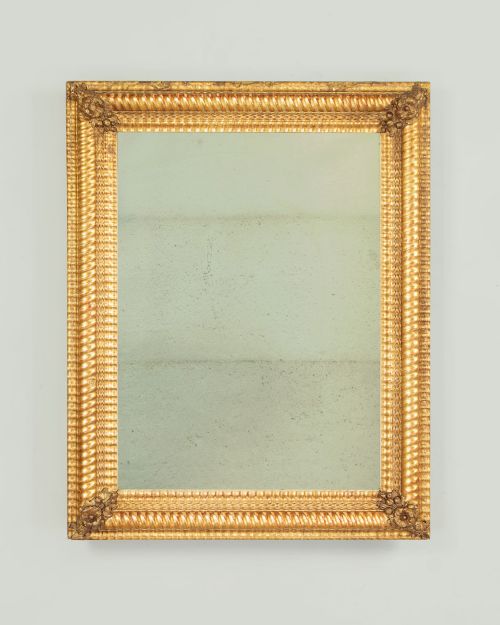
The foundation of these pieces rests on a carved wood carcass, typically pine or hardwood, which provides the rigid skeleton required to support heavy glass. Artisans applied successive layers of gesso - a mixture of chalk and binder - directly onto the timber base to build up a smooth surface for intricate relief ornamentation.
Once dried and carved, the gesso received applications of gold leaf or liquid gilt, bonded to the prepared surface to create a metallic sheen. Many pieces utilise mercury glass within the frame, producing a characteristic mottled reflection due to the silvering process employed during the period.
What Varies in Quality
Quality in a gesso gilt overmantel mirror lies in the crispness of the modelled ornament and the depth of the carved wooden detailing beneath the plaster layers. Superior examples retain their original gilding and retain sharp definition in motifs like rope twists, floral frames, and architectural columns without softening from heavy wear or later overpainting.
The structural integrity of the heavy wooden carcass dictates longevity, separating robustly joined frames from those weakened by damp or shifted joints. Furthermore, the presence of original mirror glass, particularly mercury plates with authentic foxing, distinguishes untouched historical survivals from later replacement panels.
The Gesso Gilt Overmantel Mirror Glossary
- Gesso
- A dense plaster mixture of chalk and size applied to a wooden base to form a smooth ground for gilding or fine carving. This material allows artisans to mould sharp relief decorations.
- Giltwood
- Timber that has been coated with gold leaf or metallic powder to simulate solid gold. It provides a luminous surface that catches low room lighting.
- Overmantel
- A large mirror or painting specifically scaled to hang on the wall directly above a fireplace mantelpiece. These fixtures dominated Victorian and Georgian drawing rooms.
- Mercury Glass
- A double-walled blown glass type silvered with a mercury amalgam between the layers, creating a characteristic speckled reflection. It is commonly found in older French mirrors.
Gesso Gilt Overmantel Mirror: Frequently Asked Questions
Can I clean the original mirror glass?
Clean the glass gently using a soft, dry microfibre cloth to remove surface dust without disturbing the fragile edges where the silvering meets the frame. Avoid commercial liquid cleaners that might seep behind the plate and damage the backing.
Preserve the authentic character of nineteenth-century glass, including minor foxing and age spots, rather than striving for a modern, flawless reflection.
What rooms suit an overmantel mirror?
While originally designed for the chimney breast of a formal nineteenth-century drawing room or parlour, these mirrors work equally well above low sideboards or in spacious hallways. Their generous proportions bounce natural light deep into smaller living spaces.
Ensure the width of the frame remains slightly narrower than the mantelpiece or piece of furniture it sits above to maintain visual balance.
How do I distinguish French and English nineteenth-century mirrors?
English pieces from this era frequently feature architectural elements like columns, rope twists, and strict arched tops designed for substantial Victorian hearths. French counterparts lean towards organic Rococo scrolls, shaped crests, and softer painted highlights.
Examining the construction methods on the reverse of the wooden carcass often reveals distinct regional framing traditions and joinery techniques.