
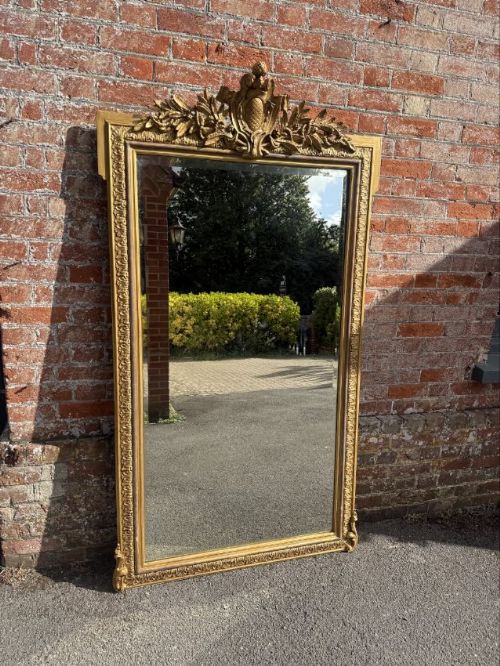
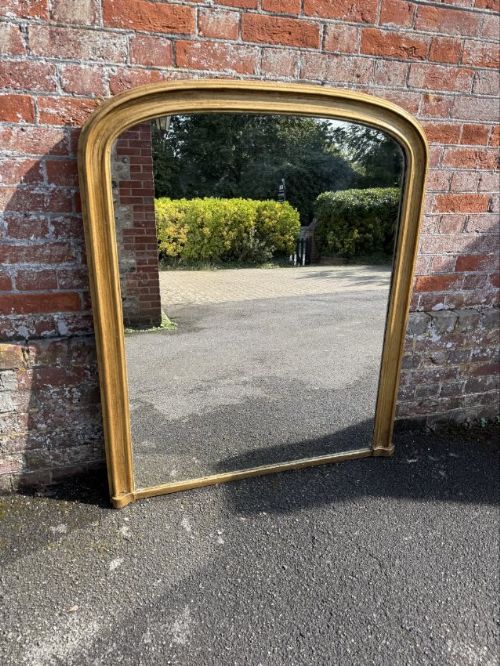
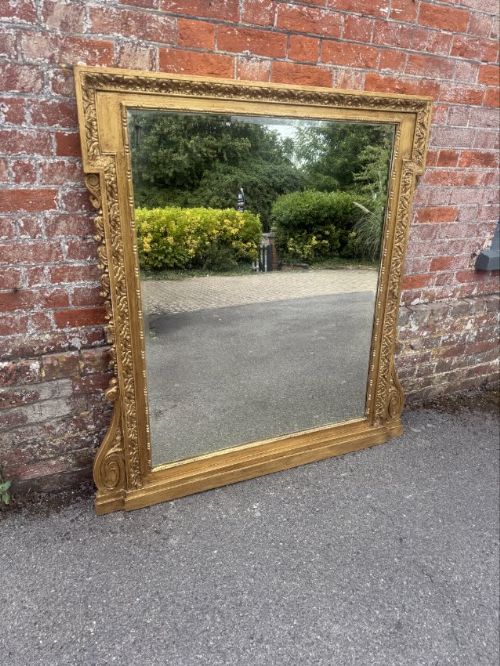


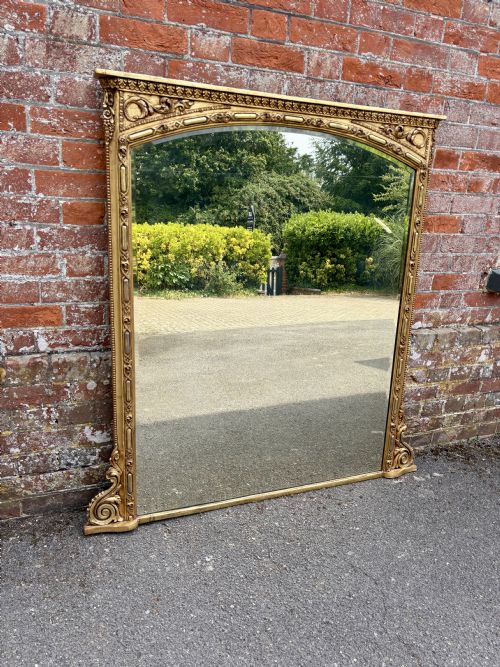
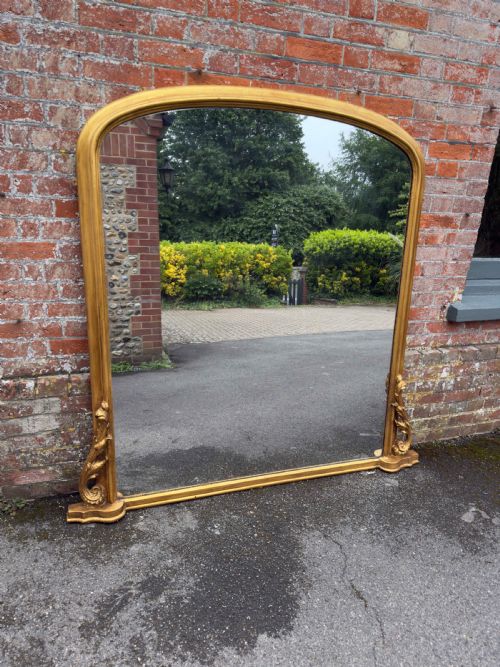


Edwardian Carved Gesso Mirror
An edwardian carved gesso mirror brings substantial architectural presence and reflective depth to a room through traditional surface moulding and gilt finish.
Edwardian Carved Gesso Mirror
When searching for an edwardian carved gesso mirror, collectors encounter overmantel mirrors, wall mirrors, and picture frames spanning various revival styles. The most prevalent pieces on this page are large nineteenth-century English overmantel mirrors alongside Edwardian wall mirrors featuring elaborate frames.
The objects combine carved wood structures with applied gesso decoration, frequently shaped with arched tops or oval formats. These frames draw upon earlier design vocabularies including Rococo, Adam, and Neoclassical styles.
Originating predominantly from English and continental workshops, these pieces function as focal points above fireplaces or within principal reception rooms. Their scale ranges from domestic wall formats to grand proportions designed for high ceilings.
Materials and Construction
The construction relies on a wooden base substrate, often carved directly or built up with applied mouldings to form the primary frame architecture. Artisans then applied gesso, a dense mixture of chalk or gypsum bound with animal glue, directly onto the wood.
This gesso layer was modelled, stamped, or carved while pliable to create intricate decorative reliefs such as floral motifs, scrolls, and classical details. Once dry, the surface received finishes including gold leaf, giltwood, or paint.
Many examples incorporate original mirror glass, occasionally retaining early mercury plates which exhibit characteristic speckling and depth. Sand moulding techniques also appear in select frames to achieve textured background surfaces.
Current listings feature pieces spanning the eighteenth century through to the Edwardian era, incorporating materials such as gold leaf, oak, and mirror glass.
Evaluating the Craftsmanship
Quality rests upon the crispness of the modelled gesso relief and the depth of the underlying wood carving. Superior examples display sharp undercutting and hand-tooled details rather than soft, mass-produced cast ornament.
The preservation of the original gilded or painted finish dictates the integrity of the piece. Retaining the authentic gold leaf or early surface patination without excessive overpainting distinguishes higher-tier works.
Proportion and structural balance also separate standard items from exceptional ones. The harmonious relationship between the mirror plate, the bevel, and the frame weight determines the overall aesthetic success.
The Edwardian Carved Gesso Mirror Glossary
- Gesso
- A fluid plaster mixture composed of chalk, gypsum, and animal glue applied to wood frames to build up surfaces for carving and gilding. This compound hardens into a durable base capable of holding fine sculptural detail.
- Giltwood
- Timber that has been coated with a thin layer of gold leaf or gold paint. This technique provides a luminous, reflective metallic surface popular in formal decorative schemes.
- Overmantel Mirror
- A large mirror specifically proportioned to hang on the wall directly above a fireplace mantelpiece. These pieces often feature horizontal emphasis or arched crowns to fit chimney breast dimensions.
- Mercury Plate
- An early type of mirror glass backed with a tin and mercury amalgam before the invention of modern silvering processes. It produces a characteristic mottled reflection with a warm, deep tonal quality.
- Rococo Revival
- A nineteenth-century design movement characterised by asymmetrical scrolls, C-curves, floral asymmetry, and naturalistic ornamentation. This style heavily influenced Victorian and Edwardian mirror frame designs.
Edwardian Carved Gesso Mirror: Frequently Asked Questions
What is an overmantel mirror?
An overmantel mirror is a large decorative looking glass designed to sit specifically on the wall above a fireplace surround. They frequently feature architectural arched tops and substantial frames to anchor the chimney breast.
Historically, these pieces served to reflect candlelight and brighten dark rooms while filling the vertical wall space between the mantel shelf and the cornice.
How do I care for gilt gesso frames?
Gilt gesso surfaces require careful maintenance using a dry, soft ostrich feather duster or a very gentle microfiber cloth. Moisture and chemical cleaning agents must be avoided entirely to prevent softening the water-soluble glue binder.
Keep these mirrors away from direct sunlight, damp environments, and excessive temperature fluctuations to protect the delicate plaster relief and metallic leaf from cracking or lifting.
What distinguishes gesso from carved wood?
Carved wood involves cutting away material directly from a solid timber block to form a decorative profile. Gesso is a chalk and glue compound built up over a wooden base and shaped or stamped while wet.
Many antique frames combine both techniques, using a carved wooden core overlaid with thick gesso to achieve intricate ornamentation that would be difficult to carve in timber alone.
How do I identify the period of a mirror?
Dating relies on examining the construction methods of the wooden frame, the composition of the gesso, and the characteristics of the mirror glass itself. Edge bevels, backboard construction, and joinery techniques provide clear chronological indicators.
Stylistic motifs also point to specific eras, such as the classical symmetry of Adam revival pieces versus the flowing asymmetry of Rococo revival frames.