
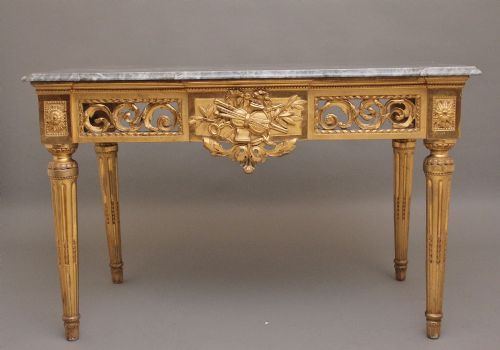
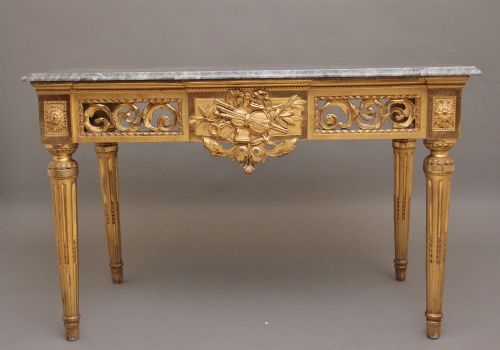
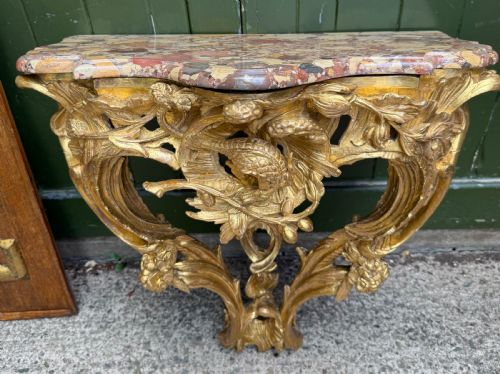
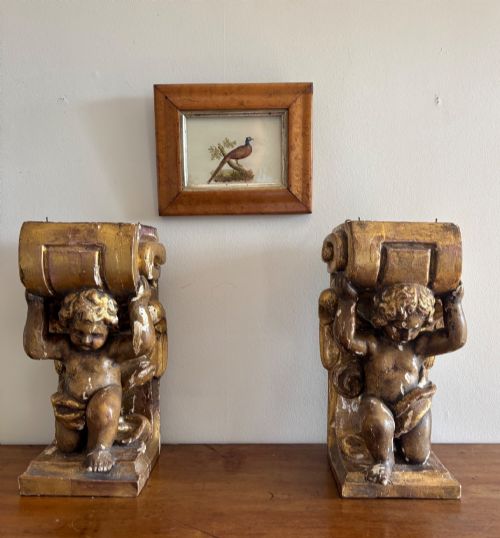
Carved Giltwood Console
A carved giltwood console brings sculptural presence to an interior, combining gilded surfaces with the heavy utility of marble and wood.
Carved Giltwood Console
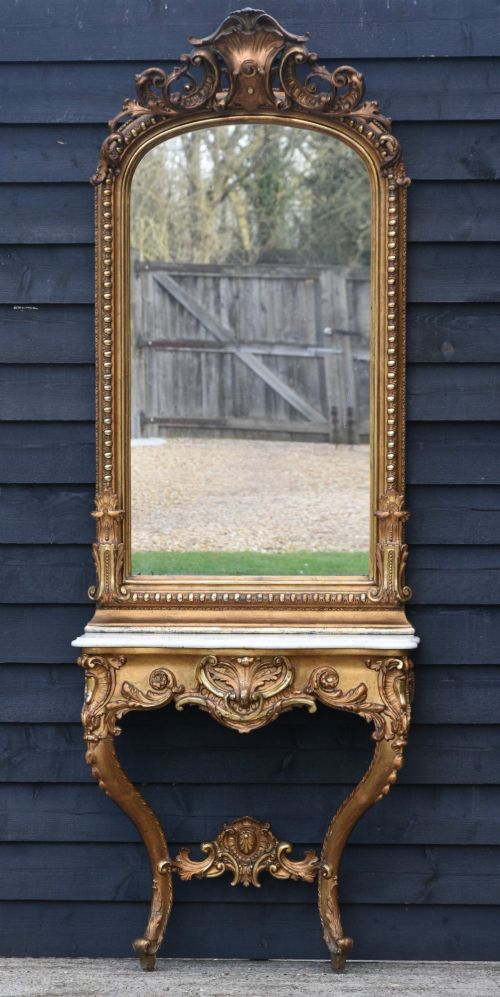
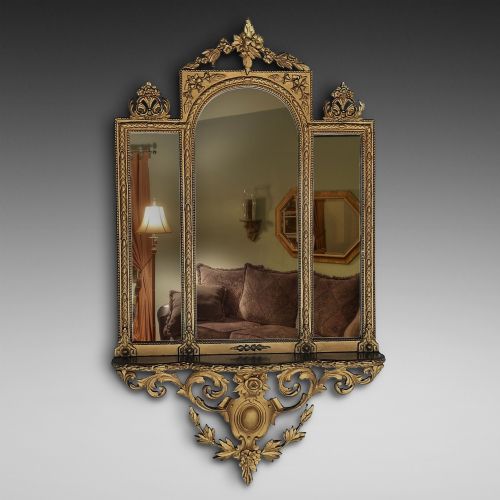
When you search for a carved giltwood console, you encounter wall-mounted or freestanding side furniture designed to anchor a drawing room, hallway, or salon. These tables serve as decorative ledges or display surfaces rather than heavy storage pieces, often paired with matching pier mirrors to amplify light and space in a room.
The pieces on this page span the 18th and 19th centuries alongside early 20th-century revivals, reflecting the enduring popularity of classical forms. French and Italian workshops dominate the selection, bringing varied interpretations of Neoclassical and Rococo design to the domestic interior.
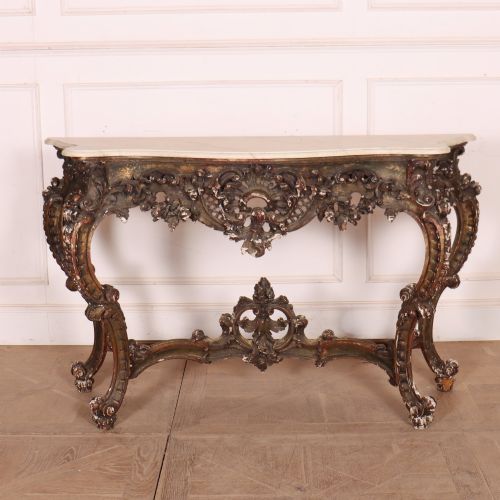
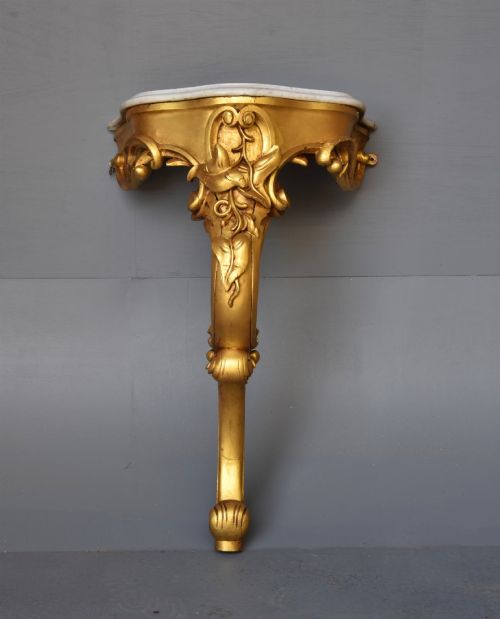
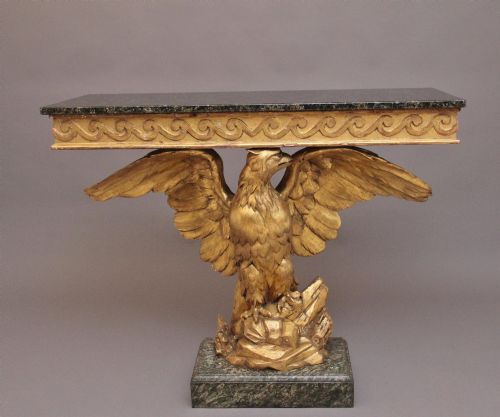
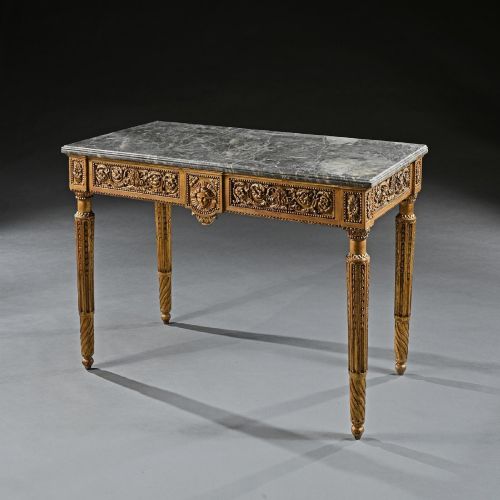
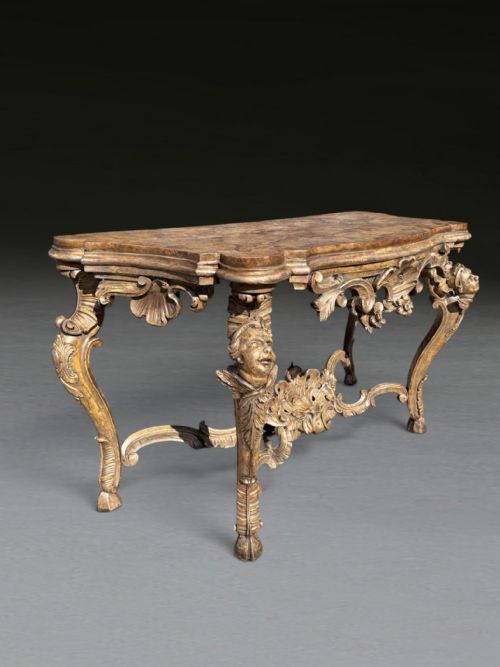
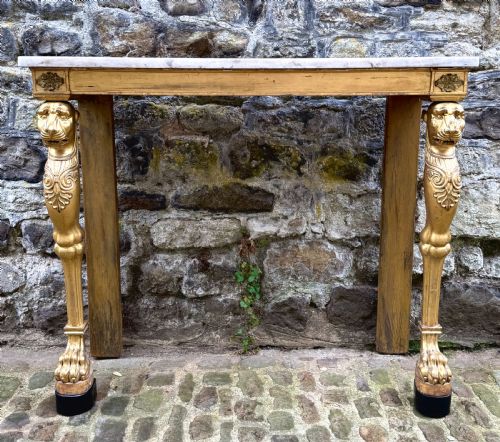
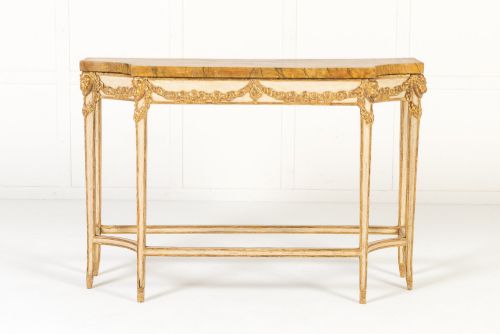
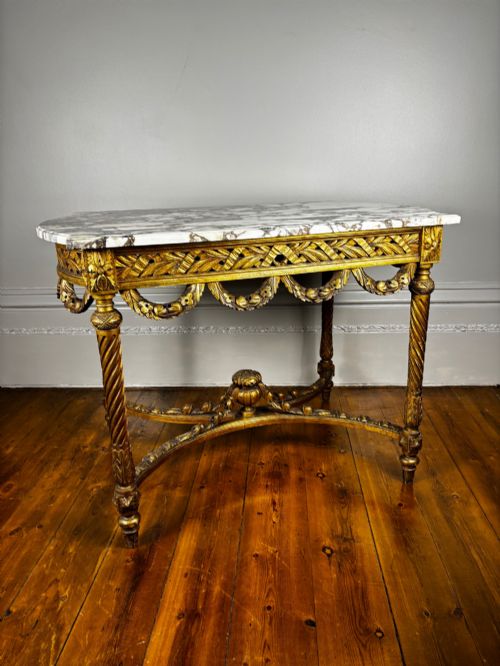
Most examples combine a carved wooden framework with a heavy stone slab top, though variations include smaller wall brackets, writing desks, and complete console and mirror sets. The forms range from restrained rectilinear shapes to deeply carved serpentine frames resting on lion's paw supports.
How They Were Made
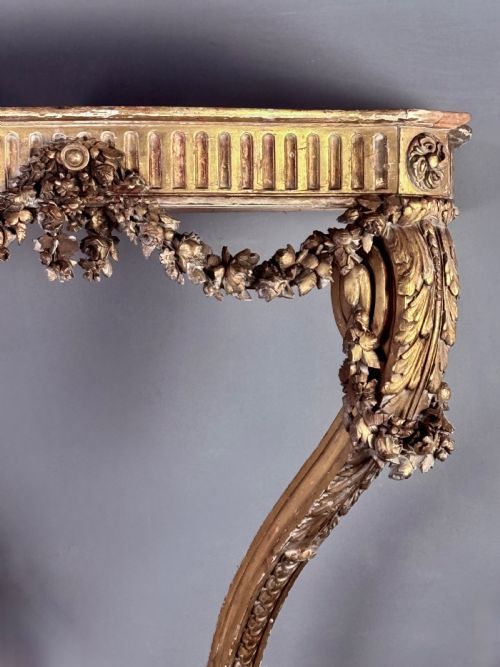
The primary material structure relies on timber, typically carved directly to form the elaborate scrolls, foliage, and figural supports characteristic of the style. Layers of gesso are applied over the carved wood to create a smooth, dense ground for subsequent gilding.
Gold leaf or applied paint finishes the surface, catching the light and sealing the gesso base against moisture. Many tables are completed with fitted marble tops, including breccia, siena, and figured varieties, which sit unattached or pinned within the wooden frame.
Carved Giltwood Console Retail Price Guide 2026
Typical asking prices for carved giltwood console among the pieces listed under this phrase on Sellingantiques today, from the lower quarter to the upper quarter. They describe what is for sale here now, not the wider market.
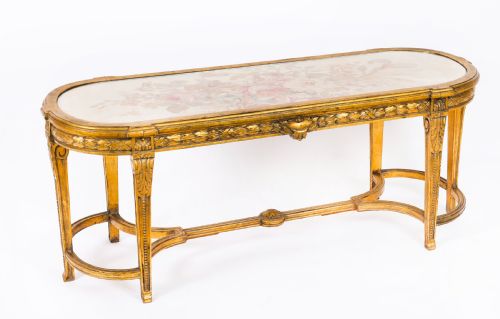
Object forms range from traditional console tables and wall brackets to complete pier mirror sets and low coffee tables.
What Varies in Quality
The depth and crispness of the carving dictate much of the visual weight, separating tables with flat, mechanical detailing from those with deeply undercut, expressive foliage and figures. Hand-carved execution in the wood allows for organic movement along aprons and legs that moulded plaster simply cannot replicate.
The application and retention of the original gold leaf influence the surface character over time. Tables that retain their original burnished gilding display subtle variations in tone where handling and light have softened the metal over centuries.
Felix Alfred Ternisien·Pauly et Cie
The Carved Giltwood Console Glossary
- Giltwood
- Wood that has been coated with gold leaf applied over a prepared gesso ground. This finish provides a luminous, reflective surface characteristic of formal antique furniture.
- Console
- A table supported by wall brackets or console legs, designed to stand against a wall. They frequently feature flat backs and decorative front legs.
- Gesso
- A plaster mixture applied to wood surfaces to provide a smooth base for gilding or painting. It allows craftsmen to carve fine details before applying the gold leaf.
- Breccia
- A type of marble composed of broken rock fragments embedded in a fine-grained matrix. It yields a rich, mottled pattern prized for console table tops.
- Pier Table
- A table designed to sit against the wall beneath a pier glass or mirror. They share a narrow profile to fit restricted wall spaces between windows.
Carved Giltwood Console: Frequently Asked Questions
Were these tables fixed to the wall?
Many console tables of the 18th and 19th centuries were designed as wall-mounted pieces, utilising brackets or a combination of front legs and wall fixings for stability. Their heavy marble tops provided sufficient downward pressure to keep the structure secure against the plaster.
Freestanding versions also exist, but the traditional form often relied on the architectural support of the wall behind it to prevent tipping under the weight of the stone slab.
How do I identify French and Italian styles?
French pieces, particularly those from the Louis periods or later revivals, often emphasise restrained symmetry, delicate floral motifs, and serpentine lines. Italian examples tend to feature bolder carving, heavier gilding, and more dramatic structural elements like animal paws or mythological figures.
Regional differences also appear in the choice of marble and the execution of the gesso work, with Italian workshops frequently leaning towards a more theatrical baroque expression.
Can I place a console table on an uneven floor?
Because these tables often combine rigid wooden frames with heavy marble slabs, placing them on uneven historic floors requires careful levelling. The marble top usually rests loose on the wooden base, meaning the base itself must be stabilized to prevent any rocking that might shift the stone.
Using discreet packing beneath the feet helps protect the structural joints from undue twisting stress over time.