
Carved Gilt Console Table
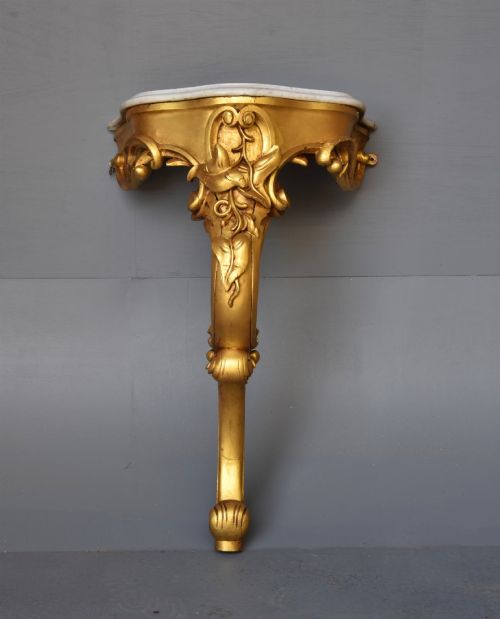
A carved gilt console table brings architectural presence to an interior, offering a surface designed to sit flat against a wall beneath a mirror or art.
Carved Gilt Console Table
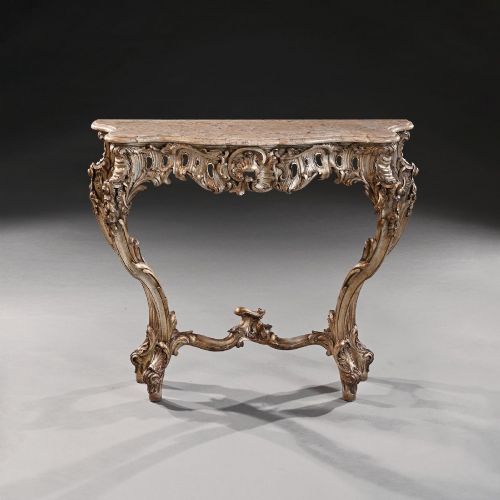
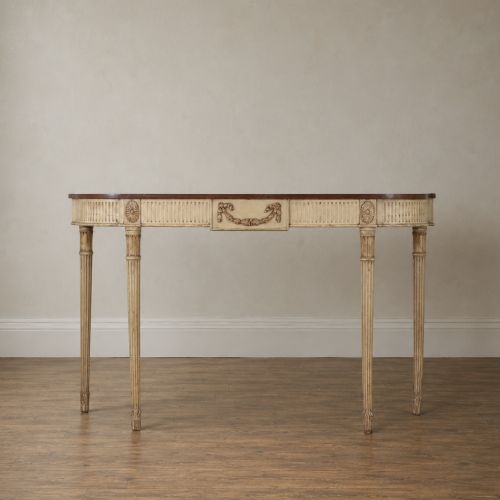
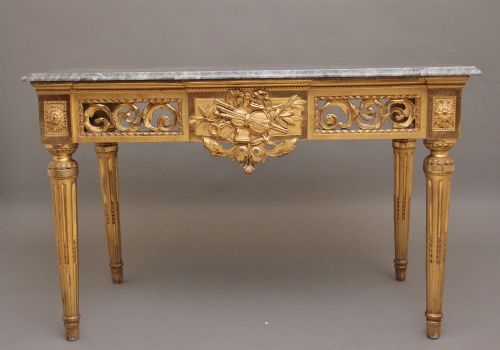
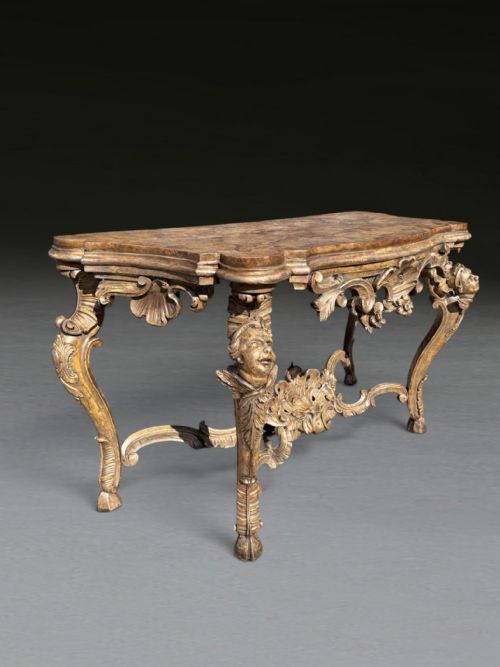
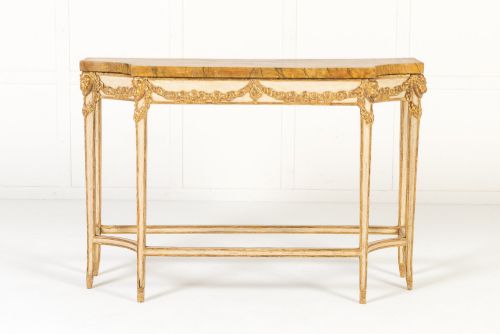
A carved gilt console table appears frequently in French and Italian designs, spanning the eighteenth and nineteenth centuries with stylistic roots in the Rococo and Neoclassical periods.
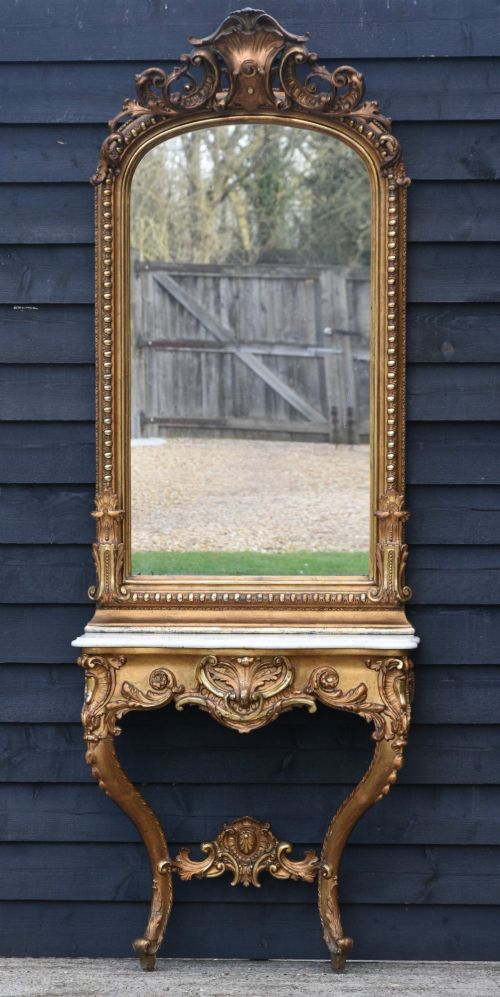
Makers produced these wall-mounted or freestanding items to serve as decorative side furniture, often pairing them with matching pier mirrors to anchor a formal room.
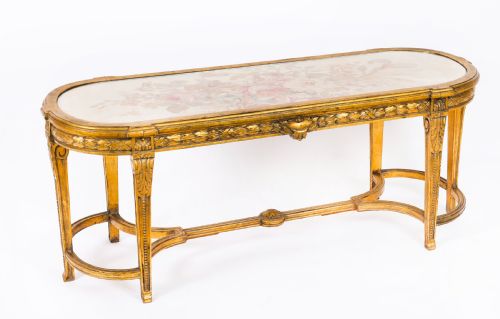
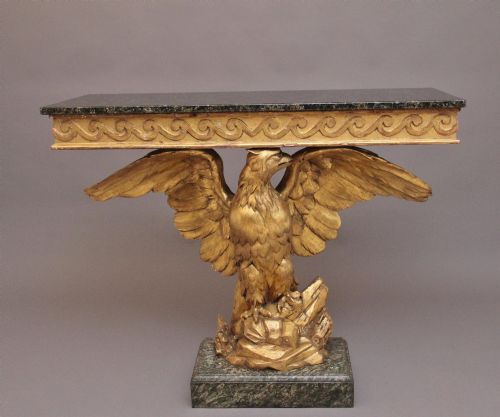
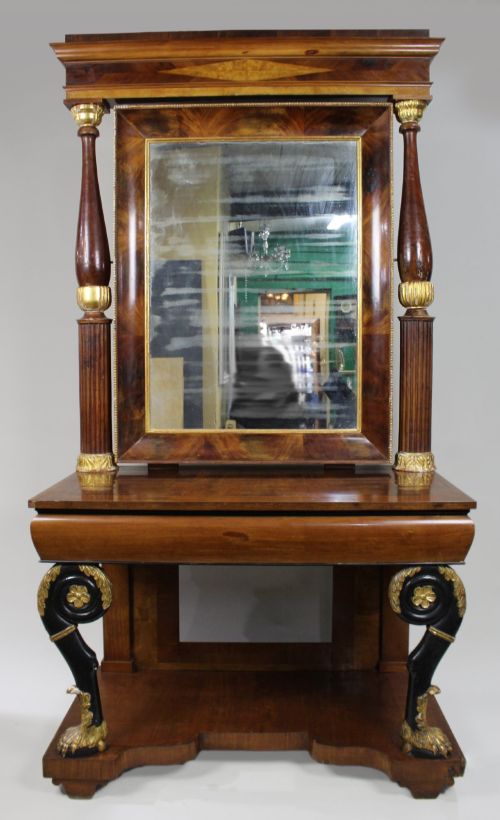
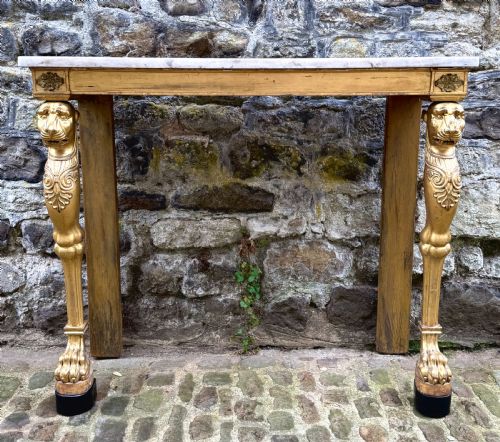
Surviving examples range from compact nineteenth-century side tables to monumental eighteenth-century Italian pieces resting on elaborate scrollwork or lion's paw supports.
Materials and Construction
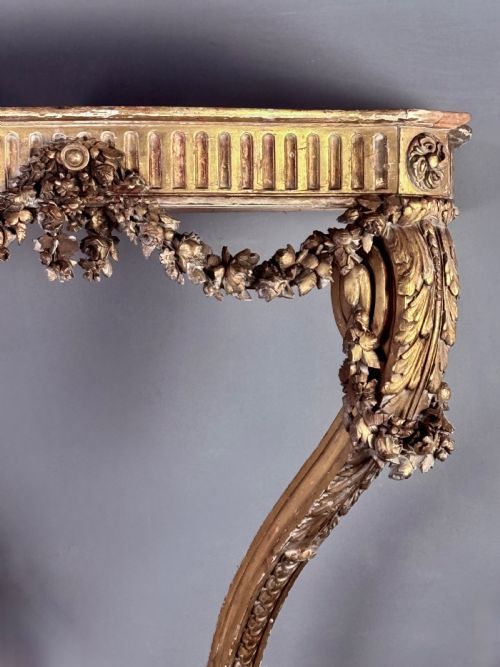
Craftsmen shaped the structural frames from timber such as oak, walnut, or pine, applying coats of gesso to build up intricate relief carvings before gilding.
Gilding involved the careful application of gold leaf or silver gilt onto prepared surfaces, sometimes combined with painted sections or faux finishes.
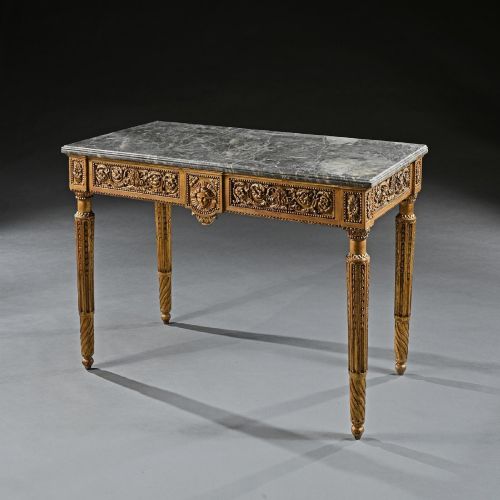
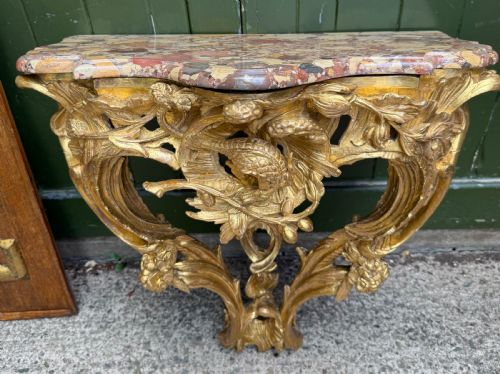
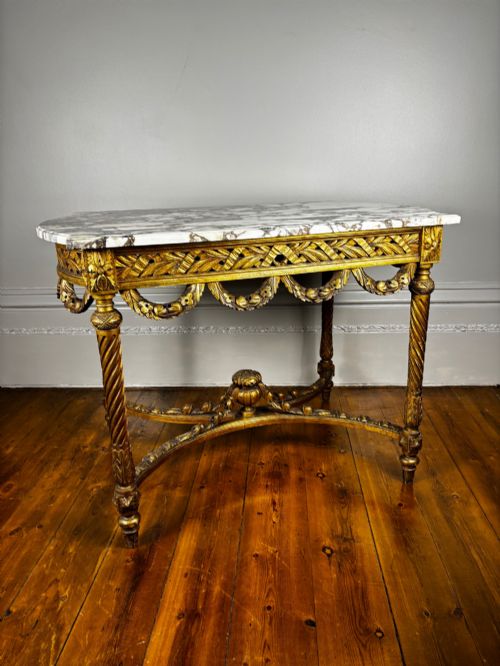
Heavy stone slabs formed the tabletops, featuring varieties of marble including breccia, rouge, and figured options such as breche d'alep.
Craftsmanship and Proportion
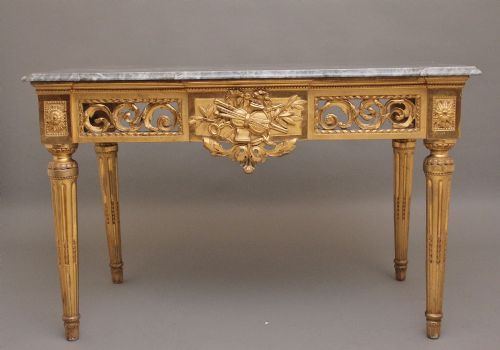
The distinction between tiers rests upon the depth and crispness of the wood carving, where superior pieces exhibit deep undercut foliage and scrollwork rather than shallow moulding.
Construction precision dictates value, visible in how cleanly the marble top matches the wooden frieze and how evenly the gold leaf adheres to intricate carved details.
Felix-Alfred Ternisien·François Linke
The Carved Gilt Console Table Glossary
- Giltwood
- Timber that has been coated with gold leaf over a prepared base of gesso and size. This finish provides the characteristic metallic sheen seen on period frames.
- Console table
- A table designed to stand against a wall, traditionally supported by brackets or legs at the front and secured to the wall at the back. They often feature shaped marble tops.
- Gesso
- A plaster mixture applied to wood surfaces to create a smooth layer for carving or gilding. It allows craftsmen to achieve sharp, intricate relief details.
- Pier mirror
- A large wall mirror designed to hang in the space between windows, frequently paired directly beneath or above a matching console table.
- Breccia marble
- A multicoloured marble composed of angular rock fragments cemented together by a finer matrix. It creates a bold, variegated surface pattern on tabletops.
Carved Gilt Console Table: Frequently Asked Questions
Were these tables meant to stand alone?
Most seventeenth and eighteenth-century examples required wall attachment for stability because their front legs carried the main load while the rear relied on structural brackets.
Over time, cabinetmakers introduced freestanding versions that balanced independently on four legs, though wall-secured models remained common in formal reception rooms.
How do I identify a French Rococo revival piece?
Revival pieces from the nineteenth century emulate earlier Louis XV aesthetics through asymmetric scrollwork, C-scroll motifs, and naturalistic shell carvings.
Examining the underlying timber and the application of the gesso helps distinguish nineteenth-century reinterpretations from eighteenth-century originals.
What marble types appear on these tables?
Italian and French workshops utilised native stone slabs, resulting in surfaces featuring white Carrara, deep red rouge marble, and breccia varieties.
Each stone slab was cut to fit the specific serpentine or rectangular contour of the wooden base beneath it.
Can I place a heavy lamp on one?
The marble tops possess substantial weight and support normal decorative items, but the wall-mounting requirements of original forms mean stability depends entirely on correct installation.
Freestanding nineteenth-century variants distribute weight more evenly down through their wooden legs and carved supports.