
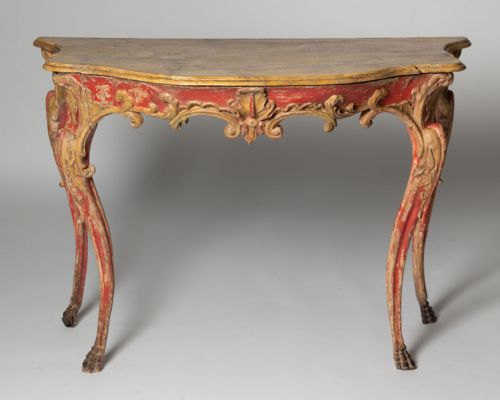


Gilded Wood Pier Table
A gilded wood pier table brings stately French and Italian presence to a room, framing mirrors and bearing marble tops with undeniable architectural gravity.
Gilded Wood Pier Table
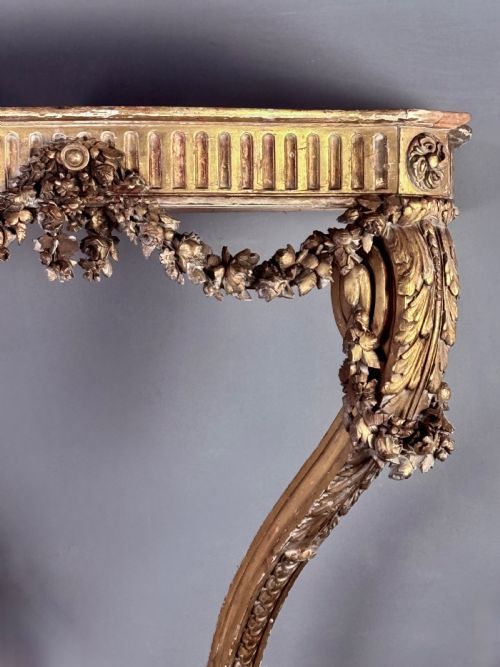
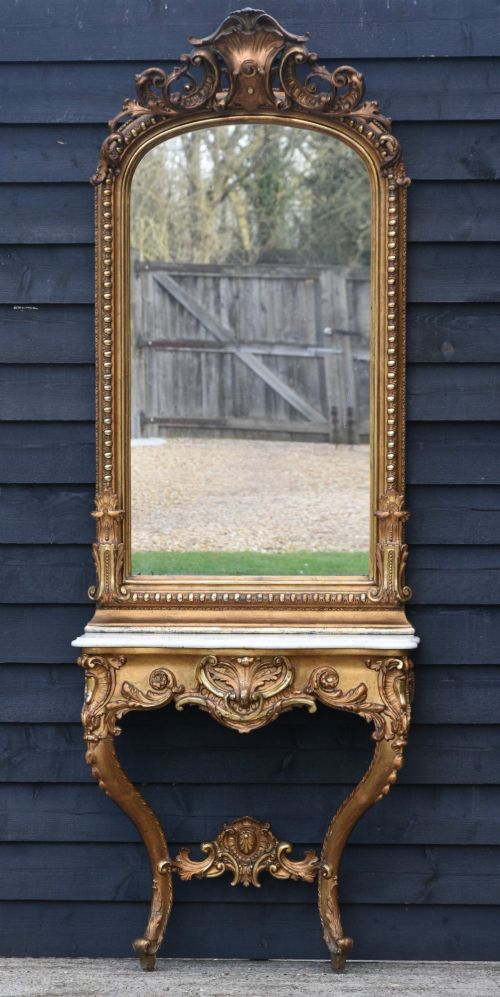
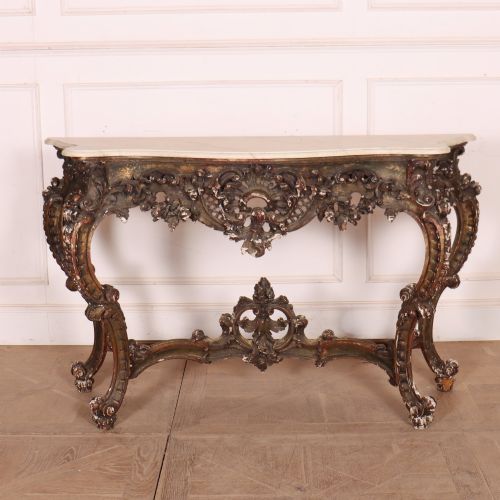
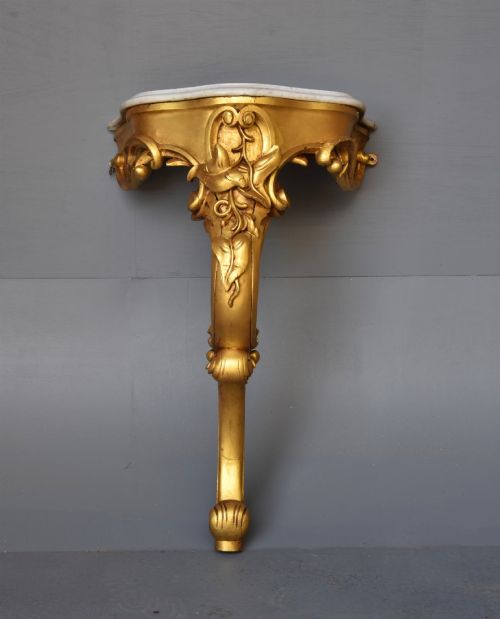
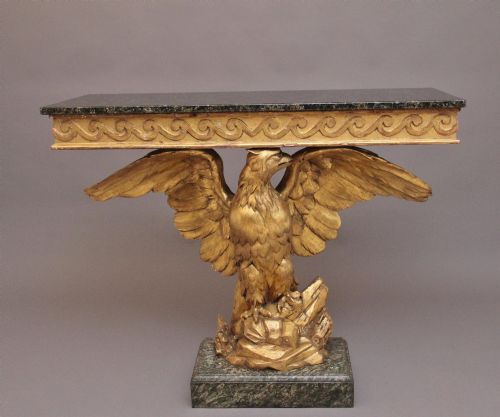
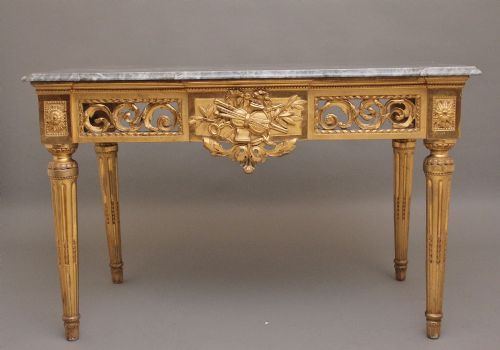
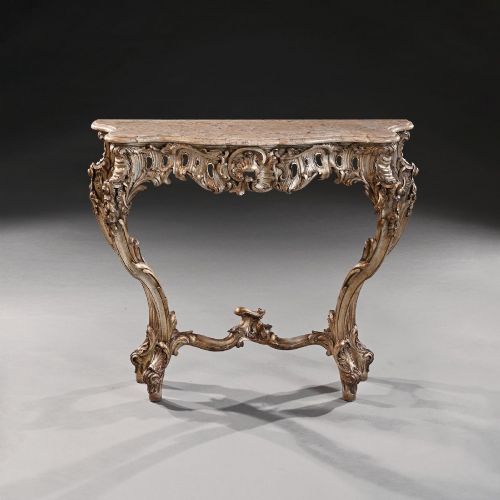
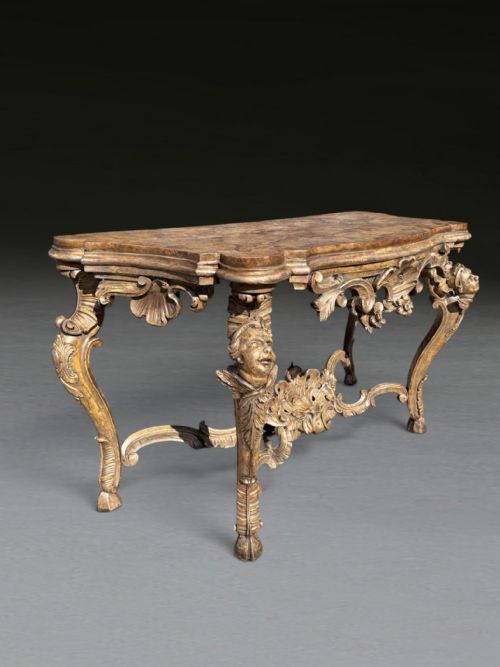
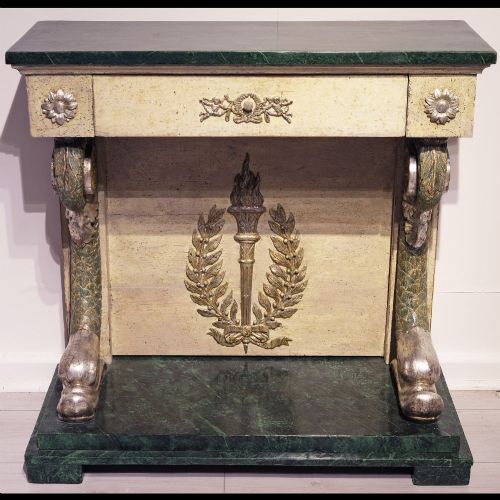
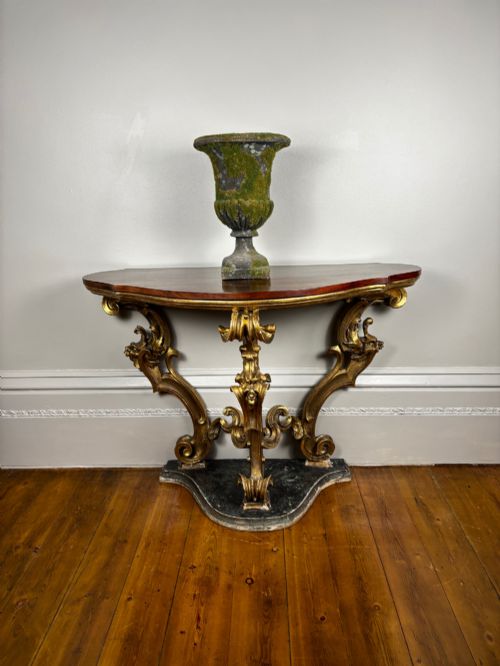
A gilded wood pier table is a foundational architectural console designed to sit flat against a wall, frequently beneath a matching wall mirror or overmantel glass. These pieces emerge predominantly from the eighteenth and nineteenth centuries, taking the form of console tables, side tables, and occasional pairs supported by lion's paw feet or carved cabriole legs.
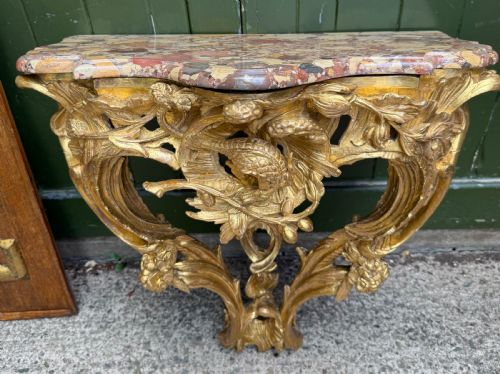
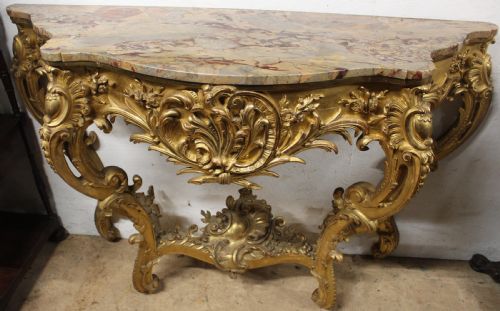
Italian and French workshops dominate the available examples, channelling regional interpretations of Rococo, Neoclassical, and Baroque Revival aesthetics. The serpentine front and the demi-lune outline recur frequently among the offerings, providing varied silhouettes suited to distinct interior scales.
Most items combine a heavy stone surface with an elaborate wooden substructure, bridging the gap between functional furniture and sculptural wall art. Buyers meet both grand console bases intended for formal reception rooms and smaller provincial variants.
Materials and construction
Carved wood provides the structural skeleton, shaped into scrolling foliage and mythological motifs before receiving coats of gesso to prepare the surface for gilding. Artisans applied delicate gold leaf or silver gilt directly onto this prepared ground, occasionally combining the metallic finish with painted highlights.
Heavy marble tops, including breccia and figured variants such as breche d'alep, rest upon the timber bases without permanent mechanical fastening. Glass and mirrored components integrate into related pier mirror combinations, utilising traditional silvering techniques appropriate to the period.
Listings span multiple centuries, ranging from eighteenth-century Italian originals to nineteenth-century French Revival interpretations.
Evaluating quality and execution
Depth and crispness in the wood carving separate superior examples from mechanical or softer later reproductions. The hand-chiselled detail in the acanthus leaves, scrollwork, and figural supports dictates the visual power of the piece.
The integration between the stone top and the wooden base indicates original assembly, as does the integrity of the gesso and gold leaf layers. Wear patterns across the gilding reveal the history of the object without detracting from the structural harmony of the frame.
Felix-Alfred Ternisien
The Gilded Wood Pier Table Glossary
- Giltwood
- Timber coated with gold leaf applied over a prepared gesso ground. This finish reflects candlelight and daylight, creating the characteristic luminance of formal historic interiors.
- Console table
- A table supported by wall brackets or front legs, designed to stand flush against a vertical surface. They often carry heavy marble slabs due to their lack of independent four-legged stability.
- Gesso
- A plaster-like mixture applied to carved wood to create a smooth surface for gilding or painting. It holds fine detail remarkably well.
- Serpentine
- A furniture outline characterised by a wavy or curving front edge that undulates inward and outward. It demands high carpentry skill to execute cleanly in wood and stone.
- Breccia marble
- A composite stone made of angular rock fragments embedded in a fine-grained matrix. Its complex veining makes each tabletop visually distinct.
Gilded Wood Pier Table: Frequently Asked Questions
Where should a gilded wood pier table go?
These tables find their natural home positioned against a blank wall, particularly in a hallway, reception room, or dining space where they command visual attention.
Matching them beneath a tall pier mirror or painting recreates the historical architectural arrangement for which artisans originally designed them.
How do I care for antique gilding?
Dust the carved wooden surfaces gently with a dry, soft brush to prevent particulate accumulation without disturbing the delicate gold leaf layers.
Avoid liquid cleaners, waxes, and modern chemical polishes entirely, as moisture and solvents degrade historic gesso and metal leaf.
Are the marble tops original?
Many tables retain their heavy fitted stone slabs, which sit unattached within the wooden frame according to period workshop practice.
Inspect the edges and underside of the marble to ensure the thickness and material match the regional origin and age of the base.
How do I distinguish Rococo from Neoclassical styles?
Rococo pieces feature asymmetric scrolls, C-curves, and naturalistic shell motifs that emphasise fluid, organic movement across the carved wooden frame.
Neoclassical designs introduce symmetrical geometry, straight fluted legs, and classical architectural motifs derived from ancient archaeological discoveries.