
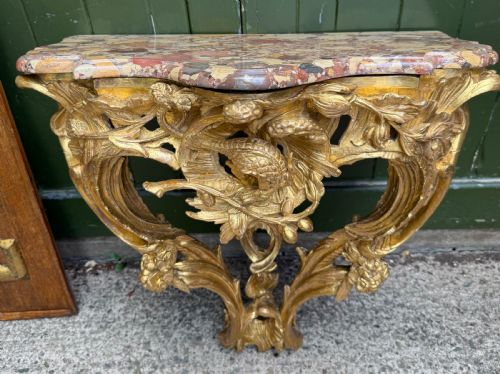
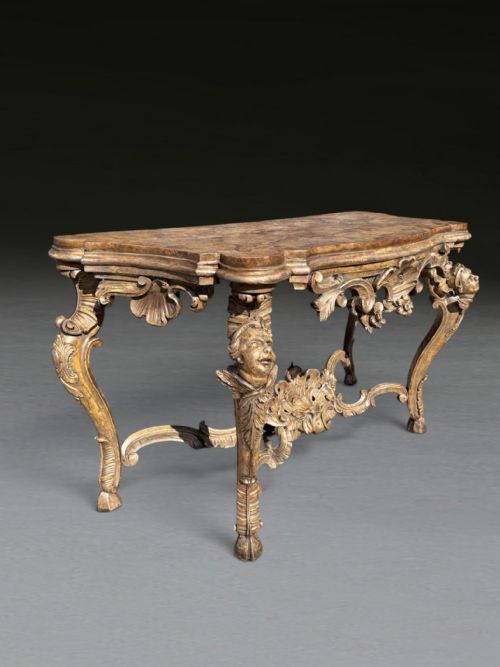
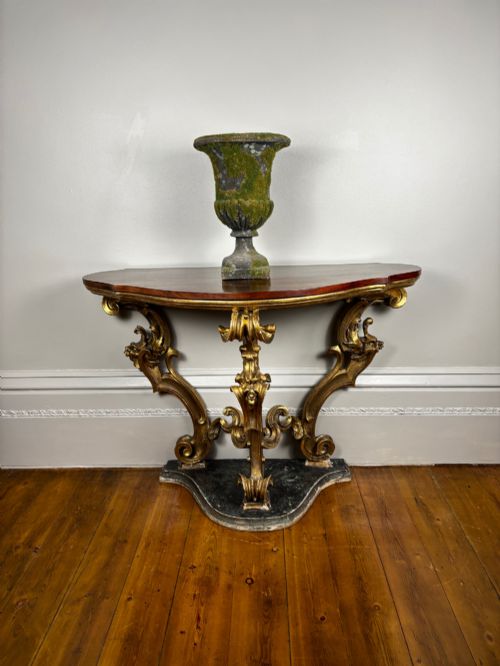
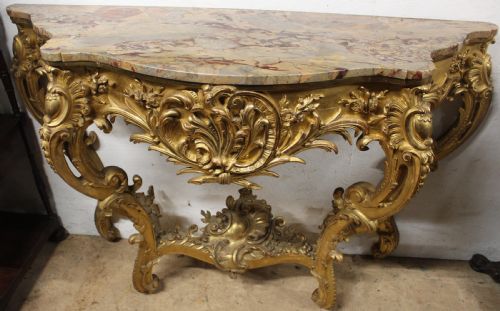


Gilded Rococo Pier Table
A gilded rococo pier table brings dramatic architectural presence to a hall or reception room through elaborate carved forms and reflective glass.
Gilded Rococo Pier Table
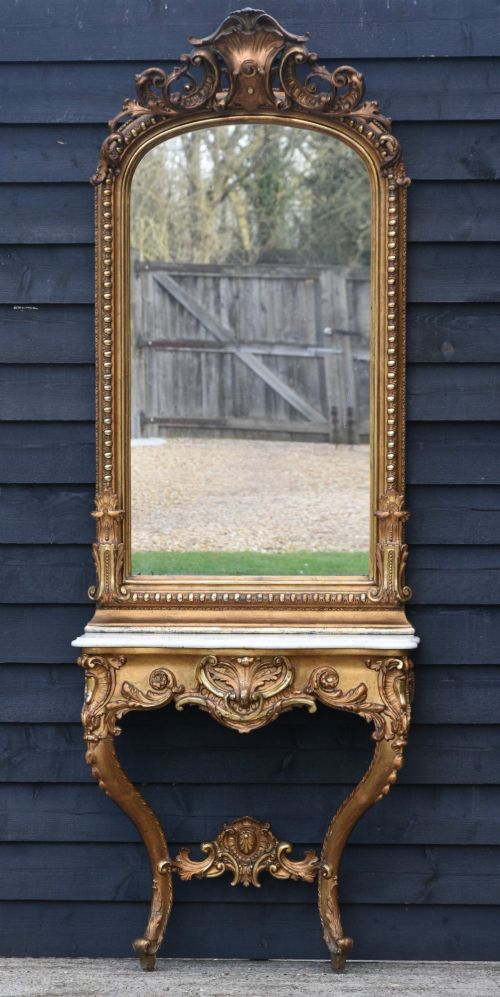
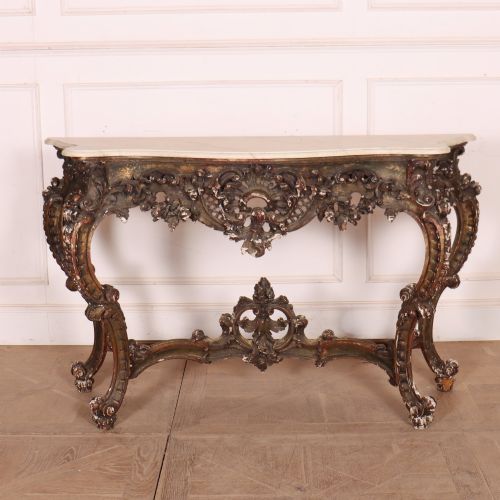
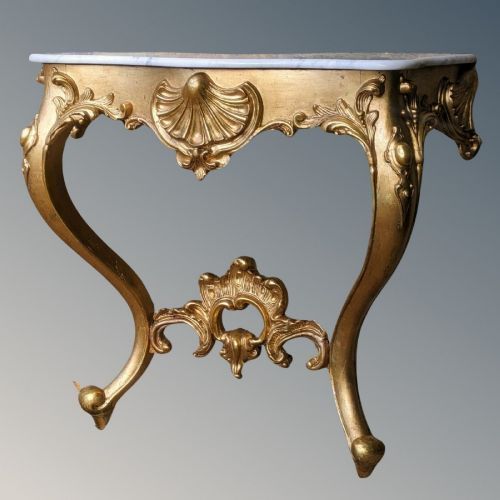
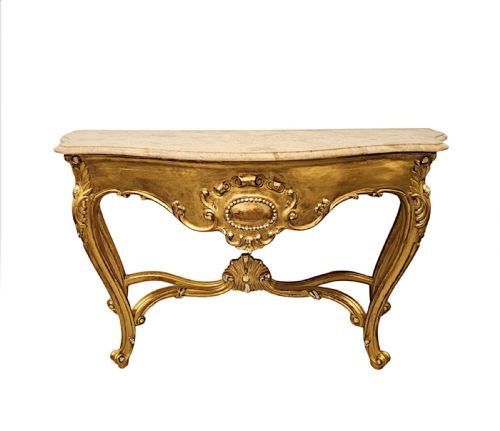
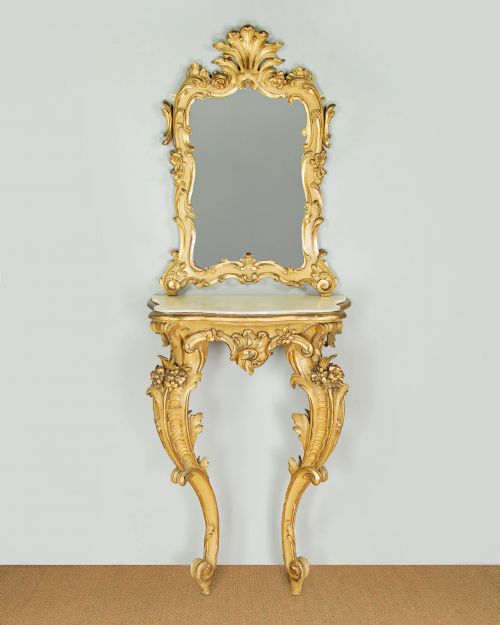
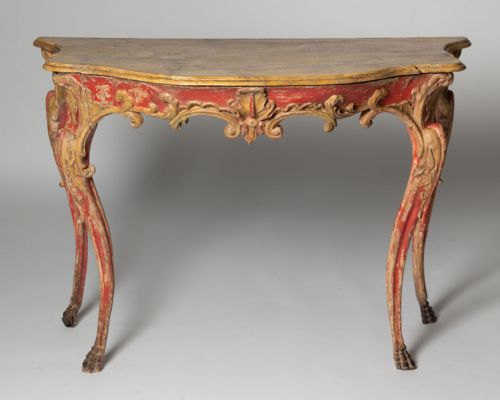
A gilded rococo pier table is designed to sit flat against a wall, frequently positioned beneath a matching pier glass mirror between windows. The examples seen here predominantly date from the eighteenth and nineteenth centuries, spanning French, Italian, and Venetian interpretations of the style.
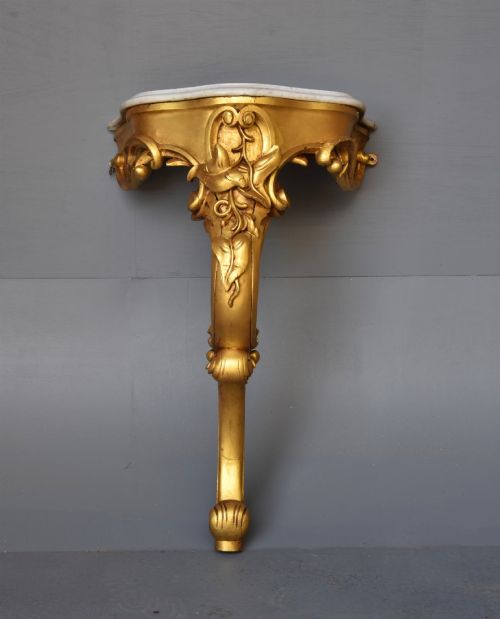
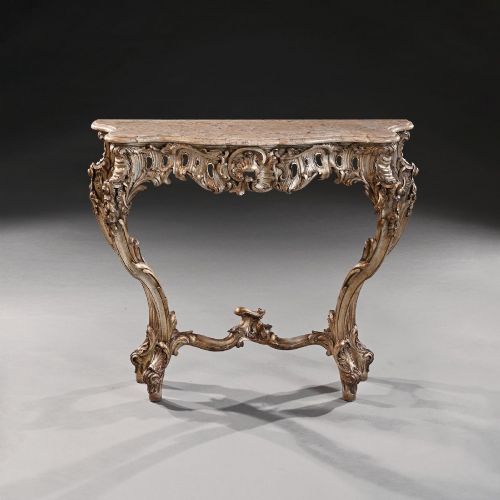
Forms range from compact side tables and serpentine console formats to elaborate combined console table and mirror sets. Italian and French workshops dominate the origin points, utilising ornate scrollwork and asymmetrical carving.
Surviving pieces frequently integrate fitted marble tops, ranging from shaped white slabs to figured varieties like breche d'alep. Buyers encounter both standalone console tables and grand pairs intended for formal nineteenth-century interiors.
Materials and construction techniques
Makers shaped structural carcasses from solid wood, primarily employing carved wood and gesso to build up the intricate three-dimensional scrollwork, foliage, and asymmetrical motifs characteristic of the style. Gilding was applied using gold leaf or silver gilt over prepared grounds.
Heavy stone slabs, specifically marble, were cut and polished to fit the complex serpentine and shaped outlines of the wooden bases. Paint and parcel gilt finishes also appear alongside traditional burnished gold surfaces.
Current listings feature marble, giltwood, gesso, and glass across French, Italian, and Victorian pieces dating from the eighteenth century through to the early twentieth century.
Distinctions in craftsmanship
The depth and crispness of the hand-carved wood separate superior examples from simpler production. Skilled carvers created undercut foliage and fluid scrolls that retain sharp definition beneath layers of gesso and gold leaf.
The quality of the marble top and its integration with the wooden frame indicate the standing of the piece. Thick, well-figured marble slabs shaped precisely to complex serpentine rails reflect higher workshop standards than standard replacement tops.
The Gilded Rococo Pier Table Glossary
- Pier table
- A table designed to stand against a wall, typically placed between two windows beneath a pier mirror.
- Gesso
- A plaster-like material applied to wood carvings as a smooth base for subsequent gilding.
- Giltwood
- Timber that has been coated with gold leaf or metal leaf for a lustrous metallic finish.
- Serpentine front
- A piece of furniture featuring a front edge curved in a wave shape, concave in the middle and convex at the ends.
- Console table
- An ornamental table supported by wall brackets or console legs rather than four independent vertical posts.
Gilded Rococo Pier Table: Frequently Asked Questions
Where should I place a pier table?
These tables suit hallways, drawing rooms, or entrance spaces where wall space allows for a console and optional mirror arrangement. They anchor a room visually without protruding far into the floor plan.
Because they were historically designed to sit flush against a wall between windows, they pair effectively with large wall mirrors to bounce light around a reception room.
How do I care for antique gilded surfaces?
Giltwood requires delicate treatment using dry, soft dusters to prevent abrasion to the thin layer of gold leaf. Moisture and chemical cleaners damage the historic gesso and metal leaf beneath.
Keep these tables away from direct heat sources and strong sunlight, which can cause the underlying wood to shift and the gesso preparation to crack.
Are marble tops original to these tables?
Many eighteenth and nineteenth-century pieces retain their original fitted marble slabs, often secured by weight or simple rebates within the wooden frame. Figured stones like breche d'alep are typical of the period.
Replacement marble tops do occur due to centuries of domestic use, so examine the underside and the fit against the carved rails to assess originality.
How do I distinguish eighteenth-century pieces from nineteenth-century revivals?
Eighteenth-century examples often exhibit hand-cut joinery, deeper patination on the bare pine or softwood beneath the gilding, and slightly heavier organic asymmetry. The carving shows the tool marks of individual hands.
Nineteenth-century rococo revival pieces, particularly those from the Victorian era or around 1880, frequently utilise machine-prepared timber alongside skilled hand-carving and brighter silver-gilt or gold leaf finishes.