


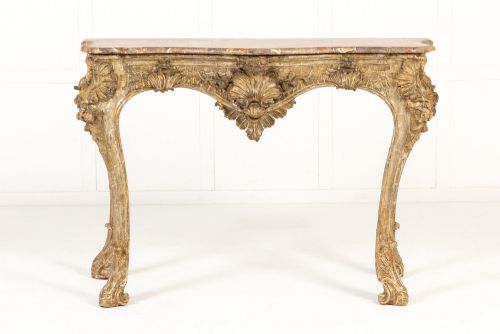


Italian Baroque Console Table
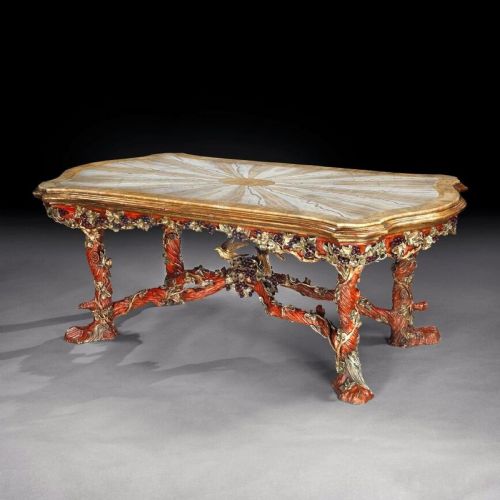
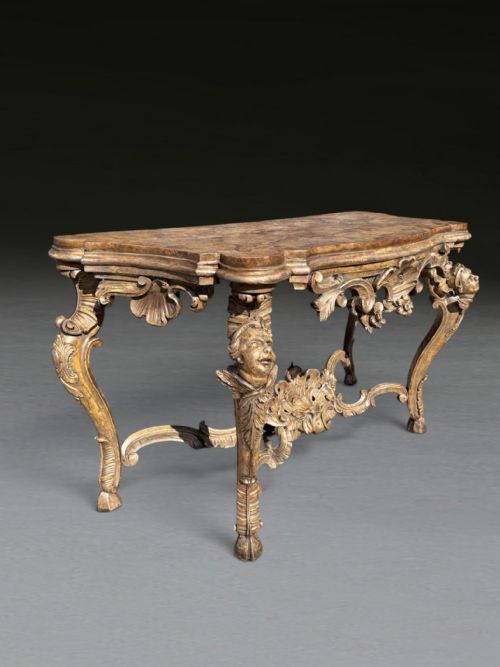
An italian baroque console table brings dramatic architectural weight and ornate carving to a room, driven by rich giltwood and heavy marble.
Italian Baroque Console Table
An italian baroque console table is a substantial furnishing designed to stand against a wall, frequently topped with marble and supported by elaborate carved wooden frames. Buyers encounter examples ranging from authentic eighteenth century works to later nineteenth century revivals and twentieth century interpretations.
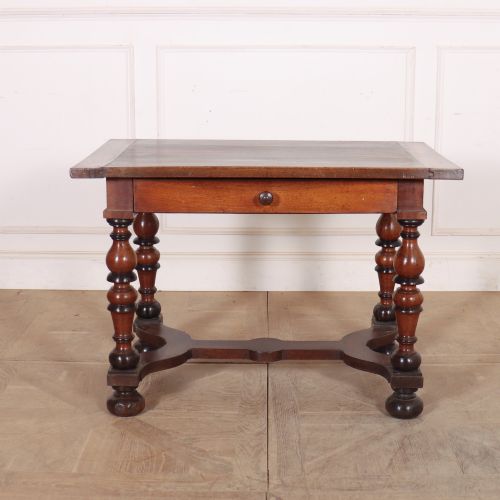
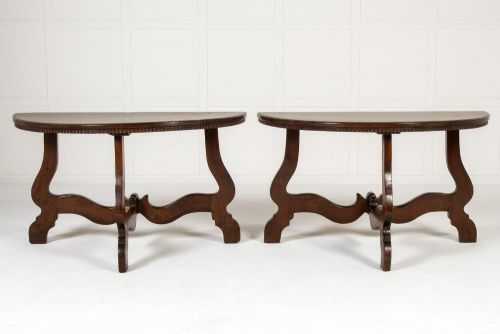
The form embraces console tables, side tables, and centre tables executed in walnut, giltwood, and painted finishes. Many incorporate classical motifs including lions' paw supports, rams, and putti alongside characteristic scrollwork.
How they were made
Construction relies heavily on carved wood, particularly walnut and gesso-prepared timbers finished with gold leaf, silver gilt, or polychrome paint. Artisans shaped structural elements by hand, applying layers of gesso to carve intricate relief details before gilding or painting.
Tops utilise heavy stone materials, notably marble and onyx, cut and polished to sit flat upon the carved wooden bases. The integration of stone requires precise joinery to support the substantial weight of the top without compromising the ornate apron below.
Listings feature periods spanning from the late seventeenth century through the Victorian era up to nineteen-twenty.
What varies in quality
Quality separates in the depth and fluidity of the carving, distinguishing crisp, deep relief work on figures and foliage from softer, more mechanical execution. The choice of materials also dictates standing, with genuine antique marble tops and thick gold leaf deployment marking superior output.
Proportion and structural integrity define the architectural success of the piece, where harmonious balance between the heavy stone top and the carved wooden base maintains visual stability.
Amleto Bertoni·Pauly et Cie
The Italian Baroque Console Table Glossary
- Giltwood
- Wood that has been coated with a thin layer of gold leaf over a prepared gesso ground. This technique creates a luminous, reflective surface characteristic of high-status furniture.
- Gesso
- A plaster mixture applied to wood surfaces as a base for paint or gilding. It allows artisans to carve fine, crisp details that wood alone might not hold.
- Console table
- A table designed to be fixed against a wall, typically supported by ornamental brackets or legs at the front. The form originated to display decorative objects in formal rooms.
- Breccia marble
- A multicolored marble composed of angular stone fragments embedded in a fine-grained matrix. It provides a highly decorative, variegated surface for table tops.
- Demi-lune
- A half-moon shape used for the surface and footprint of specific tables. This profile allows the furniture to sit flush against a wall while projecting into the space.
Italian Baroque Console Table: Frequently Asked Questions
Where should I place an Italian console table?
These pieces suit entrance halls, reception rooms, and dining areas where they anchor wall spaces beneath mirrors or large artworks. Their shallow footprint allows them to occupy corridors without obstructing movement.
Because they rely on a wall for stability in many historical configurations, positioning them flat against a vertical surface ensures proper support and display.
How do I care for the marble top?
Marble surfaces require regular dusting with a soft, dry cloth and immediate wiping of spills to prevent staining from acids like wine or citrus. Avoiding abrasive cleaners preserves the polished finish.
Applying a specialised stone wax periodically helps protect the porous surface from moisture and everyday wear.
What is the difference between walnut and giltwood versions?
Walnut examples display the natural grain and warm tone of European timber, often featuring restrained carving that highlights the material itself. They offer a more architectural, grounded appearance in a room.
Giltwood variants showcase brilliant gold leaf surfaces designed to catch candlelight and daylight alike, representing a more theatrical and ornate aesthetic.
How can I tell an eighteenth-century piece from a revival?
Eighteenth-century pieces display the tool marks, timber shrinkage, and wear patterns consistent with extended age and hand production. The joinery and preparation layers beneath the surface reflect period workshop practices.
Revival pieces from the nineteenth and twentieth centuries often employ machine-assisted cuts, standardised components, or fresher finishes while imitating earlier stylistic vocabulary.