



French Rococo Centre Table
A french rococo centre table brings fluid, serpentine forms and rich decorative woods into a room as a freestanding piece.
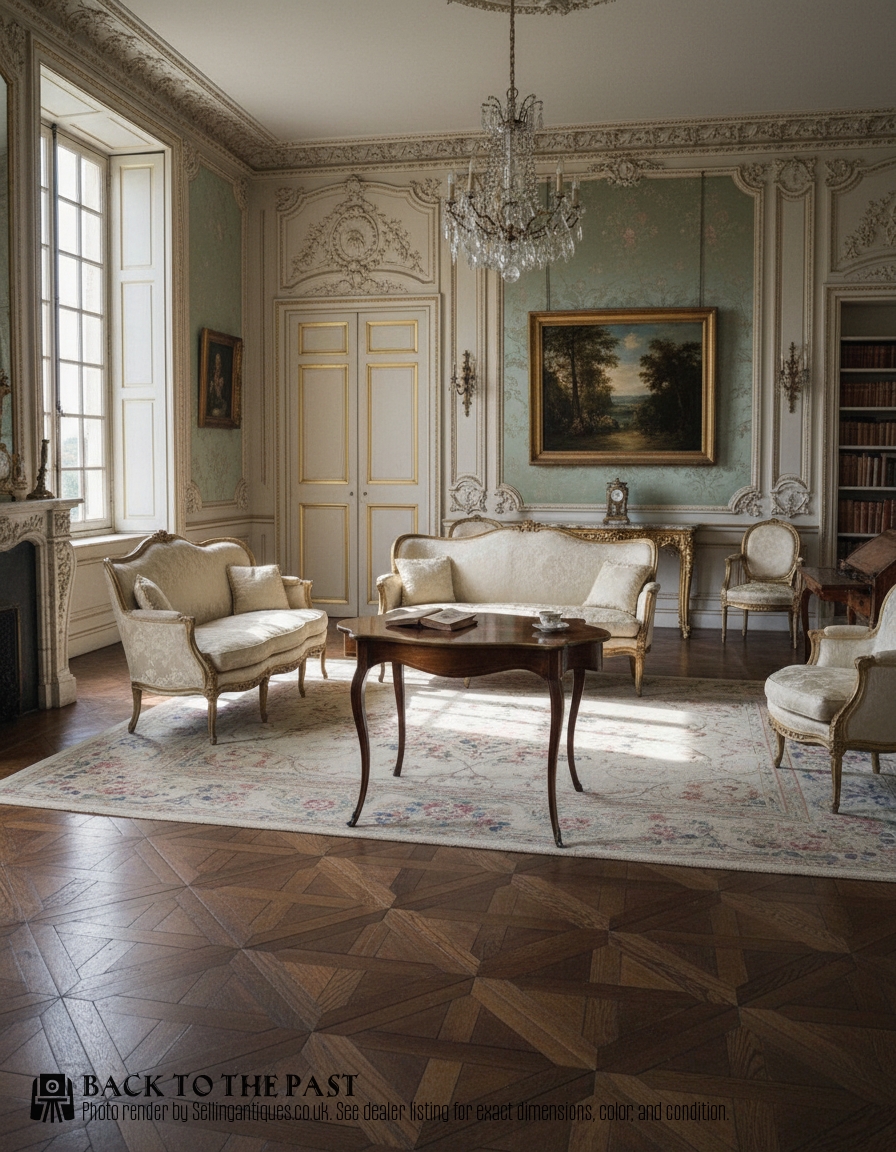
French Rococo Centre Table
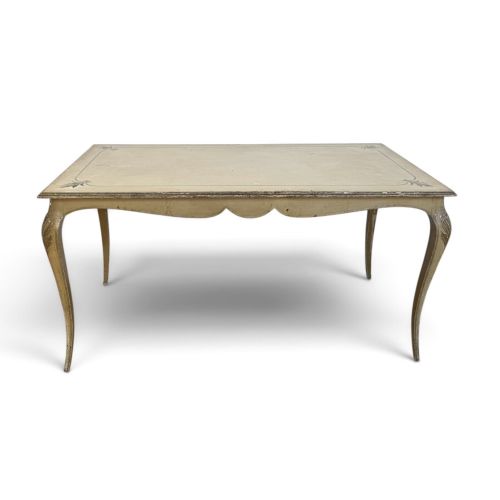
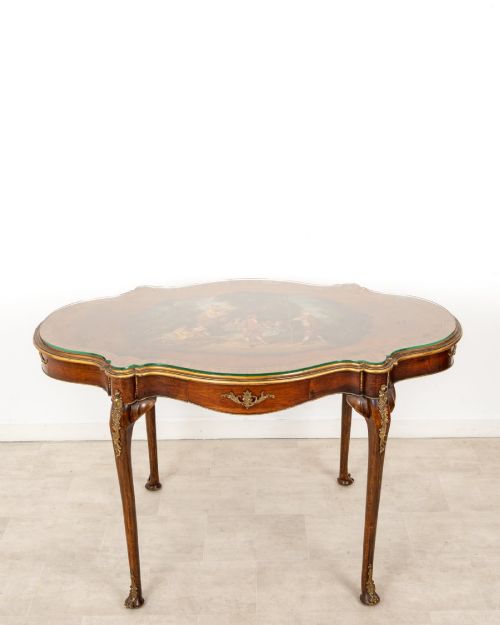
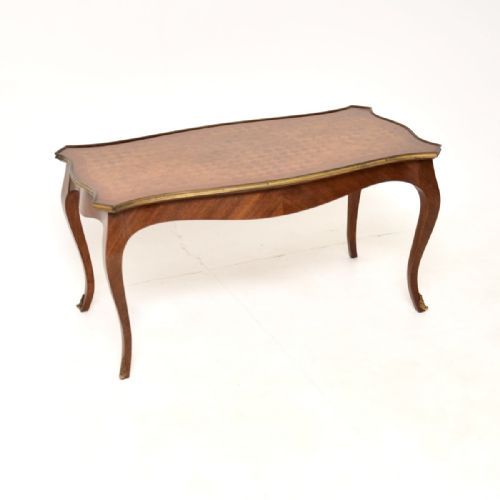
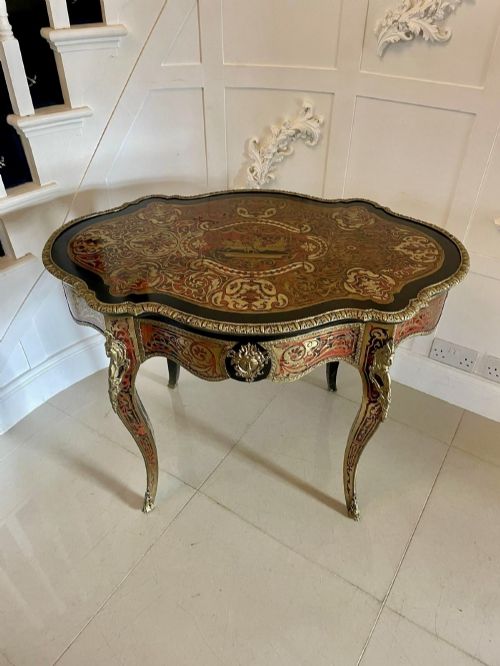
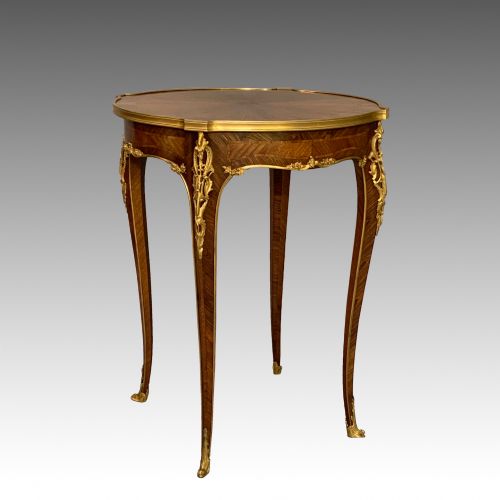
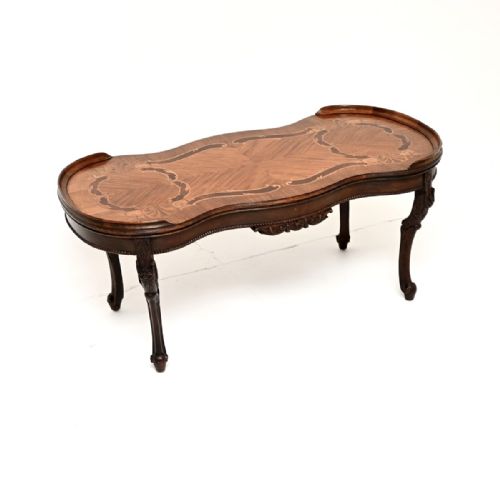
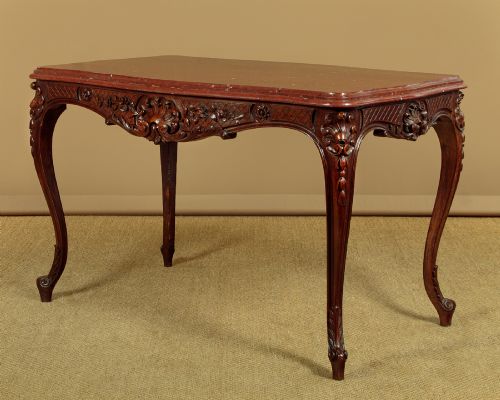
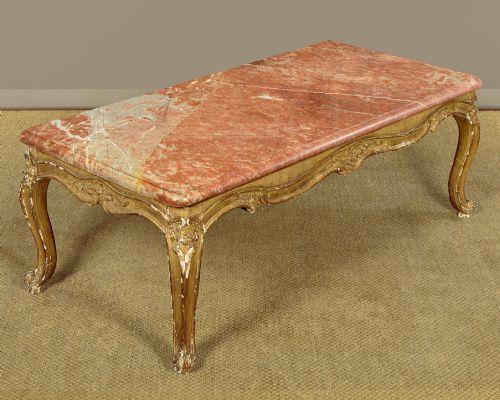
A french rococo centre table stands designed to be viewed from all sides rather than pushed against a wall, appearing across the nineteenth century and later revival periods in forms like writing tables, games tables, and low coffee tables. These pieces draw on Louis XV styles, showing asymmetrical curves, cabriole legs, and shaped tops.
How they were made
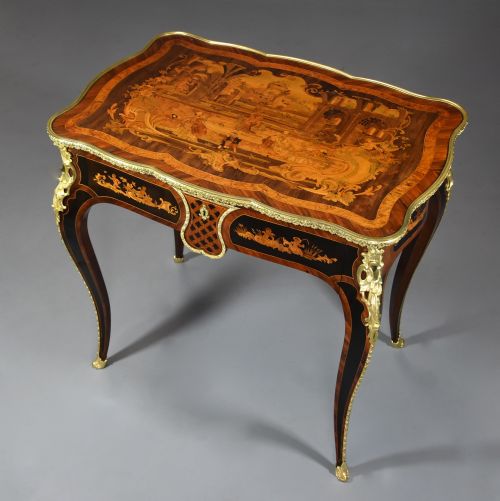
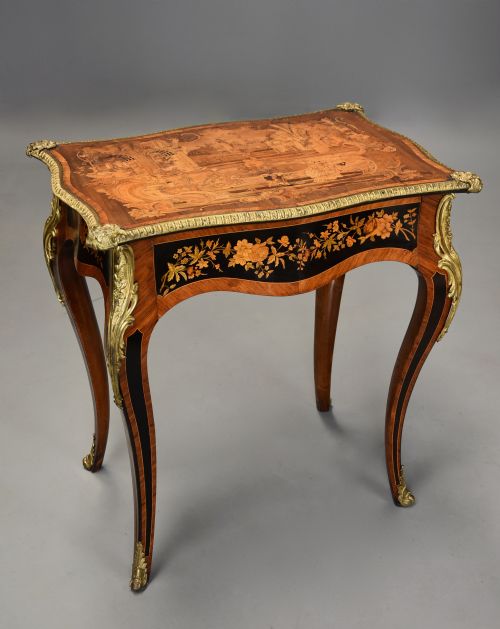
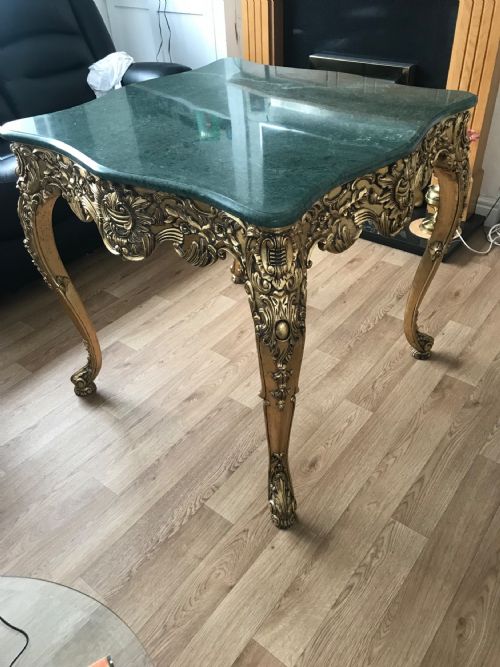
Cabinet makers utilised dense hardwoods such as kingwood, satinwood, and walnut as a base for elaborate marquetry and parquetry, cutting veneers into intricate floral and geometric patterns. Tops were frequently fitted with heavy marble, including rouge and green varieties, shaped to follow the serpentine contours of the wooden frame.
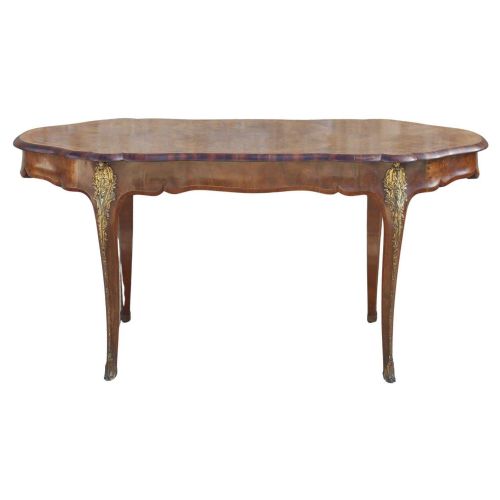
Cast gilt bronze and ormolu mounts were applied to corners, legs, and aprons to accentuate the organic curves characteristic of the style. Brass and gilt brass details further highlight the structural lines of cabriole legs and shaped skirts.
The listings show pieces constructed from walnut, kingwood, burr walnut, and mahogany, frequently combined with marble tops and gilt bronze mounts.
What varies in quality
The distinction between tiers rests upon the crispness of the cast bronze or ormolu mounts and the precision of the timber inlay. Superior examples display hand-chased metalwork and closely fitted veneers that follow every contour without visible gaps.
Structural heft and the quality of the timber selection define the upper range, where dense burr walnut or kingwood is chosen for its grain pattern. The integration of solid polished marble tops, accurately contoured to the wooden apron, distinguishes more ambitious workshops from standard production.
Joseph Emmanuel Zwiener·Holland and Son·Eugene Clauss of Paris
The French Rococo Centre Table Glossary
- Ormolu
- Gilded bronze used for decorative mounts on furniture. The technique involves applying a gold amalgam to bronze before heating.
- Marquetry
- Inlaid wood veneers forming decorative patterns or pictures. Craftsmen assemble various coloured woods to create pictorial designs on table tops.
- Cabriole leg
- A furniture leg that bends outward and then tapers inward. This form mimics animal legs and defines rococo revival pieces.
- Parquetry
- Geometric patterns formed by fitted wood veneer pieces. This technique creates checkerboard or parquet motifs across the surface.
- Gueridon
- A small occasional or side table. These round or shaped tables often feature a central pedestal or cabriole supports.
French Rococo Centre Table: Frequently Asked Questions
Where should I place a centre table?
These tables are built to stand free in the middle of a room, allowing the design of all sides to remain visible. They function effectively in large hallways, drawing rooms, or as central library surfaces.
Because the pieces are finished on every side, they do not need to rest against a wall. Placement should allow space to walk around the piece and observe the marquetry or bronze mounts.
How do I care for marble tops?
Marble surfaces require regular dusting with a soft, dry cloth to prevent surface scratching. Avoid placing acidic liquids directly onto the stone to protect the polish.
Using coasters and mats prevents rings and marks on antique polished marble. Professional sealing can help guard against stains over time.
What is the difference between marquetry and parquetry?
Marquetry involves arranging wood veneers to create pictorial scenes, flowers, or complex organic designs. The technique uses various tinted timbers to build shaded motifs.
Parquetry uses geometric shapes, such as cubes, squares, or triangles, to form repeating patterns. Both methods decorate the tops of these tables.
How do I identify the revival period?
Nineteenth-century revival pieces often display machine-sawn veneers and specific hardware associated with Victorian or Edwardian workshops. The construction methods inside the drawers and underframes reveal the period of manufacture.
Comparing the timber selection and the casting quality of the bronze mounts helps separate mid-nineteenth-century work from later twentieth-century iterations.