


Brass Mounted Walnut Table
A brass mounted walnut table brings distinct warmth and metal detail into a room, spanning Victorian and continental forms.
Brass Mounted Walnut Table
When you search for a brass mounted walnut table, you encounter a refined group of nineteenth and early twentieth-century furniture designed for display and daily use. These pieces bridge British Victorian cabinetmaking and French revival aesthetics, particularly Louis XV and Louis XVI styles.
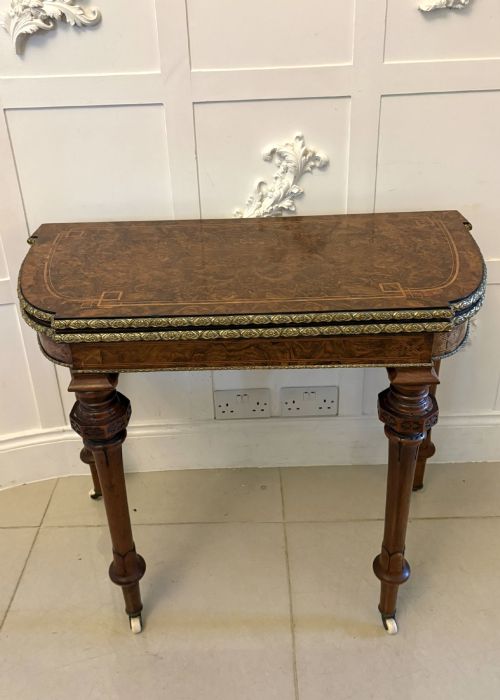
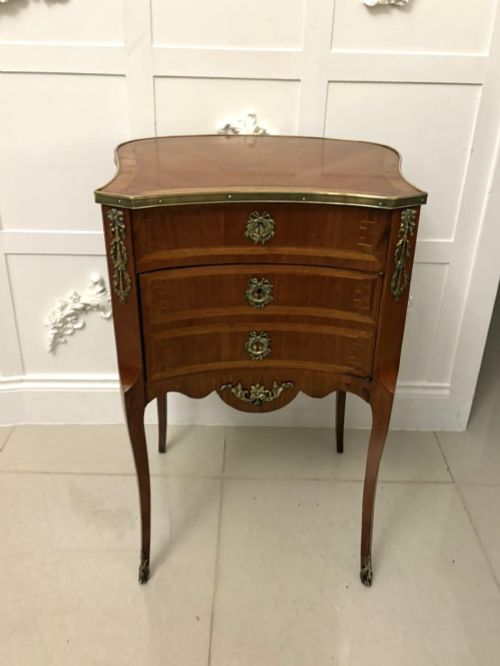
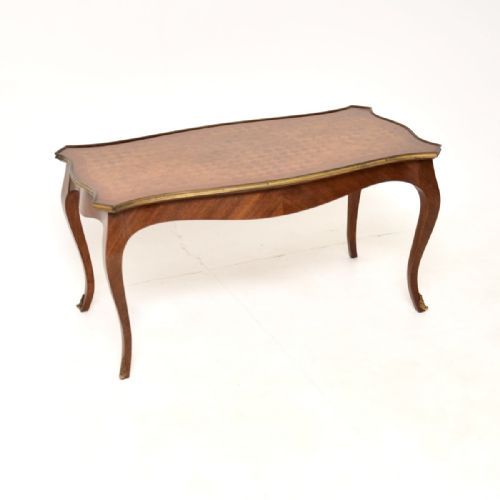
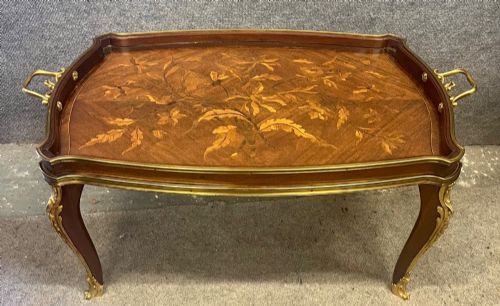
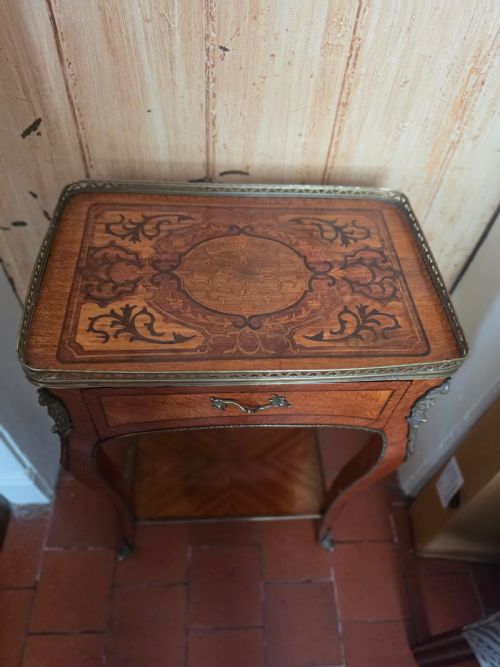
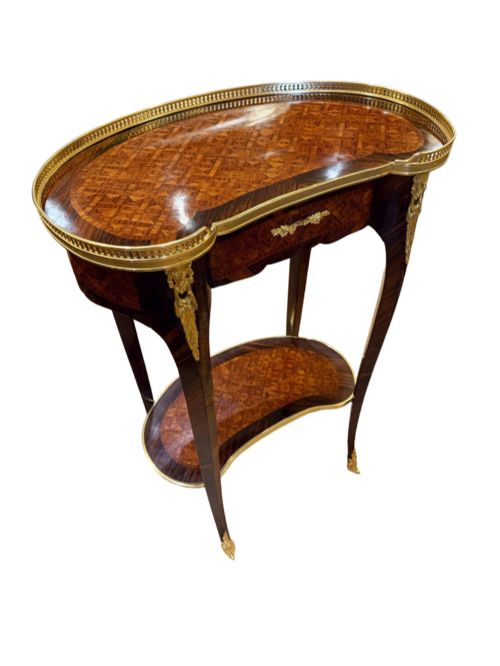
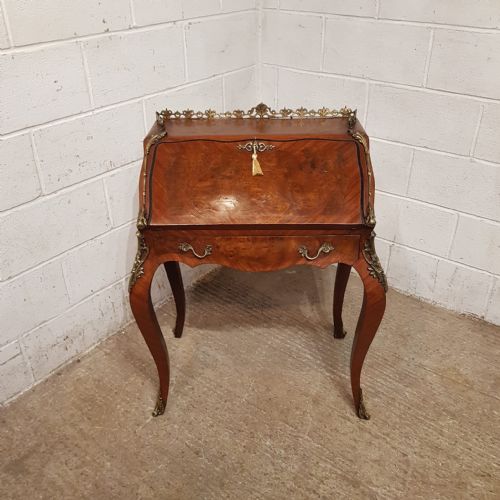
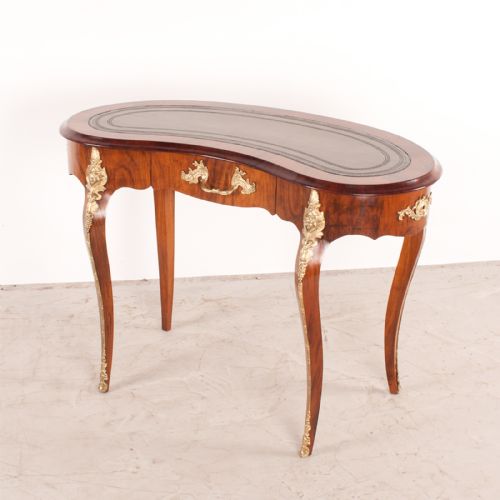
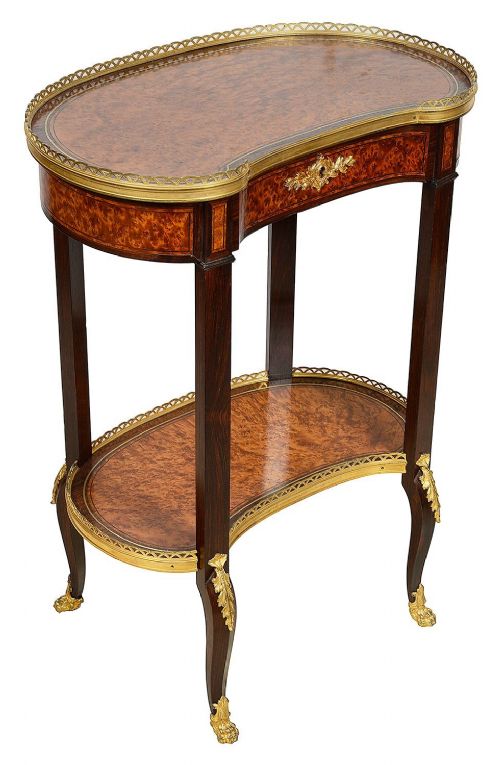
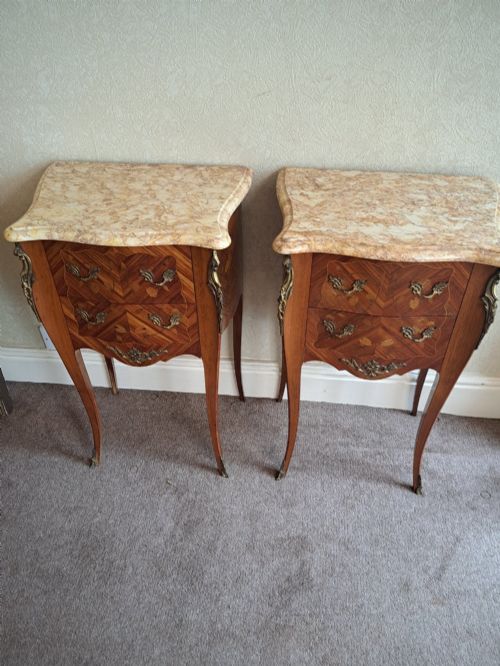
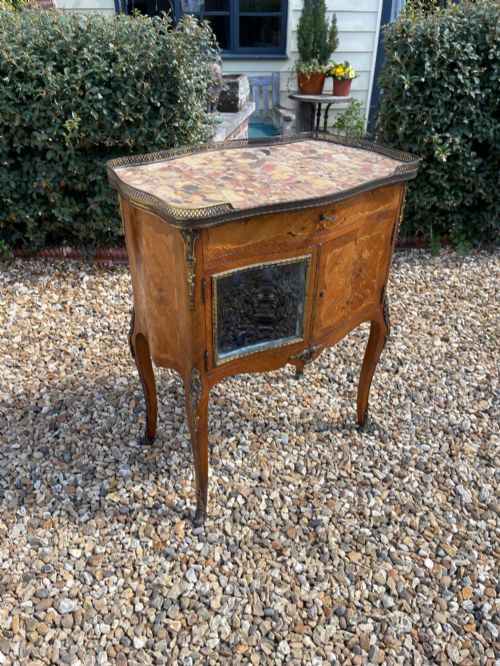
The form appears most frequently on this page as an occasional table, side table, or bedside cabinet, alongside writing desks and freestanding centre tables. Many examples incorporate intricate marquetry or parquetry inlay, combining darker timber grains with lighter woods to create geometric or floral patterns.
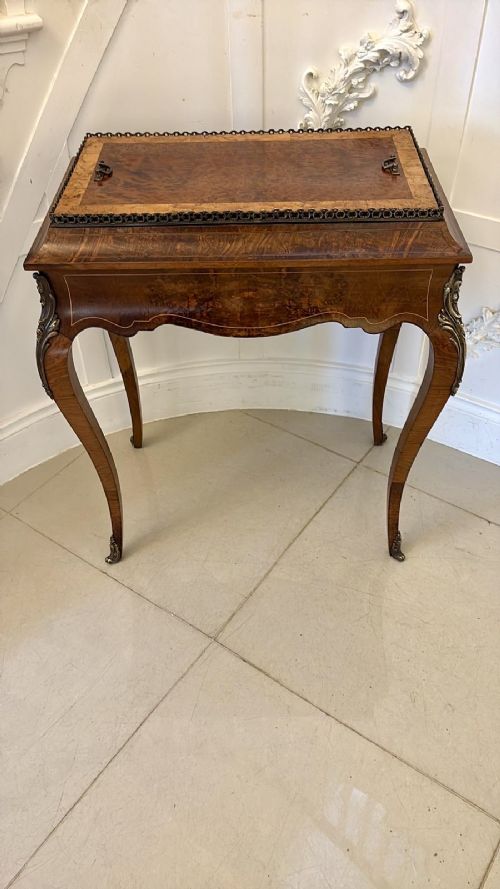
Walnut serves as the primary timber, often selected as burr walnut for its rich, swirling grain patterns. Brass mounts, ormolu accents, and gallery rails edge the tops or frame the drawers, adding structural definition and a metallic contrast to the dark wood.
How they were made
Cabinetmakers constructed these tables using solid walnut frameworks combined with decorativeveneers applied to carcases of secondary timber. Burr walnut sections were sliced thinly to cover flat surfaces, displaying complex natural figure patterns across table tops and drawer fronts.
Brass mountings and ormolu details were cast separately, then chased and fitted by hand to the corners, legs, and aprons of each table. Marquetry inlay employed contrasting woods such as kingwood, laid into prepared recesses to form elaborate floral or scroll motifs.
Marble tops, glass inserts, and onyx surfaces were integrated into specific forms like console tables and jardinières, requiring precise stone-cutting and supportive wooden frames to hold heavy upper slabs securely.
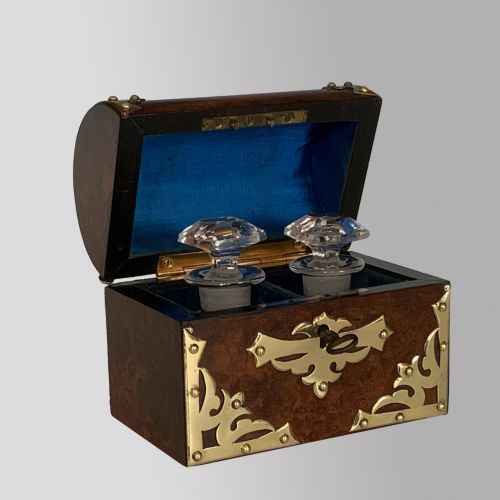
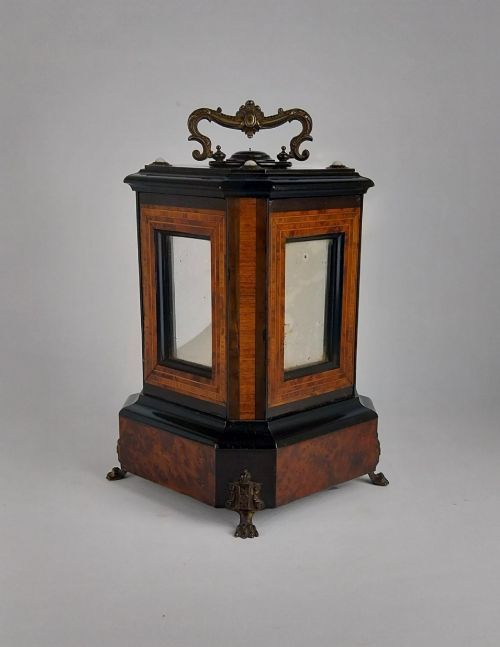
Some nineteenth-century walnut tables secretly housed musical movements inside their boxes, playing tunes whenever the lid lifted.
What varies in quality
The calibre of a brass mounted walnut table rests upon the crispness of the cast metalwork and the complexity of the timber veneer. Finer examples display hand-chased ormolu mounts with sharp relief, whereas standard pieces feature simpler stamped brass edgings and utilitarian fittings.
Marquetry execution dictates the tier of craftsmanship, with superior pieces showing tight joints between varied wood species and meticulous hand-engraved details within the floral or geometric panels. The selection of burr walnut itself varies, ranging from subdued grain patterns to deeply figured, highly symmetrical veneers across large surfaces.
Tehan
The Brass Mounted Walnut Table Glossary
- Ormolu
- Gilded bronze mounts applied to furniture. This technique provides a bright metallic contrast against dark walnut timber.
- Burr walnut
- Wood taken from the growth excrescences of walnut trees. It exhibits highly figured, swirling grain patterns prized for decorative table tops.
- Marquetry
- Inlay work using thin pieces of wood veneer to create pictorial or ornamental designs. It frequently decorates French revival side tables.
- Parquetry
- Geometric wood inlay forming repetitive patterns such as cubes or chequers. This technique appears on many nineteenth-century table surfaces.
- Jardinière
- A decorative stand or table designed to hold plants. These often feature metal liners and water-resistant interiors.
Brass Mounted Walnut Table: Frequently Asked Questions
What rooms suit a brass mounted walnut table?
These tables function well as side pieces in sitting rooms or as bedside cabinets in bedrooms. Their compact dimensions allow them to sit beside upholstery without dominating the floor space.
The reflective brass mounts and polished walnut surfaces catch natural light, adding warmth to both traditional and eclectic interiors.
How do I care for walnut and brass?
Maintenance requires occasional dusting with a dry, soft cloth and the avoidance of harsh chemical polishes. Walnut benefits from traditional wax applications to preserve the moisture in the timber.
Brass mounts should remain untouched by abrasive cleaners to preserve their patinated surface over time.
How do I distinguish French styles from Victorian pieces?
French revival pieces often display pronounced cabriole legs, extensive marquetry, and heavier ormolu mounts influenced by Louis XV and Louis XVI designs. Victorian British examples tend to favour simpler structural lines, rich burr walnut veneers, and restrained brass stringing or gallery rails.
Examining the internal secondary timbers and construction methods helps confirm the origin of the piece.
Were these tables used for writing or display?
Specific forms like bureaux de dame and writing tables served for correspondence, featuring fitted drawers and leather or wood writing surfaces. Other variants, such as etageres, occasional tables, and jardinières, were built primarily to display decorative objects or plants.
The presence of drawers, galleries, or lift-up lids usually indicates the intended practical function of the table.