
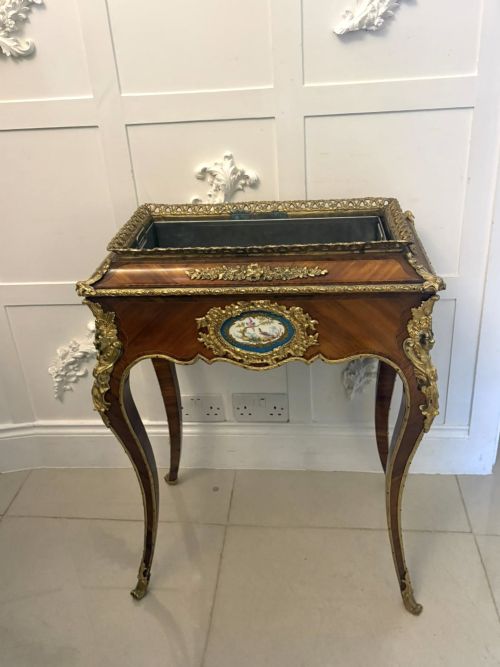
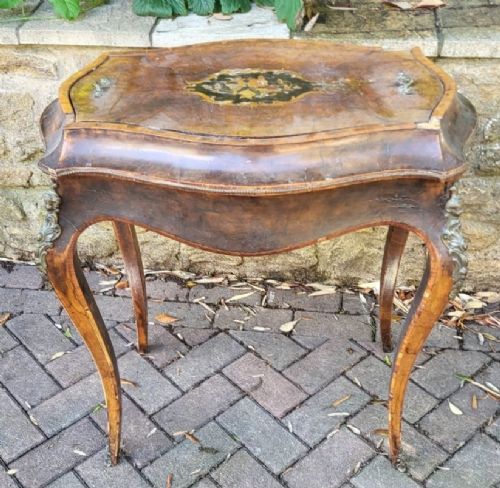
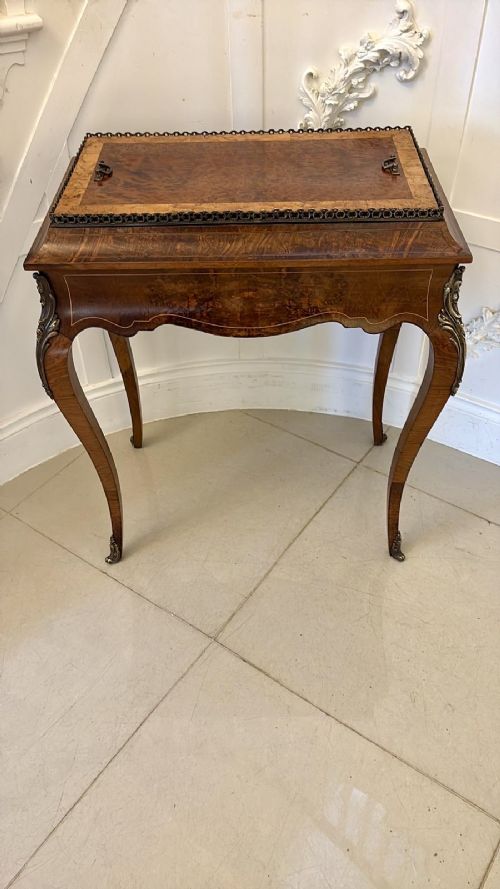


Cabriole Leg Planter Table
A cabriole leg planter table brings living foliage indoors with genuine architectural grace, offering nineteenth-century craftsmanship that elevates any interior botanical display.
Cabriole Leg Planter Table
A cabriole leg planter table combines a plant stand with a functional table surface, serving as both a decorative furnishing and a practical home for indoor greenery. These pieces emerge predominantly from the nineteenth century, including specific years like 1850, 1860, and 1880, as well as the broader Victorian era.
The dominant forms span jardinières, jardiniere tables, plant stands, and side tables, often drawing heavily on French Louis XV styles and Victorian Rococo Revival aesthetics. Such tables frequently incorporate lift-off lids or dedicated planting wells designed to hold flora securely within the living space.
Materials and construction methods
Cabinetmakers utilised rich timbers such as burr walnut, kingwood, and satinwood as the primary structural and decorative foundations for these stands. Intricate marquetry inlay frequently adorns the surfaces, creating elaborate floral or geometric patterns that demonstrate high levels of woodworking skill.
Metalwork played a defining role in finishing these pieces, with ormoulu mounts and brass detailing applied to accentuate the sweeping curves of the woodwork. Linings of metal or zinc provided the necessary waterproof barrier to protect the timber from moisture during daily horticultural use.
Ceramic elements occasionally entered the construction process through porcelain plaques, notably in Sevres-type plaque decorated examples. These fragile inserts required precise joinery to mount securely within the wooden framework of the table.
Object forms on this site span side tables, plant stands, and jardinières with French Louis XV revival styling.
Distinctions in standard and execution
The refinement of the carving along the cabriole legs sets the baseline for overall execution, distinguishing standard production from exceptional artistry. Smoother transitions and more deeply sculpted contours reflect greater workshop investment in the final form.
The selection and matching of burr walnut veneer create a visual hierarchy among these tables, where symmetrical grain patterns elevate the piece. Plain timber surfaces without thoughtful veneer arrangement lack the visual depth found in superior examples.
The integration of metal mounts, such as ormolu and brass, separates masterwork productions from simpler items. Tighter fitting mounts and crisper cast details indicate a higher tier of nineteenth-century manufacture.
The Cabriole Leg Planter Table Glossary
- Cabriole leg
- A furniture leg featuring a double curve, stepping outward at the knee and tapering inward toward the foot. This shape derives from ancient animal forms and defines Louis XV revival design.
- Jardiniere
- An ornamental stand or container designed specifically for holding flowers or plants. They appear frequently in nineteenth-century interiors as focal points for indoor greenery.
- Ormolu
- Gilded bronze or brass applied as decorative mounts onto furniture and decorative arts. The technique involves creating a gold-mercury amalgam on a metallic base.
- Marquetry
- The art of applying pieces of veneer to a structure to form decorative patterns and pictures. Craftsmen utilise various coloured woods to achieve tonal contrast.
- Kingwood
- A dense, heavy tropical timber prized for its dark violet-brown colour and striking figure. It was widely utilised in fine nineteenth-century cabinetmaking.
Cabriole Leg Planter Table: Frequently Asked Questions
What is a cabriole leg planter table?
A cabriole leg planter table is a nineteenth-century furnishing designed to hold indoor plants while serving as an elegant side table or plant stand.
These pieces typically feature curved legs and a dedicated container or well for flora, often incorporating lift-off lids and marquetry decoration.
How were these tables used originally?
Victorian households utilised these tables to bring living greenery into formal drawing rooms and parlours safely.
The waterproof liners and removable lids allowed owners to water plants without damaging the surrounding walnut or kingwood timber structure.
How do I care for the timber?
Protecting the burr walnut and marquetry surfaces requires keeping the table away from direct heat sources and sudden humidity changes.
Using proper liners inside the planter well prevents moisture from reaching the wood, ensuring the longevity of the vintage materials.
How do I identify French Louis XV style?
French Louis XV style is characterised by asymmetrical flowing lines, naturalistic motifs, and the prominent use of cabriole legs.
Nineteenth-century revival pieces embraced these curvilinear forms, frequently pairing them with ormolu mounts and intricate floral marquetry.