


Burr Walnut Plant Stand
A burr walnut plant stand brings rich grain and distinctive French or Victorian character into a room.
Burr Walnut Plant Stand
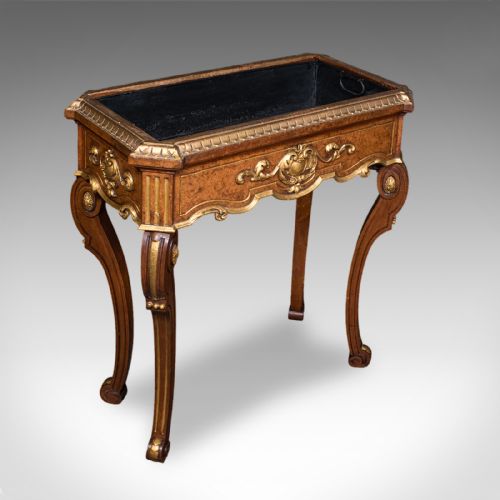
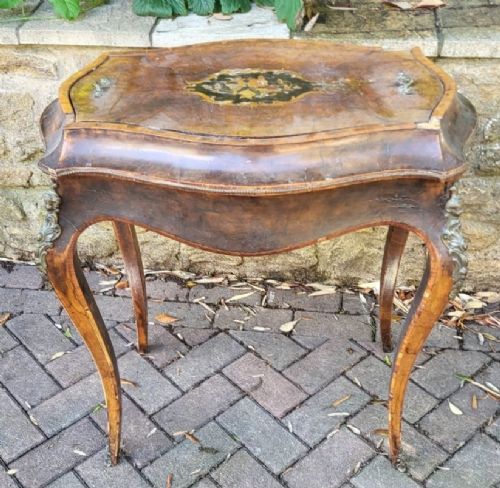
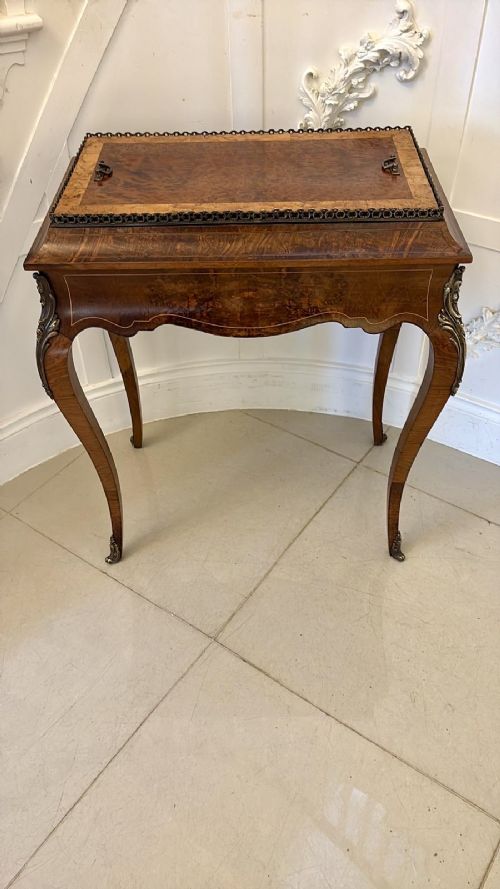
When you search for a burr walnut plant stand, you are looking at decorative items designed to display indoor foliage, which most frequently appear on this page as French or Victorian jardiniere tables and pedestals.
These pieces function simultaneously as small tables and as planters, often featuring fitted interior liners or lift-off lids for holding plants or flowers.
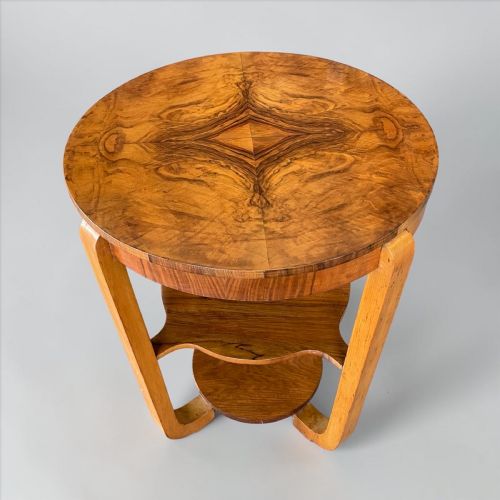
The selection ranges from mid-nineteenth century revival styles to twentieth century Art Deco forms, spanning periods such as the Regency and Victorian eras.
Construction and materials
Makers utilised burr walnut veneer over solid timber foundations to create striking, highly figured grain patterns across the tops and sides of the stands.
Many examples incorporate cast or chased ormolu mounts and brass details, which accent the curved contours associated with French Louis XV and Rococo revival designs.
Marquetry inlay and porcelain plaques occasionally appear, demonstrating meticulous craftsmanship applied to both flat surfaces and structural columns.
Burr Walnut Plant Stand Retail Price Guide 2026
Typical asking prices for burr walnut plant stand among the pieces listed under this phrase on Sellingantiques today, from the lower quarter to the upper quarter. They describe what is for sale here now, not the wider market.
Several plant stands double as cellarettes or decanter caddies, proving that Victorians liked their foliage paired with immediate refreshment.
Assessing quality
Quality rests upon the selection and matching of the veneer, where richer, more intricate burr patterns distinguish superior pieces from plain timber surfaces.
The integration of metal mounts, such as fire-gilded ormolu, separates standard production from finer cabinet work where hardware fits seamlessly into the wooden frame.
Subtlety of marquetry and the condition of original liners or interior wells further divide the ordinary items from the finest examples.
Gillow & Co.
The Burr Walnut Plant Stand Glossary
- Jardiniere
- A decorative pot or stand designed specifically to hold indoor plants or flowers. These often take the form of freestanding tables with removable liners.
- Burr walnut
- A type of wood veneer taken from the growth growths of a walnut tree, prized for its swirling, organic grain patterns. It provides a highly decorative surface for fine furniture.
- Ormolu
- Gilded bronze ornamentation applied to the mounts and feet of furniture. It is characteristic of French-inspired revival pieces from the nineteenth century.
- Marquetry
- The art of applying pieces of veneer to a structure to form decorative patterns and pictures. Craftsmen use various woods to achieve tonal contrast.
- Planter
- A container or stand for growing or displaying plants. On this page, they often double as occasional or side tables.
Burr Walnut Plant Stand: Frequently Asked Questions
What is a jardiniere table?
A jardiniere table is a specialised piece of furniture featuring a built-in container or well designed to hold potted plants indoors.
They combine the utility of a small occasional table with a decorative planter, often including a removable metal liner to protect the wood from water.
How do I care for burr walnut?
Burr walnut requires gentle cleaning with a soft, dry cloth to preserve the delicate veneer and its natural finish.
Keep these pieces away from direct sunlight and excessive moisture to prevent the wood from fading or the veneer from lifting.
How do I date a Victorian planter?
Dating a Victorian planter involves examining the timber preparation, the style of the hardware, and the presence of revival motifs.
Pieces from this era frequently incorporate French Rococo influences, burr walnut veneers, and hand-cut dovetails or traditional joinery methods.
Can I use these for modern plants?
These stands accommodate modern potted plants easily, provided you use suitable inner pots or saucers to manage drainage.
They serve as decorative display pieces that elevate greenery in living spaces much as they did in the nineteenth century.