
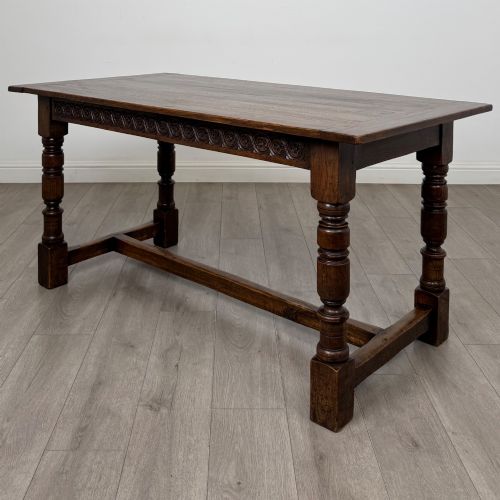
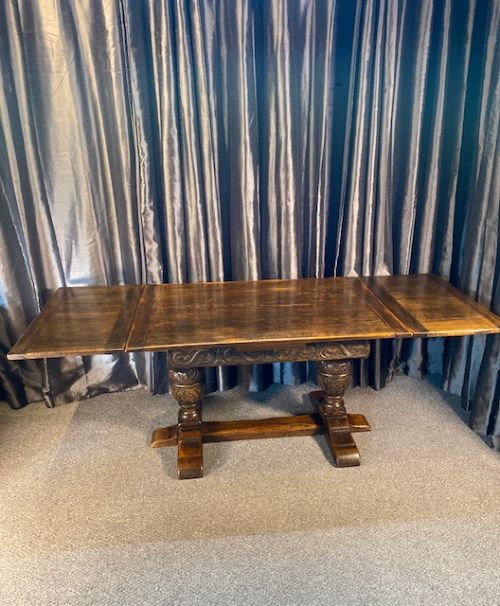
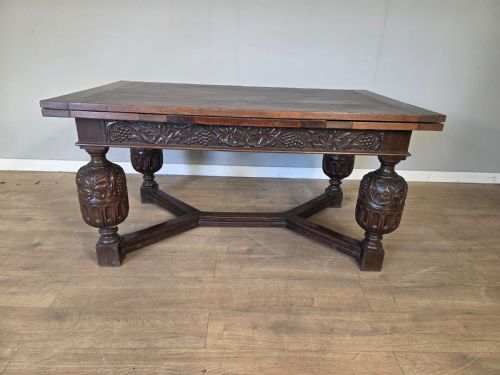
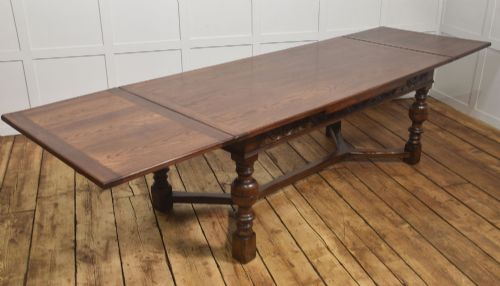
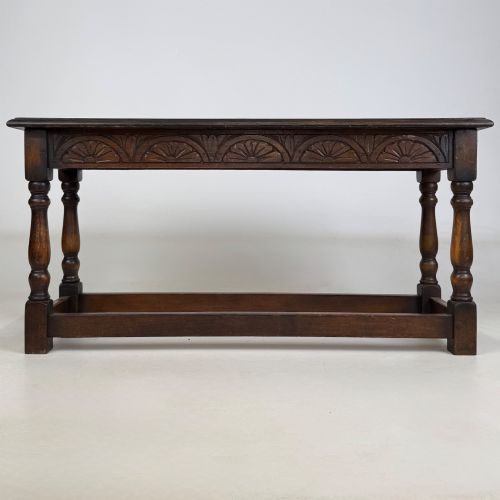
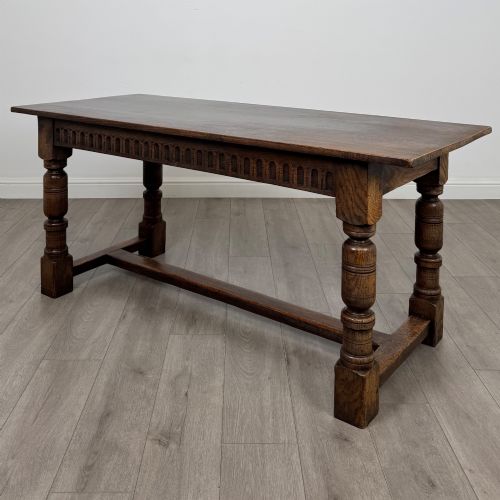
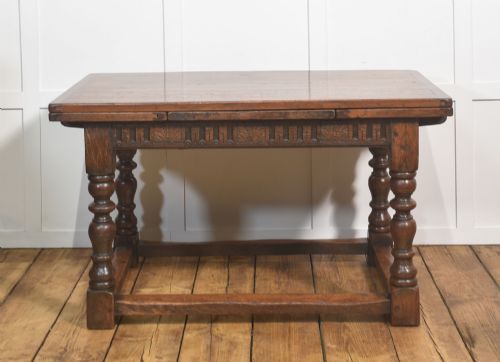
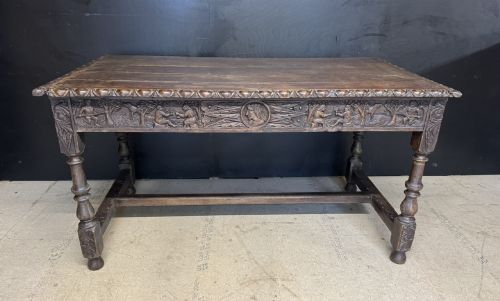
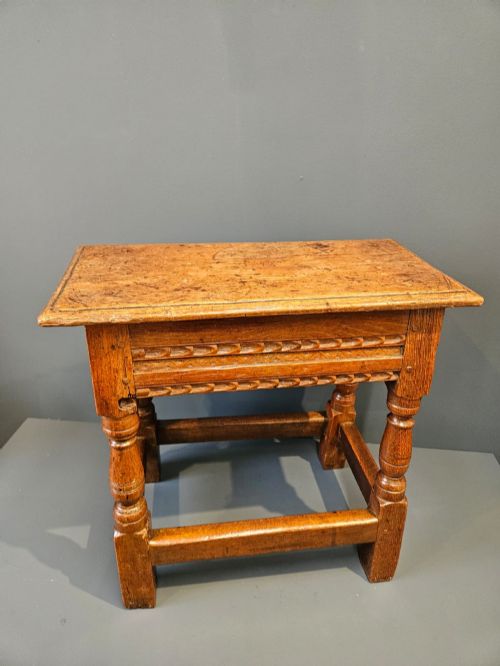
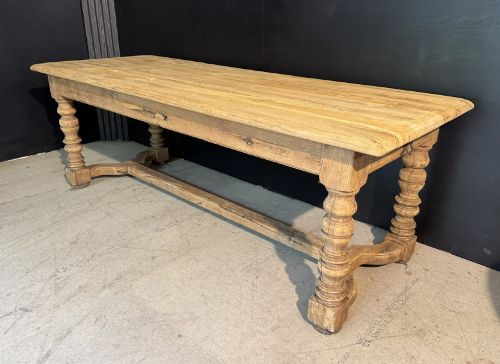
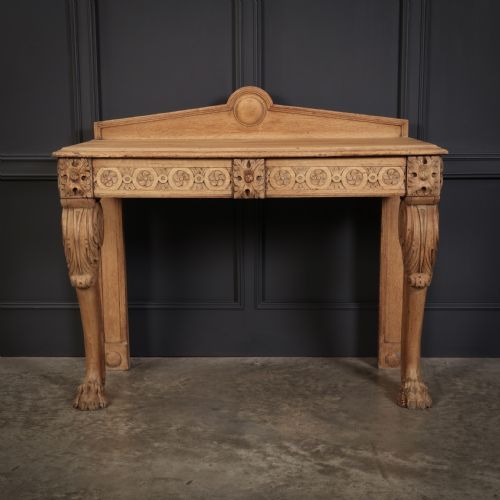


Carved Frieze Oak Table
A carved frieze oak table brings tactile depth and robust character to a room, anchoring the space with historic timber and ornamental relief work.

Carved Frieze Oak Table
A carved frieze oak table spans utilitarian surfaces and grand formal boards, with dining tables, console tables, side tables, and refectory forms appearing across the selection. These pieces frequently draw upon Jacobean, Elizabethan, Gothic, and Renaissance revival styles, alongside French country influences and nineteenth-century interpretations.
The architectural interest centres on the horizontal band beneath the top edge, where woodcarvers historically applied floral motifs, geometric strapwork, or figurative elements. Buyers encounter seventeenth-century originals alongside nineteenth-century and early twentieth-century revivals produced around nineteen-twenty or the Edwardian era.
Forms extend beyond standard dining boards to include library tables, coffee tables, writing desks, and side tables fitted with drawers. Solid oak predominates, occasionally accompanied by pine or secondary timbers within robust structural frameworks.
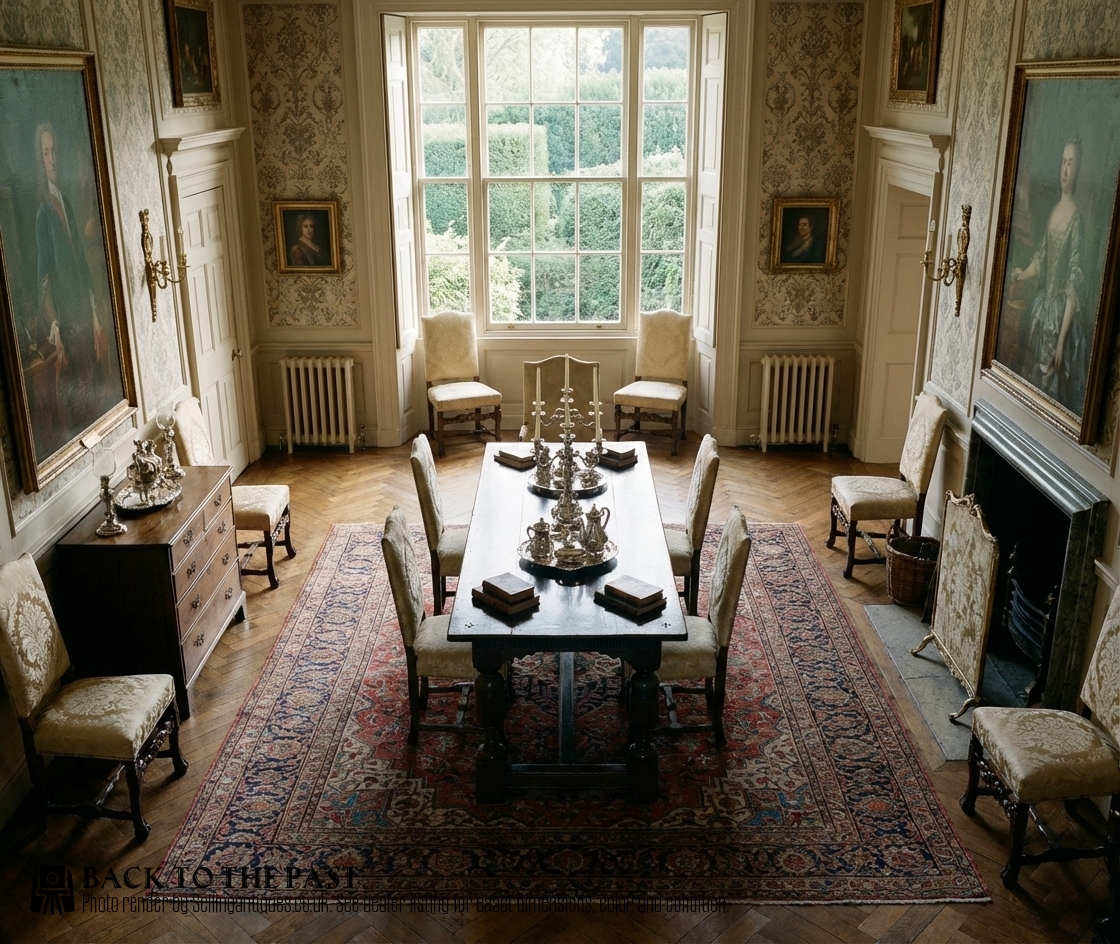
Distinguishing quality in construction and carving
Depth and crispness of the hand-carved frieze separate standard production work from exceptional craftsmanship, with superior pieces showing deliberate chisel control and well-defined relief rather than shallow machine routing. The choice of timber grain, particularly quarter-sawn oak displaying prominent medullary rays, indicates careful selection by the joiner.
Structural integrity depends upon sturdy original joints, substantial timber thickness, and well-fitted drawers operating smoothly within the frieze without excessive timber shrinkage or modern mechanical insertions.
Carved Frieze Oak Table Retail Price Guide 2026
Typical asking prices for carved frieze oak table among the pieces listed under this phrase on Sellingantiques today, from the lower quarter to the upper quarter. They describe what is for sale here now, not the wider market.
The Carved Frieze Oak Table Glossary
- Frieze
- The horizontal structural band situated directly beneath the top surface of a table, frequently ornamented with carved decoration or fitted with drawers.
- Refectory table
- A long, narrow dining table originally designed for communal dining in monastic or institutional settings, supported by sturdy legs connected by longitudinal stretchers.
- Draw leaf table
- An expandable table featuring two hidden leaves stored beneath the main top that pull out to extend the surface area.
- Joint stool
- A sturdy wooden stool constructed with pegged mortise and tenon joinery, often utilised as flexible seating or low side surfaces alongside larger tables.
- Medullary rays
- Natural ribbons radiating outwards across the grain of quarter-sawn oak, producing a distinctive figure prized by cabinet makers.
Carved Frieze Oak Table: Frequently Asked Questions
How do I date an oak table?
Dating relies on observing construction marks, joint types, timber preparation methods, and stylistic revival cues visible across the frame. Hand-cut peg placement and tool marks often signal earlier hand-tool fabrication.
Revival pieces from the nineteenth and early twentieth centuries frequently combine historical decorative motifs with machine-sawn timber dimensions and later hardware fittings.
Are these tables suitable for daily dining?
Solid oak construction provides exceptional durability and stability, making these surfaces well-suited for regular family meals and everyday domestic use. The robust timber resists heavy weight and hard wear across decades.
Protecting the surface from excessive moisture and heat preserves the historic wax or polished finish against permanent marking.
What is a draw leaf mechanism?
A draw leaf mechanism allows a dining table to increase its surface length by sliding concealed leaves out from beneath the primary top boards. The main surface dips slightly as the extensions lock into place.
This ingenious engineering provides flexible seating capacity without requiring separate storage leaves kept away from the table.
How should I care for antique oak?
Maintaining antique oak involves applying traditional beeswax periodically to nourish the dry timber and enhance the natural grain and accumulated patina. Avoiding direct sunlight and sudden temperature changes prevents the solid wood from splitting.
Dusting with a soft, dry cloth keeps the carved recesses clean without introducing harmful moisture to the historic joints.