


Carved Ebonised Mirror
A carved ebonised mirror brings architectural contrast and deep, dark timber tones to an interior, making it a striking focal point for a room.
Carved Ebonised Mirror
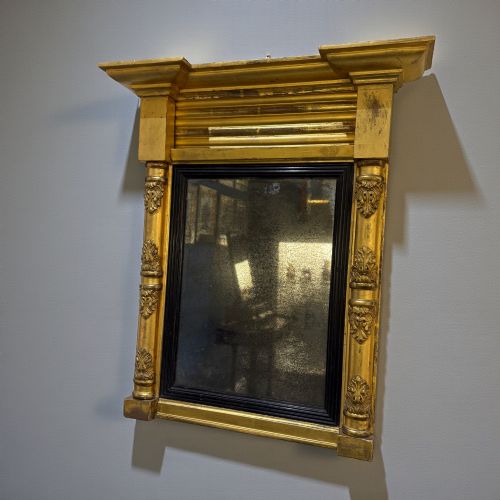
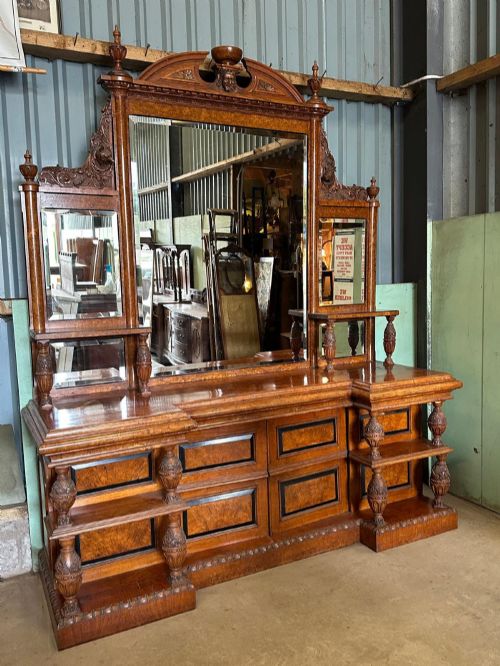
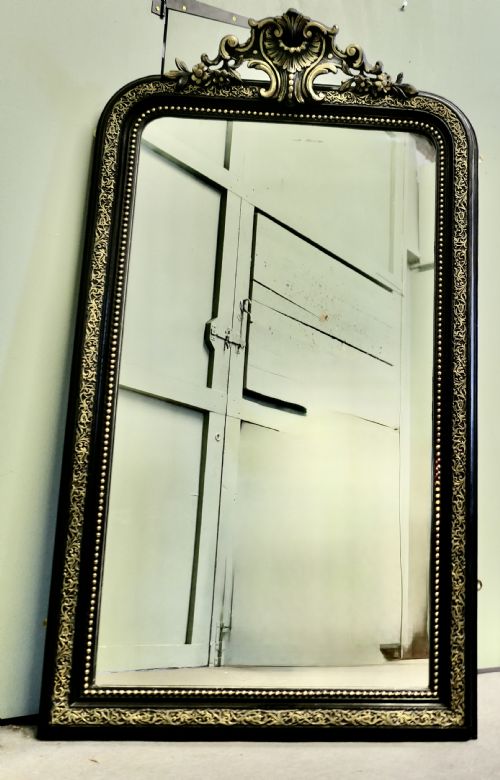
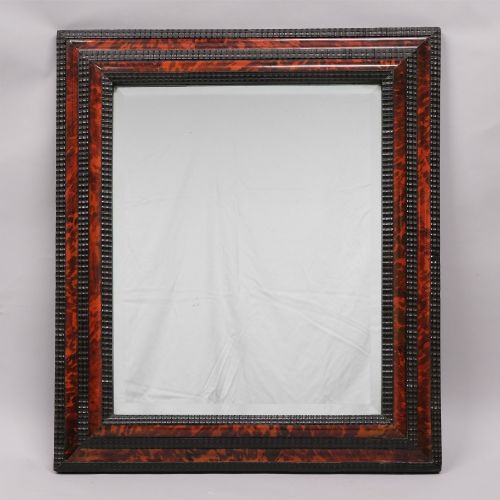
A carved ebonised mirror combines dark, blackened timber with sculptural wood carving, creating a dramatic visual weight that suits both period and modern interiors. When searching for a carved ebonised mirror, buyers encounter pieces ranging from smaller hall and vanity mirrors to large overmantel and pier mirrors designed to anchor a principal room.
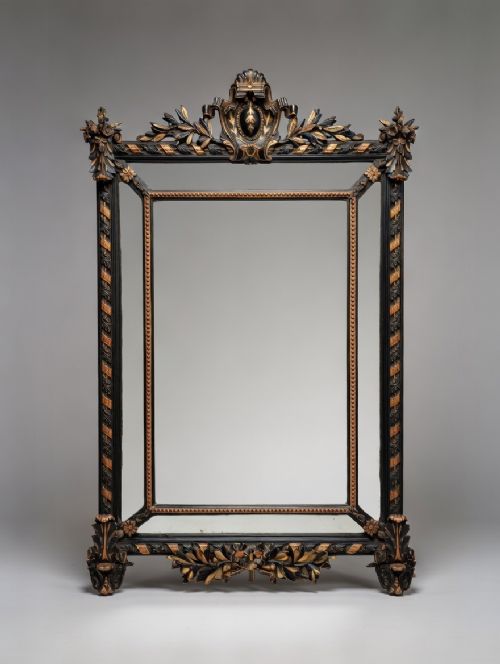
The selections span various historical periods including the Regency era, the Victorian period, and the late nineteenth century, alongside revival styles like Napoleon III and Aesthetic Movement pieces. Many examples incorporate parcel-gilt details, where touches of gold leaf highlight the carved elements against the dark ebonised background.
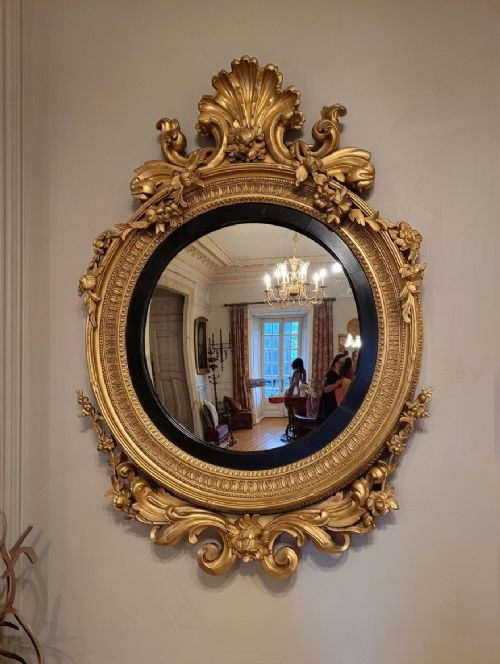
While many related mirrors appear in giltwood or mahogany, the ebonised variants provide a distinct monochromatic depth often paired with gesso mouldings or carved wood and gesso frames. These pieces function both as decorative wall furnishings and as practical items that reflect light while adding a solemn, elegant presence to spaces.
Materials and Techniques
Cabinet makers and gilders built these frames from woods such as oak, walnut, or pine, applying a dark finish to imitate expensive ebony. Layers of gesso were often built up over the timber base to create crisp, raised mouldings and carved decorations before the ebonising wash or paint was applied.
Parcel-gilt highlights were achieved by laying thin sheets of gold leaf onto specific raised carved details, such as sight edges or floral motifs, contrasting sharply with the matte or polished black surface. Original mirror glass plates, frequently silvered using older methods, rest within these frames, sometimes showing the subtle distortions typical of nineteenth-century manufacture.
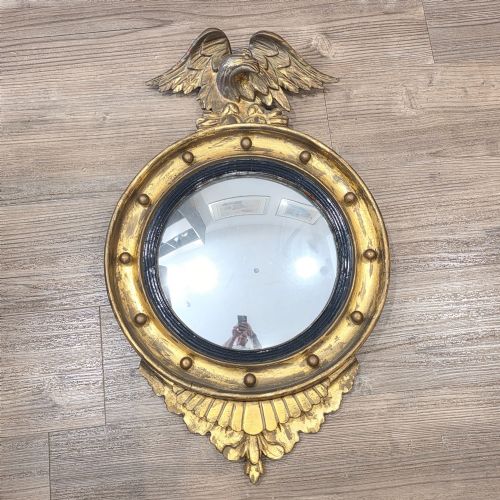
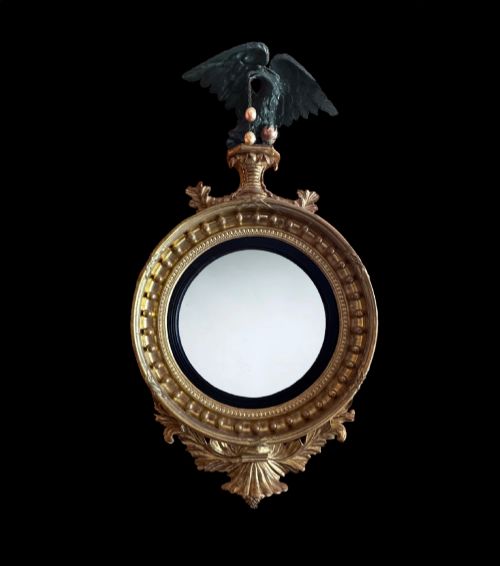
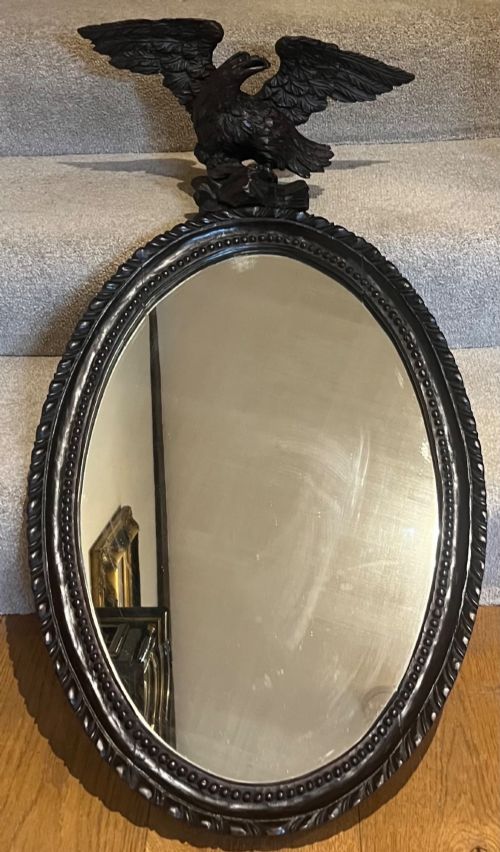
Several mirrors arrive with watchful golden eagles perched atop their frames, keeping a permanent eye on the drawing room.
Assessing Quality
The distinction between ordinary and superior examples lies in the crispness and depth of the wood carving and the finesse of the gesso work beneath the ebonised finish. Sharply defined details on moulded ornaments and deliberate placement of parcel-gilt indicate skilled workshop production rather than mass-market output.
Proportion and scale also dictate the standing of a piece, particularly in large overmantel and pier mirrors where the balance between the frame width and the mirror plate governs the visual harmony. The integrity of the ebonised surface and the retention of original gilding and mirror plates hold significant weight in discerning the standard of execution.
The Carved Ebonised Mirror Glossary
- Ebonised
- Wood treated with a stain, dye, or black finish to imitate genuine ebony. This dark finish gained popularity in various nineteenth-century revival periods for its dramatic contrast.
- Parcel-Gilt
- Partially gilded surfaces where gold leaf highlights specific carved details or mouldings. It provides a bright contrast against ebonised or painted timber frames.
- Gesso
- A plaster-like mixture applied to wood frames and carved to form raised decorative motifs before gilding or painting. It allows for intricate, sharp ornamental detail.
- Overmantel Mirror
- A large mirror specifically designed to hang above a fireplace mantelpiece. These pieces often feature wide horizontal proportions to suit the width of the hearth.
- Pier Mirror
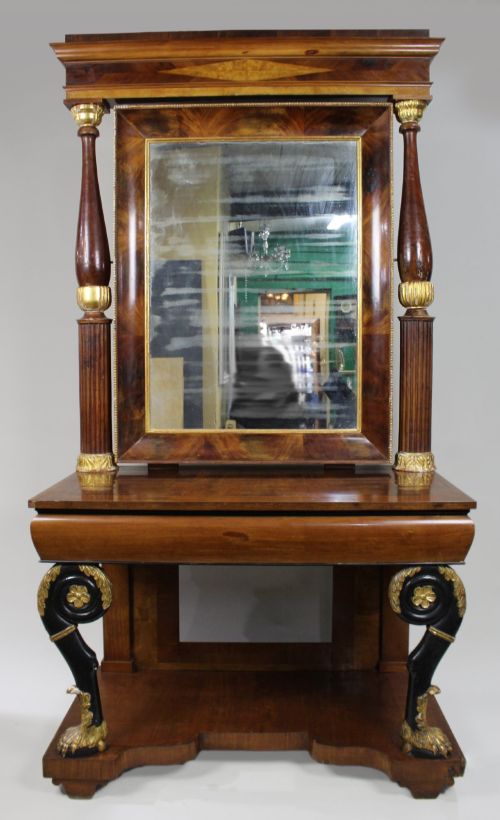
- A tall mirror designed to hang on the narrow pier of wall space between windows. They frequently match console tables placed directly beneath them.
Carved Ebonised Mirror: Frequently Asked Questions
Where should I hang an overmantel mirror?
An overmantel mirror traditionally hangs directly above a fireplace mantelpiece, serving as the visual anchor for the chimney breast. It reflects light across the room and balances the substantial architectural weight of the fireplace below.
When positioning the mirror, ensure it is securely fixed to wall studs given the considerable weight of timber and gesso frames. Keeping the lower edge just above the mantelpiece creates a cohesive connection between the hearth and the wall decoration.
How do I care for ebonised wood?
Ebonised wood requires gentle dusting with a soft, dry cloth to prevent the accumulation of particles in the carved recesses. Avoid using harsh chemical polishes or modern spray cleaners that can strip or dull the dark finish.
Keep the mirror away from direct sunlight and damp environments to protect the underlying timber and the gesso preparation. Periodically check the fixings and backing boards to ensure the heavy glass plate remains secure within the frame.
What is a pier mirror?
A pier mirror is a tall, narrow mirror historically designed to fit on the wall space between two windows. This placement maximises the natural light entering a room by reflecting it back into the interior space.
These mirrors often sit above matching console tables or small side tables in hallways and reception rooms. Their vertical proportions draw the eye upward, enhancing the perceived height of the room.
How do I distinguish Victorian from Regency styles?
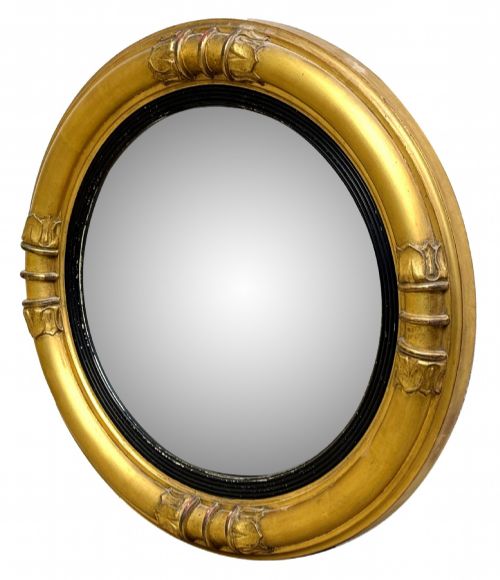
Regency mirrors frequently feature classical motifs such as convex plates, reeded columns, and eagle surmounts inspired by ancient Roman and Greek designs. The lines tend to maintain a strict neoclassical symmetry and proportion.
Victorian pieces often display heavier, more exuberant ornamentation reflecting later revival movements and industrial manufacturing techniques. They encompass diverse influences from Gothic to Aesthetic movements, resulting in bolder carved forms and varied wood combinations.