
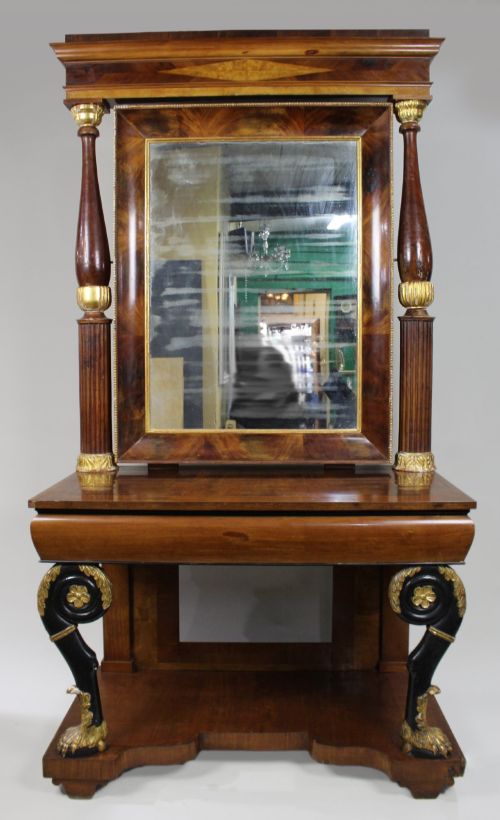
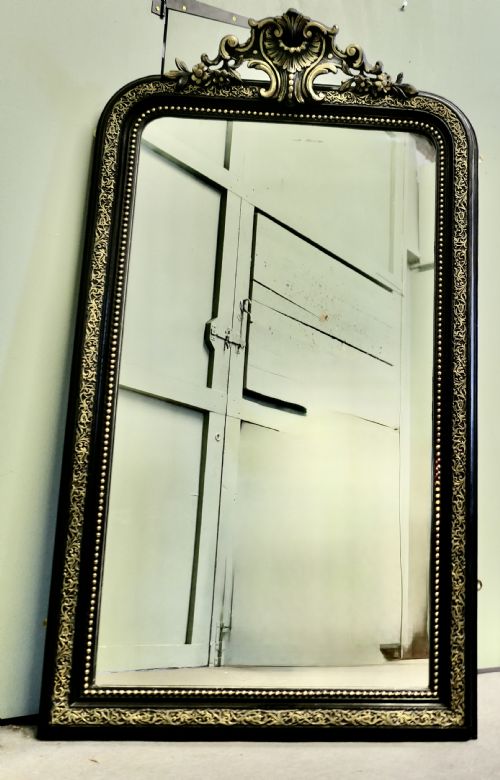
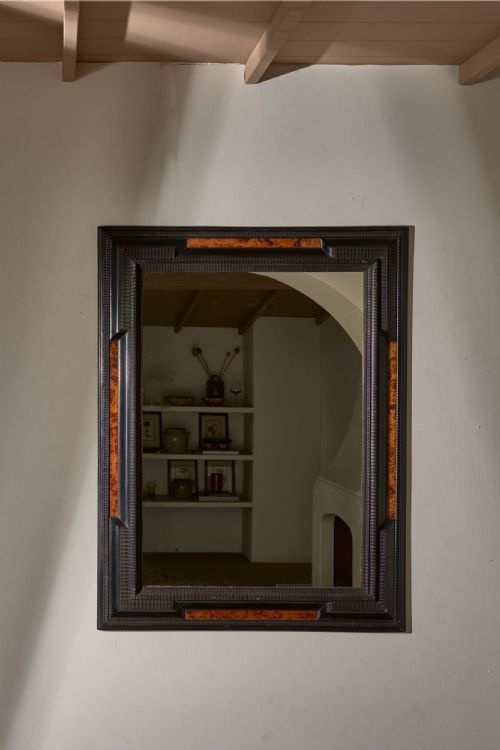

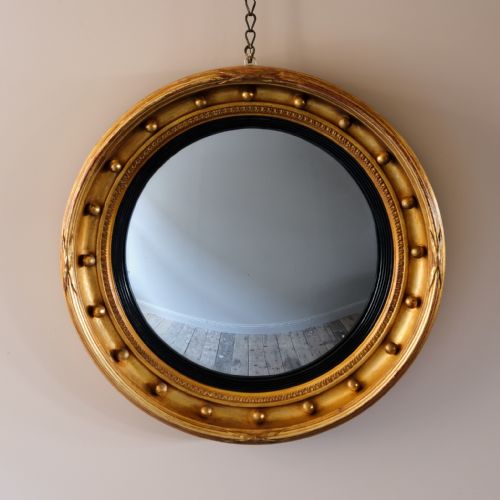


Ebonised Hall Mirror
An ebonised hall mirror brings dark, striking presence to an entranceway, offering deep black timber surfaces that catch the light through polished glass.
Ebonised Hall Mirror
An ebonised hall mirror serves as a functional and decorative focal point for entranceways, combining dark timber with reflective glass to brighten narrow spaces.
You will most frequently encounter Victorian pieces and examples from the nineteenth century on this page, often showing influences from the Aesthetic Movement or Napoleon III periods.
Materials and construction methods
Wood is treated with a dark stain or finish to imitate ebony, paired frequently with giltwood or parcel-gilt highlights that contrast against the blackened surfaces.
Makers applied delicate gesso mouldings to create relief details and ornamentation on the frames, occasionally incorporating brass elements or alternative timbers like mahogany and birch beneath the dark finish.
Listings feature items spanning the Regency, Victorian, and Biedermeier periods, utilising ebonised wood, gesso, brass, and mirror glass.
Distinguishing quality across the range
The refinement of the surface finish and the crispness of applied gesso details separate the finer examples from simpler workshop productions.
Proportion and the preservation of original mirror glass and gilding dictate the overall visual weight and integrity of each piece.
Gillows
The Ebonised Hall Mirror Glossary
- Ebonised wood
- Timber treated with a dark stain, polish or paint to achieve the deep black appearance of genuine ebony.
- Parcel gilt
- A surface technique where select portions of an object are highlighted with thin layers of gold leaf.
- Gesso
- A plaster-like mixture applied to wood frames and carved or moulded into decorative relief patterns before gilding or painting.
- Pier mirror
- A tall mirror specifically designed to hang on the wall space between two windows, often paired with a console table.
Ebonised Hall Mirror: Frequently Asked Questions
How do I hang a heavy hall mirror safely?
Heavy framed mirrors require secure fixing directly into wall studs or solid masonry using appropriate brackets to bear the substantial weight of the timber and glass.
Ensuring the hanging wire or integrated D-rings are robustly attached to the back of the frame is essential for long-term stability.
Where should I place an ebonised hall mirror?
Positioning the mirror opposite or adjacent to a light source in an entrance hall maximises its ability to reflect natural illumination and visually expand the room.
These dark frames stand out best against lighter wall colours, creating a deliberate contrast in a reception area.
How do I clean ebonised wood and glass?
Dust the blackened wooden frame gently with a dry, soft cloth and avoid harsh chemical sprays that can degrade the dark finish over time.
Use a mild glass cleaner applied to a cloth rather than directly onto the mirror surface to prevent moisture seeping behind the plate.
What defines the Aesthetic Movement style?
The Aesthetic Movement embraced artistic refinement and simplicity, often utilising ebonised surfaces influenced by Japanese design principles during the later nineteenth century.
Pieces from this period frequently feature restrained ornamentation that emphasises form and material quality.