


Large Black Mirror
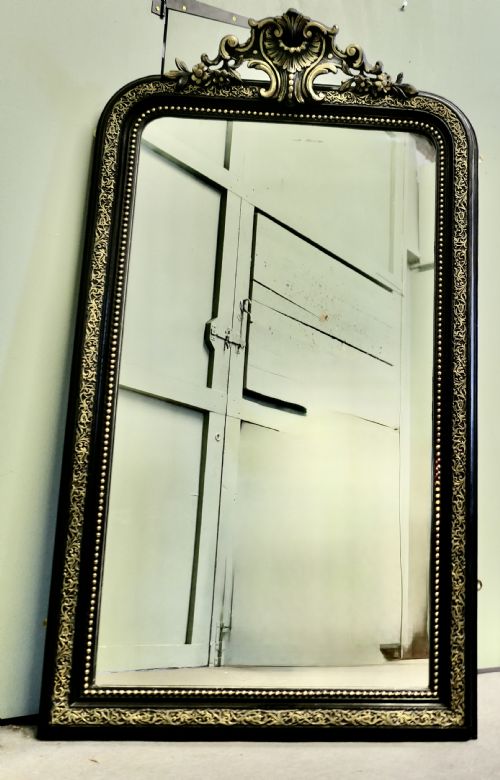
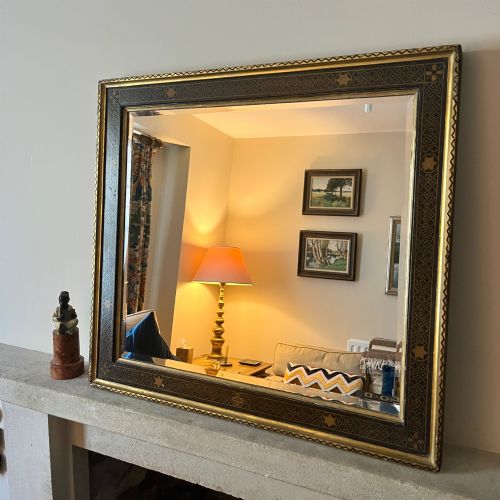
A large black mirror brings heavy contrast and architectural presence to a room, drawing the eye through ebonised timber, dark paint and gilt highlights.
Large Black Mirror
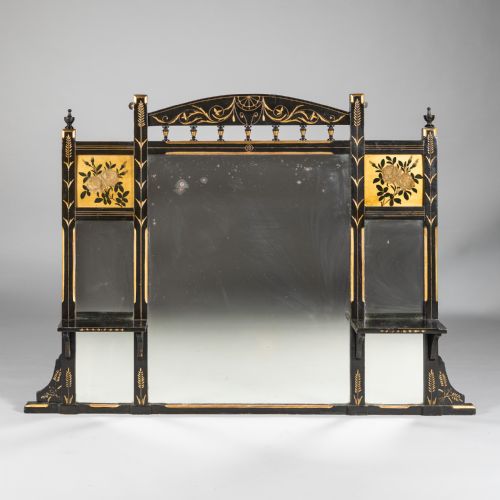
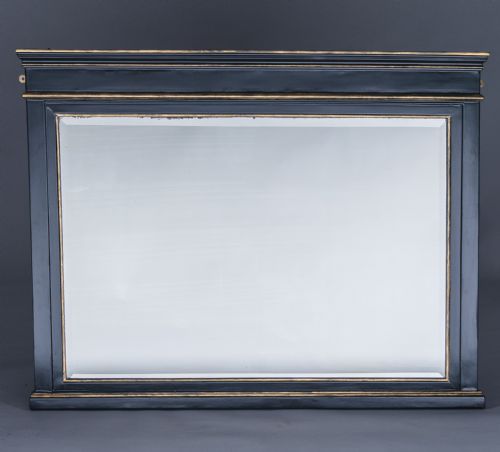
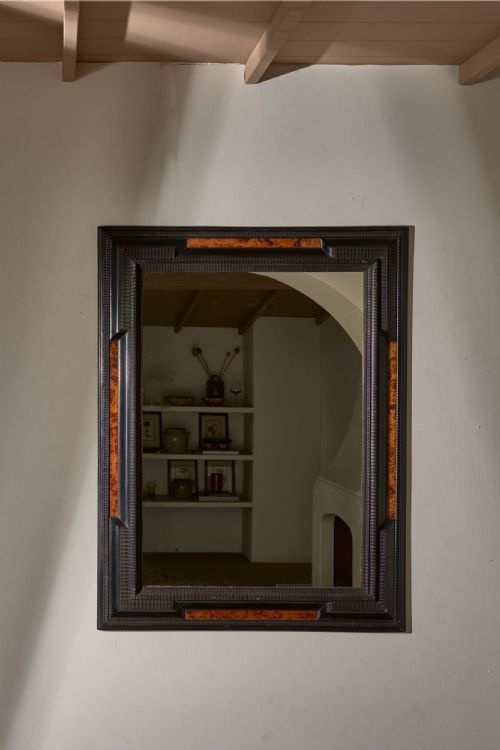
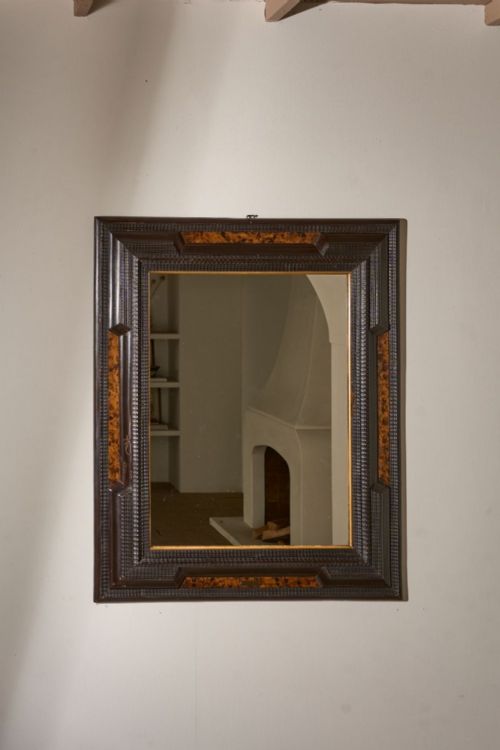
A large black mirror most frequently takes the form of a Victorian overmantle, designed to sit above a fireplace with an arched, rectangular or cushion-moulded profile. These pieces utilise ebonised wood, painted finishes or dark lacquer to create a solid visual anchor on a wall.
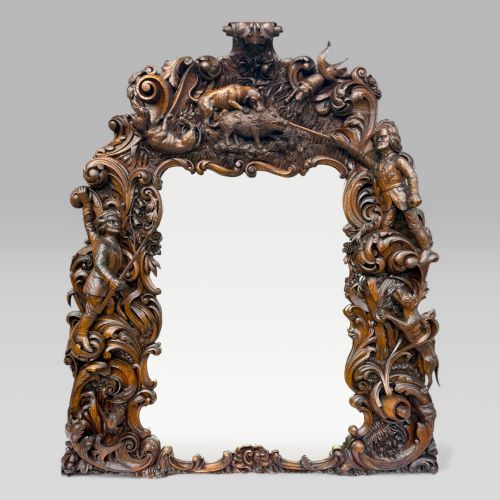
Beyond domestic overmantles, the category encompasses French Napoleon III pier mirrors, carved oak Black Forest hunting frames with dragons or eagles, and tall floor-standing dressing glasses. Their origins span the nineteenth and early twentieth centuries, touching on Aesthetic Movement taste and Gothic revival designs.
How they were made
Frames are constructed from carved timber or wood compositions built up with gesso, which provides the smooth or moulded ground necessary for fine detail. Craftsmen then applied ebonising to darken the wood, or painted the surface before laying down gold or silver leaf to create parcel-gilt contrasts.
The mirror glass itself is held within heavy rebates, often featuring bevelled edges in later pieces or original silvering that shows characteristic age spots and oxidation. Structural joinery relies on pegged or screwed pine and oak frames to support the considerable weight of the glass.
Listings feature nineteenth-century and early twentieth-century periods, utilising ebonised wood, gesso, gold leaf, and mirror glass across wall, overmantle, and floor forms.
What varies in quality
The depth and crispness of the carved ornamentation dictate the distinction between standard production and exceptional craftsmanship. Pieces featuring undercut foliage, figural carvings or detailed composition gesso relief show superior handwork compared to simpler flat mouldings.
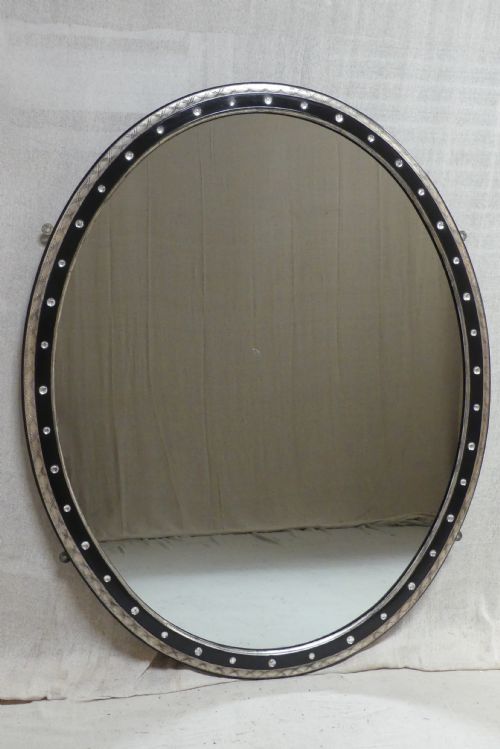
The integrity of the original finish alters the character of the object, particularly where parcel-gilt or silvered details interact with the ebonised ground. Greater harmony in the decorative scheme and minimal disturbance to the original painted or gilded surfaces elevate the standing of the piece.
Gabriel Viardot
The Large Black Mirror Glossary
- Ebonised
- Wood treated with chemical stains, dyes or black paint to imitate expensive ebony. This finish is characteristic of Victorian and Aesthetic Movement frames.
- Overmantle
- A large mirror specifically proportioned to hang on the wall directly above a fireplace mantelpiece. They frequently feature low horizontal dimensions or arched tops to match architectural surrounds.
- Gesso
- A plaster-like mixture applied to wooden frames and carved or smoothed to receive paint and leaf. It allows for sharp decorative moulding that timber alone cannot achieve.
- Parcel-gilt
- A decorative treatment where selected areas of an object are partially gilded with gold or silver leaf while the rest remains dark or painted. This creates contrast against the black ground.
- Cushion mirror
- A frame profile where the outer moulding swells outwards in a convex curve resembling a cushion. This style is frequently found on mid-nineteenth-century French wall mirrors.
Large Black Mirror: Frequently Asked Questions
Where should a large black mirror be hung?
These pieces find their traditional home above a fireplace mantelpiece, where their proportions balance the hearth below. They also function effectively on main reception room walls to reflect light and anchor large wall spaces.
Because of their substantial weight, secure wall fixings into masonry or structural studs are essential. Positioning them opposite a window maximises natural light distribution across the room.
How do I identify a Victorian ebonised mirror?
Victorian ebonised frames typically display heavy timber construction finished with black stain, paint or lacquer, often combined with parcel-gilt highlights. They frequently take the form of overmantles with arched or rectangular heads.
Examining the backboards, fixings and the composition of the gesso helps confirm nineteenth-century origin. The presence of Aesthetic Movement motifs or classical mouldings further points to this period.
What is a Black Forest mirror?
Black Forest mirrors originate from nineteenth-century carving traditions in central Europe, particularly associated with Swiss and German workshops. They are carved from solid oak or linden wood and depict naturalistic subjects.
Common motifs include hunting scenes, foliage, birds, dogs and winged dragons. The wood is typically left in its natural dark tone or stained rather than heavily ebonised.
How should I clean an antique mirror frame?
Maintenance requires dry dusting with a soft brush to remove particulates from deep carvings and gesso mouldings without disturbing the finish. Moisture and standard chemical cleaners must be kept away from antique surfaces and fragile gilding.
Original mirror glass can be cleaned gently with a dry or barely damp microfiber cloth. Care must be taken around the edges where silvering is thin or degraded.