

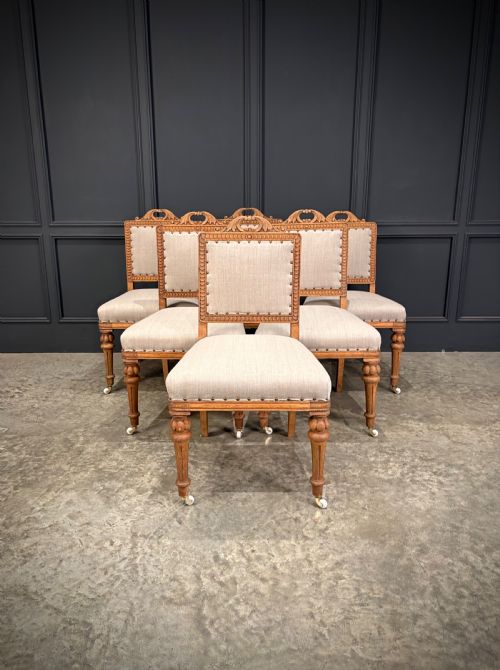


Carved Crest Side Chairs
These carved crest side chairs bring heraldic presence and robust timberwork to a room, offering sturdy seating with distinct carved detail.
Carved Crest Side Chairs
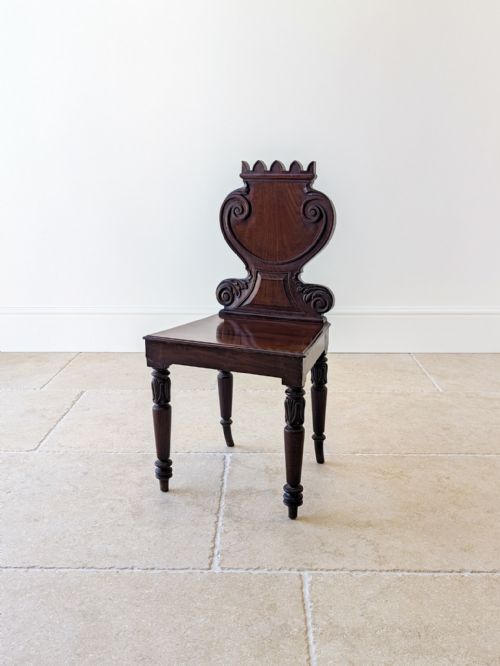
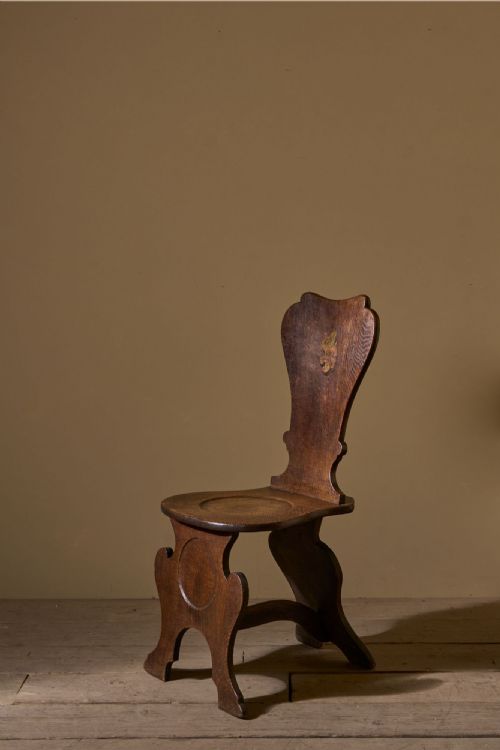
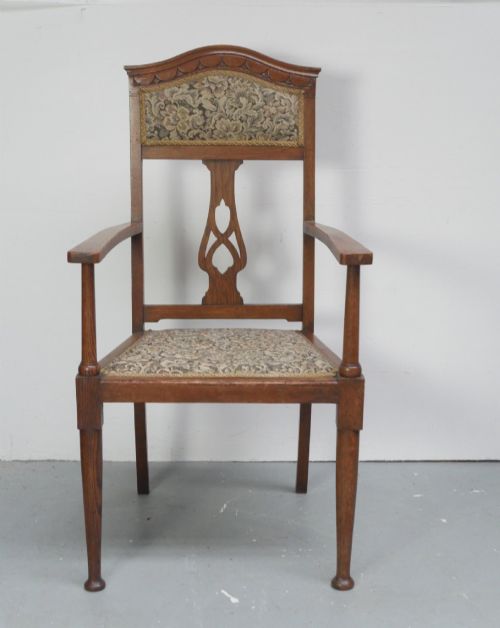
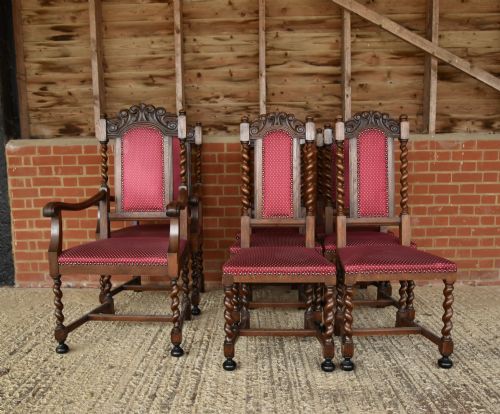
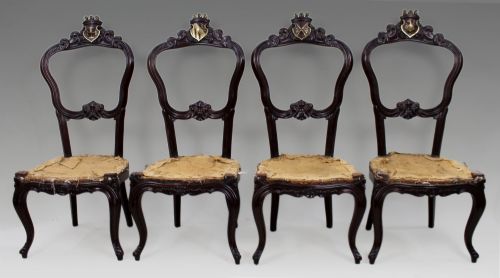
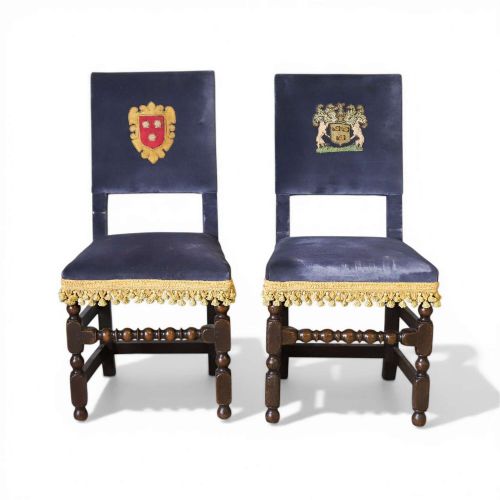
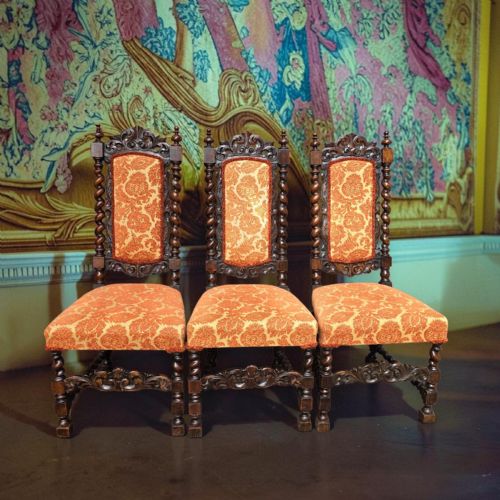
Carved crest side chairs encompass a variety of seating forms designed for halls, dining rooms, and reception spaces, featuring distinct ornamental top rails. The evidence shows these chairs appearing across multiple centuries, from early oak backstools to later Victorian walnut and mahogany iterations.
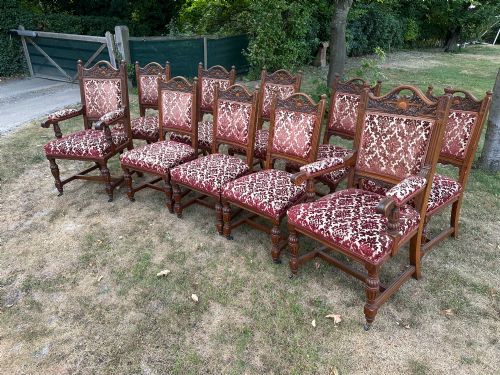
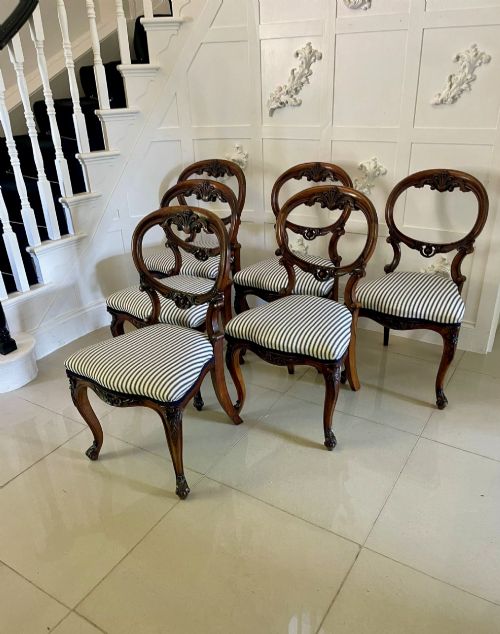
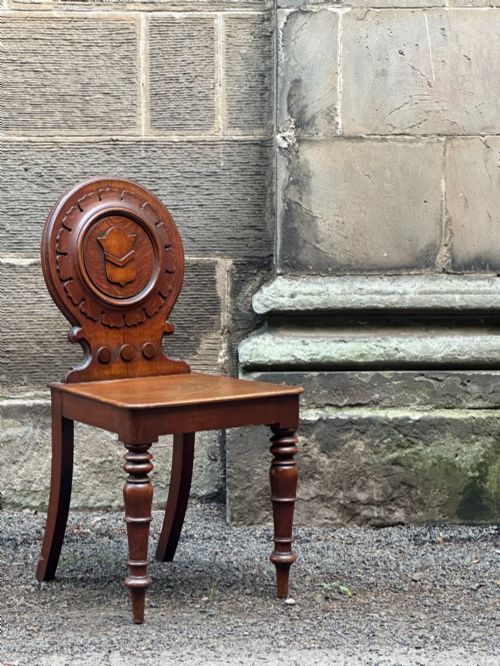
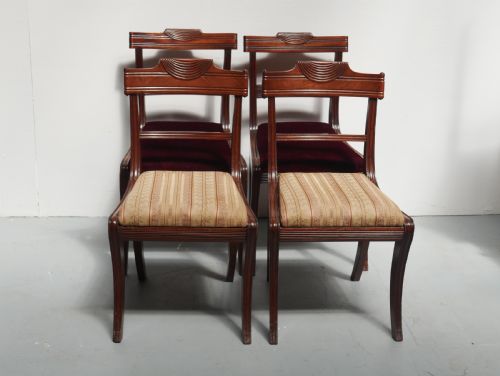
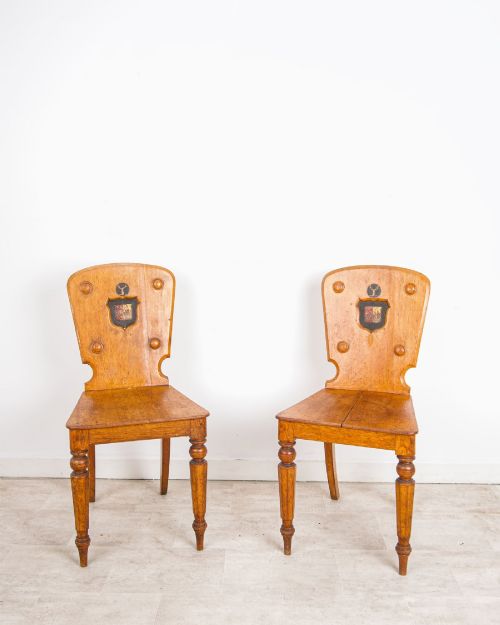
The most common examples encountered on this page date from the nineteenth century, including Victorian hall chairs with carved shields and Regency mahogany designs. Alongside single pieces, buyers regularly find matched pairs and larger dining sets spanning several periods of British and Scottish craftsmanship.
Distinctions in Quality
Quality rests in the crispness and depth of the carved crests, where hand-tooled heraldic details show greater definition than routine machine shaping. Timber selection and the integrity of the original joinery further separate standard utility seating from finer commissioned work.
Proportion and matching also define the higher tier, particularly in multi-piece dining sets and pairs where uniform grain and consistent carving across every chair preserve the unified design intent.
Several chairs bear the clan crests of Scottish households, ready to preside over your hallway with ancestral dignity.
Gillows·Waring and Gillow
The Carved Crest Side Chairs Glossary
- Backstool
- An early form of upholstered or plain wooden seat without arms, popular in the seventeenth century. It represents a precursor to the modern side chair.
- Armorial
- A design incorporating a coat of arms or heraldic crest. These elements are frequently carved into the wooden backs of hall chairs.
- Klismos
- An ancient Greek chair style revived during the Regency and Victorian periods, characterised by curved legs and a concave backrest. It offers a distinct neoclassical silhouette.
- Bergere
- An enclosed upholstered armchair or side chair featuring cane panels within a wooden frame. This technique lightened the visual weight of heavy timber seating.
- Barley Twist
- A cylindrical furniture leg or stretcher carved in a helical spiral resemblance. This technique appears frequently on seventeenth-century and nineteenth-century revival seating.
Carved Crest Side Chairs: Frequently Asked Questions
What is a carved crest side chair?
A carved crest side chair is an un-armed seat featuring an ornamental or heraldic top rail on the backrest. These chairs were traditionally placed in halls, dining rooms, or reception spaces to display family crests or formal decorative motifs.
They function primarily as occasional seating or accent pieces rather than primary lounging chairs. The upright posture required by these designs suits formal interiors.
How do I identify seventeenth-century chairs?
Seventeenth-century chairs, often recorded as backstools or joined oak chairs, feature pegged mortise and tenon joints and heavy turned underframing. The wood surfaces show deep patination and hand-worked grain rather than smooth factory finishes.
Decoration on these early pieces tends towards geometric strapwork, simple mouldings, or low-relief carving rather than elaborate heraldic crests. Their construction relies entirely on solid timber without modern adhesives.
Where were hall chairs placed?
Hall chairs stood in entrance halls and corridors of large houses, serving visitors waiting for audiences with the homeowner. Their sturdy wooden seats and high carved backs reinforced the status and lineage of the household through visible heraldry.
Because they were meant for brief waiting rather than extended sitting, comfort was secondary to formal presentation. They typically lacked upholstery, relying on carved shields to catch the eye.
How do Regency chairs differ from Victorian ones?
Regency chairs draw inspiration from classical antiquity, utilising clean lines, brass inlay, and dark mahogany or faux rosewood finishes. Their carving is disciplined and relies on classical motifs like leaves and reeding.
Victorian chairs embrace heavier proportions and exuberant revival styles, including Gothic and Jacobean revivals. They frequently utilise walnut or oak with deep, ornate relief carving on the crest rails.