


Seventeenth Century Style Seating
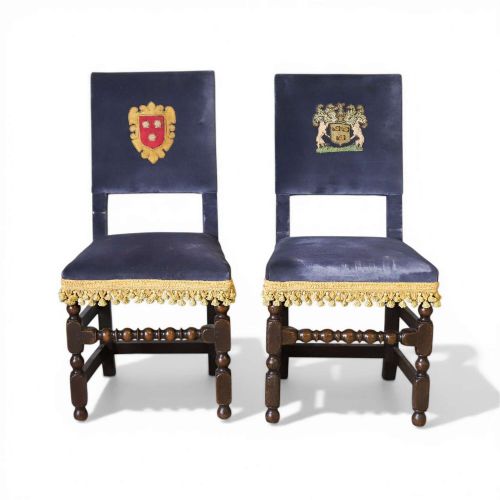
Seventeenth century style seating delivers sturdy oak and walnut frames upholstered in velvet, tapestry, and cane for period interiors.
Seventeenth Century Style Seating
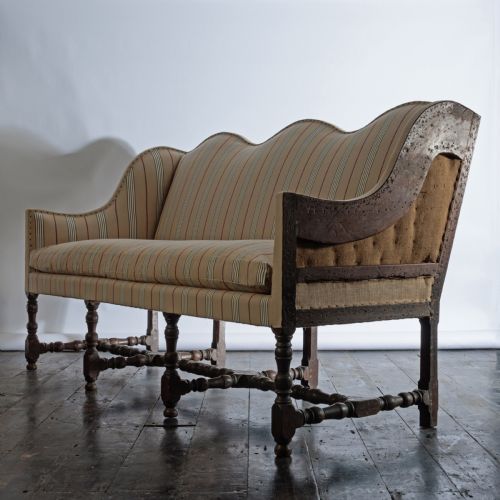
When you search for seventeenth century style seating, you encounter robust forms originating from the seventeenth century alongside revival interpretations produced across the Victorian era and the early twentieth century. The selection ranges from joint stools and side chairs to armchairs, library chairs, and long settees.
Construction and materials
Makers utilised solid timbers, predominantly oak and walnut, to build the heavy frames characteristic of seventeenth century style seating. Joinery methods relied on traditional pegged joints for stools and chairs, ensuring structural longevity.
Upholstery materials recorded in the listings include velvet, cotton, jute, and tapestry fabric, frequently accented with metallic fringe and combined with natural cane panels for backs and seats.
The inventory spans multiple centuries, including items dated to 1700, the Victorian era, and the 1920s.
Assessing quality
Quality in seventeenth century style seating rests on the integrity of the timber and the authenticity of the revival period. Solid oak and walnut frames display crisp turning and carving that distinguish superior workshops from later, simpler production.
The sophistication of the upholstery textiles, from woven tapestry fabric to hand-applied metallic fringe, elevates the finish of armchairs and sofas, reflecting the ambition of the original commission or revival period.
Waring and Gillow
The Seventeenth Century Style Seating Glossary
- Joint stool
- A traditional wooden stool built with mortise and tenon joints, commonly used for seating or resting objects.
- Wainscot chair
- A heavy wooden armchair with a solid panel back, popular during the seventeenth century.
- Wingback sofa
- An upholstered seating form featuring protective wings designed to shield occupants from drafts.
- Bobbin turning
- A type of lathe-turned furniture leg or stretcher resembling a string of bobbins or spools.
- Armorial
- Adorned with heraldic crests or coats of arms, often found on high-status family seating.
Seventeenth Century Style Seating: Frequently Asked Questions
What periods do these pieces date from?
The selection includes authentic seventeenth century items alongside Victorian and early twentieth century revival pieces made around 1880, 1910, and 1920.
Craftsmen in these later periods deliberately replicated earlier Jacobean and William and Mary styles using traditional materials like oak and walnut.
How were joint stools used historically?
Joint stools served primarily as flexible seating around the dining table or throughout the domestic interior. Their sturdy pegged construction allowed them to double as small tables when needed.
They represent some of the most durable domestic forms surviving from the period.
What materials define these chairs?
Solid oak and walnut form the structural backbone of almost every piece in this category. These dense hardwoods were chosen for their strength and availability.
Upholstery elements incorporate velvet, tapestry fabric, cotton, jute, and cane, occasionally finished with metallic fringe.
How do I identify a revival piece?
Revival pieces, typically dating from the nineteenth or early twentieth century, emulate seventeenth century motifs such as bobbin turning and heavy framing. Examination of the timber seasoning, tool marks, and secondary woods helps clarify the exact date of manufacture.
Maker attribution stamps, such as those associated with Waring and Gillow, provide a clear indication of a twentieth century revival origin.