
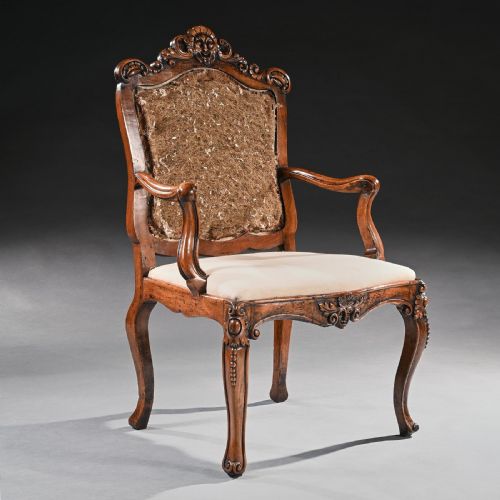
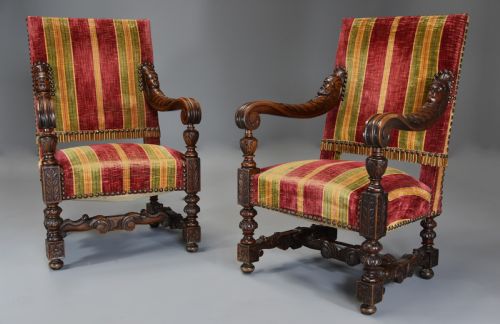


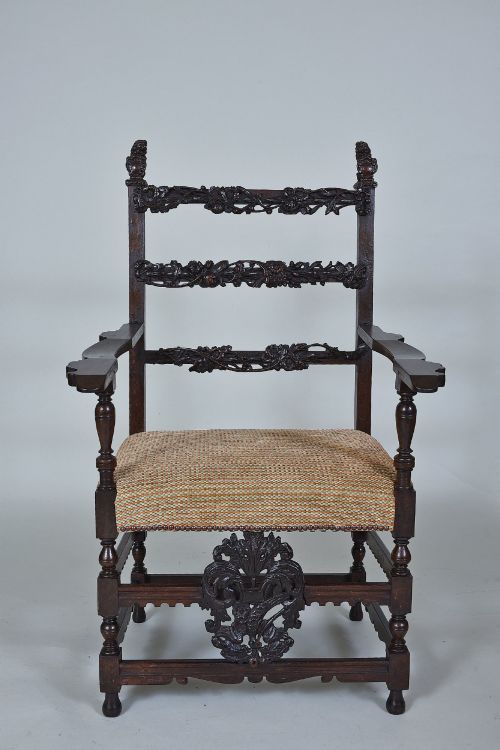
Baroque Open Armchairs
Baroque open armchairs bring commanding presence and rich carving into a room, offering substantial timber frames and period upholstery.
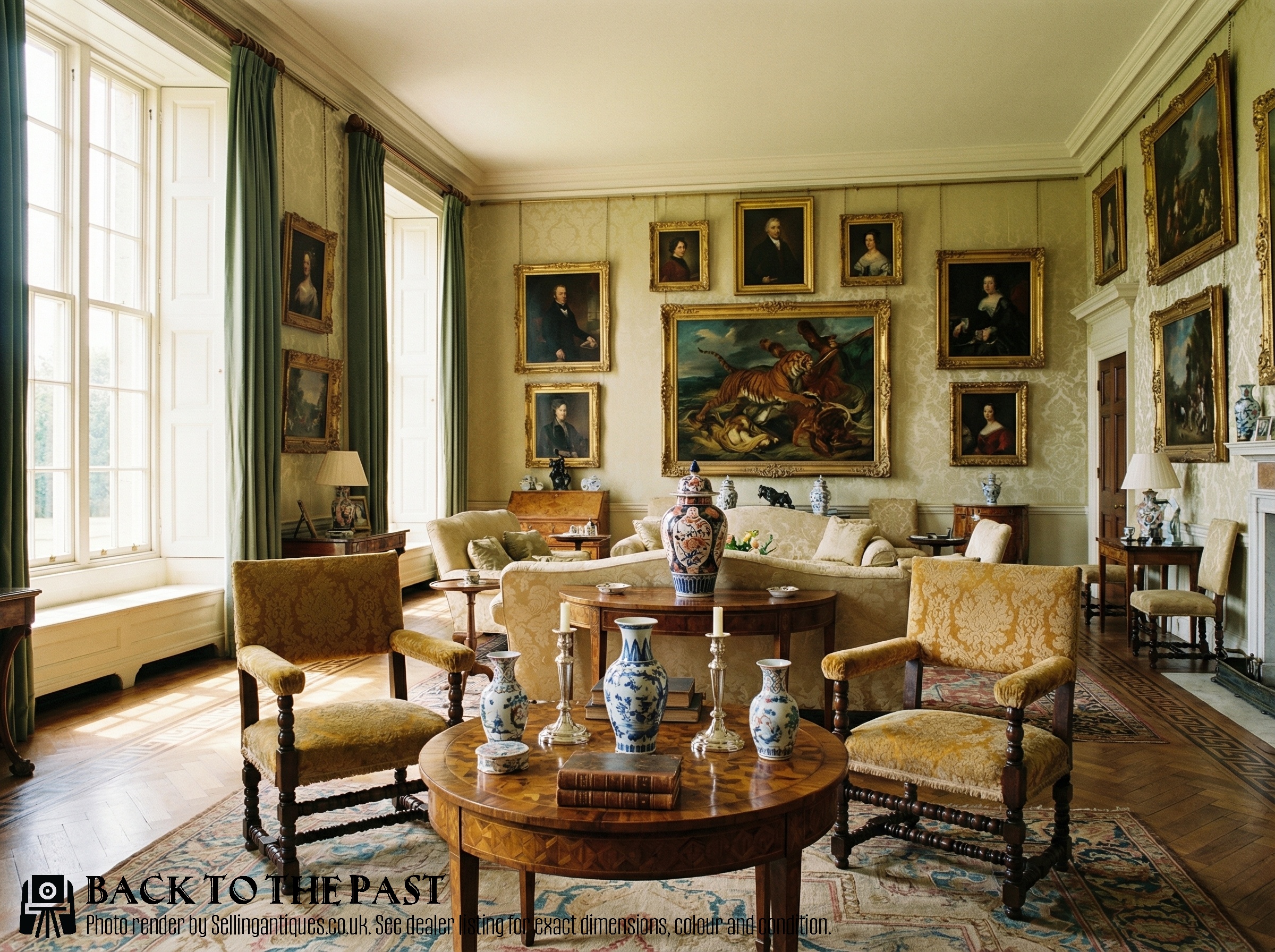
Baroque Open Armchairs
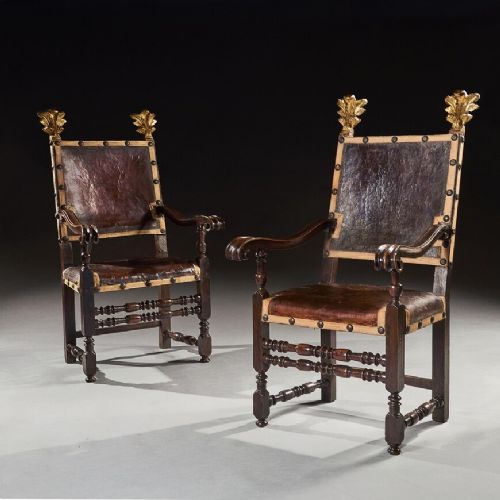
Baroque open armchairs represent a grand tradition of seating, spanning from the seventeenth century through revival periods up to the early twentieth century. When exploring baroque open armchairs, expect to encounter substantial forms originating from Italy, France, England, Holland, and Portugal. These seats serve as statement pieces, often appearing in pairs or grand throne formats.
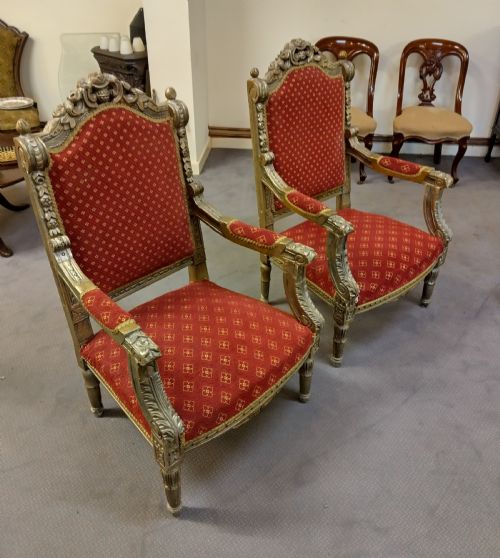
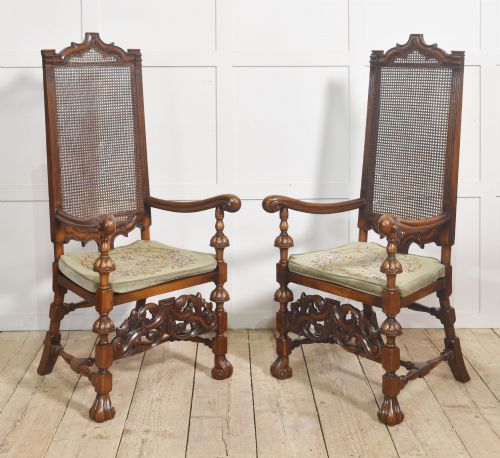
The materials and styles visible across these listings encompass solid walnut, giltwood, and parcel-gilt finishes alongside needlepoint, tapestry, velvet, and fabric upholstery. Seventeenth-century examples sit alongside eighteenth-century Italian Rococo and Louis XV variants, plus later nineteenth-century revivals like Carolean and Baroque Revival. Walnut frames dominate the selection, frequently paired with intricate carving and upholstered pads.
How they were made
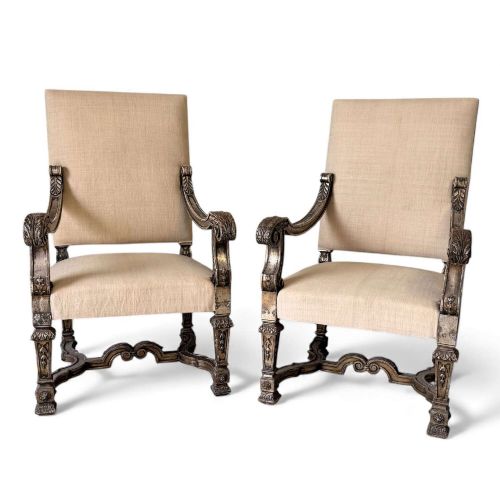
Frames rely heavily on solid walnut, padouk wood, and carved giltwood or silver gilt surfaces, often enhanced with gold leaf and brass details. Artisans shaped these structural timbers through extensive hand carving, creating high backs, sculptural arms, and elaborate head rails.
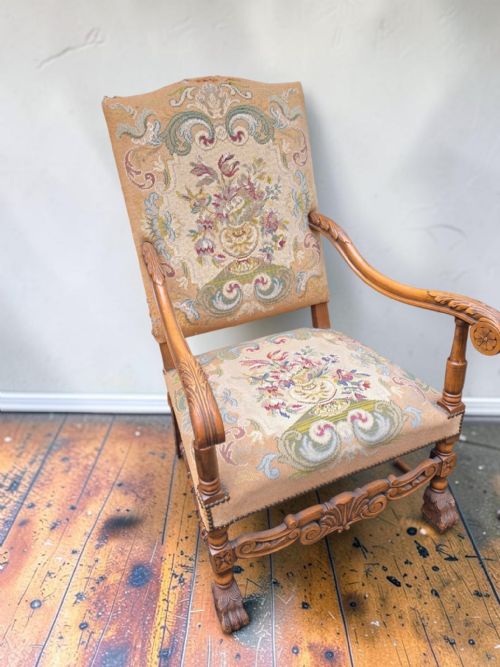
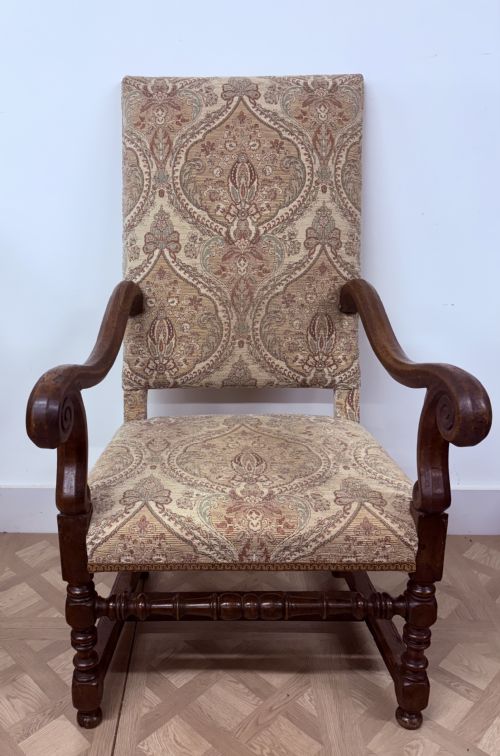
Upholstery methods incorporate traditional coverings such as needlework, tapestry, and velvet. Many pieces retain older textiles or have received modern reupholstery to preserve the structural integrity of the padded elements.
Listings span from the seventeenth century through to the early twentieth century, incorporating walnut, giltwood, and padouk wood frames.
What varies in quality
The distinction between ordinary and exceptional seating lies in the depth and crispness of the timber carving. Superior examples display fluent, deeply undercut ornamentation on the arms, legs, and crest rails rather than flat or mechanical surface decoration.
Proportion and scale also dictate worth, with large-scale throne armchairs and matched pairs commanding greater presence. The selection of primary timber, such as dense walnut or heavy giltwood, combined with authentic period needlepoint or tapestry, elevates the standing of an individual piece.
The Baroque Open Armchairs Glossary
- Parcel-gilt
- Partially gilded with gold leaf to highlight specific carved details against a contrasting wood or painted surface. This technique creates a subtle play of light across the frame.
- Giltwood
- Timber, commonly lime or pine in certain traditions, coated with gold leaf or gilt finish. It provides a brilliant metallic sheen suited to formal reception rooms.
- Elbow chair
- An alternative term for an armchair, often referencing historical terminology for seating with defined arm supports. These pieces function well at the ends of dining tables or as desk chairs.
- Needlepoint
- Stitched canvas embroidery utilised historically for durable and decorative upholstery. It frequently depicts floral or pictorial scenes on period seating.
- Marquetry
- Decorative veneer work inlaid into the timber surface to form geometric or pictorial patterns. It appears on select Dutch examples within the selection.
Baroque Open Armchairs: Frequently Asked Questions
How do I identify a 17th-century chair?
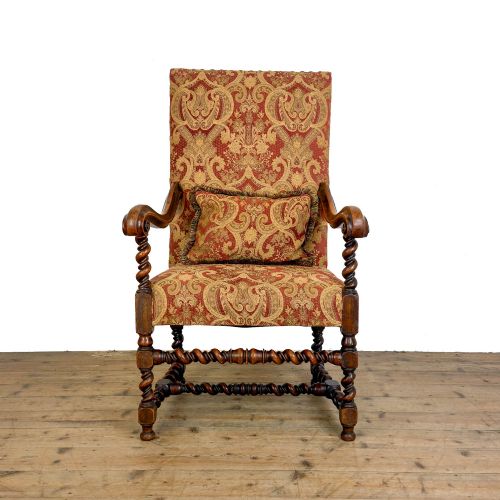
Seventeenth-century pieces typically feature heavy walnut construction, simpler rectilinear or slightly raked framing, and turnings such as bobbin or spiral motifs. The joinery relies on pegged construction methods distinct from later manufacturing.
Surface patination on the timber and hand-tooled joinery also help confirm the early date before revival periods introduced softer or more theatrical proportions.
Where should I place a throne armchair?
Throne armchairs possess a commanding scale with high backs and elaborate giltwood or carved walnut frames. They suit grand hallways, studies, or living rooms as focal seating.
Due to their visual weight, they require adequate surrounding space rather than cramped placement between smaller furnishings.
Are these chairs comfortable for daily use?
Many baroque open armchairs feature wide seats and upholstered armrests designed for formal relaxation. Comfort depends on the firmness and depth of the internal padding.
Revival and antique chairs with older upholstery may offer a firmer sit than modern armchairs, aligning with historical seating ergonomics.
What is the difference between Baroque and Rococo?
Baroque design emphasises symmetry, monumental scale, and rich, heavy carving intended to convey power and majesty. Walnut and giltwood frames dominate this aesthetic.
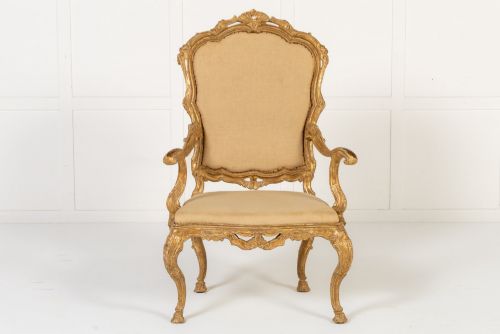
Italian Rococo introduces asymmetry, C-scrolls, and lighter, more fluid carved motifs like extravagant head rails, as seen on mid-eighteenth-century walnut examples.