





Italian Open Armchairs
Italian open armchairs bring carved walnut, giltwood and neoclassical elegance straight into a room.
Italian Open Armchairs
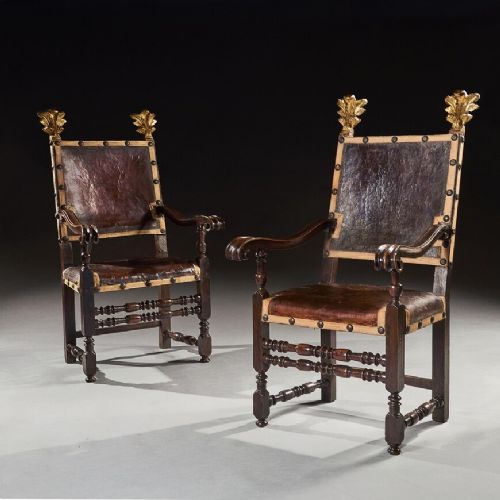
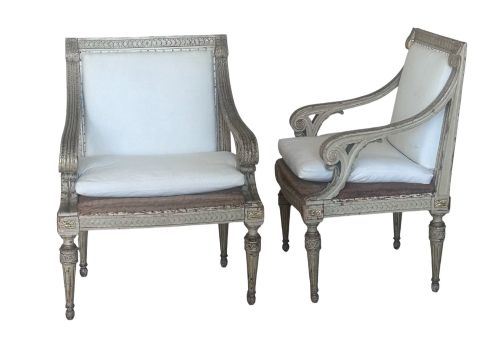
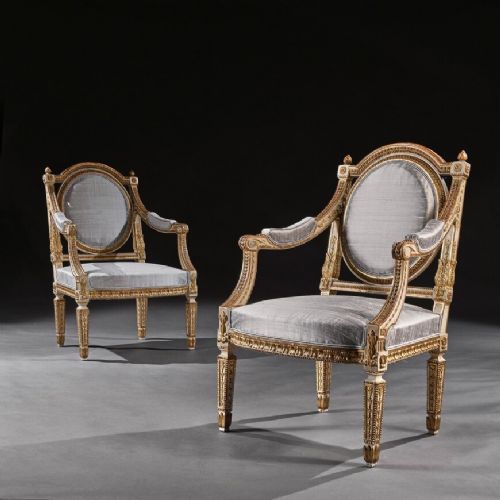
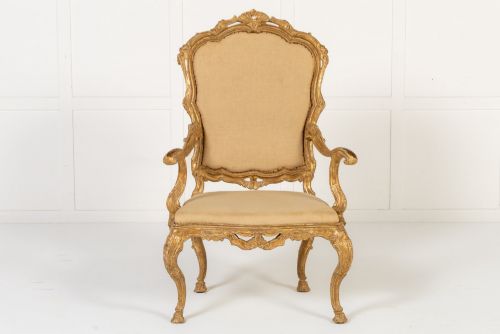
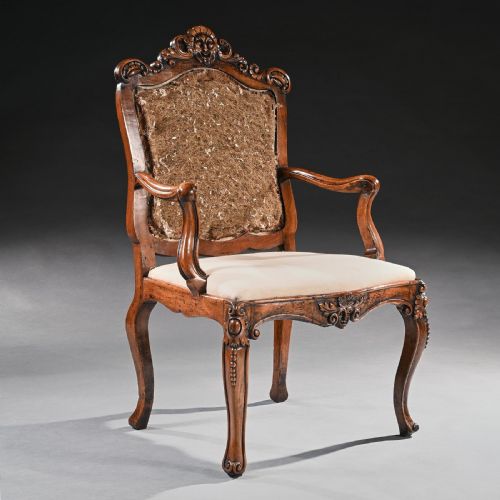
Italian open armchairs encompass seating shaped across the seventeenth, eighteenth and nineteenth centuries, featuring styles from Baroque and Rococo to Neoclassical. These pieces serve as striking salon furniture, defined by exposed wooden frames and open structural sides.
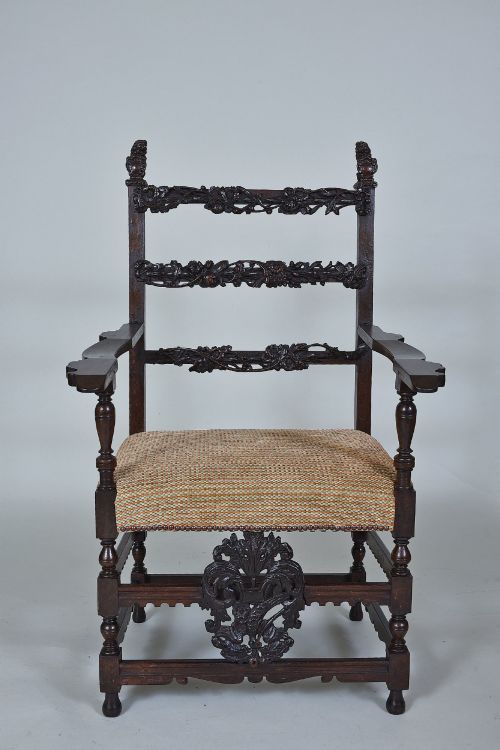
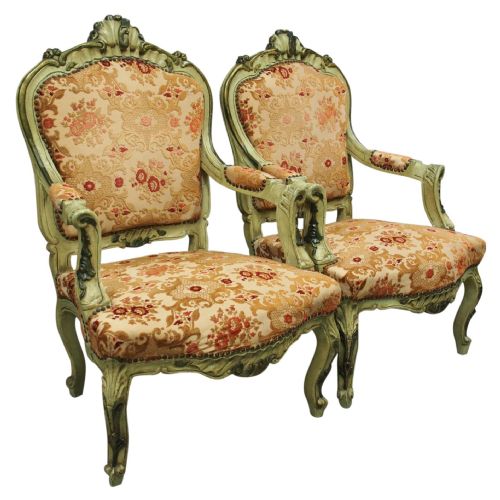
Buyers frequently encounter walnut and giltwood examples bearing carved details like parcel-gilt finishes or painted surfaces. Forms range from high back designs to grand scale pairs originating from regional centres such as Piedmont.
How they were made
Craftsmen shaped these frames primarily from solid walnut and mahogany, employing traditional carving techniques to form intricate head rails and supports. Woodwork often received layers of gesso before application of gold leaf, silver gilt or paint.
Upholstery elements historically integrated leather and fabric inserts secured directly into the wooden framework. Bobbin turned components and structural joinery completed the construction of these decorative open armchairs.
Several armchairs feature head rails carved so extravagantly they practically demand a royal visitor to sit beneath them.
What varies in quality
The refinement of the carved ornament distinguishes finer examples, particularly where floral motifs, scrolls and head rails display depth and precision. The execution of surface treatments, such as genuine parcel-gilt or painted finishes over gesso, dictates visual richness.
Proportion and scale play significant roles, with large scale pairs and documented regional pieces commanding attention. The choice of primary timber, whether figured walnut or solid mahogany, underpins the structural integrity of the frame.
Henry Thomas Peters of Genoa
The Italian Open Armchairs Glossary
- Giltwood
- Wood that has been coated with gold leaf. This finish appears frequently on Baroque and Neoclassical seating.
- Gesso
- A plaster mix applied to wood surfaces to prepare them for gilding or painting. It provides a smooth base for fine detail work.
- Parcel-gilt
- Partially gilded woodwork where gold leaf highlights specific carved elements against a painted or natural wood ground. It creates contrast across the frame.
- Rococo
- An ornate style prominent in the mid eighteenth century featuring asymmetrical curves and C-scrolls. Italian versions showcase exuberant carving on walnut armchairs.
Italian Open Armchairs: Frequently Asked Questions
How do I identify a neoclassical armchair?
Neoclassical armchairs typically display straighter structural lines, symmetrical motifs and classical proportions drawn from ancient architectural vocabulary. Craftsmen utilised painted and parcel gilt surfaces alongside refined carving during this period.
Such chairs contrast with the heavier curves of earlier Baroque or Rococo seating found across the same regions.
Are these chairs suitable for daily use?
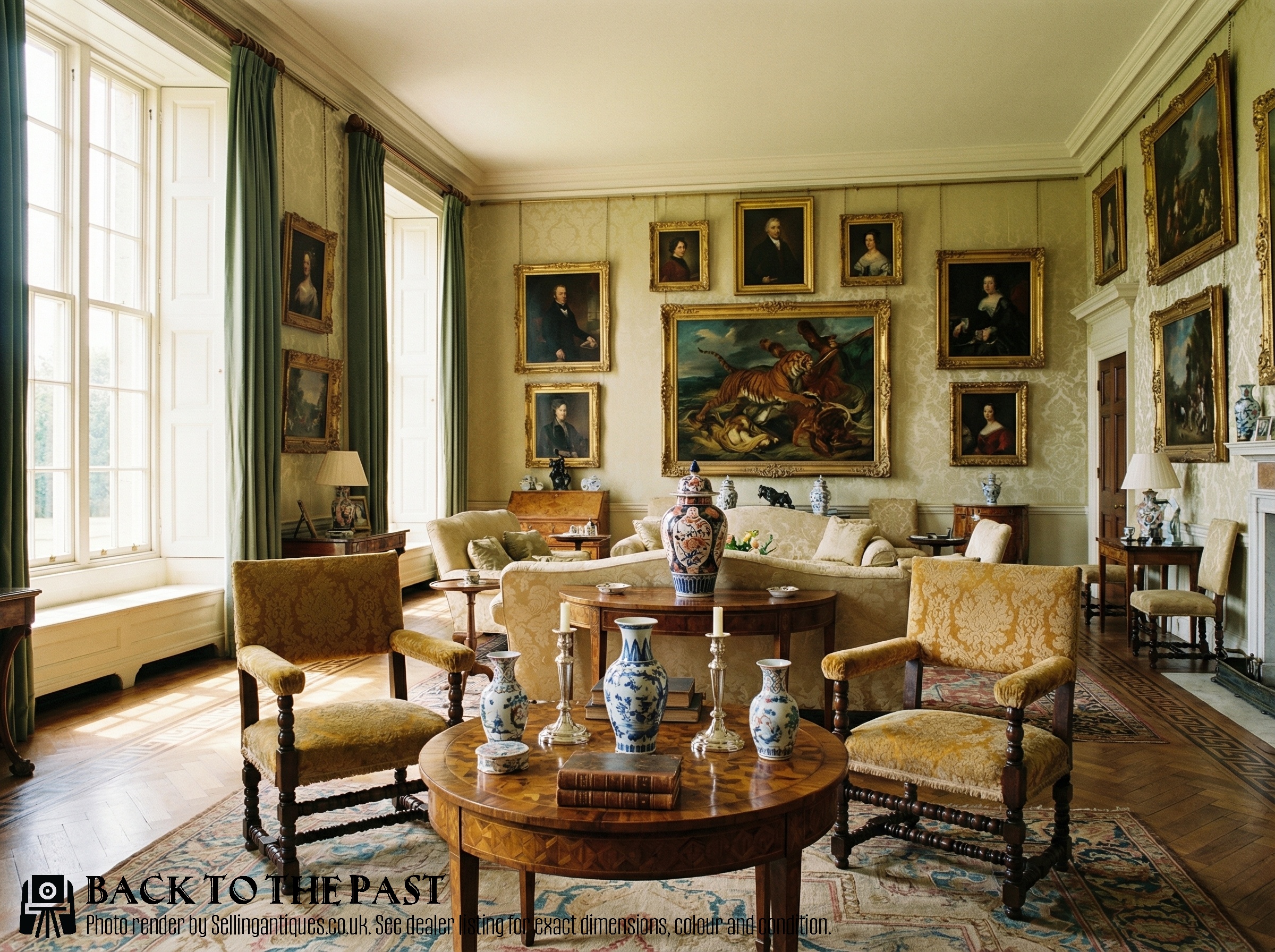
These historical armchairs function well in modern interiors when placed in low traffic settings like studies or formal reception spaces. Their open wooden arms and antique frames require mindful placement to preserve the historic finish.
Most serve primarily as decorative accent pieces rather than heavy lounge seating.
How do I spot a walnut armchair?
Walnut frames exhibit a rich brown grain that forms the primary structure of many seventeenth and eighteenth century pieces. Workshops often left the timber unpainted or enhanced it with carved details and leather upholstery.
Over time, the wood develops a deep patina across the arms and legs.