

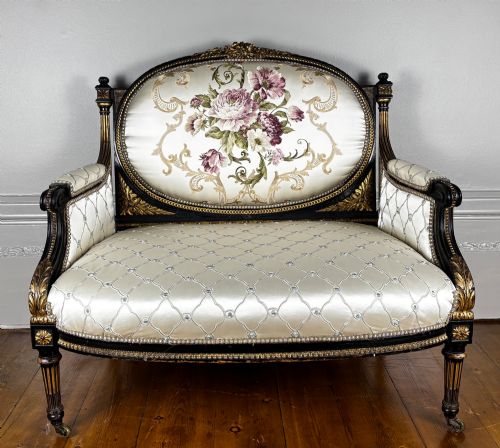


Carved Cream Settee
A carved cream settee brings together period woodwork and lighter paint finishes, offering generous seating rooted in centuries of craftsmanship.
Carved Cream Settee
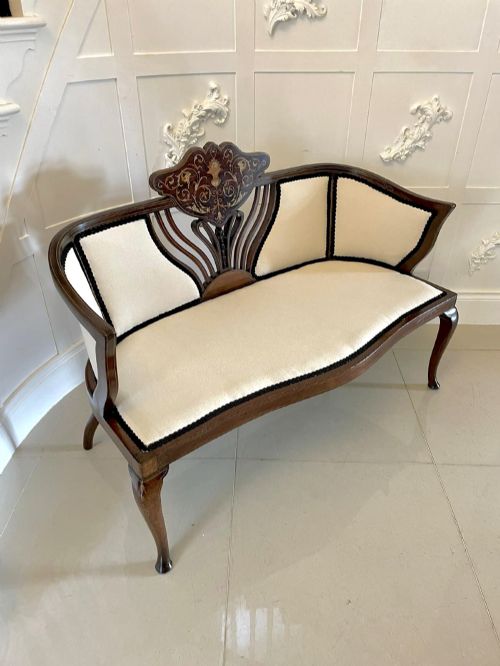
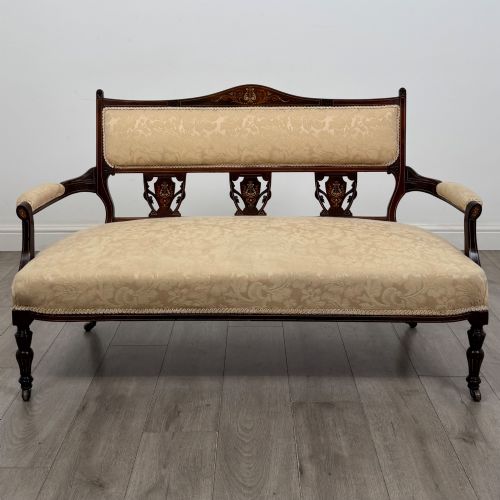
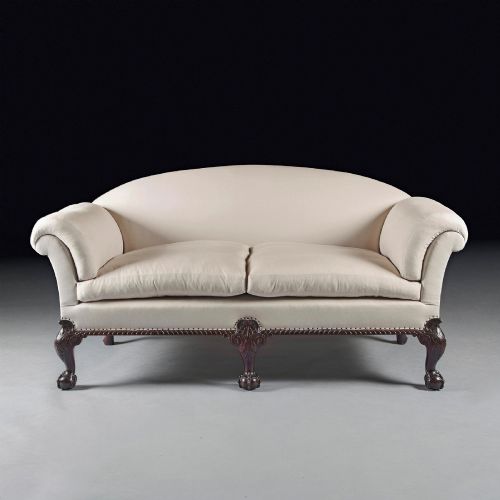
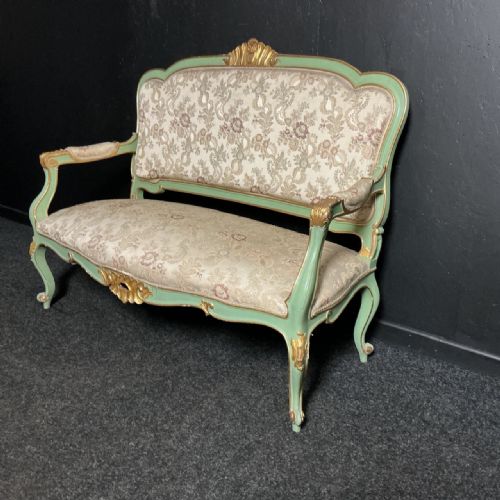
A carved cream settee spans several centuries of design, appearing in forms from Victorian and Edwardian iterations to earlier continental styles. Buyers searching for a carved cream settee encounter painted finishes alongside exposed timber frameworks.
The selection ranges from French painted two seat sofas to larger salon suites, drawing on periods such as the eighteenth century, the Victorian era, and the Edwardian epoch. These seats provide substantial seating capacity while maintaining decorative woodwork.
Many examples emerge in specific stylistic manners, including Louis XV Revival and Hepplewhite influences. They serve as focal points in drawing rooms, hallways, and principal reception spaces.
How they were made
Makers utilised solid timbers such as mahogany, walnut, oak, and rosewood for the structural frames, often applying paint or ebonising to the exterior surfaces. Gilding and parcel gilt details frequently accentuate the carved wooden ornaments.
Upholstery techniques combined traditional stuffing with fabric, linen, and specialised upholstery fabric secured over spring or webbed bases. Carved motifs on the wood relied on hand chiselling to achieve scroll arms, ball and claw feet, and intricate crest rails.
Materials recorded across the inventory include mahogany, walnut, oak, brass, fabric, linen, and paint applied over traditional wood frames.
What varies in quality
The distinction between tiers rests upon the crispness of the hand carving and the integrity of the underlying timber frame. Superior examples demonstrate deeply chiselled ornamentation that retains sharp edges beneath layers of historic paint.
Construction methods determine durability, visible in the tightness of frame joints and the proportion of the woodwork relative to the upholstered sections. Original painted surfaces or patinated timber carry greater weight than later re-paintings.
Howard and Sons·Morison and Co·Butlers of Dublin
The Carved Cream Settee Glossary
- Settee
- A long upholstered seat for more than one person, typically featuring a back and arms. These pieces developed from earlier benches to become central elements of formal interior seating.
- Louis XV Style
- A continental design movement characterised by asymmetric curves, cabriole legs, and naturalistic floral carvings. This aesthetic heavily influenced nineteenth-century revival seating.
- Chaise Longue
- An upholstered chair with a long seat that allows the user to recline. Variations include scroll end versions and double ended configurations originating in the nineteenth century.
- Bergere
- An enclosed upholstered armchair or settee with wooden frames and stuffed armrests. The style often incorporates cane work or fully upholstered sides.
- Parcel Gilt
- A decorative technique where specific raised carved details receive a thin application of gold leaf while the surrounding wood remains painted or polished.
Carved Cream Settee: Frequently Asked Questions
How do I identify a Victorian settee?
Victorian settees typically employ dense timbers like walnut and mahogany, often featuring deep buttoning, elaborate carving, or inlaid details. Their proportions reflect the heavier domestic tastes of the mid to late nineteenth century.
Makers of this period frequently drew on earlier historical styles such as Rococo revival, resulting in curved woodwork and sprung upholstery designed for formal drawing rooms.
Where were painted settees used historically?
Painted settees were commonly placed in formal salons, withdrawing rooms, and garden rooms across France, Sweden, and England. The lighter paint finishes complemented pastel wall coverings and neoclassical interior schemes.
Continental examples from the eighteenth and nineteenth centuries frequently utilised cream or muted tones to brighten reception spaces before heavy dark woods regained popularity.
What is the difference between a sofa and a settee?
Historically, a settee described a wooden or partially upholstered wooden bench with a back and arms, whereas a sofa denoted a fully upholstered piece designed for reclining. Over time, the terms became largely interchangeable.
In marketplace listings, both labels apply to multi-seat furniture, though pieces explicitly termed settees more often display exposed carved wooden frames.
How should I care for an antique painted wood frame?
Preserving a painted wooden frame requires dusting with a dry, soft cloth and avoiding modern chemical cleaning agents that can soften historic paint layers. Keeping the piece away from direct sunlight prevents the cream or light finishes from yellowing.
Checking the structural joints periodically ensures that the timber frame remains stable without putting undue stress on the decorative carved sections.