





Antique Scandinavian Sofa
An antique scandinavian sofa brings crisp painted woodwork and sculptural birch forms into a room, offering both seating and architectural character.
Antique Scandinavian Sofa
An antique scandinavian sofa encompasses seating pieces originating from northern Europe, spanning the eighteenth century through to the early twentieth century. These seating forms range from early painted settles and benches to refined Empire revival and Biedermeier frames.
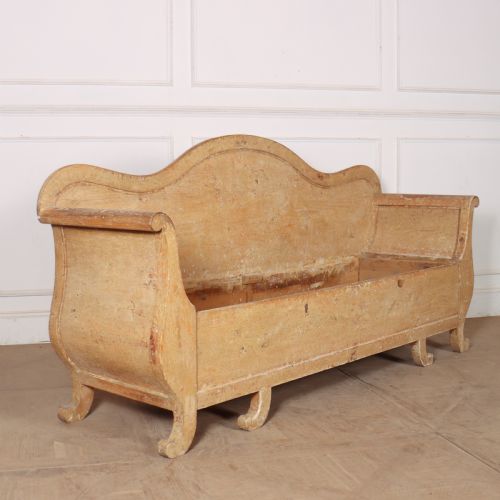
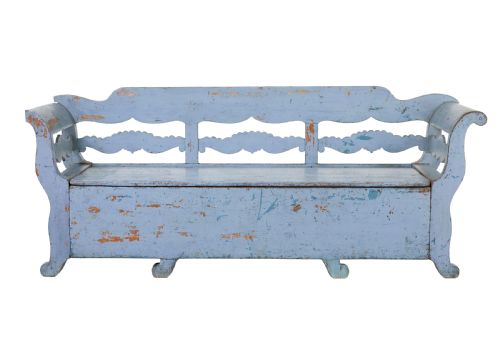
The version most commonly met on this page is the Swedish painted sofa or bench, often dated to the nineteenth century or the eighteenth century. Buyers frequently encounter pieces displaying Gustavian or Scandinavian country styles, frequently finished in original paint.
Beyond standard sofas, the broader selection includes related seating types such as settle benches and large painted benches, alongside occasional living room suites. These pieces reflect the distinctive design traditions of Scandinavian workshops across multiple periods.
How they were made
Cabinetmakers utilised regional timbers including solid pine and birch, frequently selecting burr birch veneers for decorative surfaces on Biedermeier and Empire revival items. Carved details appear on specific birch frames, demonstrating traditional woodworking techniques.
Surface finishes rely heavily on paint, with many pieces retaining original painted coats in muted or pale tones characteristic of Gustavian and Scandinavian country aesthetics. Upholstery utilises traditional textiles such as linen, hessian, and standard upholstery fabric.
The listings span pine, birch, and painted wood, alongside upholstered textiles including linen and hessian.
What varies in quality
The degree of surface preservation sets individual pieces apart, particularly regarding original paintwork versus later overpainting. Surviving early paint finishes contribute significantly to the character of eighteenth-century and nineteenth-century examples.
Structural refinement and timber selection also differentiate the range, moving from utilitarian pine settles to highly figured burr birch Biedermeier frames. Carved ornamentation and the crispness of classical revival details further distinguish finer examples.
The Antique Scandinavian Sofa Glossary
- Gustavian
- The Swedish neoclassical style spanning the late eighteenth century, characterised by restrained classical proportions and pale painted finishes. It draws inspiration from French Louis XVI design adapted to Nordic tastes.
- Biedermeier
- A central and northern European style from the nineteenth century prioritising utilitarian comfort and clean lines over excessive ornamentation. It typically highlights the natural grain of timbers like birch.
- Settle
- A wooden wooden bench featuring high backs and solid sides designed to block draughts in domestic interiors. Many examples incorporate integrated storage beneath the seat.
- Empire Revival
- A nineteenth-century neoclassical revival style echoing the pomp of the Napoleonic era, featuring bold architectural forms. Pieces in this style often employ rich birch veneers and classical motifs.
- Burr Birch
- A timber harvested from birch tree growths displaying swirling, highly decorative grain patterns. Cabinetmakers utilised these veneers on prominent surfaces during the nineteenth century.
Antique Scandinavian Sofa: Frequently Asked Questions
How do I identify a Gustavian sofa?
A Gustavian sofa typically displays restrained neoclassical carving, fluted legs, and a pale painted finish. The proportions remain balanced and architectural, avoiding heavy ornamentation.
Look for channelled woodwork and traditional upholstery treatments that echo late eighteenth-century Swedish design principles.
What is the difference between a settle and a sofa?
A settle is constructed entirely from wood, featuring a high back and solid sides designed to shield occupants from draughts. Many incorporate a storage box beneath the hinged seat.
A sofa is primarily an upholstered seating form designed for comfort, though early Scandinavian variations often combine exposed painted wooden frames with textile upholstery.
Are these sofas suitable for daily use?
Many nineteenth-century and early twentieth-century frames remain structurally sound for regular sitting, provided the internal webbing and upholstery have been properly maintained. Buyers should assess the frame stability and support before heavy daily placement.
Lighter antique frames may require gentle usage compared to modern upholstered seating.
How should I care for original painted wood?
Original painted surfaces require minimal intervention, avoiding harsh modern cleaning chemicals or abrasive cloths. Dusting with a dry, soft microfiber cloth protects the historic finish from accumulation.
Keep painted timber pieces away from direct heat sources and strong sunlight to prevent paint flaking and timber drying.