




Cream Painted Sofa
A cream painted antique sofa brings continental elegance and relaxed charm to a room, offering tactile fabric and graceful carved woodwork.
Cream Painted Sofa
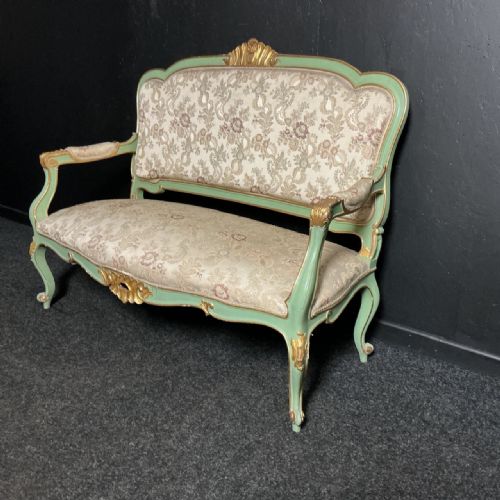
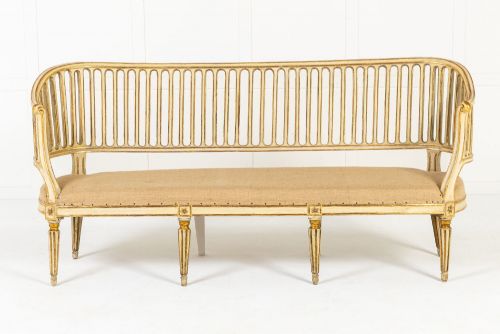
A cream painted antique sofa combines upholstered seating with pale finished frames, drawing on periods from the eighteenth century to the twentieth century. These pieces appear in forms such as French settees, corner sofas, and double or triple back canapes.
Originating largely from continental workshops in France, Sweden, and Italy, alongside English interpretations, these items reflect classic European design movements. Buyers encounter styles ranging from restrained neoclassical lines to ornate Louis XV and Louis XVI revivals.
The aesthetic relies on aged paint surfaces applied over timber frames, often paired with neutral or textured upholstery fabrics. This combination suits interiors that favour historic character and muted colour palettes.
Materials and construction methods
Makers constructed the structural frames from solid timbers such as pine, satinwood, and general hardwoods, shaped through traditional joinery and carving techniques. Surface decoration typically involved layers of paint, sometimes accented with gold leaf to highlight carved details.
Upholstery methods utilised traditional stuffing and lining materials, finished with durable fabrics like linen or custom textiles suited to daily use. The painted finishes developed natural patina and wear over decades of domestic life.
Some nineteenth century settees bear subtle pencil marks underneath from upholsterers who measured fabric before the invention of electric lighting.
Assessing craftsmanship and condition
Quality rests in the crispness of the wood carving and the structural integrity of the frame joints, distinguishing master craftsmanship from simpler provincial work. Finer examples display balanced proportions and refined ornamental details that reflect their specific stylistic period.
The integrity and history of the painted surface significantly influence the character of each piece, with original layered finishes commanding greater interest than modern repainting. Well-preserved upholstery webbing and springs also contribute to the overall standard of construction.
The Cream Painted Sofa Glossary
- Canape
- An upholstered decorative sofa originating in France, typically featuring an exposed wooden frame and an open back.
- Cabriole leg
- A furniture leg that curves outward and then tapers inward, common in eighteenth century and revival designs.
- Gilt
- A thin layer of gold applied to the wooden surface or carved elements to provide metallic highlights.
- Settle
- A wooden bench with a high back and solid arms, often associated with earlier Swedish vernacular furniture.
- Bergere
- An enclosed upholstered armchair or settee with wooden sides and a padded back.
Cream Painted Sofa: Frequently Asked Questions
How do I clean a painted wooden frame?
Dust the surface gently with a soft, dry cloth to remove daily accumulation without disturbing the historic finish. Avoid harsh chemical cleaners and abrasive cloths that might strip or dull the aged paint.
For stubborn marks, use a slightly damp cloth with mild soap, drying the wood immediately afterwards. Preserving the original patina is central to maintaining the character of the piece.
Where does Gustavian style come from?
Gustavian design originates in Sweden during the late eighteenth century, inspired by French neoclassical aesthetics observed by King Gustav III. This regional interpretation translates continental luxury into simpler, brighter forms.
Pieces from this tradition typically feature pale grey and cream paint finishes, fluted columns, and restrained geometric carvings. They fit naturally into minimalist or rustic interior schemes.
Are these sofas suitable for daily sitting?
Most pieces are structurally sound for everyday use, provided the internal webbing and joints remain stable. Historic frames can handle normal domestic seating when placed carefully on level floors.
Buyers planning frequent daily lounging should check the firmness of the internal padding and upholstery support. Professional conservation can reinforce older frames without altering their outward appearance.
What defines Louis XV revival furniture?
Louis XV revival pieces emulate the asymmetric curves, floral motifs, and fluid lines of the mid eighteenth century. Makers working in later Victorian and twentieth century periods recreated these flowing shapes using traditional techniques.
This aesthetic prioritises comfort and organic silhouettes over rigid symmetry, making these settees visually softer than earlier neoclassical designs. The exposed frames are frequently painted in cream or pastel tones.