


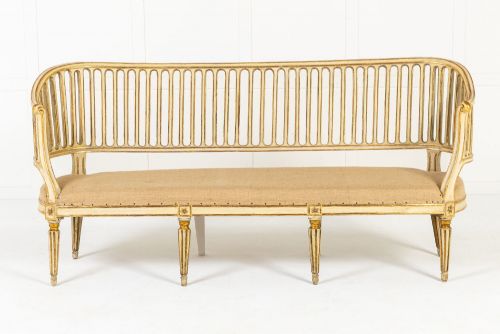

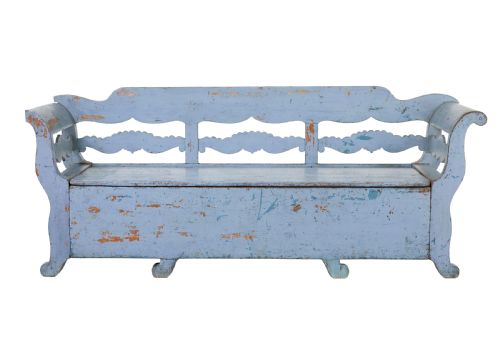


Gustavian Painted Wooden Sofa
A gustavian painted wooden sofa brings restrained Scandinavian elegance and historic charm into a room, offering both seating and striking neoclassical character.
Gustavian Painted Wooden Sofa
When you search for a gustavian painted wooden sofa, you are looking at substantial seating forms originating mainly from Scandinavian countries, particularly Sweden. These items span the eighteenth and nineteenth centuries, with later echoes found in Edwardian and early twentieth-century interpretations.
The objects appearing in this category include formal settees, rustic settle benches, and classic sofas. Most examples show traditional painted surfaces, often combined with pine construction and upholstered elements such as linen, hessian, or cane.
You are most likely to meet nineteenth-century painted Swedish benches and eighteenth-century settees displaying restrained neoclassical lines or Swedish Rococo details. These seating forms served both functional domestic roles and decorative reception purposes in period interiors.
How they were made
Makers built these pieces primarily from solid pine, shaping the structural frames through traditional joinery before applying layers of paint. This painted finish often aged over generations to develop a characteristic patina.
Upholstery techniques utilised natural foundation materials such as hessian and linen to pad the seating areas, sometimes incorporating cane work for lighter backrests and panels.
Listings in this category span pine, paint, hessian, linen, cane, and gilt materials across the eighteenth, nineteenth, and early twentieth centuries.
What varies in quality
The distinction between standard items and superior examples rests upon the integrity of the original paint surface and the subtlety of the carved neoclassical or rococo ornament. Pieces retaining untouched historic paintwork show greater authenticity than later re-painted surfaces.
Proportion and structural balance also separate simpler country workshop output from more refined urban pieces. Well-balanced frames with crisp decorative carving command greater interest from collectors of Scandinavian furniture.
The Gustavian Painted Wooden Sofa Glossary
- Gustavian
- The Swedish interpretation of neoclassical style, named after King Gustav III. It is characterised by restrained geometric symmetry, fluted columns, and pale painted finishes.
- Settle
- A wooden bench featuring a high back and solid arms designed to block drafts in older homes. Many examples include enclosed storage compartments beneath the seat.
- Settee
- A medium-sized upholstered or wooden bench intended for multiple people. These forms bridge the gap between simple benches and large formal sofas.
- Hessian
- A coarse woven fabric typically manufactured from jute fibres. It served as a traditional foundation layer for stuffing and upholstery work.
Gustavian Painted Wooden Sofa: Frequently Asked Questions
What is a gustavian painted wooden sofa?
A gustavian painted wooden sofa is a historical Scandinavian seating piece defined by pale painted finishes and neoclassical design elements. These items date primarily from the eighteenth and nineteenth centuries.
They combine structural pine frames with upholstered pads or woven cane panels, serving as functional seating with distinct architectural presence.
How do I care for painted wooden furniture?
Caring for historic painted surfaces requires gentle dusting with a dry microfibre cloth and avoiding harsh chemical cleaners. Keep these pieces away from direct sunlight and extreme humidity changes.
Maintaining stable indoor temperatures prevents the pine timber from expanding and protects the delicate layered paintwork from flaking.
How do I distinguish eighteenth and nineteenth-century pieces?
Eighteenth-century examples often exhibit more pronounced rococo curves or strict neoclassical symmetry associated with the height of the Gustavian era. Nineteenth-century pieces frequently display heavier proportions or simpler country interpretations of these earlier motifs.
Examining the construction joints, tool marks, and the layering of the paint surface helps reveal the approximate age of the timber.