




Carved Church Candlestick
A carved church candlestick brings centuries of devotional devotion and skilled craftsmanship into a domestic interior.
Carved Church Candlestick
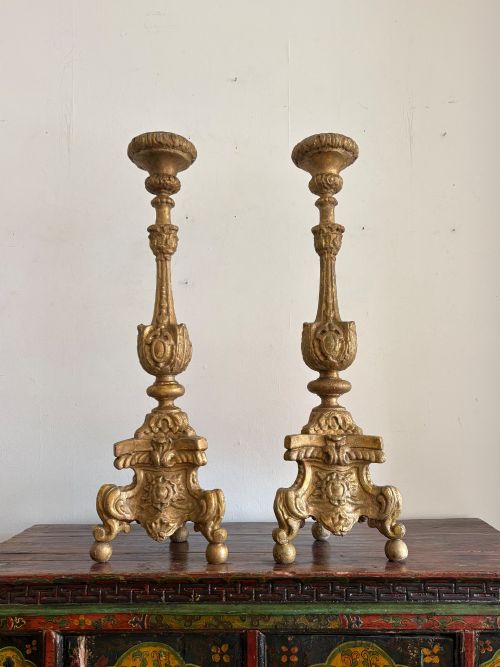
A carved church candlestick serves as an ecclesiastical altar piece, often adapted from utilitarian origins into decorative furnishings for homes. Buyers seeking a carved church candlestick will encounter examples spanning the eighteenth and nineteenth centuries, with Italian Baroque designs appearing frequently alongside French and Spanish variants.
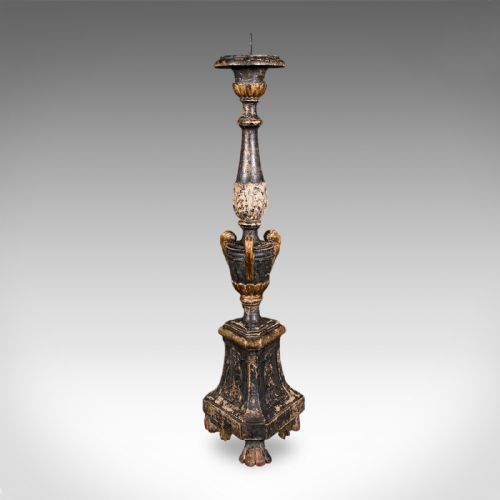
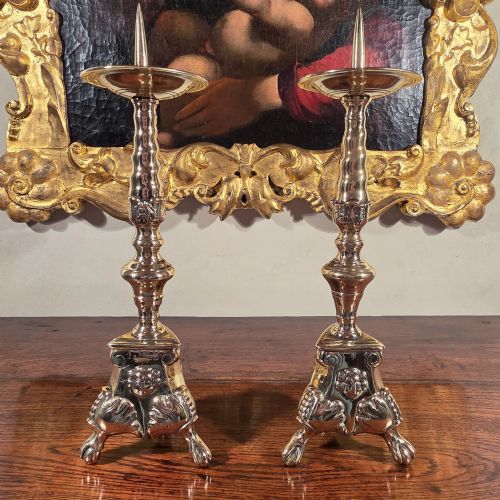
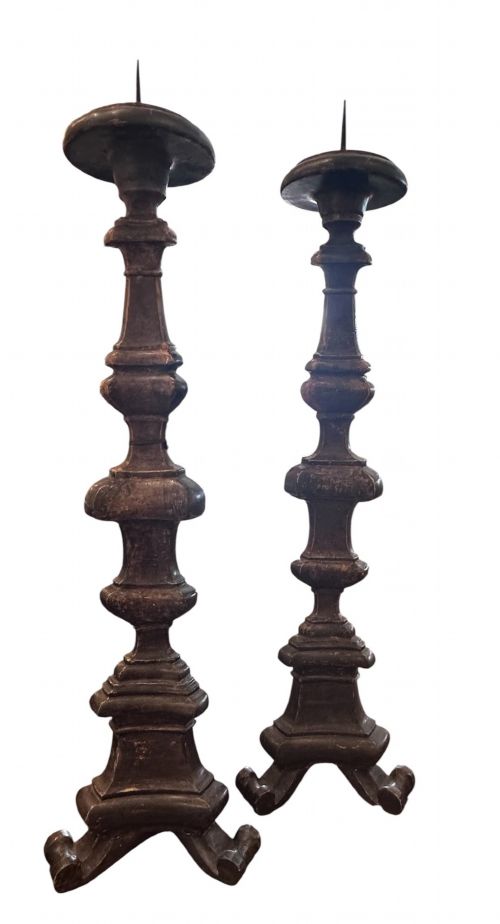
The inventory includes pairs and single items, ranging from tall altar-type candle-holders to diminutive prickets and figural acolyte supports. These objects often display surface treatments such as gold leaf, silver leaf, gesso, or polychrome paint over carved wood bases.
Beyond standard tabletop forms, some listings show torchere stands and pieces converted into table lamps or centrepieces. The stylistic vocabulary draws heavily from continental baroque and neoclassical traditions, reflecting their original liturgical contexts in European churches.
How they were made
Makers shaped these items primarily from solid timber such as pine, oak, and other carved woods, forming substantial structural columns and bases. Artisans then applied preparatory layers of gesso to smooth the wooden surfaces before adding finishes.
Surface ornamentation relied on the application of gold leaf, silver leaf, or giltwood techniques to create reflective sheens suitable for dimly lit chapels. Polychrome paint and ebonisation further augmented the visual depth of the carved motifs.
Listings feature periods spanning from the eighteenth century through to the early twentieth century, utilising materials including giltwood, gesso, iron, and brass.
What varies in quality
Quality rests principally in the depth and sharpness of the hand carving, where fluid baroque acanthus leaves and sculptural figures display superior anatomical and spatial definition. Lesser examples feature shallower chisel work and less dynamic proportions.
The preservation of original surface gilding and gesso layers also dictates distinction, as subsequent overpainting or heavy restoration diminishes historical integrity. Pieces retaining authentic patination and original metal prickets command greater appreciation among collectors.
The Carved Church Candlestick Glossary
- Pricket
- A sharp metal spike on top of a candlestick designed to secure a candle in place. This form predates socket candlesticks.
- Giltwood
- Timber that has been coated with a thin layer of gold leaf or gold paint. It provides a luminous surface finish.
- Gesso
- A plaster mixture applied to wood as a base for painting or gilding. It creates a smooth ground for decorative work.
- Torchere
- A tall ornamental stand or candlestick designed to hold a light. These pieces often feature elaborate carved detailing.
- Acolyte
- An altar assistant, whose figure is sometimes represented in carved wooden candlestick supports. These sculptural bases depict human forms holding light.
Carved Church Candlestick: Frequently Asked Questions
What is a pricket candlestick?
A pricket candlestick uses an upright metal spike rather than a socket to hold the candle steady. This traditional form was standard on church altars.
Over time, many examples lost their original prickets or underwent conversion for modern electrical lamp fittings.
Where were these pieces made?
Most recorded items originate from continental Europe, with a strong representation of Italian, French, and Spanish workshops. English examples also appear occasionally in the listings.
Regional aesthetic preferences shape the distinct carving styles and surface finishes found on each piece.
Can these candlesticks hold real candles?
Many retain their original metal pricket spikes, which require candles with a base hole to mount securely. Some items have been converted into lamp bases for modern domestic use.
Buyers should examine specific listings to determine whether a piece retains its candle-holding function or houses electrical components.