



Continental Altar Candlestick
These continental altar candlestick pieces bring architectural presence and centuries of devotional history straight into a room.
Continental Altar Candlestick
A continental altar candlestick is a substantial liturgical fixture designed for church altars, taking the form of traditional candlesticks or converted table lamps. These objects range from sixteenth-century brass examples to eighteenth-century baroque creations.
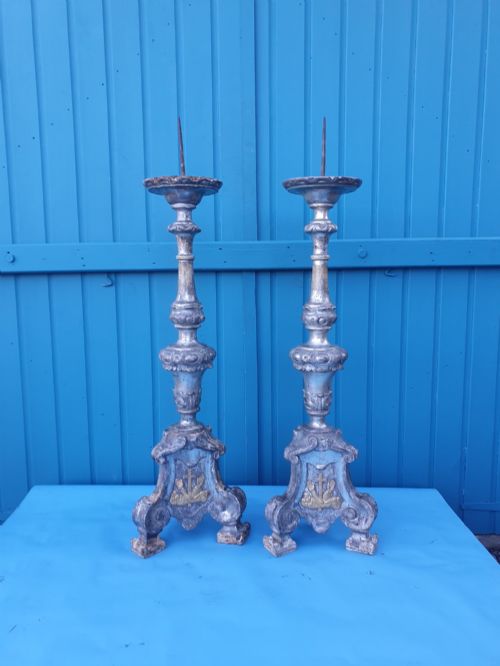
The pieces appearing on this page include carved giltwood lamps, pricket sticks, and tall wooden candle-holders. Baroque and rococo styles dominate the selection, often reflecting Italian or Spanish origins from the seventeenth and eighteenth centuries.
Buyers will encounter both pairs and single items, with many older wooden examples having received later adaptations into functional lamps. Their scale and sculptural form distinguish them instantly from domestic lighting of later eras.
How they were made
The wooden examples rely on carved timber substrates finished with gesso and gold leaf or silver leaf to simulate solid metal or create rich surface reflection. Artisans shaped these pieces by hand, incorporating elaborate baroque motifs and occasionally angelic figures.
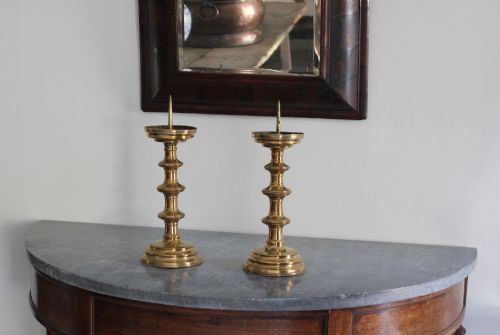
Early metal specimens utilise cast brass construction, employing historical foundry methods suited to heavy ecclesiastical hardware. Iron also appears among the materials, providing robust structural support for pricket configurations.
Continental Altar Candlestick Retail Price Guide 2026
Typical asking prices for continental altar candlestick among the pieces listed under this phrase on Sellingantiques today, from the lower quarter to the upper quarter. They describe what is for sale here now, not the wider market.
Listings span from the sixteenth century through the nineteenth century, encompassing brass, carved wood, gesso, and giltwood materials.
What varies in quality
Depth and crispness of the hand-carving separate ordinary woodwork from finer sculptural execution, particularly where figures or intricate foliage are involved. The application and survival of original or early gilding also dictate the visual strength of the piece.
Proportion and scale play a crucial role, as taller or more substantial proportions generally indicate pieces commissioned for major ecclesiastical settings rather than smaller chapels.
The Continental Altar Candlestick Glossary
- Pricket stick
- A candlestick featuring a central spike rather than a socket to secure the candle. This traditional form was standard for large altar candles.
- Giltwood
- Timber that has been coated with a thin layer of gold leaf. This technique protected the carved wood beneath while offering a brilliant decorative surface.
- Gesso
- A plaster-like mixture applied to wood surfaces as a preparation for gilding. It allows for sharp, detailed relief work before the leaf is laid.
- Baroque
- An ornate artistic style spanning the seventeenth and eighteenth centuries characterised by dynamic movement and dramatic theatricality. It heavily influences the design of these altar pieces.
Continental Altar Candlestick: Frequently Asked Questions
What is a pricket candlestick?
A pricket candlestick uses a sharp metal spike on top to hold a large candle in place instead of a traditional hollow socket. This design dates back to early ecclesiastical traditions where heavy wax candles were standard.
Such sticks often appear on church altars and provide a distinctive silhouette compared to domestic holders.
How are old candlesticks converted to lamps?
Conversion typically involves running electrical wiring through the centre of the existing wooden or metal stem. A suitable fitting is then secured to the top without removing the original pricket or candle platform.
This allows historic ecclesiastical pieces to function safely as modern table lamps while preserving their outward appearance.
Where were these pieces originally used?
These items originated in churches and chapels across continental Europe, primarily serving on altars during liturgical services. Their imposing height and rich decoration reflected the solemnity of their religious surroundings.
Over time, many migrated from ecclesiastical settings into private collections and domestic interiors.